

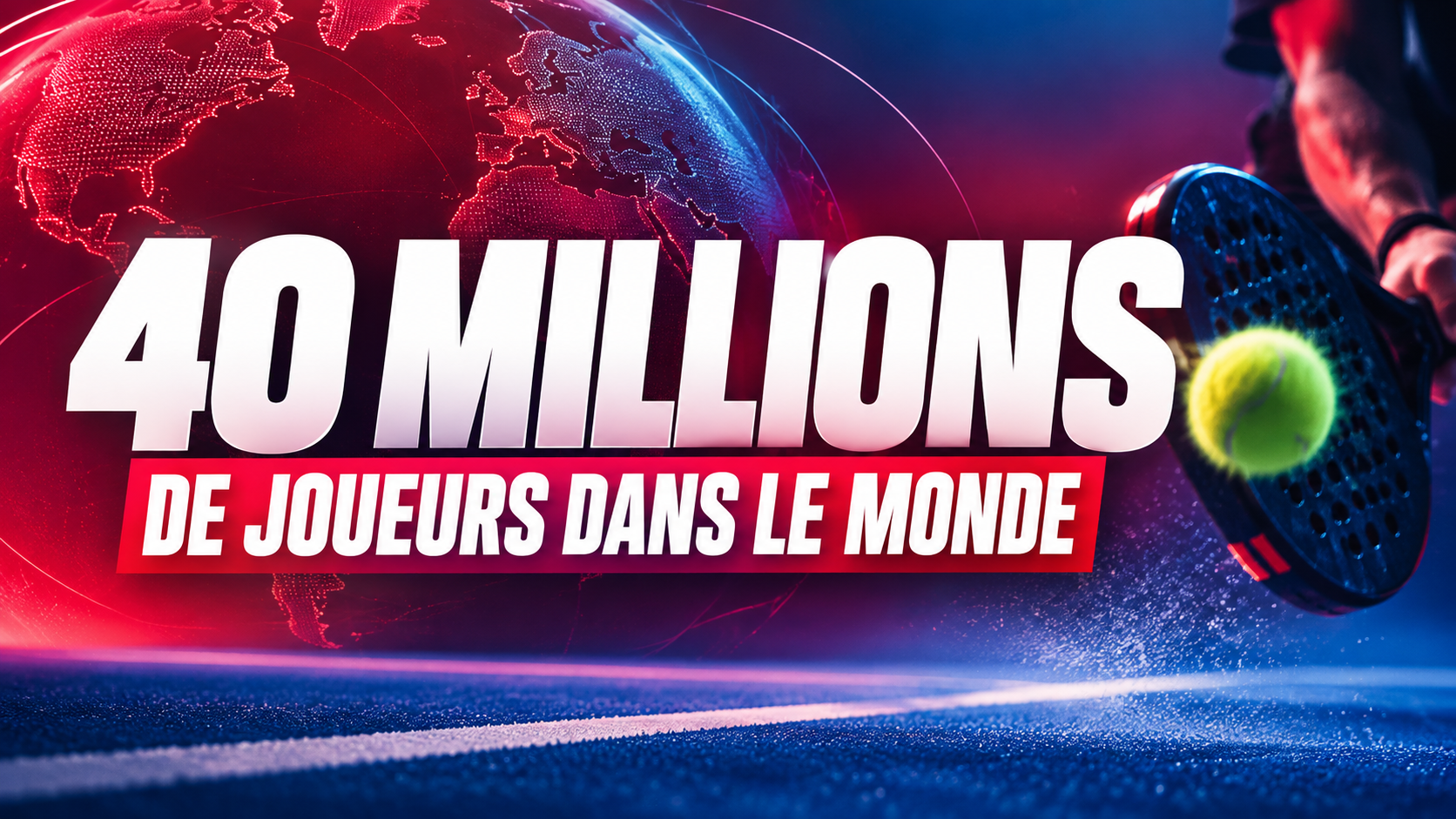








Le world padel continues to change in scale. According to the FIP World Padel Report 2026 Published by the International Padel Federation, the sport now has approximately 40 million amateur practitioners worldwide. Behind this figure, another reality emerges: padel is no longer limited to its historical markets. It is developing on every continent, attracting a particularly large female audience, and has also crossed the threshold of one million registered players.
40 million players, including 27 million regular players
This is one of the key figures in the 2026 report of the International Padel Federation (FIP) : about 40 million people have played padel at least once in the last twelve months.
This estimate therefore includes both casual players and regular players.
The FIP nevertheless distinguishes a population of 27 million more regular players who practice approximately once a week or every two weeks.
In other words, close to two out of three practitioners they play frequently enough to form an important base for clubs and economic players in the sector.
This distinction is essential to understanding the true size of the market. The total number of participants measures the sport's popularity, while the frequency of play provides a better understanding of its integration into sporting habits.
Europe still accounts for more than 60% of the players
Despite the rapid internationalization of padel, Europe remains its main source of practitioners. .
According to FIP estimates, the global distribution of amateur players is as follows:
| Continent | Share of global practitioners |
|---|---|
| Europe | 61,4% |
| America | 24,1% |
| Asia | 9,5% |
| Africa | 4,7% |
| Oceania | 0,2% |
Source: FIP World Padel Report 2026. Percentages are rounded.
The European continent thus concentrates more than six out of ten players, driven in particular by historical markets such as Spain and Italy , but also through the development of padel in France, Germany and the United Kingdom .
America accounts for nearly a quarter of practitioners, with a particularly strong presence in South America.
Asia is gaining ground in world padel
While Europe maintains a clear lead, Asia appears to be one of the most dynamic regions .
It now brings together 9,5% of global practitioners , representing an increase of almost three percentage points compared to the previous report.
This development accompanies the development of infrastructure in several Asian countries, particularly in Southeast Asia.
Indonesia is a particularly striking example of this transformation. The country is experiencing a sharp increase in the number of clubs and tracks, reflecting a growing interest in the sport.
Asian development could thus gradually alter the geographical distribution of padel players internationally.
47% of amateur practitioners are women
Another important finding of the report: the Padel attracts almost as many women as men. among amateur practitioners.
The FIP believes that women represent 47% of players , compared to 53% for men.
This relatively balanced distribution is a notable characteristic of amateur practice.
She highlights padel's ability to appeal to a diverse audience, beyond just players from tennis or racket sports.
However, this proportion should be distinguished from that observed among licensed players, where the male representation remains significantly higher.
The milestone of one million registered members has been reached
The development of padel is not only about recreational practice.
According to the report, the number of licensed members registered with national federations affiliated with the FIP exceeded one million for the first time, reaching approximately 1,114 million players .
The progress is particularly significant compared to previous published data.
| Year | Number of licensees |
|---|---|
| 2024 | 585 325 |
| 2025 | 845 500 |
| 2026 | 1 114 000 |
The FIP reports on a a 31% increase compared to the previous survey .
More than 90% of licenses are concentrated in Europe, which confirms the continent's weight in the federal organization of the discipline.
Among the licensed players, 67,8% are men et 32,2% of women .
This difference with the distribution of amateur practitioners shows that the feminization of the practice is not yet reflected in the same proportions at the level of federal licenses.
A sport now played in 191 countries and territories
The globalization of padel can also be measured by its geographical distribution.
The FIP now lists a practice in 191 countries and territories including 162 United Nations member states and 29 dependent territories.
Padel thus has a presence on all continents, with very different levels of development depending on the region.
The report also includes 28,497 clubs and establishments offering padel and 91 tracks globally, according to figures collected at the end of August 2026.
These figures reflect the scale of a sport which, in just a few years, has gradually established itself in new markets.
Growth that now extends beyond just historical markets
Le FIP World Padel Report 2026 confirms a fundamental trend: padel continues its expansion while diversifying its growth areas.
Spain and several European countries remain benchmarks, but new markets are emerging, particularly in Asia, while France, Germany and the United Kingdom are actively participating in European development.
With An estimated 40 million amateur practitioners including 27 million regular players Padel now has a large base of players.

Franck Binisti discovered padel at the Club des Pyramides in 2009 in the Paris region. Since then, padel has been part of his life. You often see him touring France to cover major French padel events.









































































 FIP rankings – Guichard drops, Fonteny moves closer to the top 100, Robert makes a great move
 Lebrón / Augsburger: Brussels had sent a message, Dubai reinforces the threat
 Dubai P1 – Fernández / Calvo: “Any of the three best pairs could be world number 1”
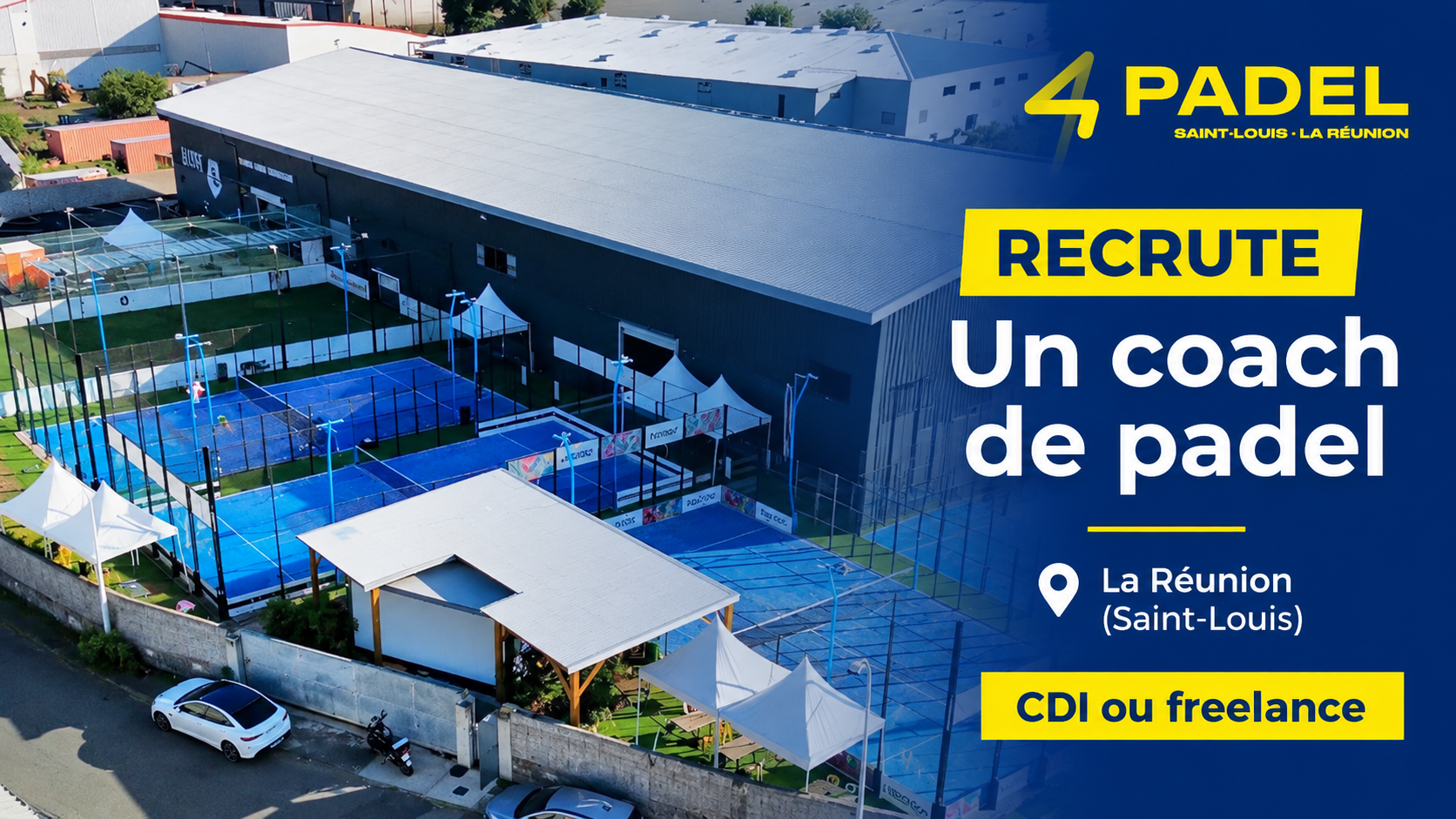 4PADEL is recruiting a padel coach in Reunion Island: permanent contract or freelance
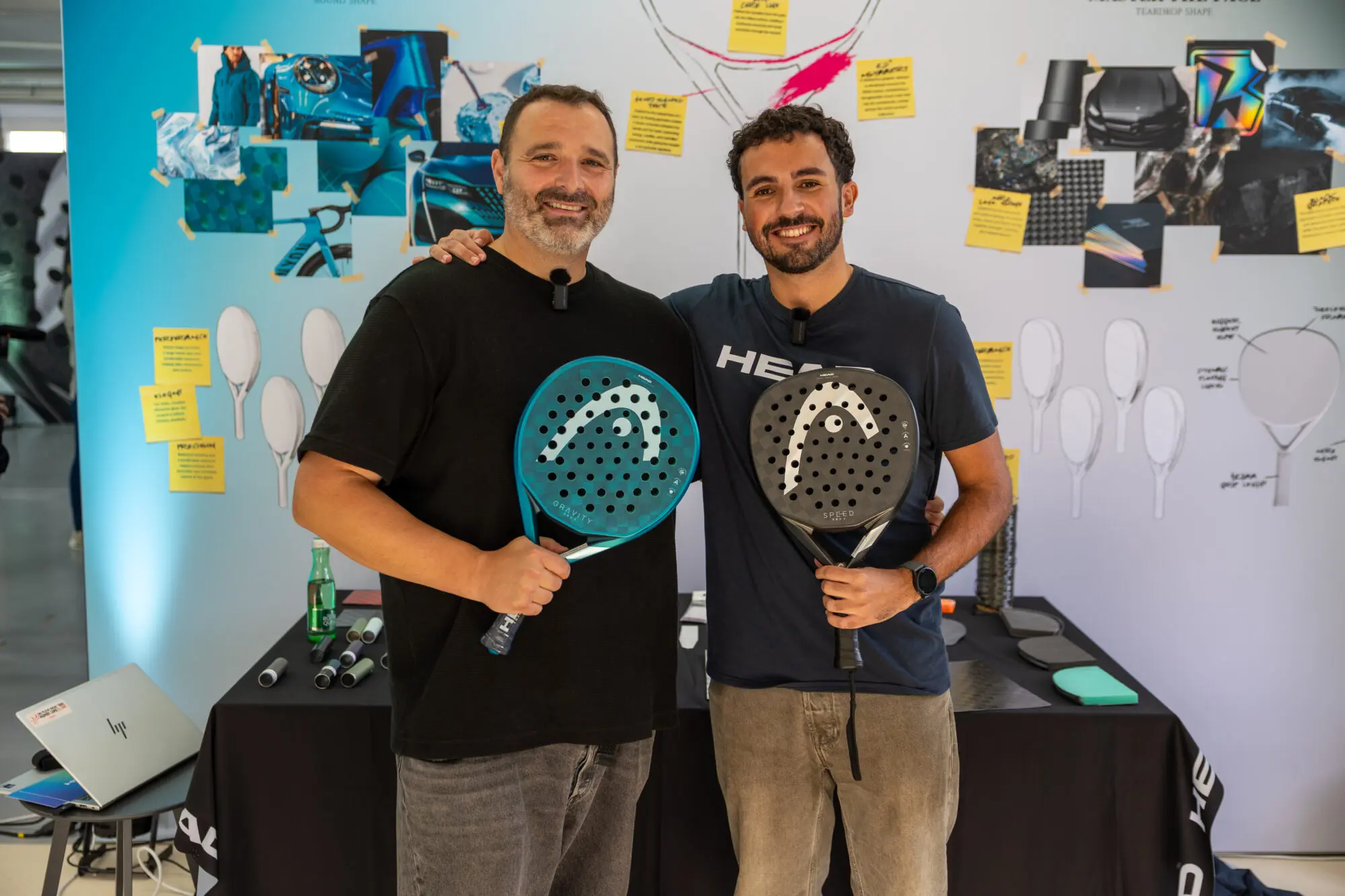 Two and a half years to create a padel racket: HEAD reveals the manufacturing secrets of its 2027 models
 Javier Rodríguez Piris: “I would like Spain to host the World Championships in 2030”
 "We're not a tournament club": the gamble taken by the two Henry sisters who are hosting a P3000 at The Break Padel Club
 “Victim of Padel ": The Adventure Padel Jack Troster and Jack Troster are back with a new track and a crazy music video.
 Bullpadel 2027 in the feminine: the queens take to the track
 Blanqué and Joris remain untouchable, securing the title at the P3000 Break Padel Club
 Three consecutive serves in the Dubai final: the recurring umpiring error Premier Padel
 Padel, weight training, and even HYROX: clubs are changing their model
 Padel court rentals: a global market estimated at 4,6 billion euros
 FIP Beyond: the new global padel circuit for amateurs and seniors
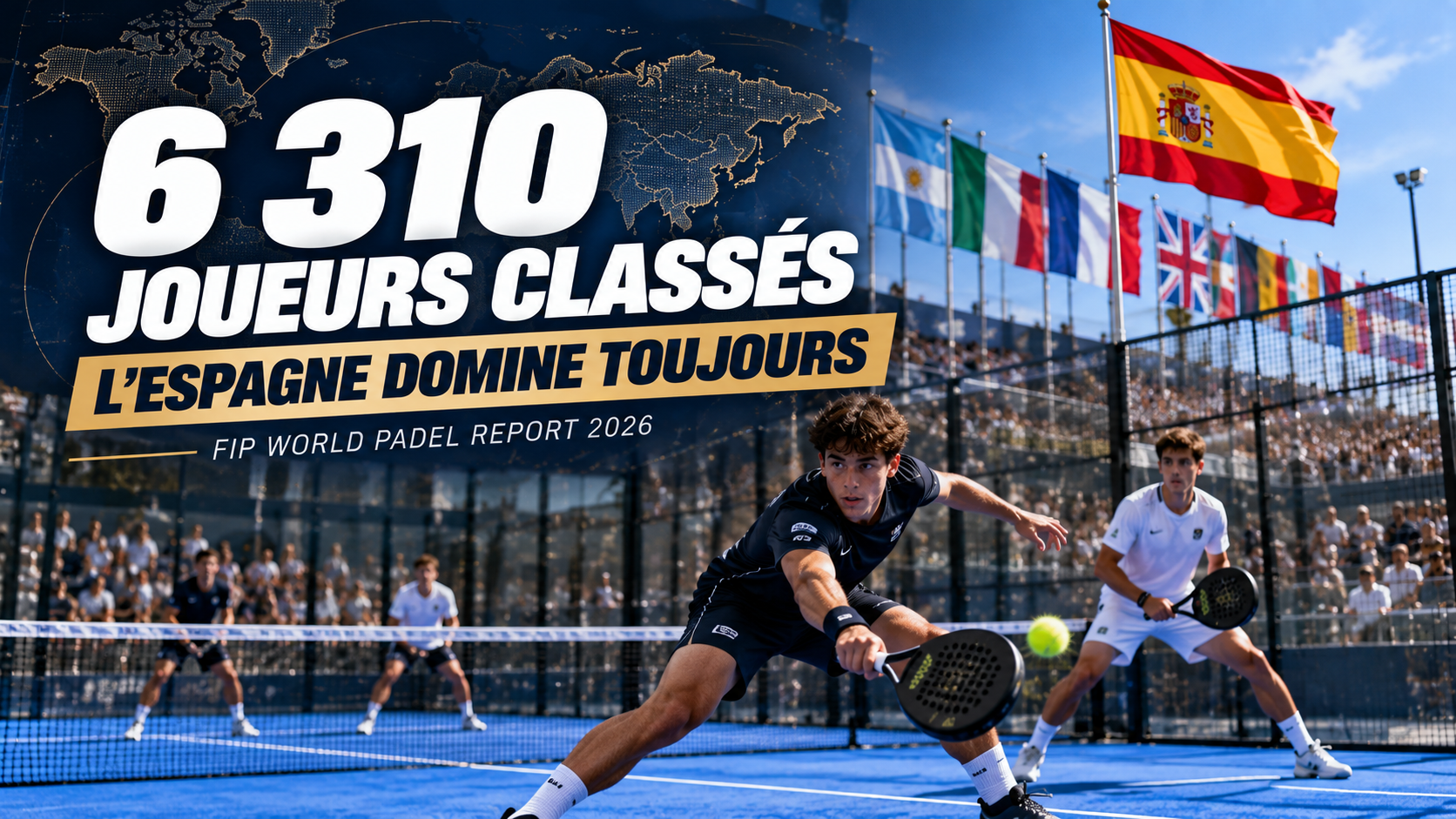 More than 6,300 FIP-ranked players: professional padel is becoming international, but Spain dominates
 OSS Barcelona – Why Spain and France aren't yet playing in the same league
 Cancer and rehabilitation: could padel become a therapeutic tool?
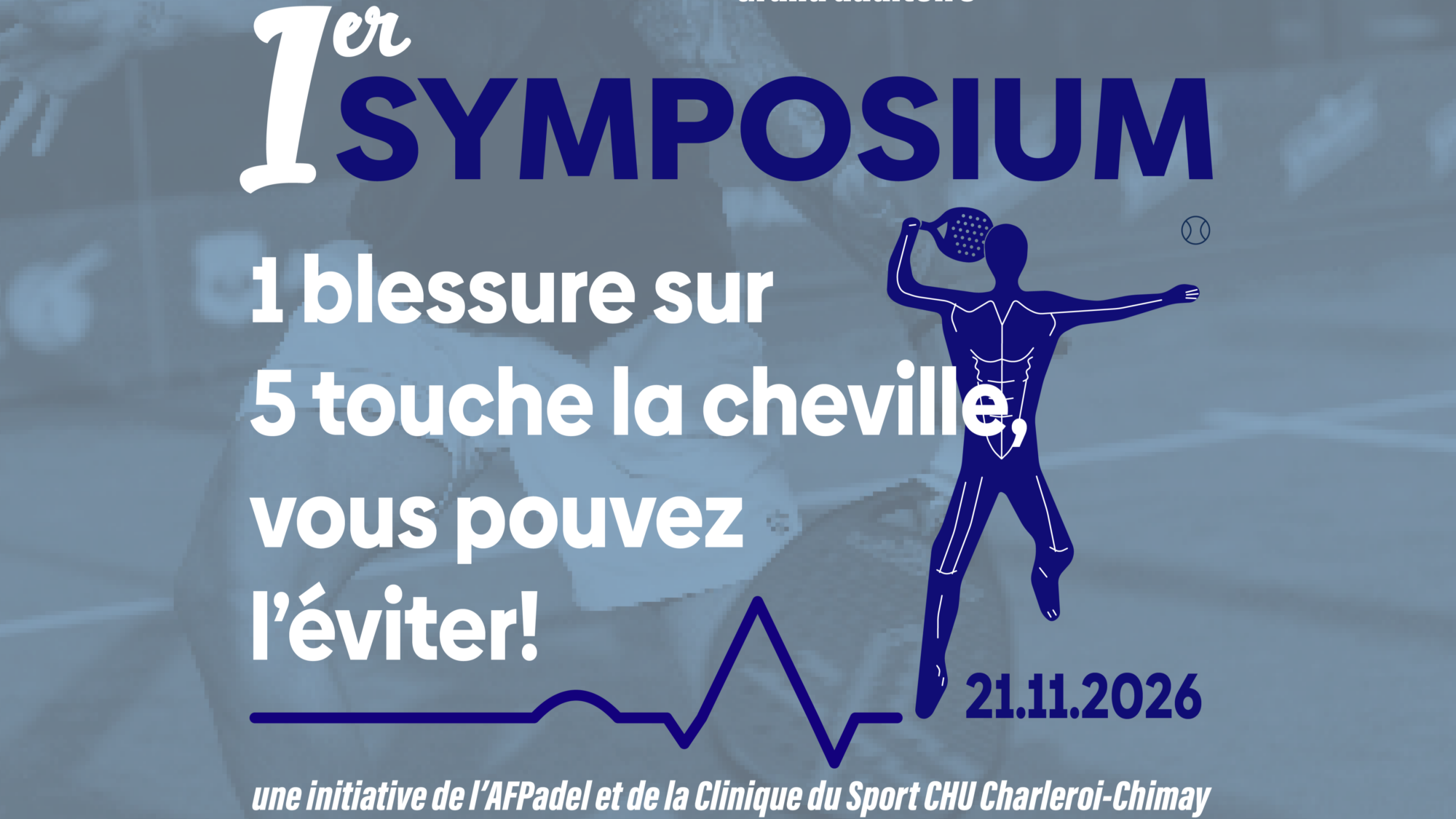 Padel injuries: ankle, knee, elbow, eye… what the latest figures reveal
 Shocking turn of events at Dubai P1: Coello and Tapia have also withdrawn!
 Padel serve: a good serve is especially good preparation for the third shot.
 What the analysis of the stroke reveals: tennis forehand vs. padel bandeja
 Has the bandeja disappeared from modern padel?
 Flat forehand in padel: 5 exercises from Cristian Álvarez to gain control and efficiency
 Why can Libaak/Alfonso beat almost everyone… except Coello/Tapia?
 Tapia reveals his recipe for beating Coello / Tapia: "I would bet everything on myself"
 How Coello defused Chingotto's game plan
 In padel, does the chemistry between a pair count as much as individual skill?
 Organising a national padel competition: what are the FFT's requirements for clubs?
 Organising a P2000 or a P3000: how much does it really cost clubs?
 P2000 or P3000: what are the differences in prize money, format and organization in 2028?
 Do you lose your ranking? Padel FFT after more than a year without a license / without competition?
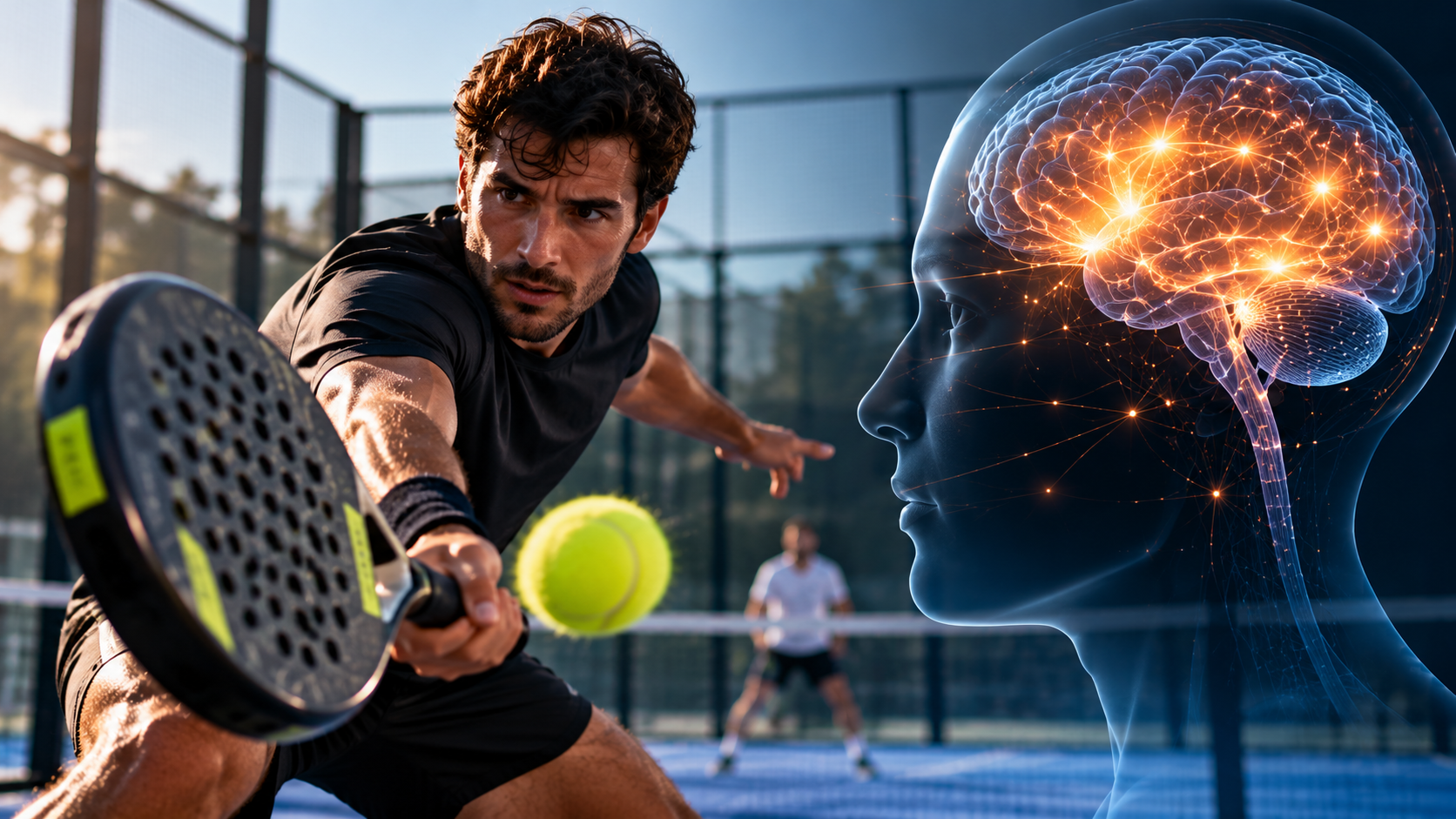 Memory, reflexes, concentration: what happens in our brain when we play padel?
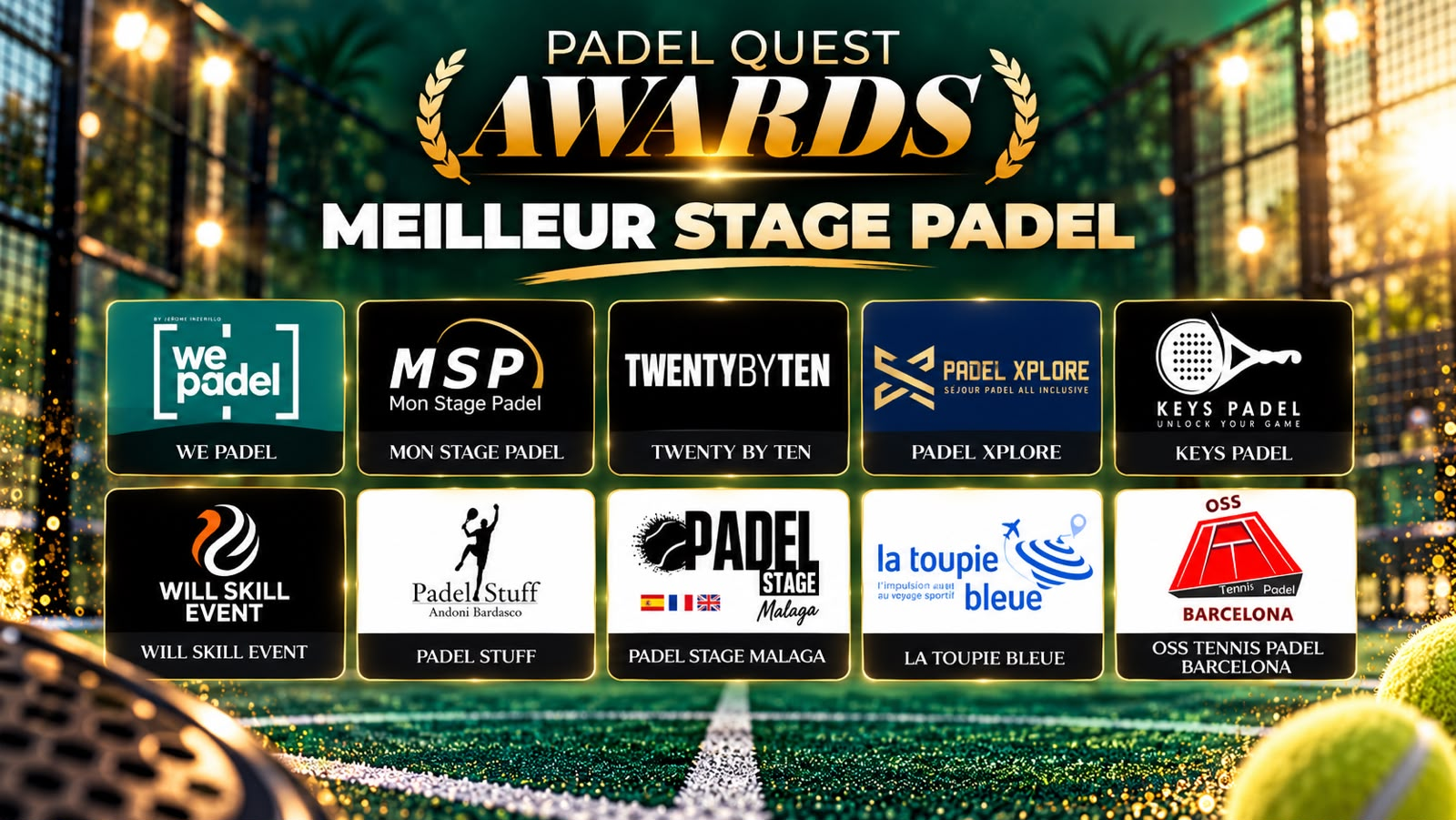 Padel Quest Awards: Ten specialists in the running for the title of best padel training camp of the year
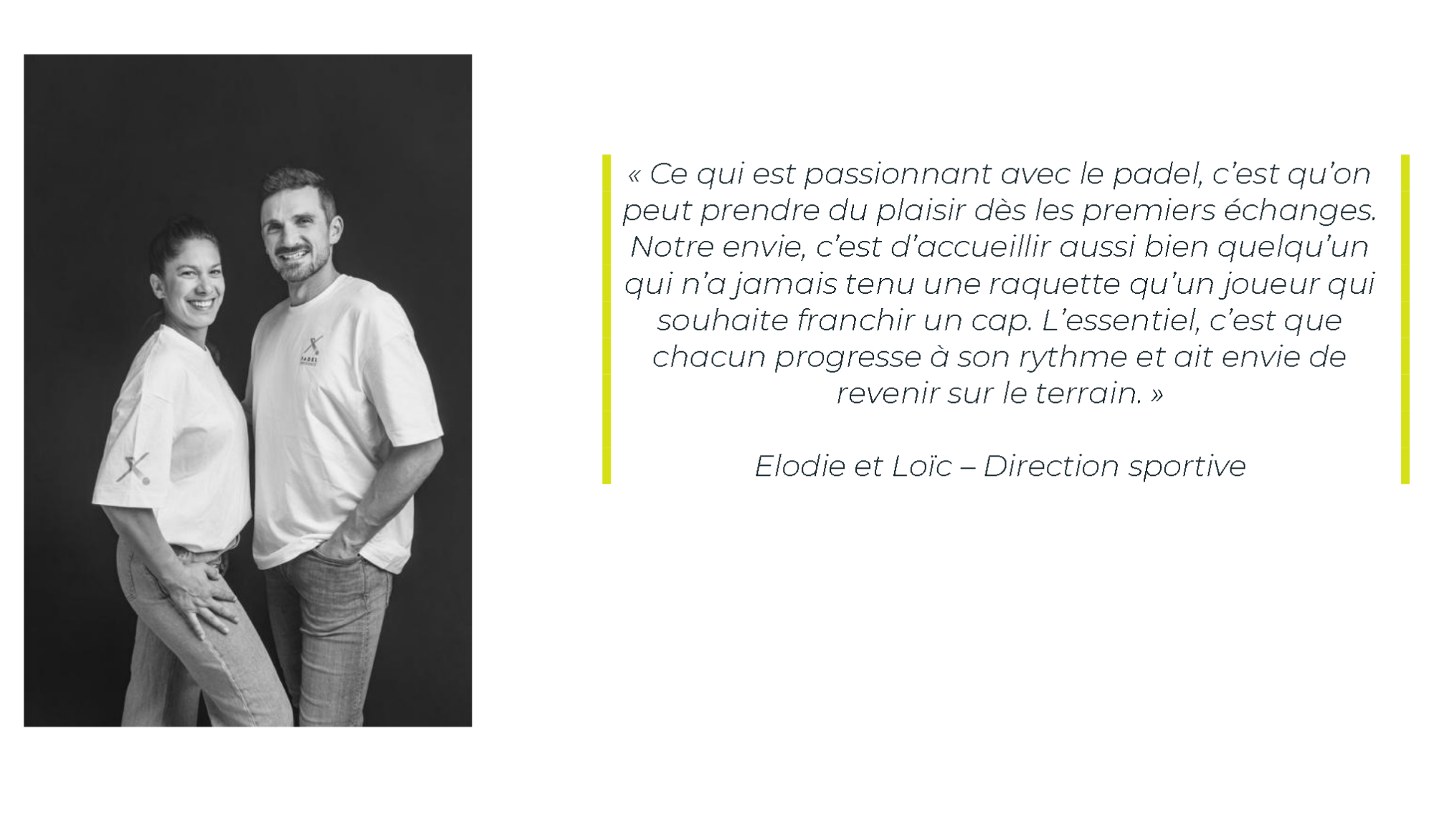 Padel Xperience: The Academy opens on November 2nd in Marcheprime, ahead of the complex's inauguration in 2027
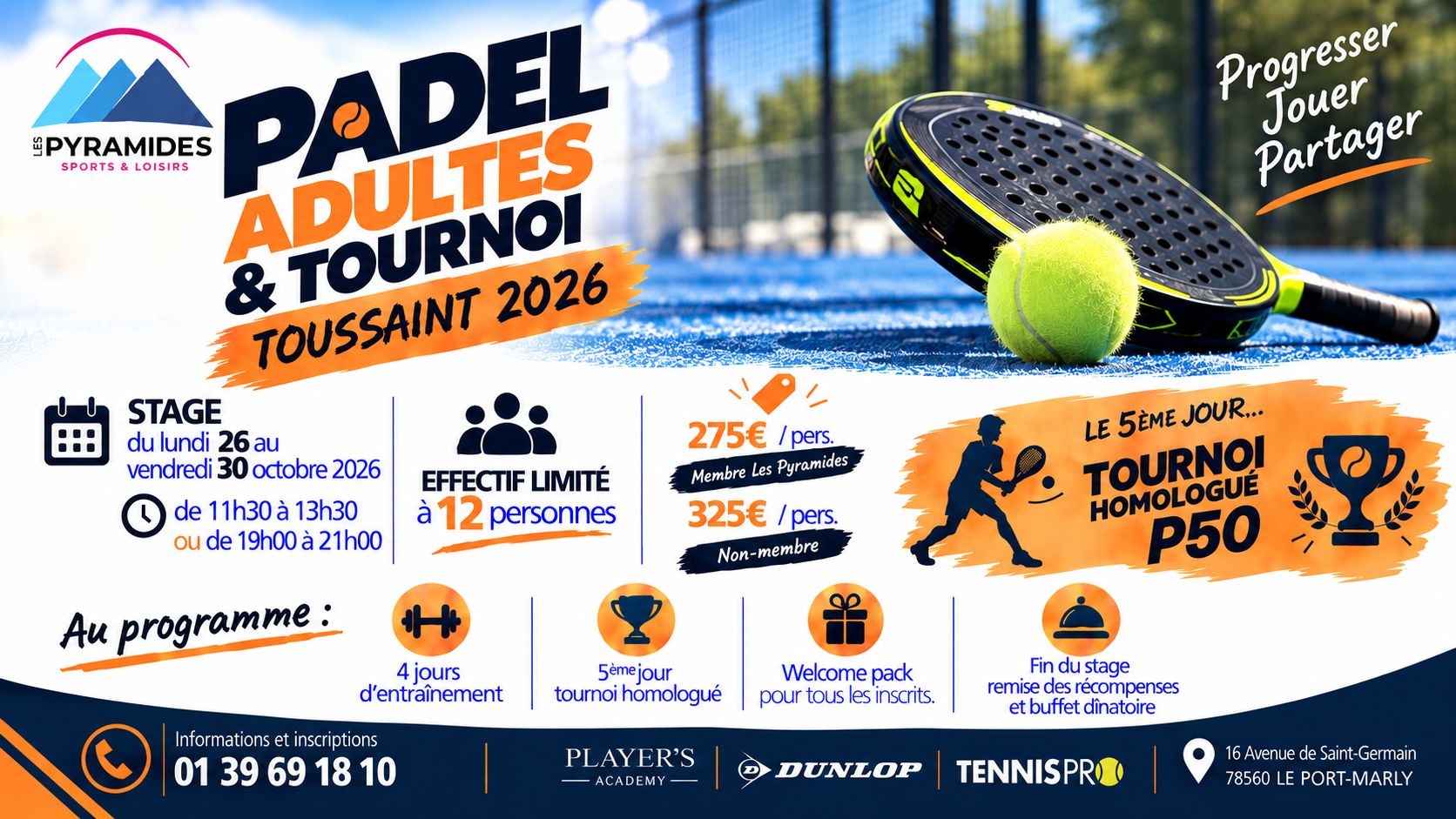 All Saints' Day – Les Pyramides are organizing a padel training camp for adults with a P50 tournament to close out the week