

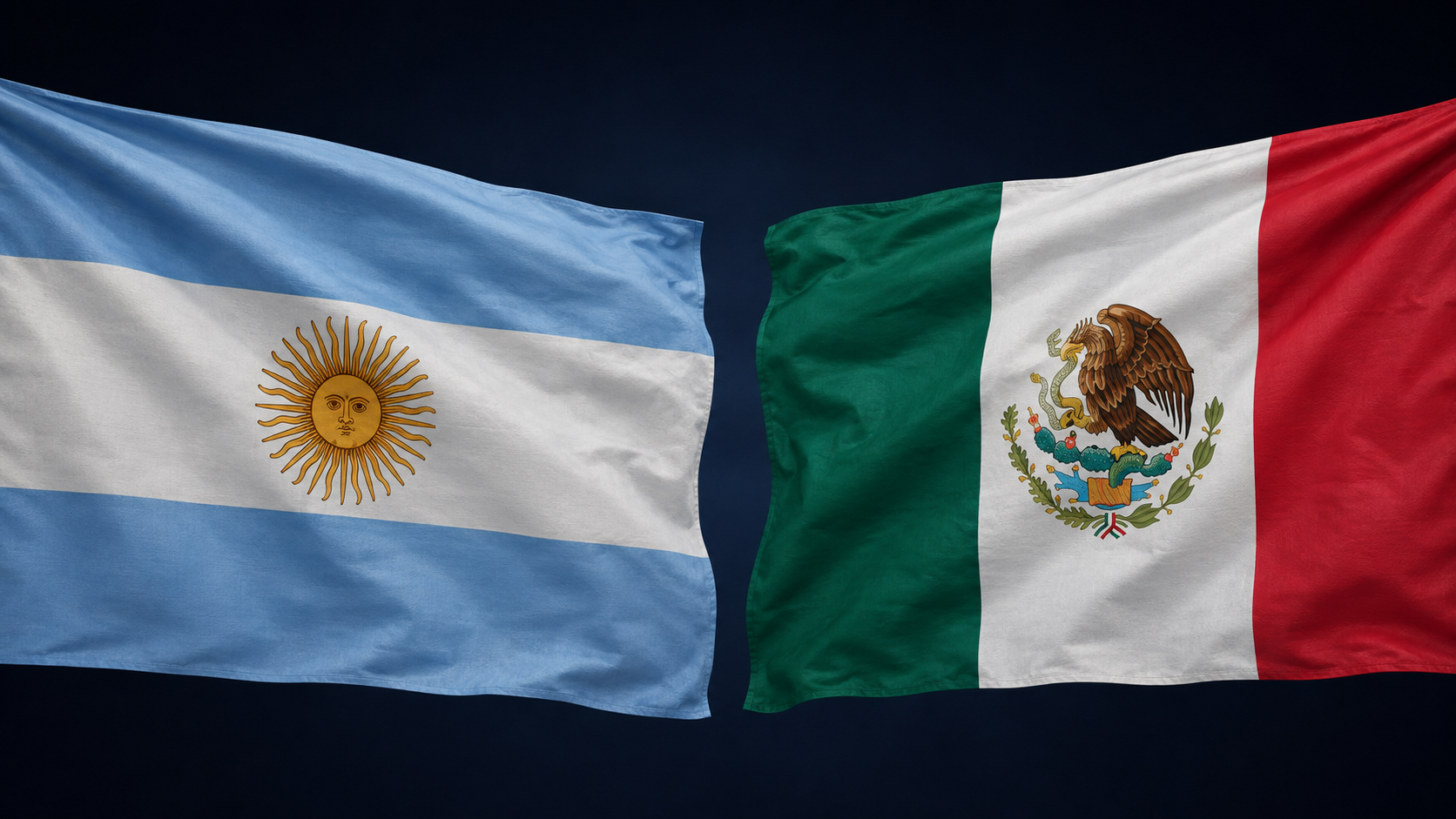








Agustín Torre has announced his intention to now represent Mexico. Behind this personal decision lies a broader question: in an increasingly international padel landscape, can changing sporting nationality become a genuine career choice?
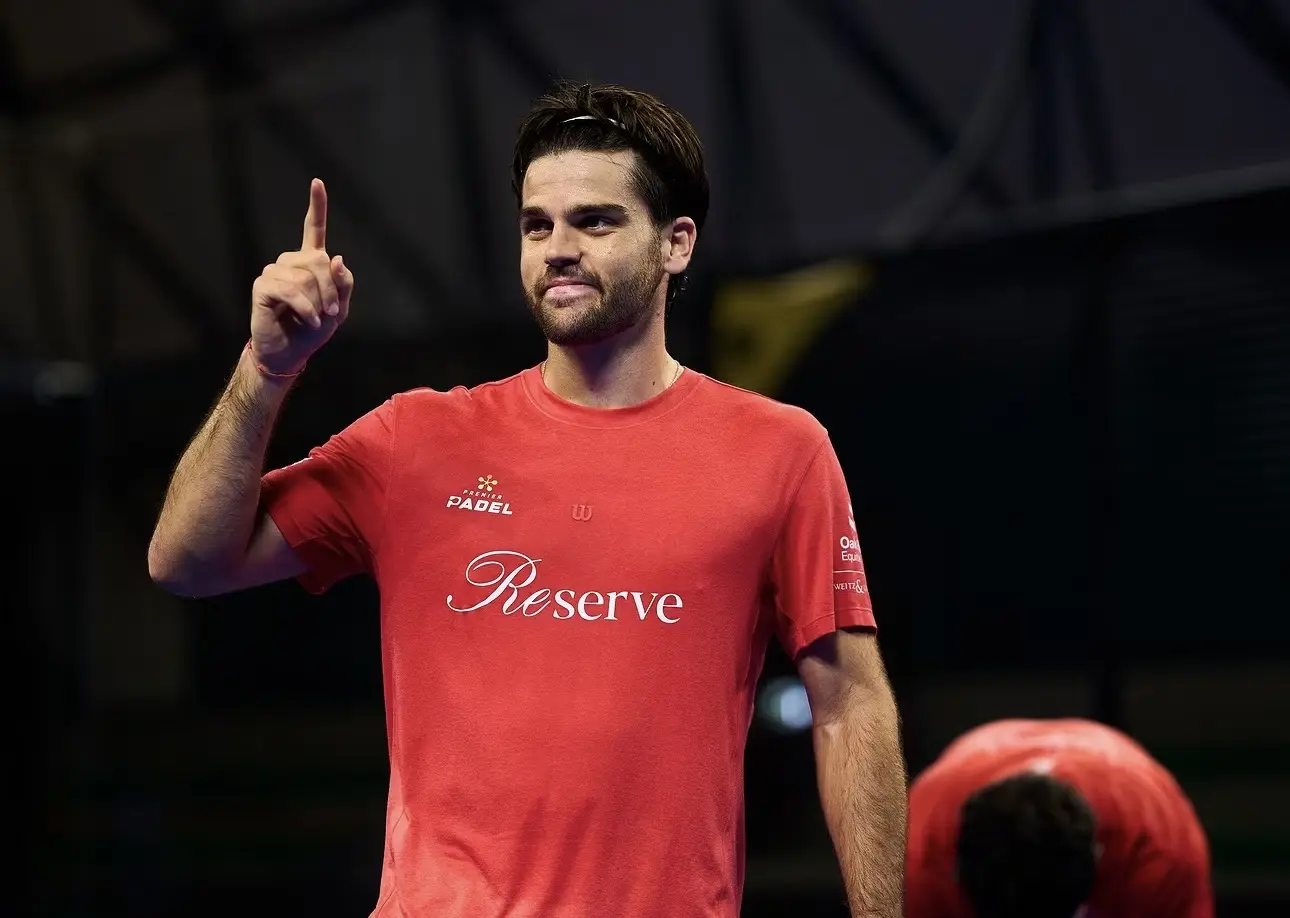
Agustín Torre is unlikely to represent Argentina again. The 31-year-old, born in Olavarría, has announced his intention to represent Mexico, a country with which he has maintained close ties for several years.
In a video shared by PadelSpain, “El Loco” explains that he wants to represent “a country that opened its doors to him, believed in him and made him feel at home”.
The choice is therefore not entirely unexpected. Torre has long been linked to Mexico, particularly the city of Torreón, and has also been associated with the Mexican brand ACA. PadelOn his Instagram account, he now presents himself as the Mexican player with the best world ranking.
At the time of writing, his official FIP profile still lists him as an Argentinian. The Spanish media outlet suggests the likely acquisition of dual nationality, but neither the FIP nor the Mexican Federation has yet publicly confirmed his eligibility.
A place almost inaccessible with Argentina
From a sporting perspective, Torre's decision is easy to understand.
Ranked 76th in the FIP world rankings of August 17, 2026, with a career-high ranking of 40th, the Argentinian is playing at a very high international level. But that is not necessarily enough to guarantee him a place on his native country's national team.
Argentina boasts unparalleled squad depth. Agustín Tapia, Federico Chingotto, Franco Stupaczuk, Leo Augsburger, Martín Di Nenno, and several other players compete for available spots in major team competitions.
Under these conditions, even a player firmly established in the world's top 100 can remain very far from being called up.
The situation is different with Mexico. Torre could immediately become one of the highest-ranked players available to the national team and bring valuable experience from the professional circuit.
The stakes are even higher now that Mexico has qualified for the 2026 World Cup finals in Doha. This doesn't mean Torre will automatically be selected, but his change of sporting nationality could quickly open up international opportunities that seemed almost unattainable with Argentina.
What the FIP regulations actually say
Changing your selection, however, is not simply a matter of choosing a new flag on your profile.
The FIP eligibility regulations impose several conditions for representing a country in an official national team or national pair competition.
The player must, in particular:
- to possess the permanent nationality of the country concerned, regardless of residence;
- be registered with the national federation affiliated with the FIP;
- never to have represented another country in a senior continental or world team or pairs championship;
- not to have represented another country in an official competition in the last 36 months.
When a nationality is acquired after birth, the player must also meet certain criteria regarding birth, parentage, or residency. For someone who has lived in the country since the age of 10, the regulations typically require at least five years of physical presence.
A federation may request an exemption for a player who holds the nationality of the country and demonstrates a genuine connection to it. This possibility remains subject to restrictions: it is limited to two players per federation per competition, and must be requested several months before the registration deadline.
Finally, a player cannot represent more than two countries during his career.
Torre's eligibility will therefore depend on his administrative situation, his exact history in official competitions, and FIP validation. His announcement opens up a possibility, but does not guarantee him a call-up or participation in the next World Championship.
An old phenomenon, but one that is set to accelerate.
Changing sporting nationalities is not new in padel.
Several players born in Argentina have already represented Spain. Juan Martín Díaz, from Mar del Plata, wore the Spanish colours from the late 1990s. Juani Mieres, born in Bahía Blanca, also joined the Spanish national team after obtaining citizenship.
But the international development of padel could give a new dimension to the phenomenon.
Many professional players now live outside their country of birth, work with foreign coaches, and build part of their careers in emerging markets. Sporting borders are gradually becoming less rigid, without disappearing altogether.
For a player ranked between 50th and 150th in the world, the choice can be crucial. The chances of playing in a World Cup are extremely slim under the Spanish or Argentinian flag. They become much greater with a nation that has less depth but harbors genuine international ambitions.
An opportunity for emerging nations
For Mexico, the possible arrival of Torre would not just represent a temporary reinforcement.
A player accustomed to the professional circuit can help raise the bar for an entire team. He brings his experience of major tournaments, his knowledge of top players, and a culture of daily training at the highest level.
This presence can also accelerate the development of local players and give more visibility to Mexican padel.
Other nations might be tempted to follow this strategy. As world championships become more competitive, integrating naturalized players or those with dual nationality could quickly close the gap with the established powers.
The line between development and recruitment
The issue remains sensitive, however.
Should a national team selection reflect the training work done in a country, or can it also rely on players trained elsewhere, but who have an administrative and personal link with that country?
Integrating experienced players can accelerate a nation's progress. However, if it becomes systematic, it also risks reducing opportunities for homegrown players. National teams might then turn to club clubs, seeking the best available reinforcements.
Torre's case, however, must be considered with nuance. His choice does not appear to be based solely on sporting opportunity. The player has maintained a genuine connection with Mexico for several years and presents his decision as a way of giving back to a country that has been important in his career.
The FIP regulations are specifically designed to maintain this balance: allowing changes when they correspond to a genuine personal history, while preventing the creation of a completely open market for national selections.
Agustín Torre is probably not the last player to face this choice. In a globalized padel world, sporting nationality is gradually becoming a career factor. But changing flags isn't enough: you still have to meet the requirements, convince the national team coach, and earn your place on the court.

I discovered the Padel I stumbled into Spain at a campsite. I was instantly hooked; passionate about padel, I follow international and regional news with the same excitement as the sport itself.

































































 Garrido / De Pascual: target Sanz and stay the course to reach the semi-finals
 FIP Silver Como – An XXL quarter-final awaits Boronad / Robert against Diestro / Fernández Lancha
 Javier Rodríguez Piris: “I would like Spain to host the World Championships in 2030”
 Dubai P1 – From qualifiers to semi-finals: Abate becomes the first Italian to reach the semi-finals of a tournament Premier Padel male
 "We're not a tournament club": the gamble taken by the two Henry sisters who are hosting a P3000 at The Break Padel Club
 Gonzalo Alfonso on his split with Tolito Aguirre: "It was painful, sad"
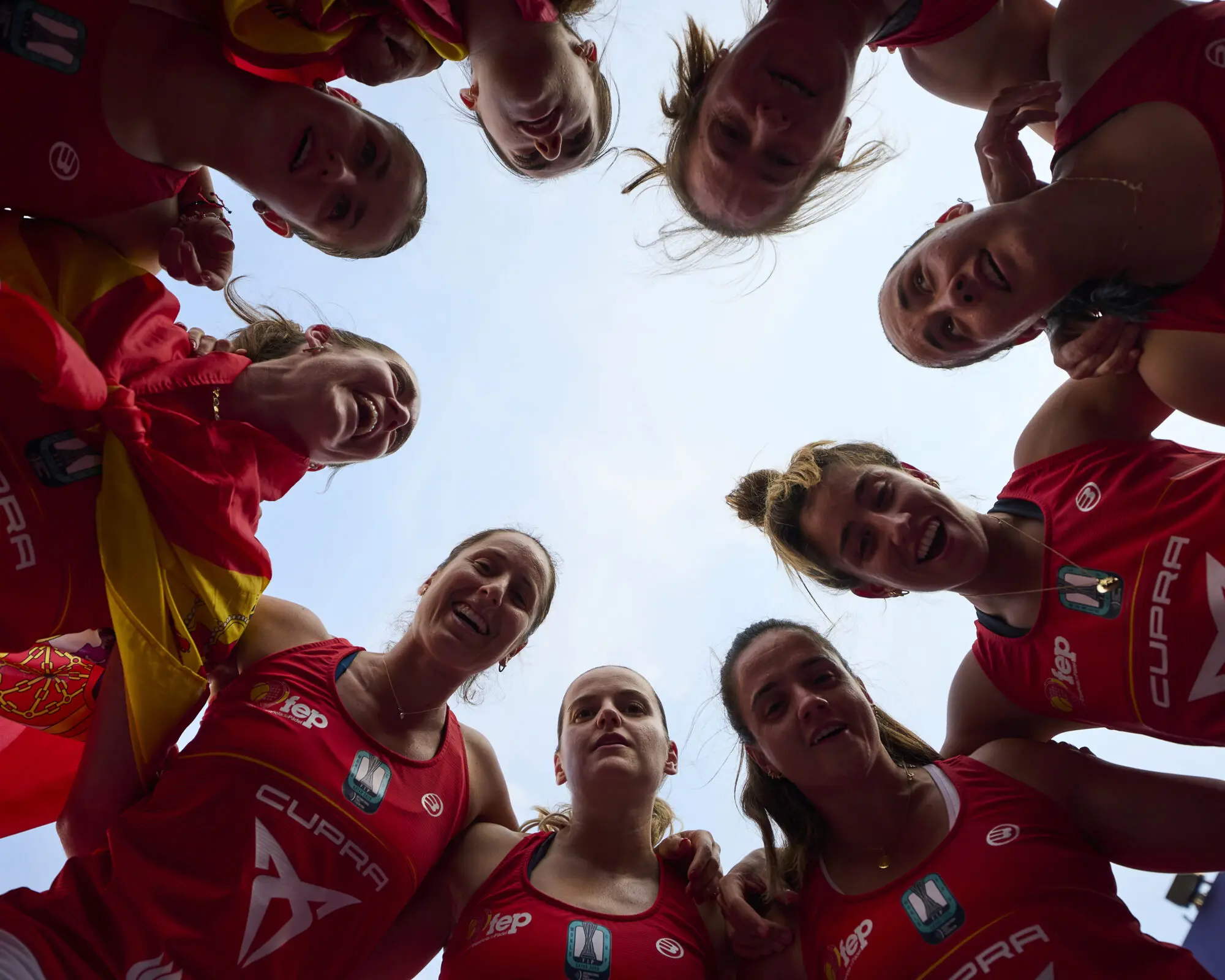 2026 World Championships – Ustero in tears, Triay facing Brea: the world champions' confessions
 Paquito Navarro: "This is probably my last match with Spain."
 JAP1, JAP2: How to become a padel referee and what are the prospects?
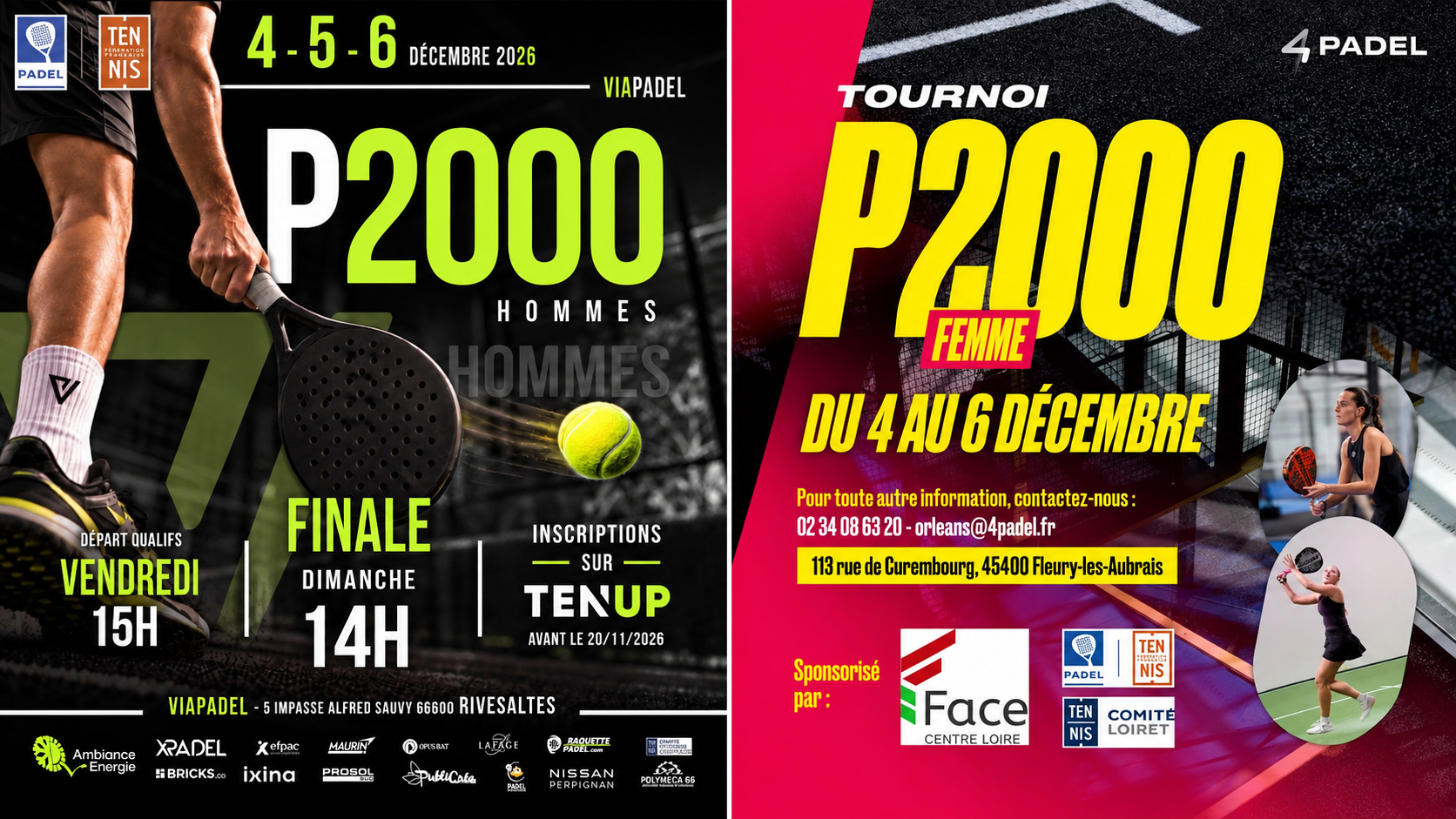 P2000: Scatena / Sescun, Courrin / Basso, Mansart / Bognard… the first pairs entered for the December events
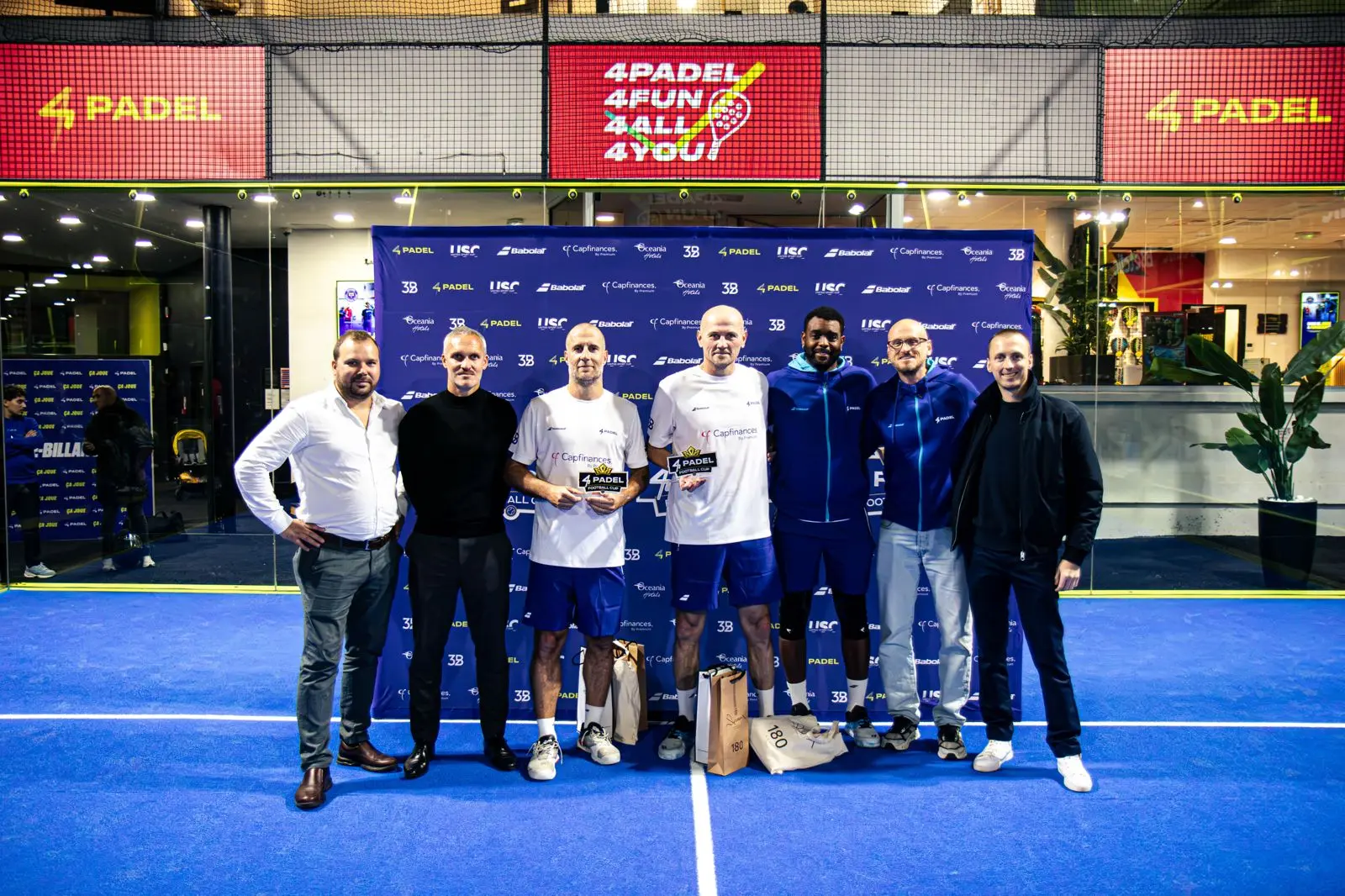 4PADEL Football Cup: Lille kicks off season 2 with a victory for Cheyrou/Cygan against Mandanda/Danic
 P3000 Bouillargues – Results / Live / Schedule
 Padel, weight training, and even HYROX: clubs are changing their model
 Padel court rentals: a global market estimated at 4,6 billion euros
 FIP Beyond: the new global padel circuit for amateurs and seniors
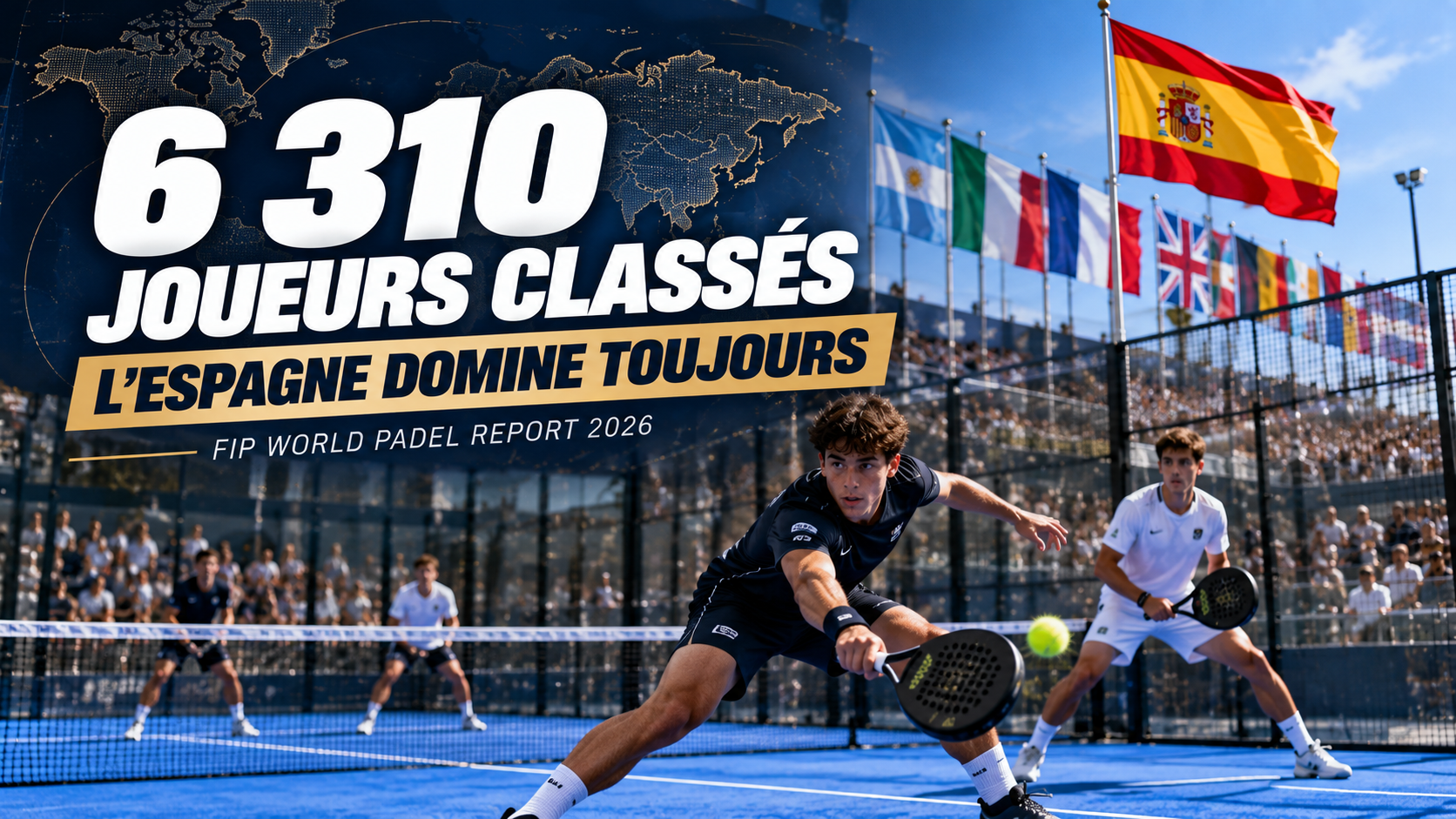 More than 6,300 FIP-ranked players: professional padel is becoming international, but Spain dominates
 OSS Barcelona – Why Spain and France aren't yet playing in the same league
 Cancer and rehabilitation: could padel become a therapeutic tool?
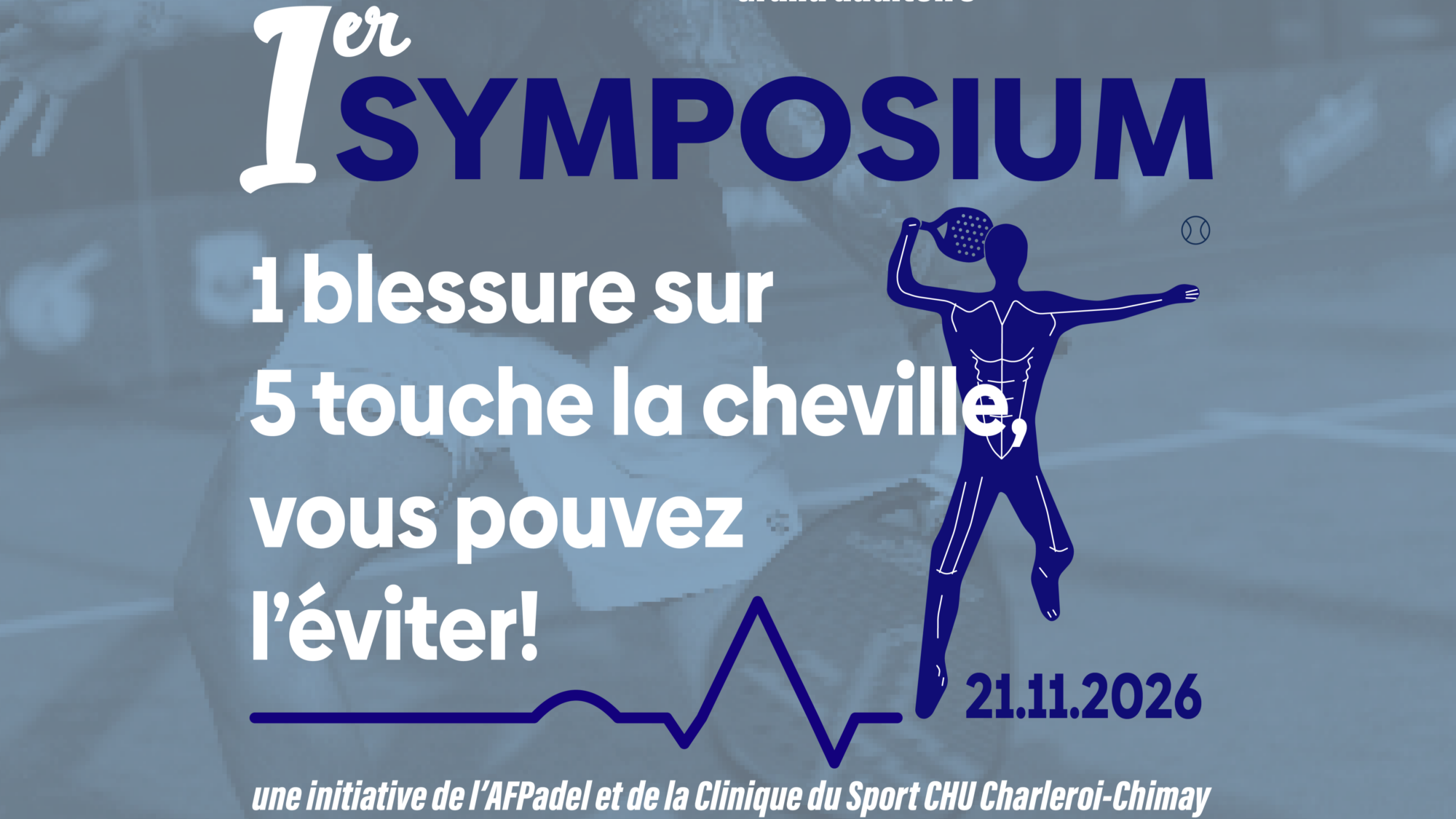 Padel injuries: ankle, knee, elbow, eye… what the latest figures reveal
 Shocking turn of events at Dubai P1: Coello and Tapia have also withdrawn!
 Padel serve: a good serve is especially good preparation for the third shot.
 What the analysis of the stroke reveals: tennis forehand vs. padel bandeja
 Has the bandeja disappeared from modern padel?
 Flat forehand in padel: 5 exercises from Cristian Álvarez to gain control and efficiency
 Why can Libaak/Alfonso beat almost everyone… except Coello/Tapia?
 Tapia reveals his recipe for beating Coello / Tapia: "I would bet everything on myself"
 How Coello defused Chingotto's game plan
 In padel, does the chemistry between a pair count as much as individual skill?
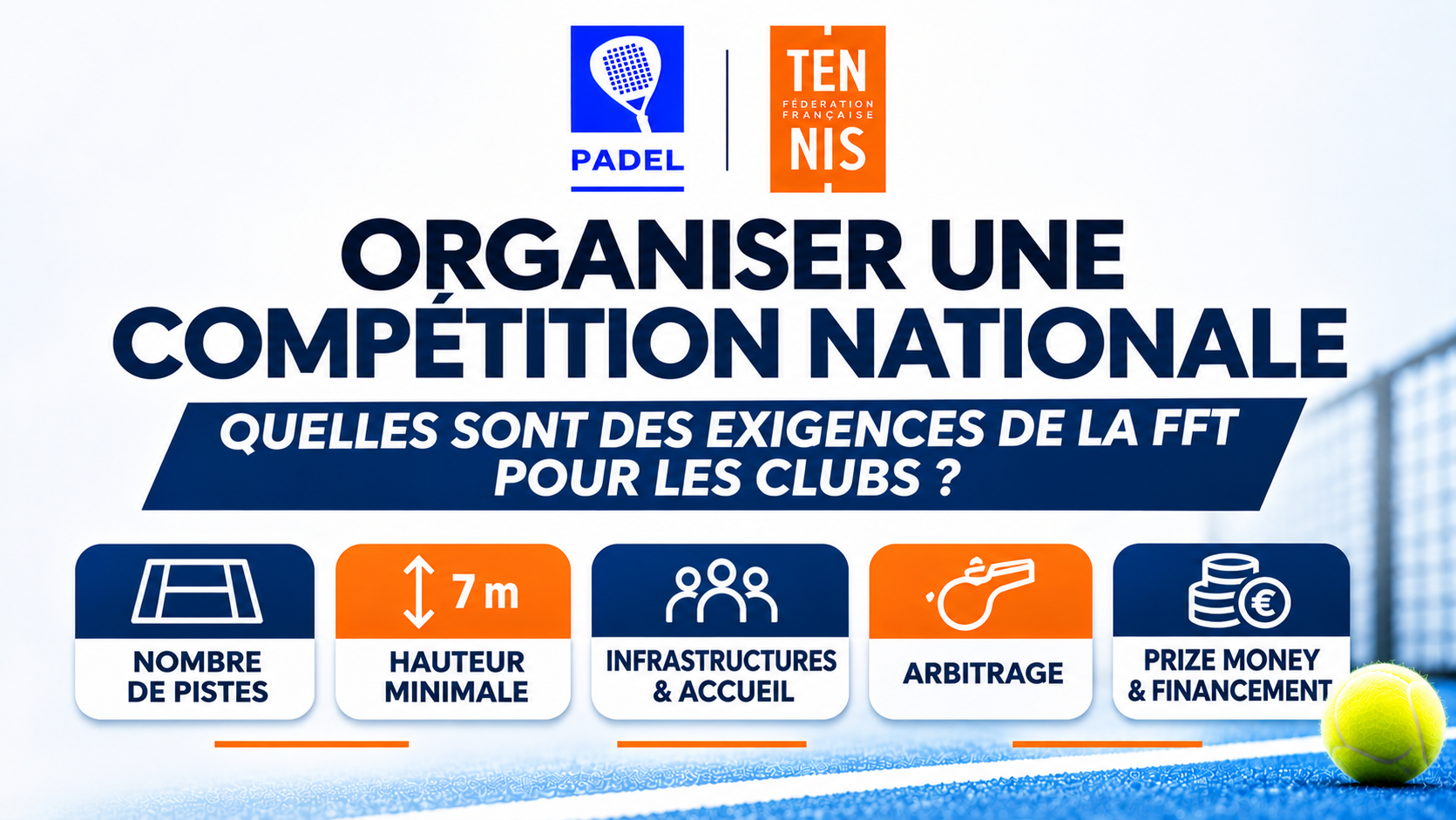 Organising a national padel competition: what are the FFT's requirements for clubs?
 Organising a P2000 or a P3000: how much does it really cost clubs?
 P2000 or P3000: what are the differences in prize money, format and organization in 2028?
 Do you lose your ranking? Padel FFT after more than a year without a license / without competition?
 Memory, reflexes, concentration: what happens in our brain when we play padel?
 Padel Quest Awards: Ten specialists in the running for the title of best padel training camp of the year
 Padel Xperience: The Academy opens on November 2nd in Marcheprime, ahead of the complex's inauguration in 2027
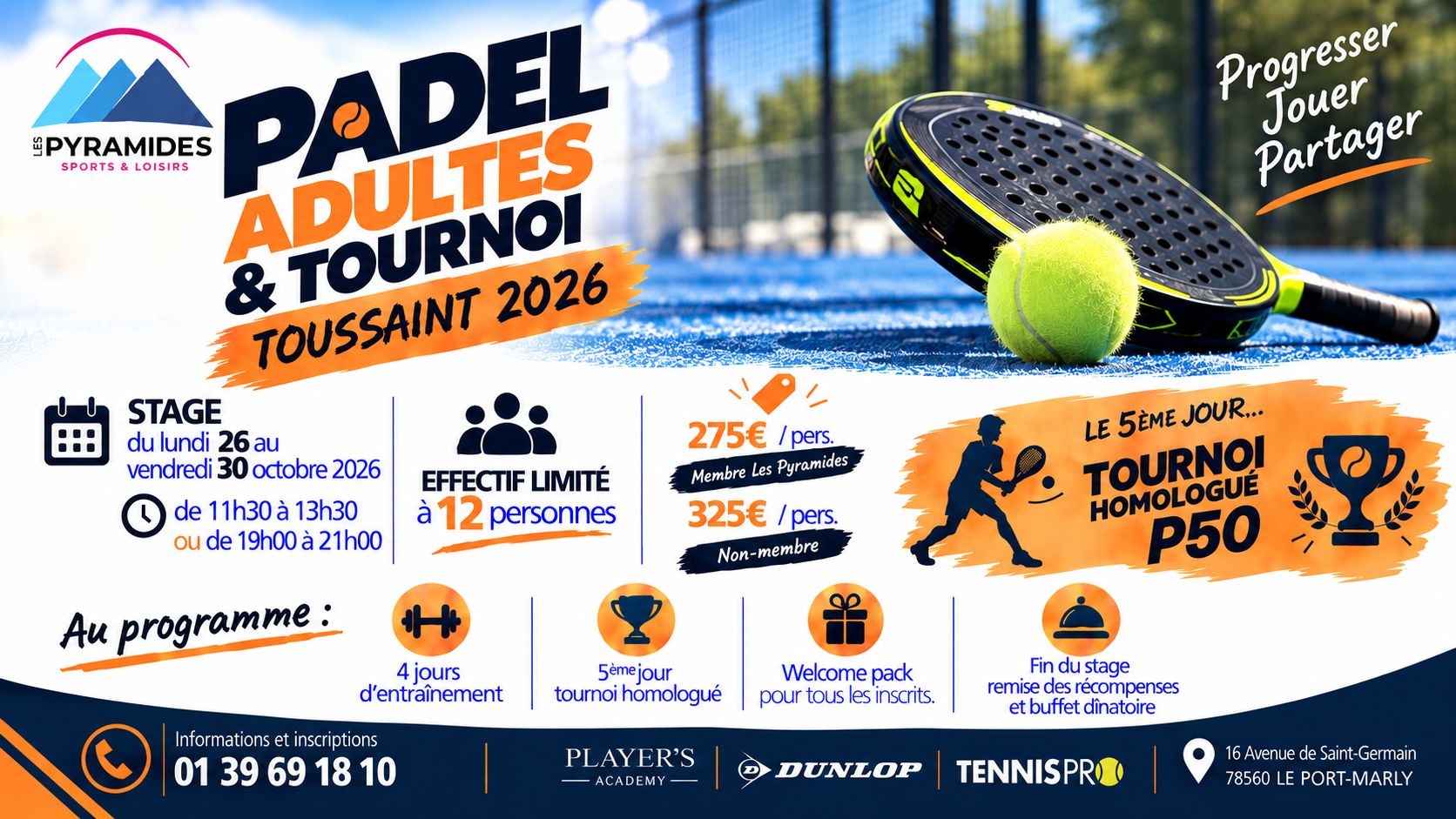 All Saints' Day – Les Pyramides are organizing a padel training camp for adults with a P50 tournament to close out the week