

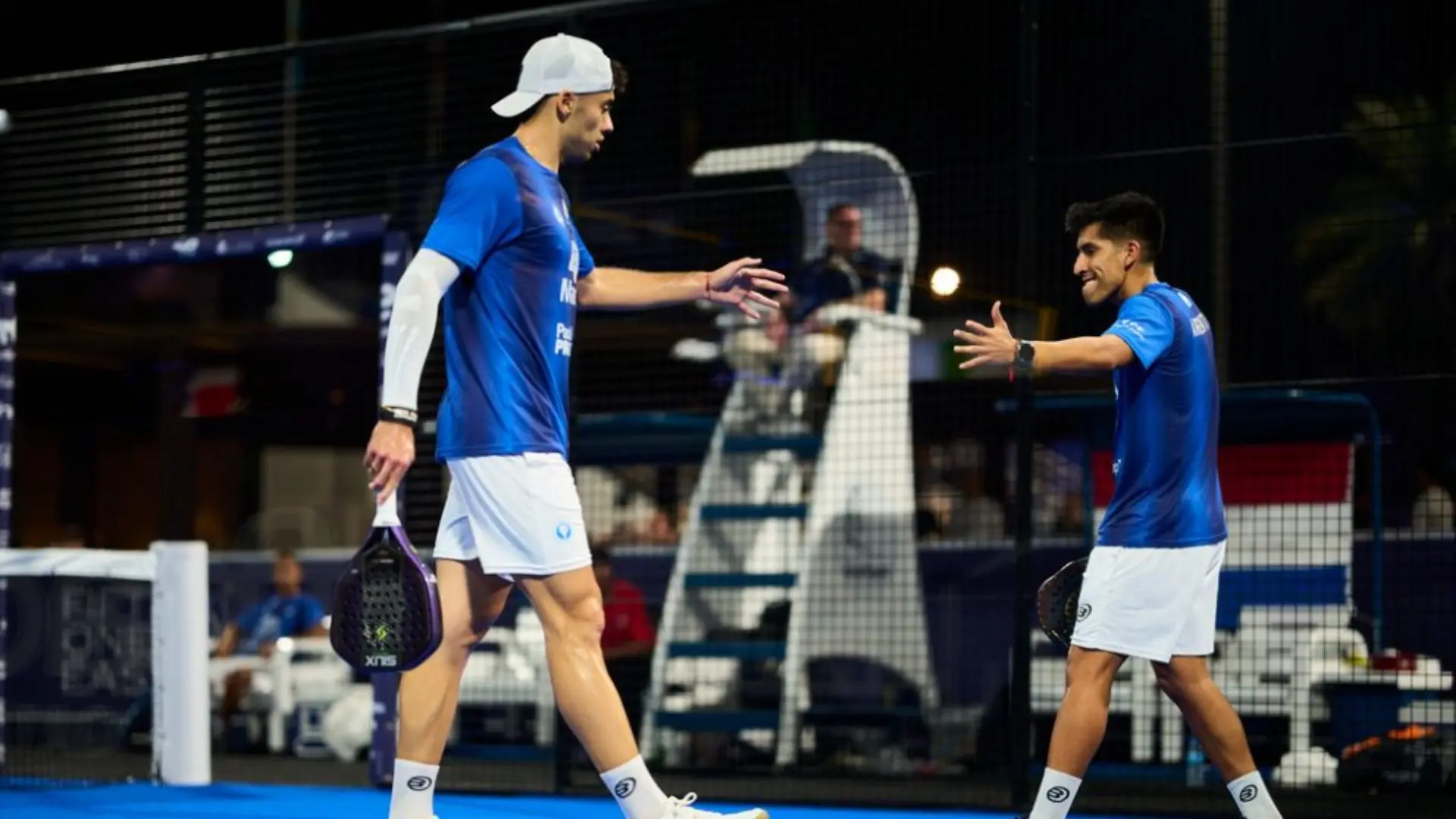








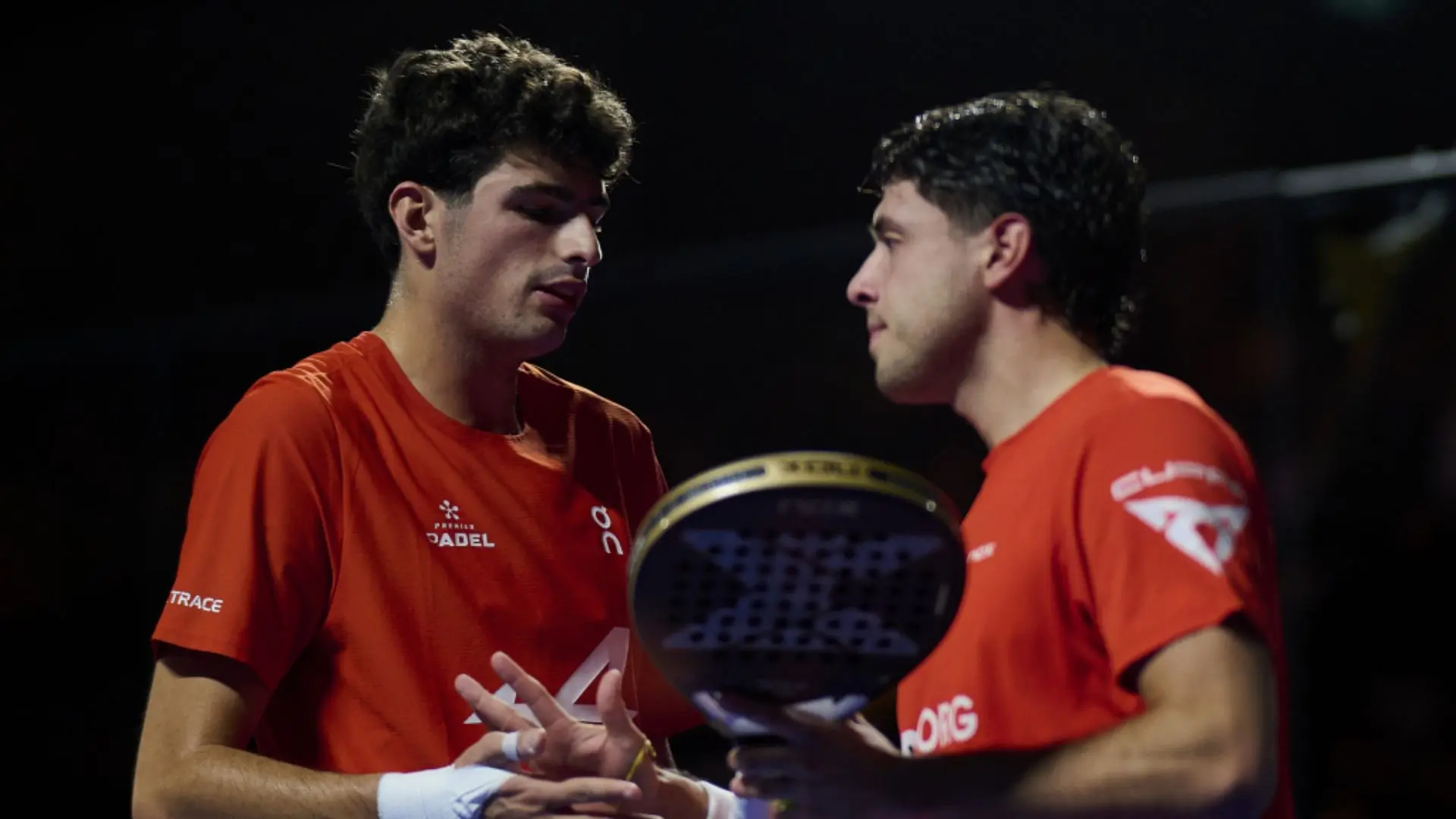
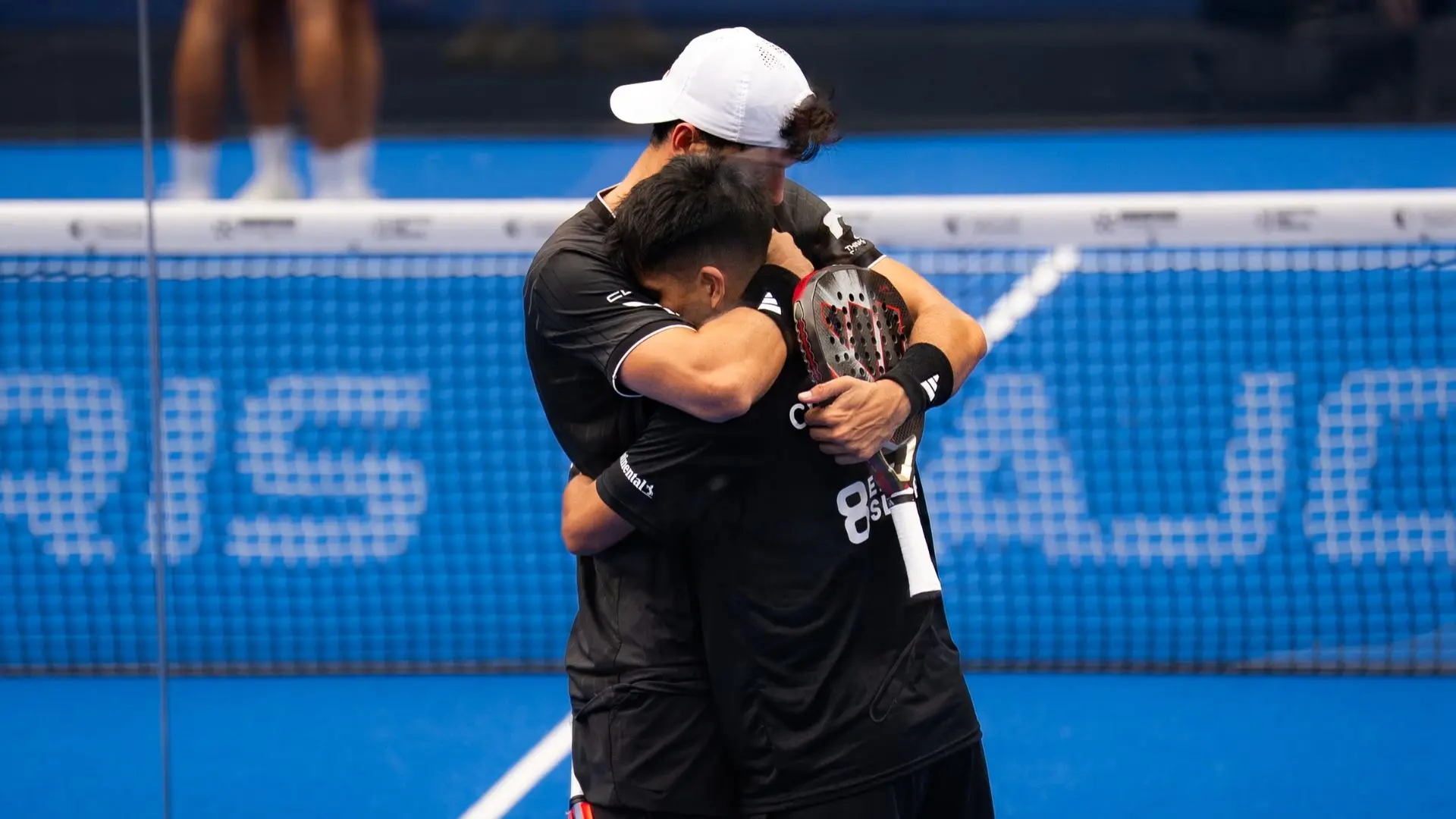
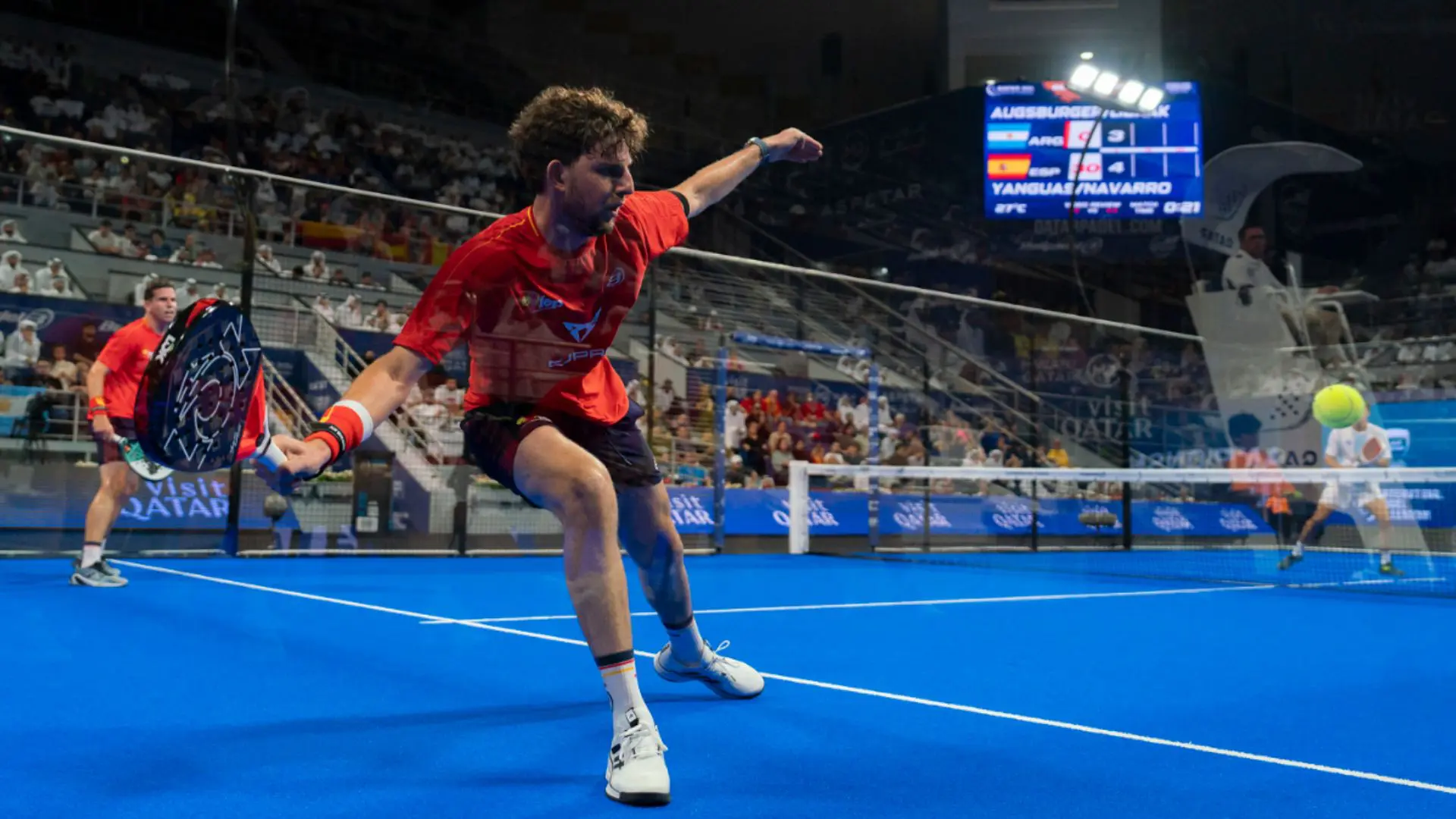
Teaming up against the Netherlands on November 3rd, Fede Chingotto and Leo Augsburger secured Argentina's third point by defeating Nolten and Van Betuw 6-3, 6-4. This partnership raises questions: Augsburger's power offers obvious possibilities, but the distribution of balls and the pace of the attack still require adjustments.
Two weeks after their semi-final clash in Milan, the two Argentinians found themselves on the same side of the net. Augsburger, partnered with Juan Lebrón, had prevailed over the Galán-Chingotto duo. In Doha, their victory contributed to Argentina's 3-0 triumph over the Netherlands. The World Championship thus offers an opportunity to examine what their combined strengths can produce.
Augsburger wants to have influence even in the right half
One of the impressions left by this match concerns Augsburger's presence in the air. The left-handed player seemed eager to intercept many high balls, including those coming from Chingotto's side. His power can then be used to put the opposing pair under pressure across a wider area of the court.
This desire to intervene raises an interesting question. On the same ball, Augsburger might consider accelerating the attack, whereas Chingotto would be more inclined to prolong the build-up, maintain possession at the net, and wait for a more favorable opportunity. Their readings are not necessarily incompatible, but they must converge early enough so that each knows how to support their partner's shot.
To harness this power, the quality of your shot selection is just as important as the quality of your strike. Taking a ball further down the right side of the court can offer a finishing opportunity. This also requires anticipating the rest of the rally if the smash returns.
Chingotto needs to find his place within these interventions
Chingotto's game relies heavily on his ability to make the opposition work, maintain pressure, and create scoring opportunities. With Augsburger, the balance lies in preserving this build-up play while allowing the finisher the option to intervene whenever a chance arises.
Chingotto is already familiar with this dynamic from his time playing alongside Ale Galán. He's used to playing with a partner who can dominate in the air. However, each partnership has its own set of rules: the trajectories the left-sided player intervenes on, the timing of his movement, and how he covers the space he creates.
It was precisely on this ground that Chingotto/Augsburger gave the impression of a duo still finding its rhythm. Two excellent players can identify different possibilities on the same ball. Their understanding must allow them to quickly decide who plays it, and then organize their positioning around that decision. The challenge lies as much in covering the ball after impact as in the initial division of the court.
Tapia/Chingotto already have some shared references
The comparison with Agustín Tapia and Chingotto comes naturally. Their partnership has a proven track record with the national team, notably during the 2024 World Cup. They defeated Diogo Jesus and Vasco Pascoal in the semi-final, before winning a crucial match against Juan Lebrón and Ale Galán in the final. 7/6 3/6 6/2 .
These shared experiences provide a useful point of comparison. Tapia and Chingotto have already faced a match together where every decision mattered for the world title. This doesn't guarantee a better performance every time, but their partnership has a history of playing in high-pressure situations.
Augsburger and Chingotto still need to establish their own benchmarks. Their performance against the Netherlands hinted at potential, but didn't immediately allow the duo to be placed on the same level of collective understanding.
An option to refine for Argentina
The victory against Nolten and Van Betuw is a promising first sign for this partnership in the tournament. However, the level of opposition must be considered before drawing any conclusions about its effectiveness against the top pairs.
The appeal of the Chingotto/Augsburger pairing lies in finding the right balance between Chingotto's patience and Augsburger's ability to accelerate. A sufficiently solid structure can give Augsburger better balls to attack; his interventions, in turn, can prevent opponents from establishing a foothold in the rally.
For Argentina, the next step will be to see if this power distribution becomes more natural as the pressure increases. The power is already there. The shared reference points will determine to what extent the pair can exploit it.

I discovered the Padel I stumbled into Spain at a campsite. I was instantly hooked; passionate about padel, I follow international and regional news with the same excitement as the sport itself.



































































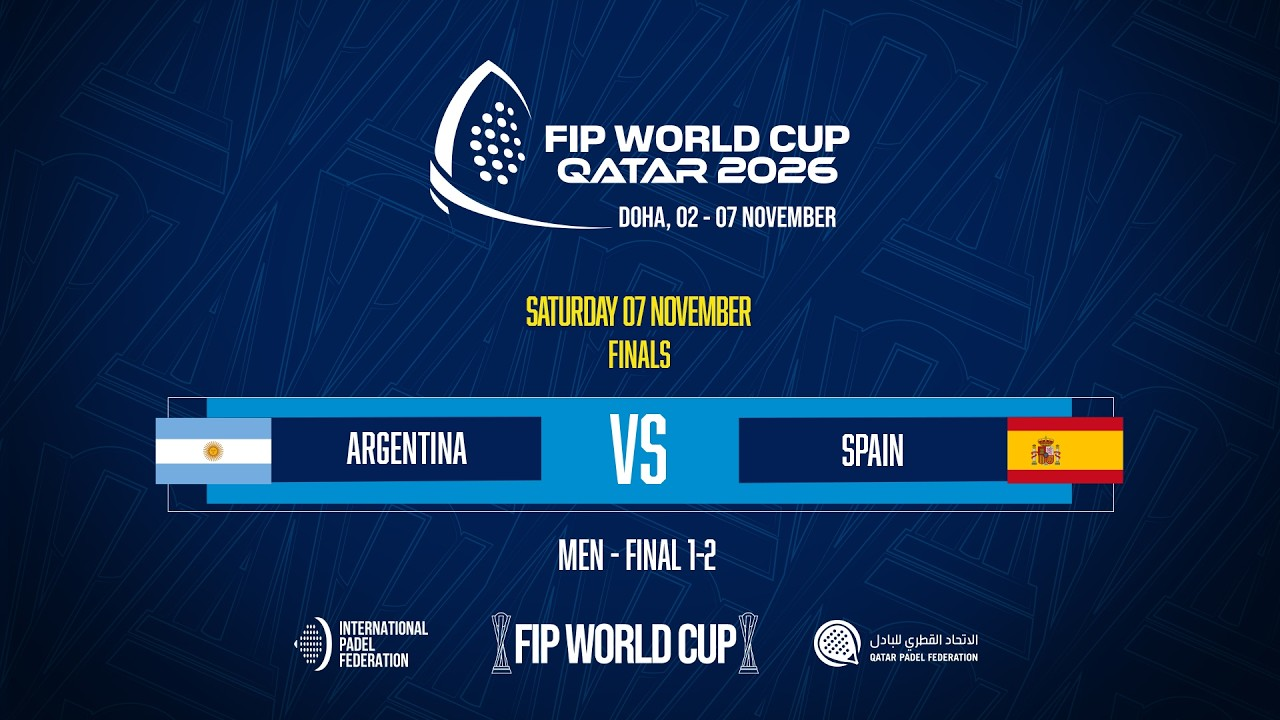 2026 World Cup – The lineups are out, Spain is trying a surprise with Goñi/Lebrón to get revenge on Argentina
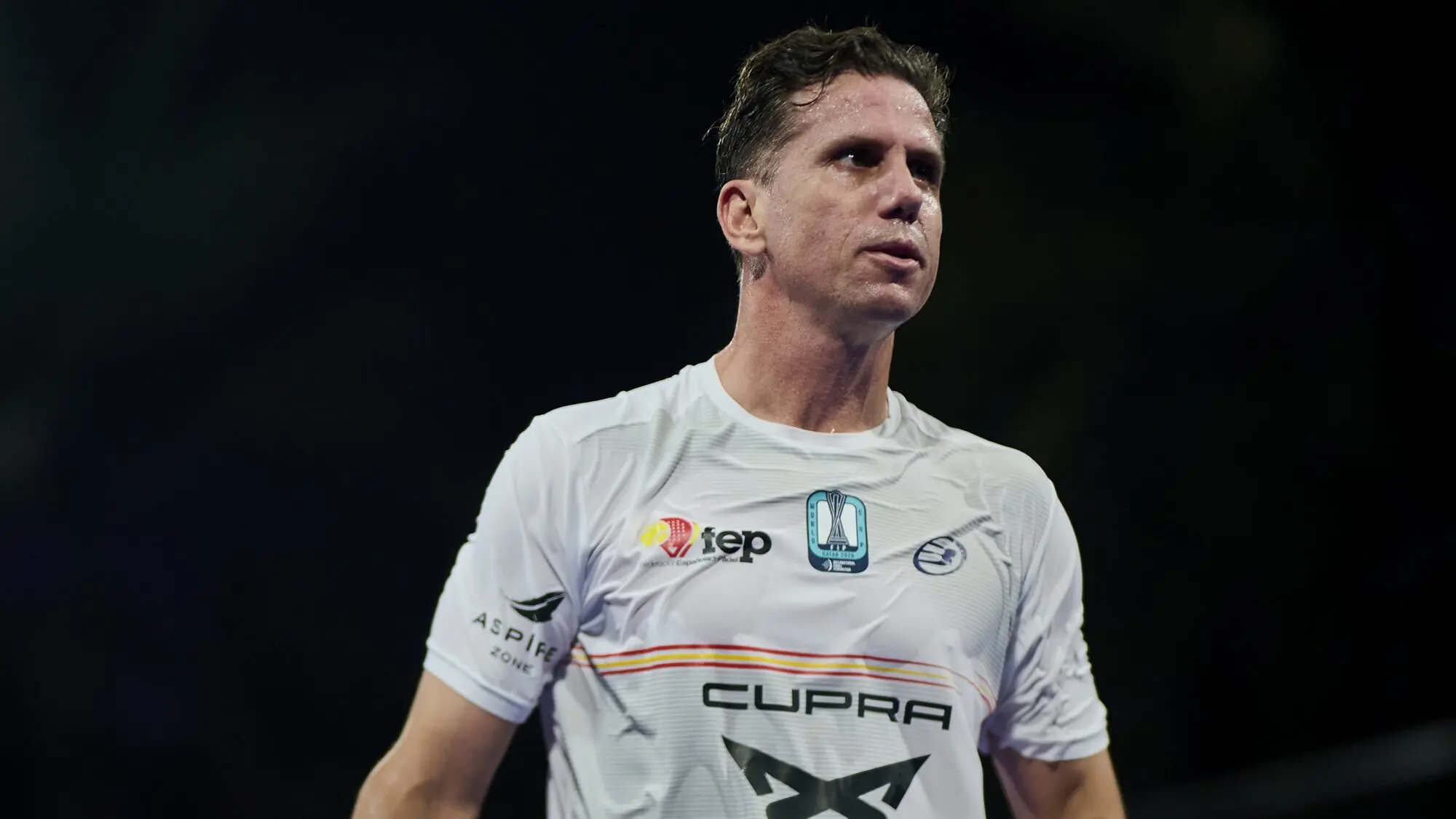 Paquito Navarro: "This is probably my last match with Spain."
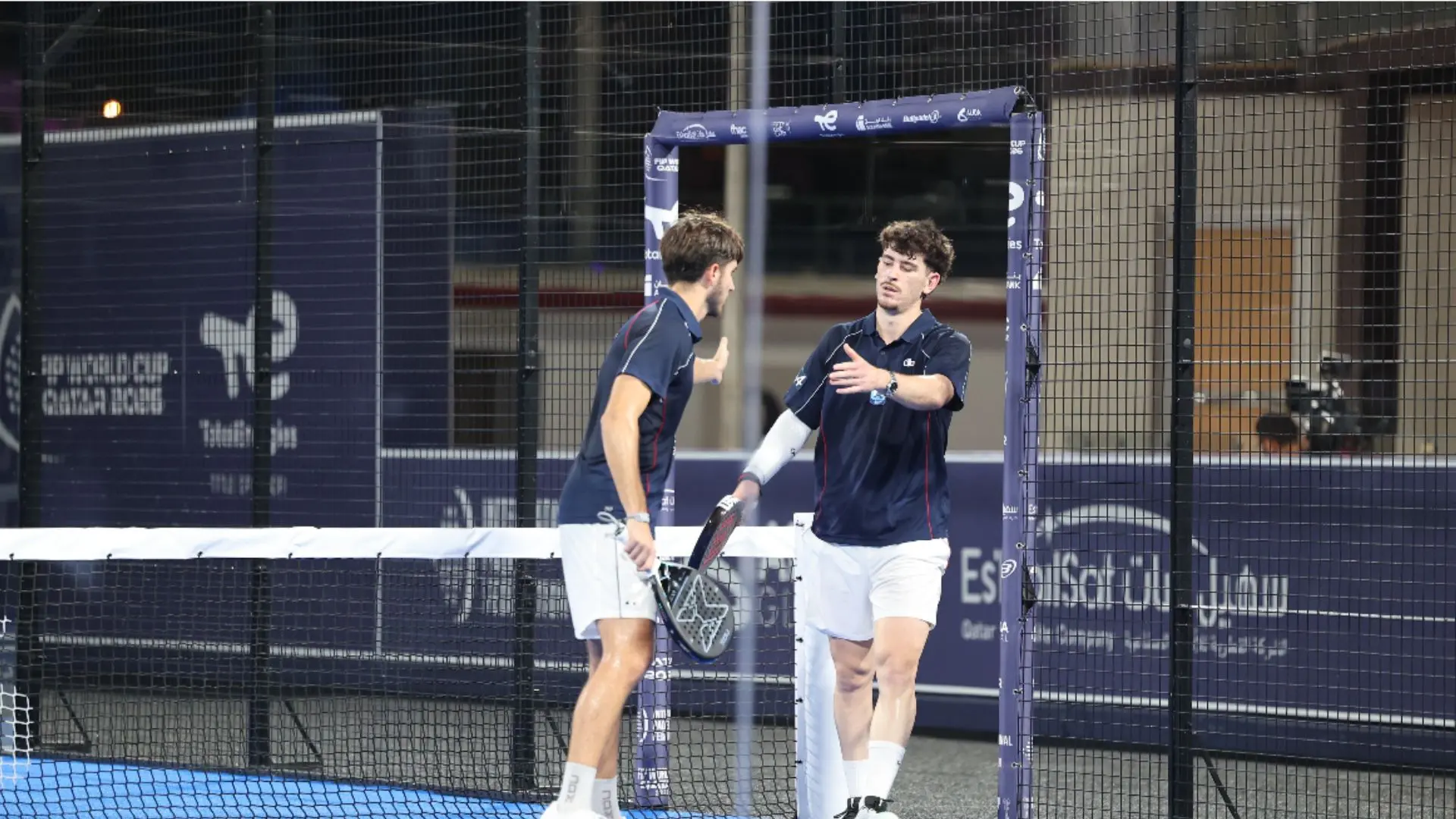 2026 World Championships – France finish on a high note and secure 9th place in the world rankings against Paraguay
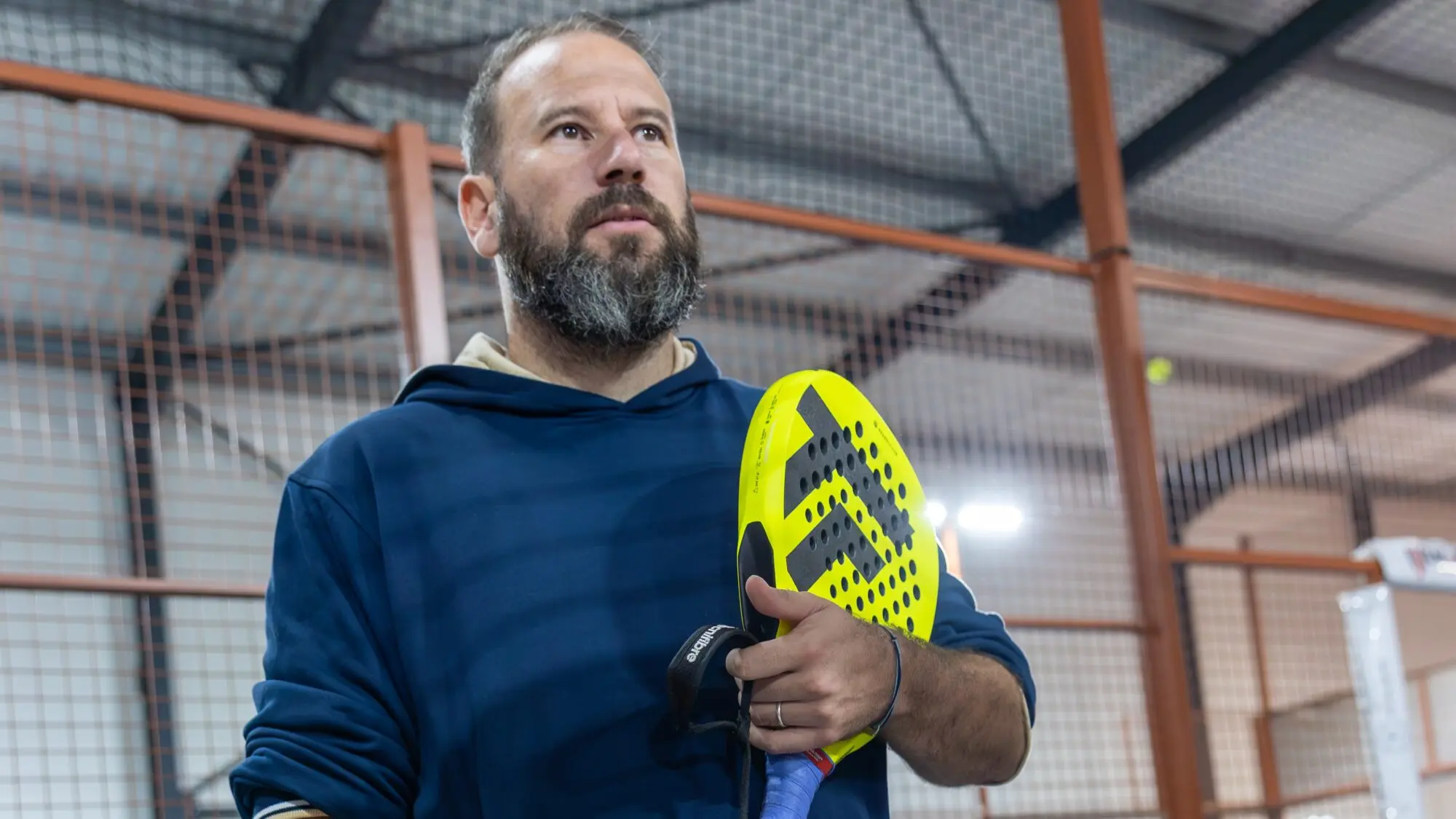 "I applied to become the coach of the French national team": an objective for Adrien Maigret
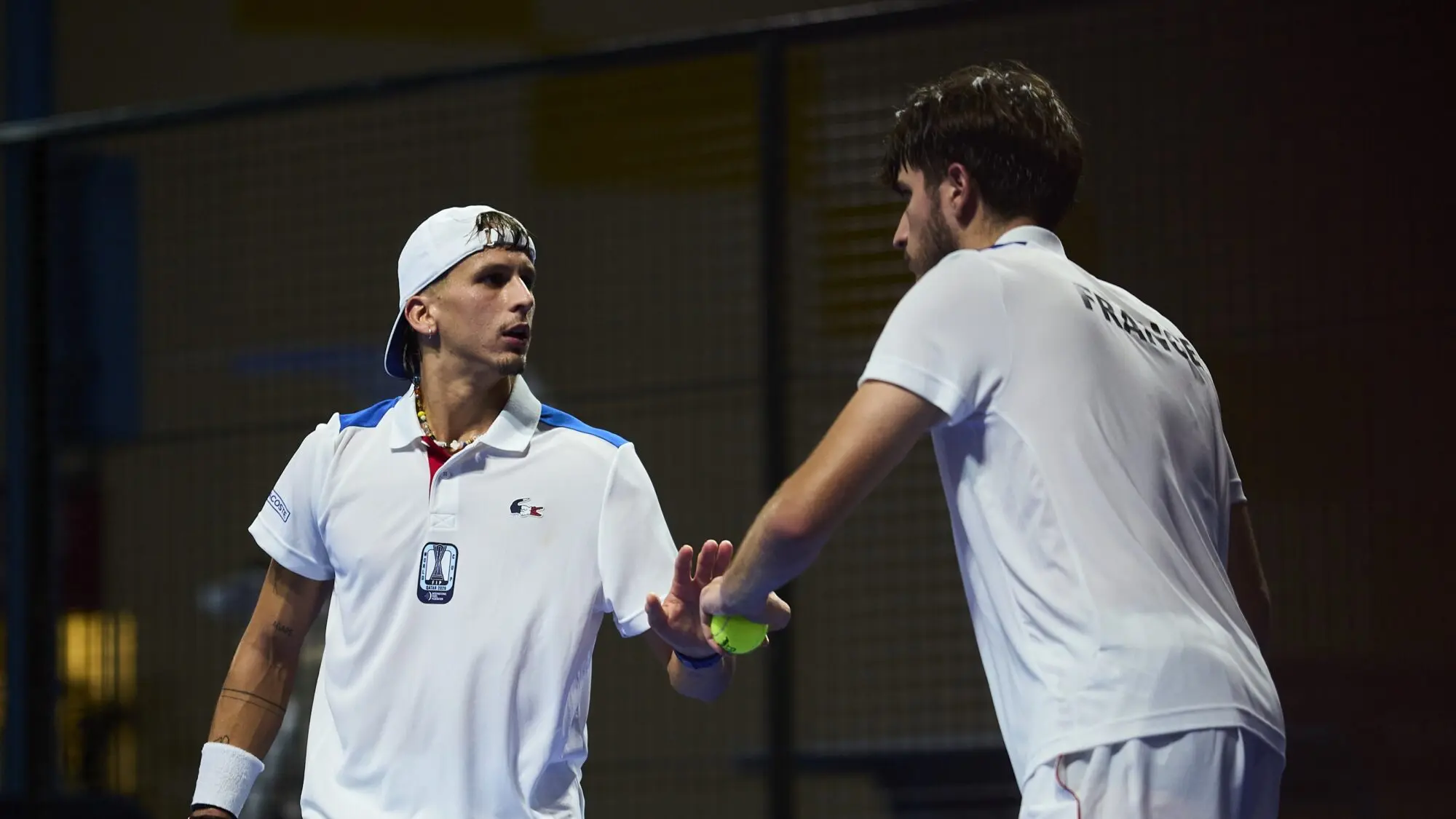 Fonteny/Joris after their “almost” upset against Tapia/Libaak: “We believed until the very last point”
 2026 World Cup – Five players barred from World Cup with the United Arab Emirates: Íñigo Jofre denounces the situation
 Coello/Tapia ahead of the Kuwait Major final against Tello/Arce: “These are two players who cause us a lot of problems”
 2026 World Championships – No medal for the French women, beaten 2-0 by Italy in the bronze medal match
 2026 World Championships – The French women's team loses their first point against Italy despite a strong performance from Touly/Pothier; Collombon/Bahurel can no longer afford any mistakes.
 Padel, weight training, and even HYROX: clubs are changing their model
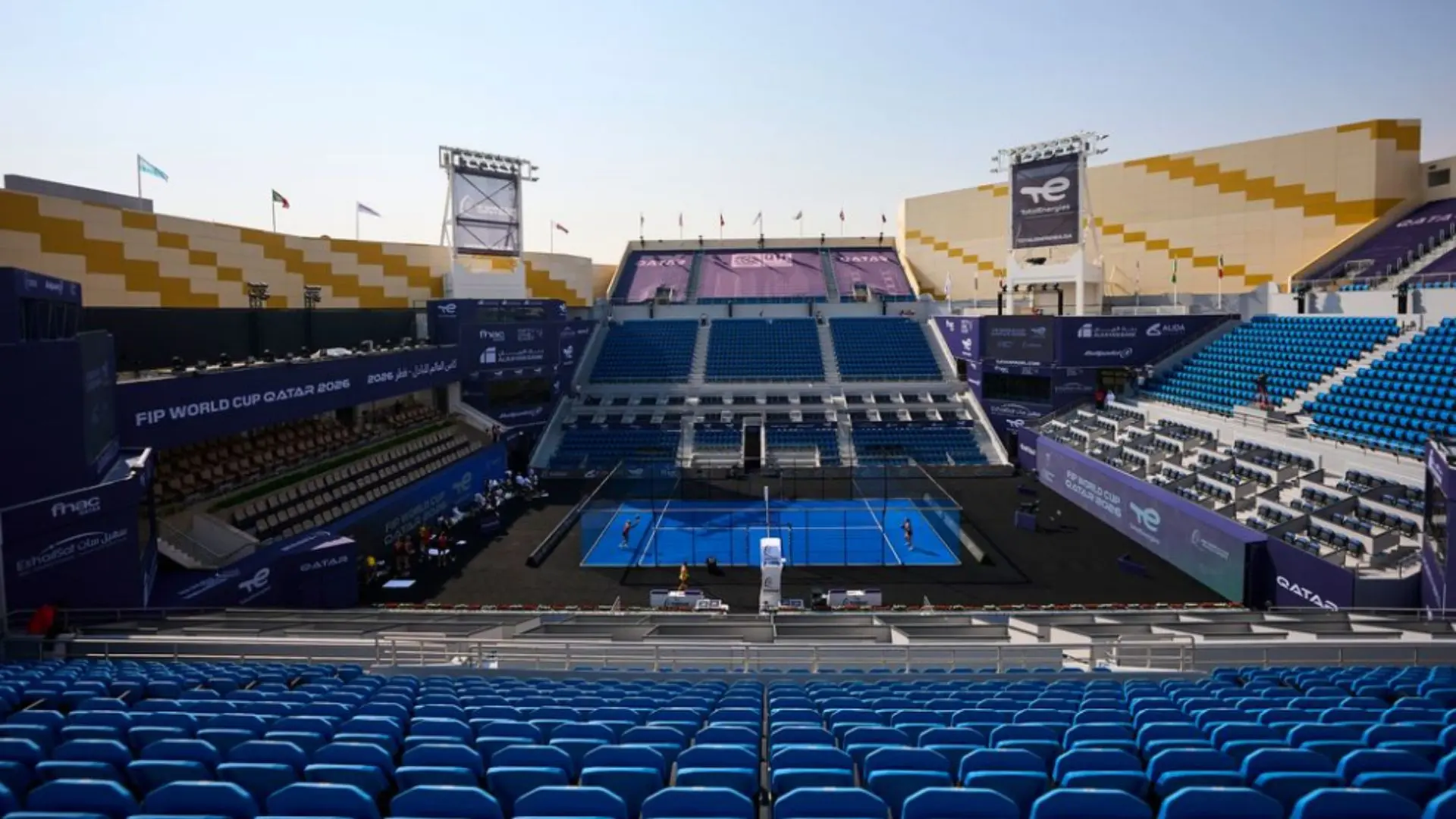 2026 World Championships – Where to watch the finals? Spain vs. Argentina, two clashes for the world titles
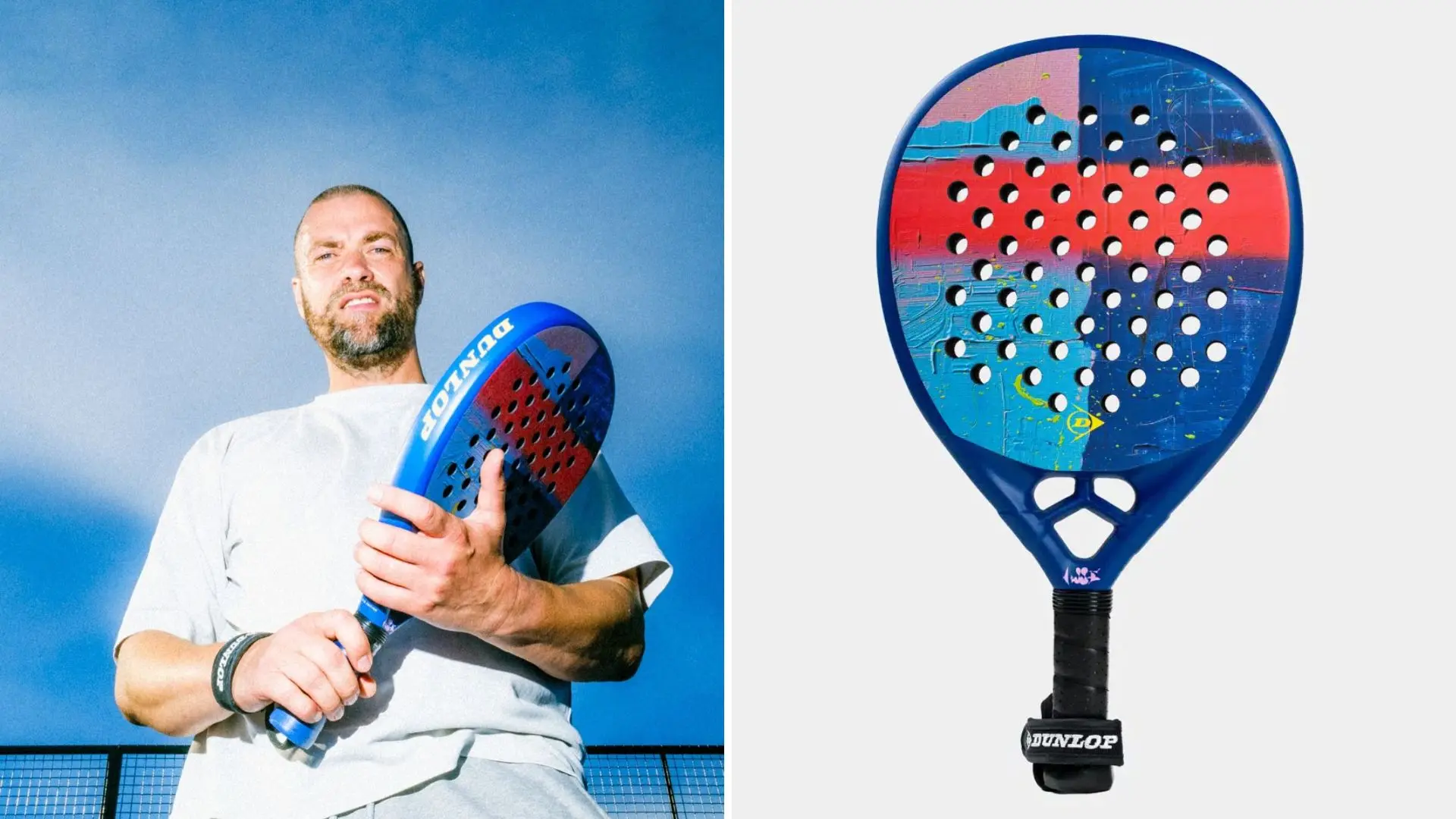 Dunlop unveils the Galactica Pro by Nisse, a limited edition of only 500 pieces worldwide
 2026 World Cup – Joris/Robert, the new addition to the French team for their final match against Paraguay
 Dubai P1 – Galán/Chingotto withdraw, Leal/Guerrero take advantage of their absence to directly enter the main draw
 Padel court rentals: a global market estimated at 4,6 billion euros
 FIP Beyond: the new global padel circuit for amateurs and seniors
 More than 6,300 FIP-ranked players: professional padel is becoming international, but Spain dominates
 Memory, reflexes, concentration: what happens in our brain when we play padel?
 P2000 or P3000: what are the differences in prize money, format and organization in 2028?
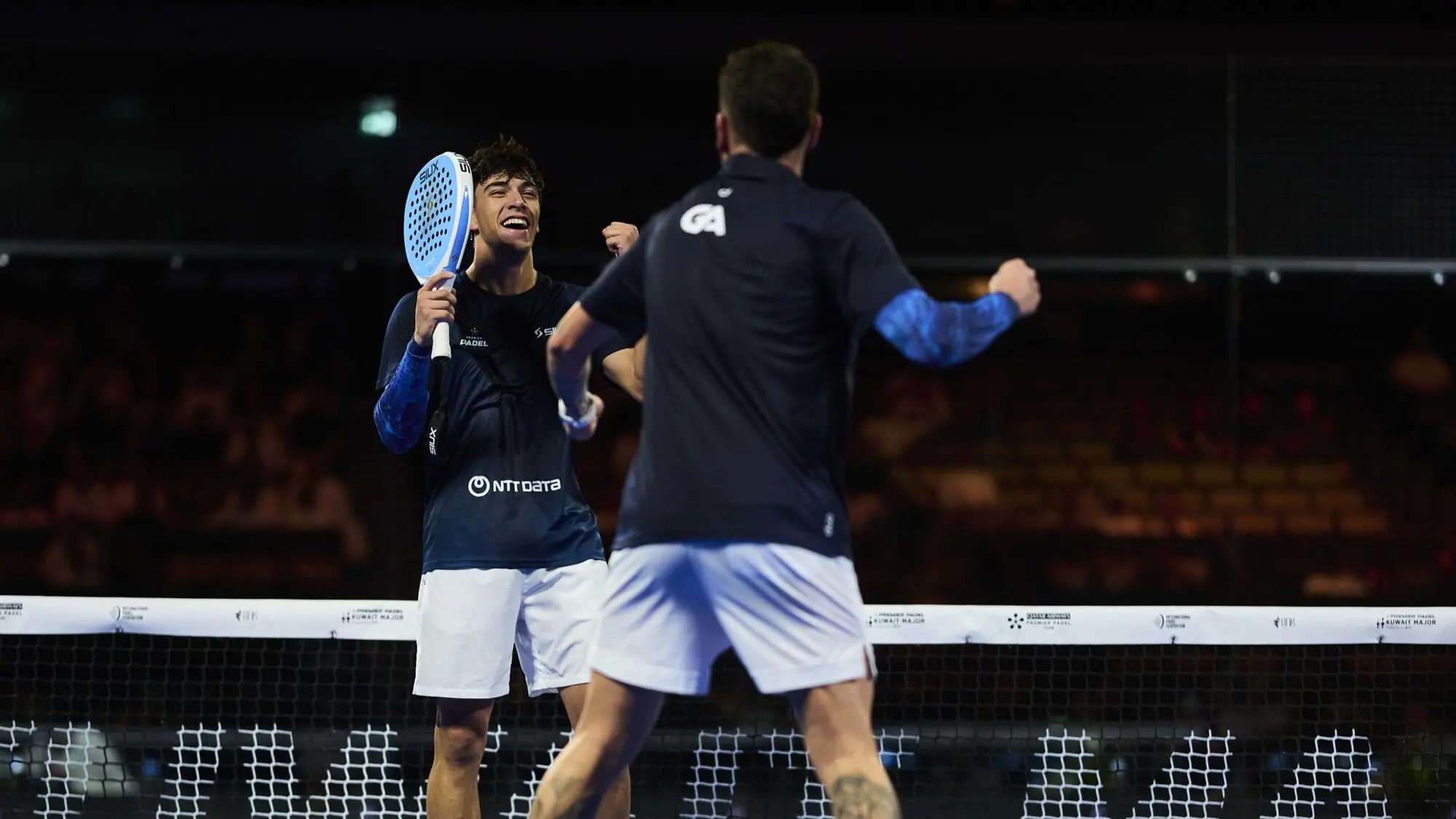 Why can Libaak/Alfonso beat almost everyone… except Coello/Tapia?
 Could padel help the brain recover after chemotherapy?
 What the analysis of the stroke reveals: tennis forehand vs. padel bandeja
 Has the bandeja disappeared from modern padel?
 Flat forehand in padel: 5 exercises from Cristian Álvarez to gain control and efficiency
 Why knowing how to play on the right and left can make all the difference
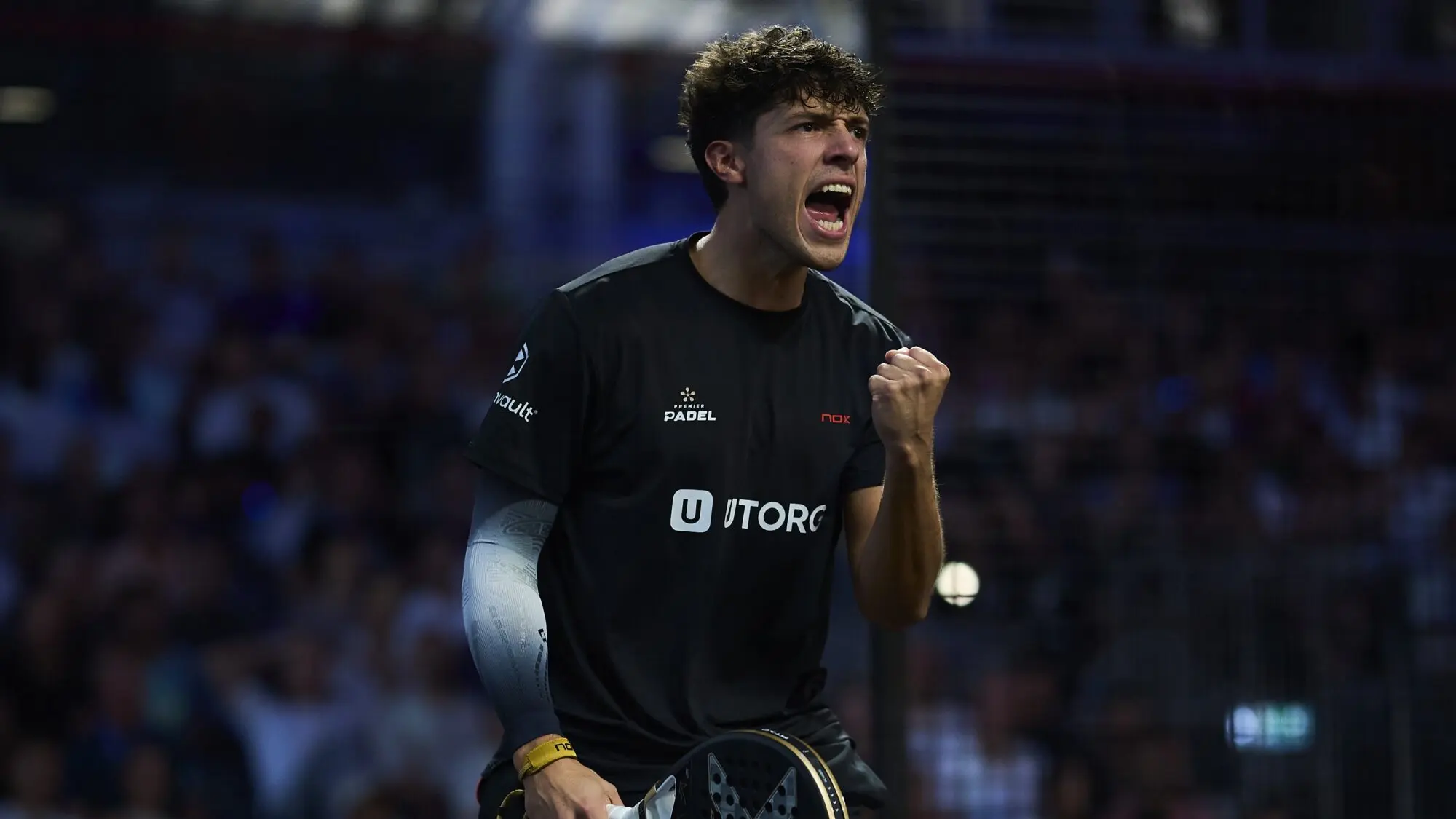 Tapia reveals his recipe for beating Coello / Tapia: "I would bet everything on myself"
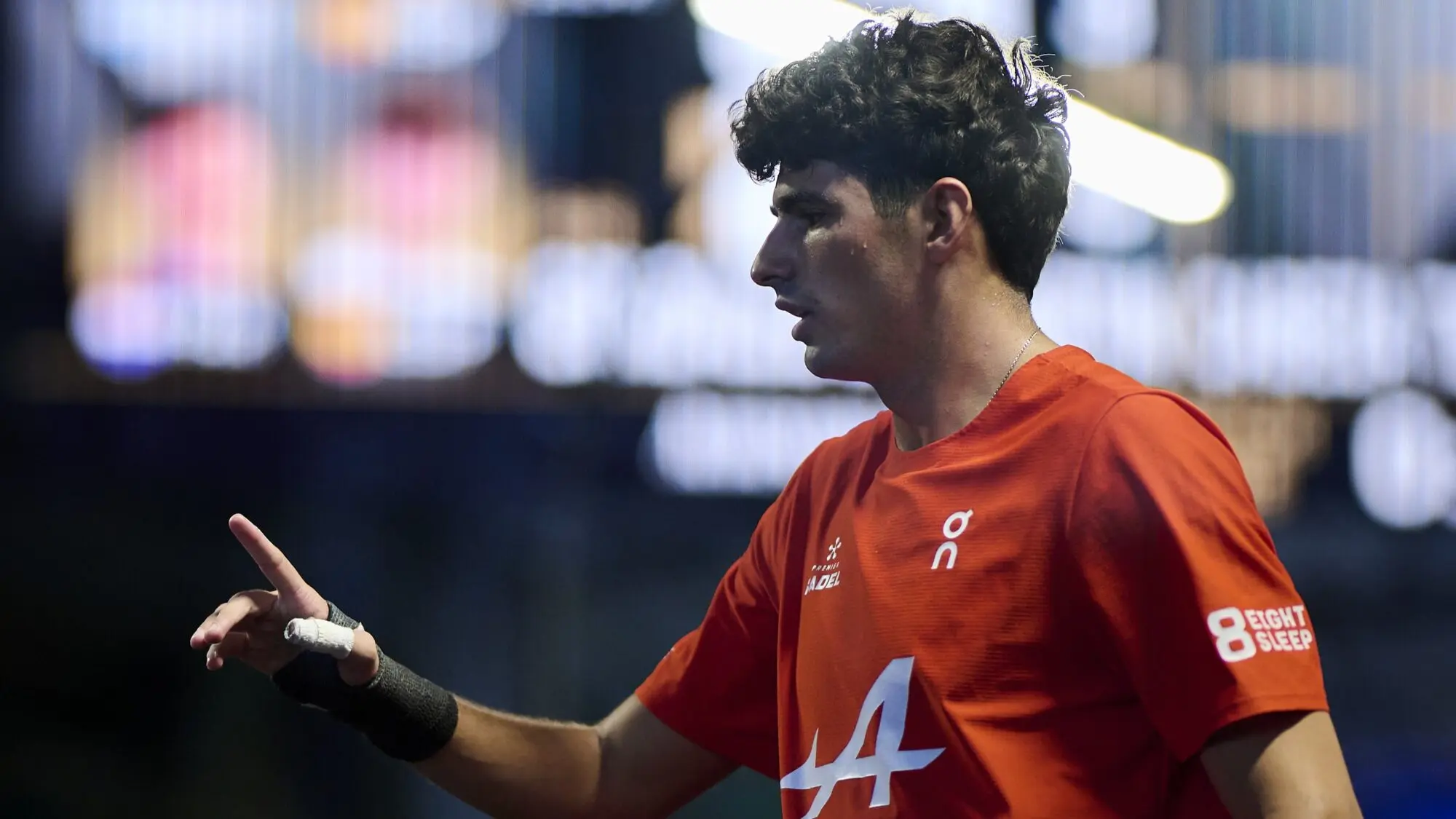 How Coello defused Chingotto's game plan
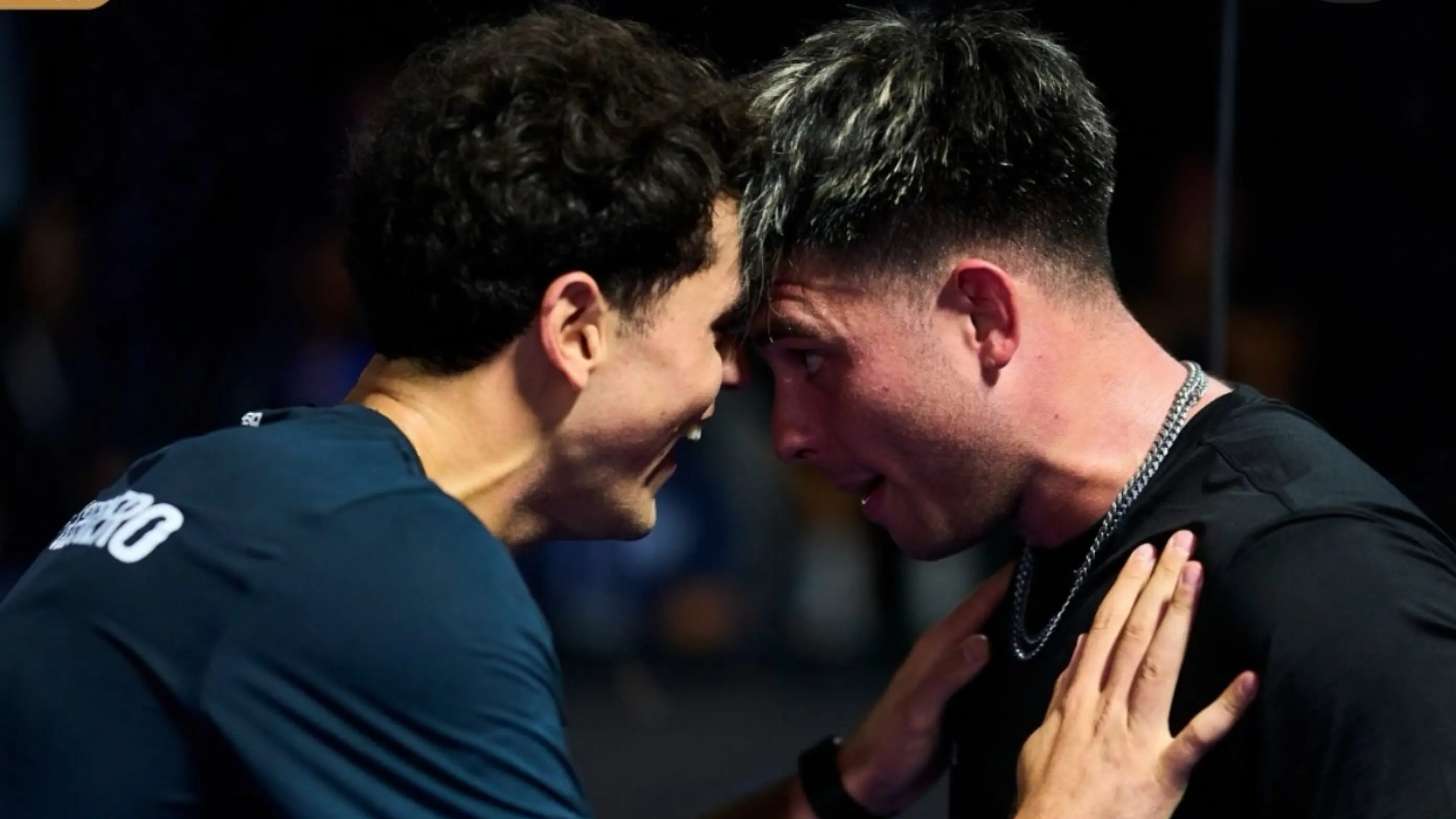 In padel, does the chemistry between a pair count as much as individual skill?
 Organising a P2000 or a P3000: how much does it really cost clubs?
 Do you lose your ranking? Padel FFT after more than a year without a license / without competition?
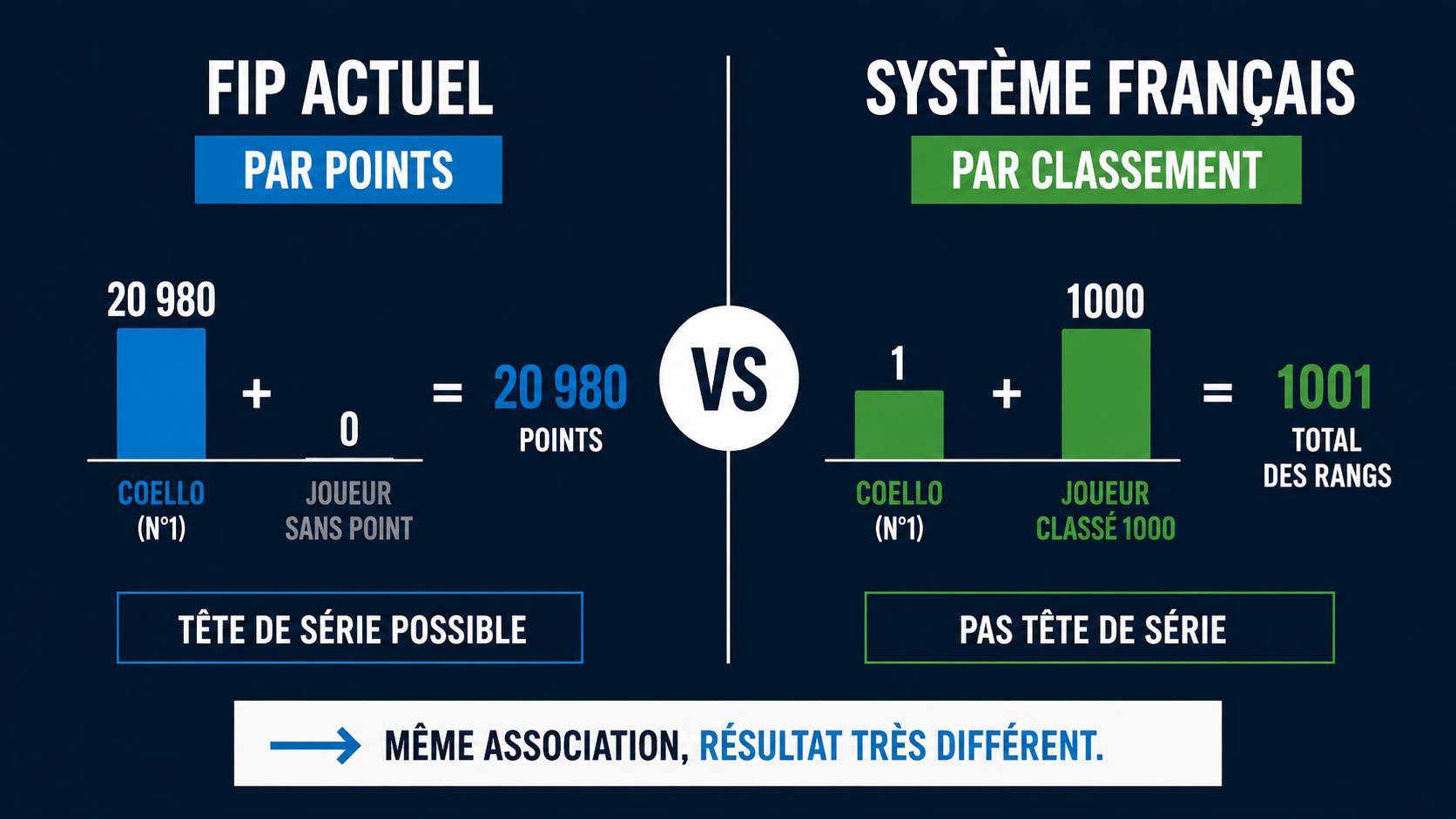 Coello with a player at 0 points ahead of two top 10 players: should the FIP ranking be reviewed?
 Kuwait Major: Chingotto/Galán out, Alejandro Galán injured, Coello/Tapia the only favorites?
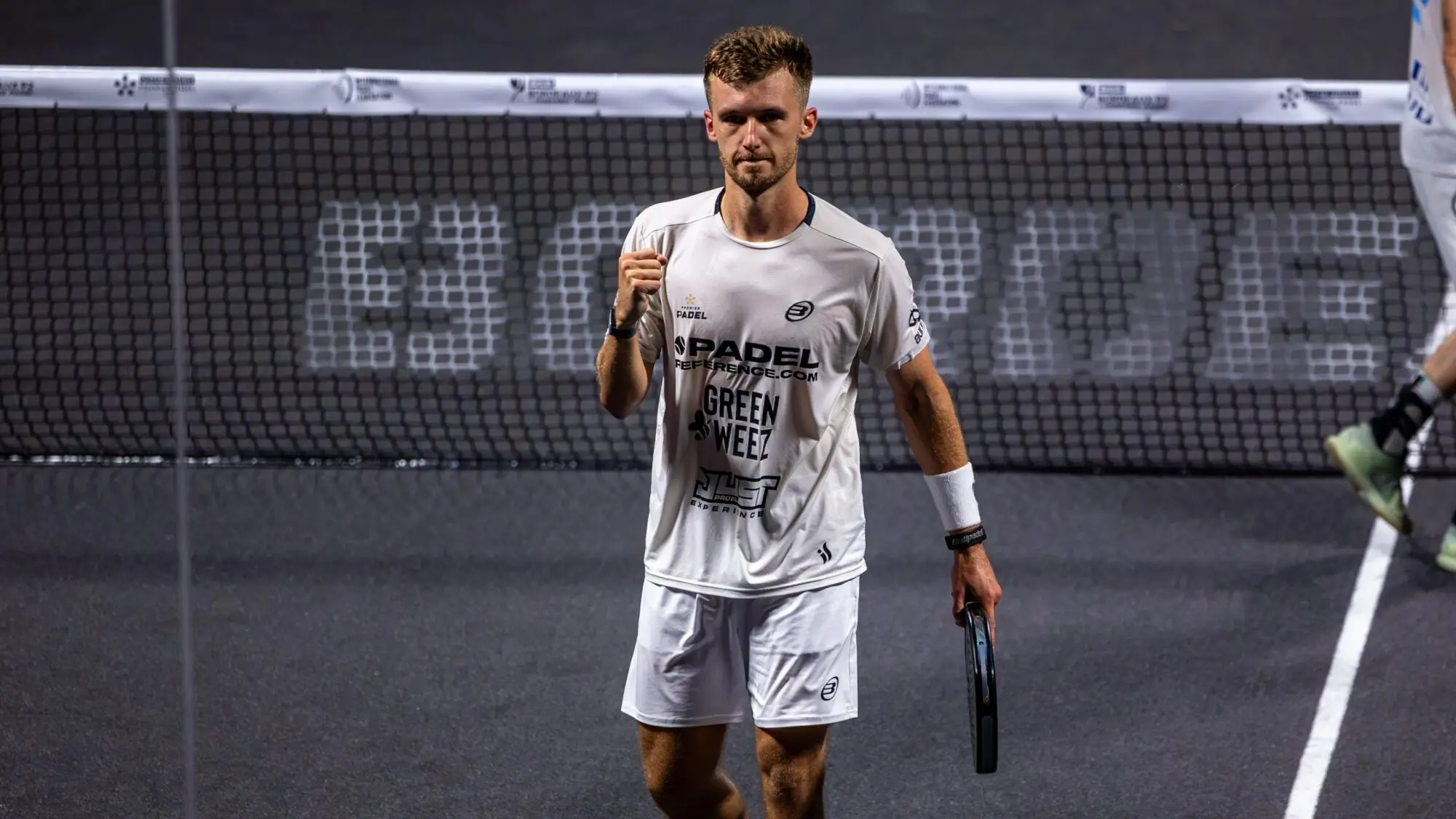 Julien Seurin opens up about his mental state: "There are far more doubts than moments of happiness."
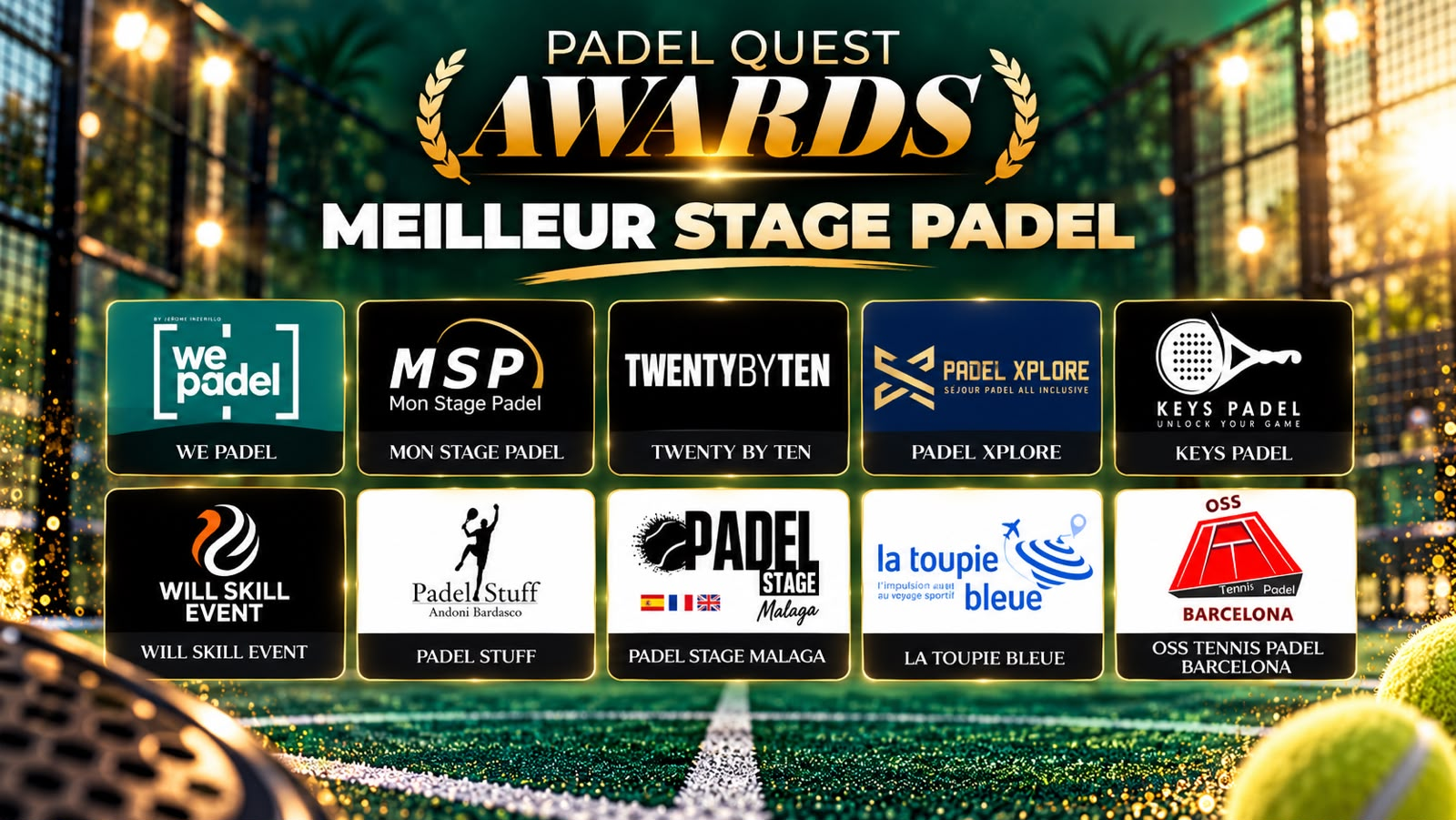 Padel Quest Awards: Ten specialists in the running for the title of best padel training camp of the year
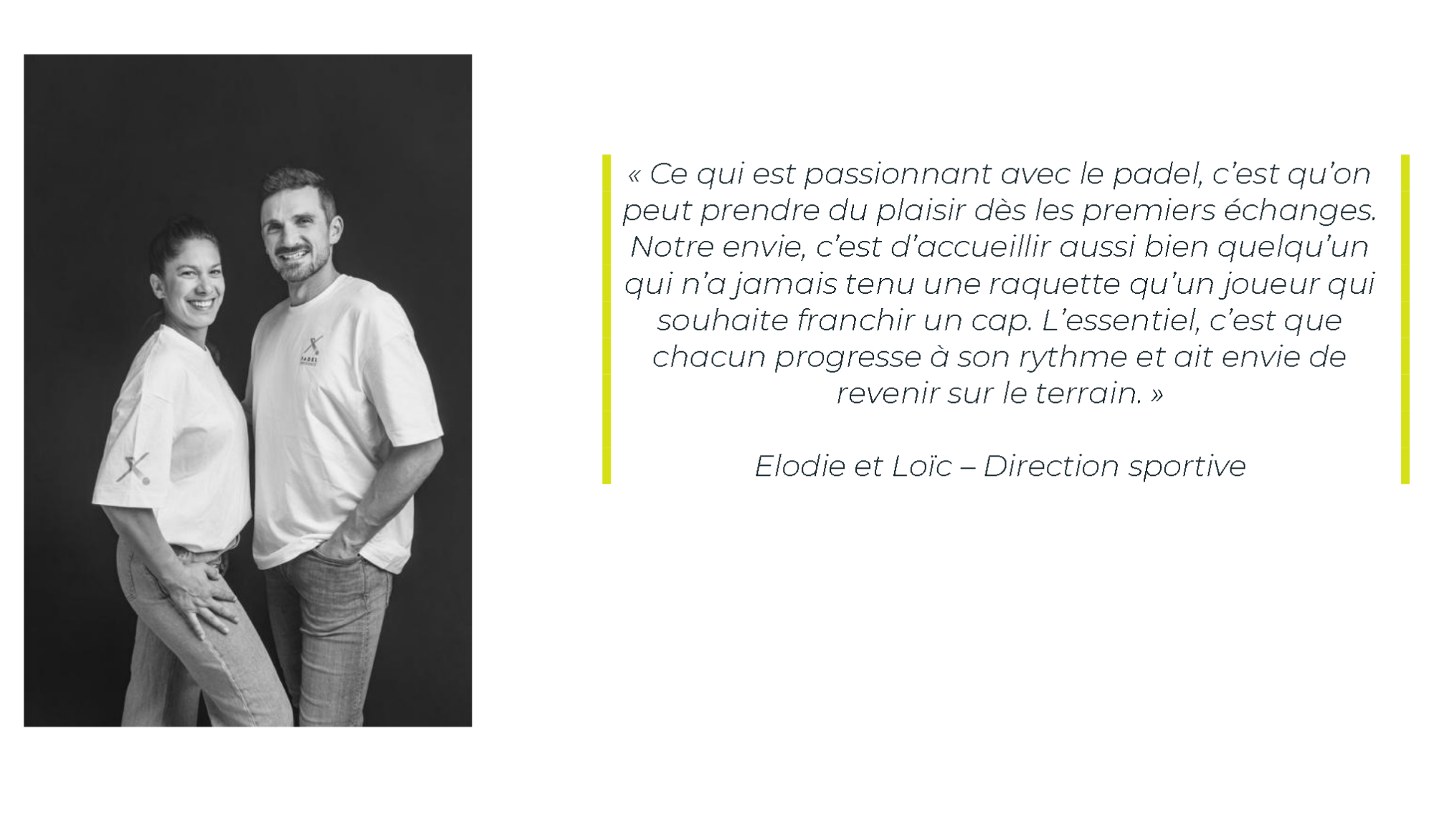 Padel Xperience: The Academy opens on November 2nd in Marcheprime, ahead of the complex's inauguration in 2027
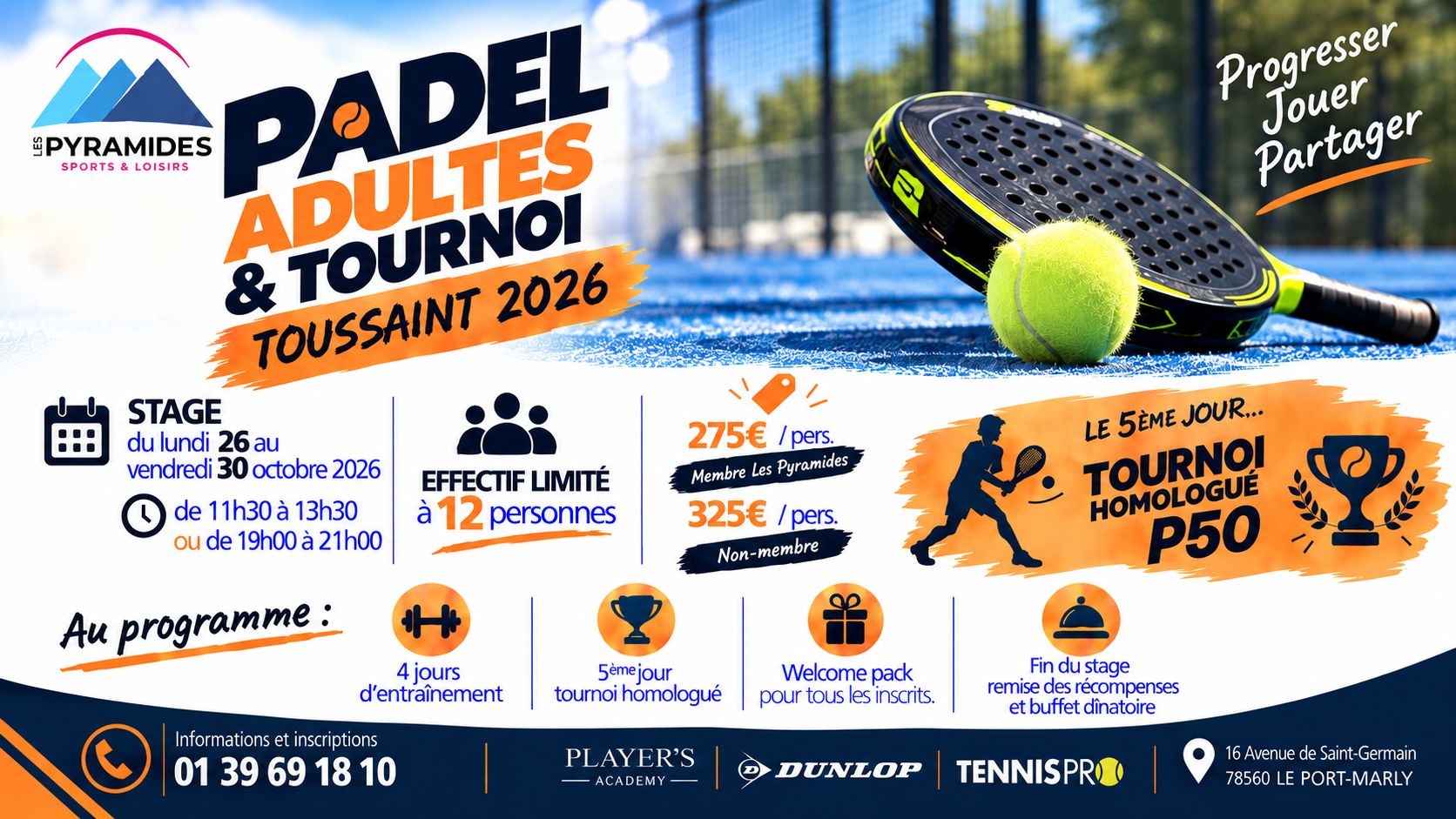 All Saints' Day – Les Pyramides are organizing a padel training camp for adults with a P50 tournament to close out the week
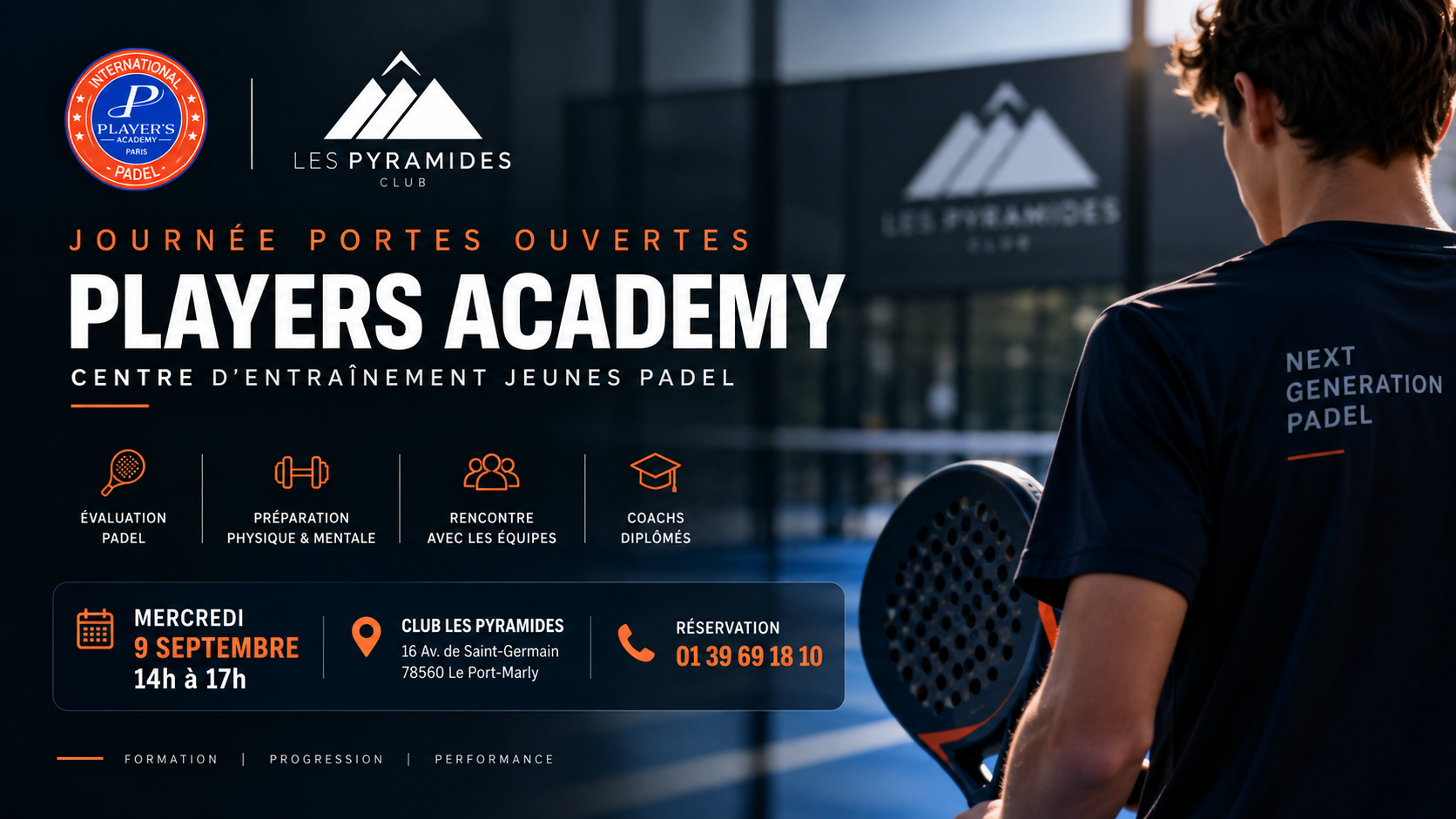 Les Pyramides: after 12 padel courts, the club is focusing on youth training