

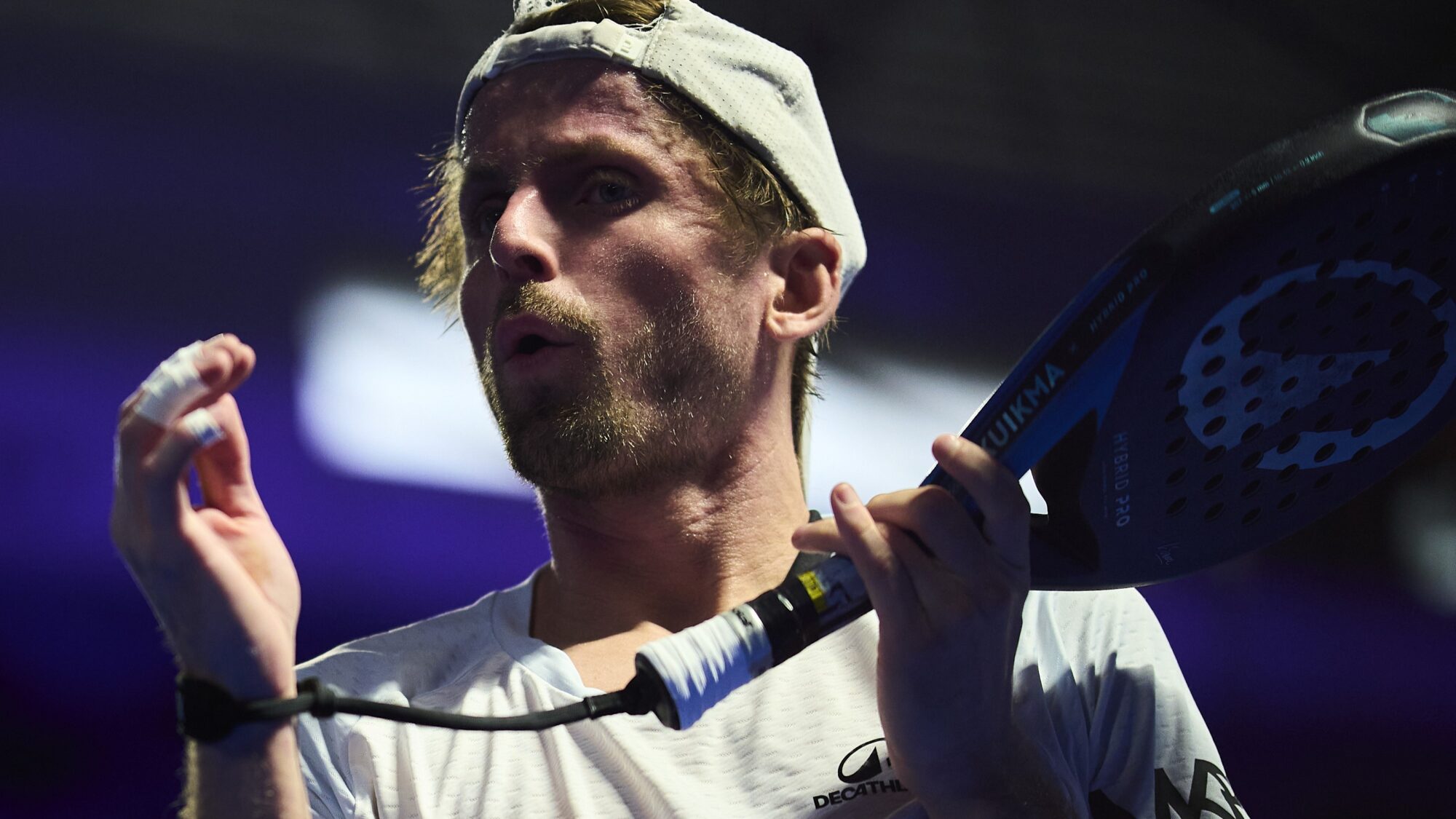








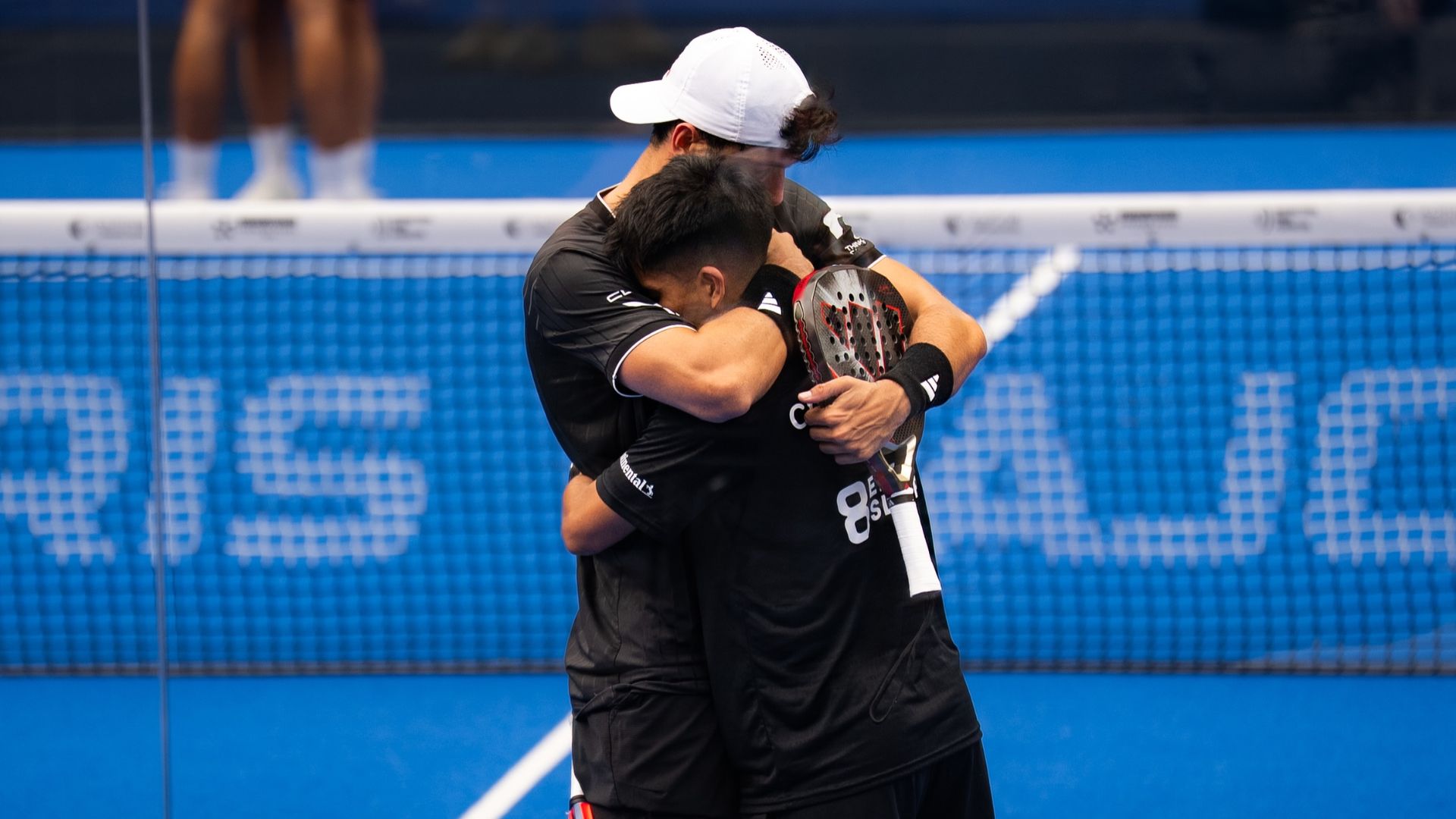
In professional padel, defeat is a daily occurrence. While the spotlight often shines on the winners, the vast majority of players finish each tournament with a loss. Belgian Clément Geens, partner of Frenchman Dylan Guichard, shares his thoughts on this reality of top-level competition: how to accept defeat without losing the desire to win?
In professional padel, almost everyone loses every week
"We don't like to lose. And thankfully so."
It is with these words that Clement Geens The Kuikma-branded player introduces a reflection on an essential aspect of high-level sport: managing defeat .
The Belgian player points out a simple reality, but one that is not always highlighted in sports analyses.
"Apart from the best pair in the world, everyone loses every week."
The formula is deliberately striking. In a knockout tournament, only one pair finishes the competition by lifting the trophy. All the others leave the draw after a defeat.
Even players who have great weeks, reach the quarter-finals or make it to the semi-finals usually end their run with a defeat.
Even the world's number ones are not immune to this reality. Arturo Coello and Agustín Tapia , despite their dominance on the circuit Premier PadelThey do not win all the tournaments they participate in.
For the other players, defeat is therefore a regular, sometimes even weekly, experience.
Accepting defeat does not mean being satisfied with it.
For Clement Geens It is certainly not about trivializing failure or diminishing one's ambition.
"A defeat can hurt, frustrate, and leave many regrets."
This reaction is natural for competitors who dedicate a large part of their daily lives to training, travel, and the pursuit of performance.
But the Belgian insists on the need to move beyond this initial emotional reaction.
"What could I have done better? What do I need to work on? What can I learn from this match?"
These questions form the core of his message.
A defeat should not only be seen as a negative result. It can also help identify areas for improvement for future competitions.
The goal is not to find excuses, but to understand why a match turned around and how to better approach a similar situation in the future.
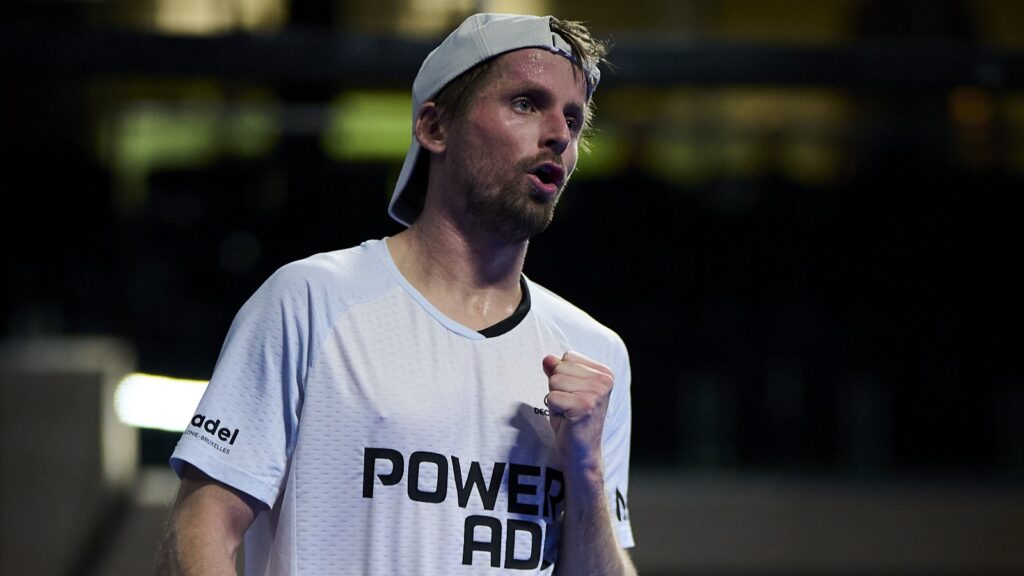
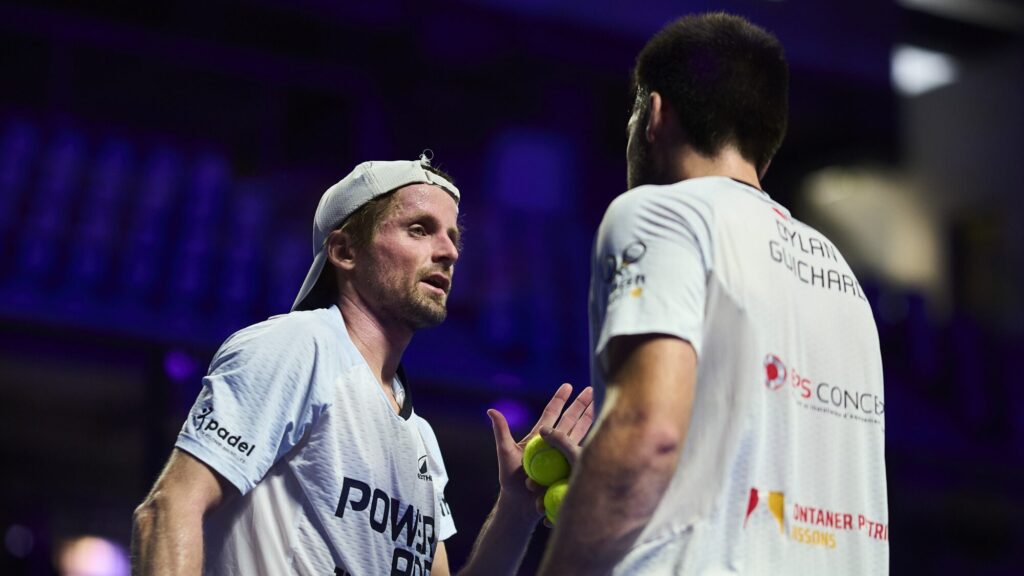
With Dylan Guichard, Geens knows the demands of the circuit
This reflection takes on a particular meaning in light of the career path of Clement Geens , who plays on the international circuit alongside the Frenchman Dylan Guichard .
The Franco-Belgian duo notably delivered some interesting performances against experienced players.
During the FIP Platinum Lyon 2026 Guichard and Geens notably succeeded in bringing down Sanyo Gutiérrez , former world number one, and his partner.
More recently, at Milan P1 They made a successful entry into the competition by dominating Fernández / Del Castillo .
These results illustrate the progress of a pair capable of competing with high-level opponents, without being able to hope to win every tournament.
On the international circuit, the differences sometimes come down to a few points, a bad decision or a period of poor performance.
The challenge then lies in maintaining confidence and ambition despite the inevitable accumulation of defeats.
What sports psychology teaches us about failure
Clément Geens' reflection aligns with several works carried out in the field of sports psychology particularly around resilience and emotion management.
Research published in the scientific journal Frontiers in Psychology studied how athletes react to their poor performances.
They suggest that a less harsh attitude towards oneself after a failure can promote more constructive emotional and behavioral reactions.
This does not mean that we should minimize a defeat or give up on sporting standards.
The challenge is rather to prevent a bad result from turning into a permanent questioning.
In padel, this ability can notably translate into a more precise analysis of matches: Managing key points, tactical choices, movement, communication with partners, and effectiveness in decisive moments .
A defeat can therefore reveal areas for improvement that are not always visible after a victory.
The rankings don't tell the whole story of a player
On the professional circuit, performance is primarily evaluated through results and points in the FIP ranking .
A victory allows you to continue your journey and accumulate points, while an early elimination can weigh on your progress in the rankings.
But the raw result does not necessarily reflect all the work done.
A pair can improve their level of play, get closer to the best teams in the world and become more competitive without this progress immediately resulting in a title.
Conversely, success can sometimes mask tactical or technical difficulties.
This is the whole nuance defended by Geens: continue to strive for victory, while also valuing what each encounter offers to learn. .
"We can't win every week, but we can learn every week."
The Belgian player ends his message with a sentence that sums up his philosophy:
"We can't win every week. But we can try to learn every week."
This is a discussion that concerns professionals, young players, and amateur competitors alike.
Defeat will always be frustrating, especially when a match seemed within reach. But how you react to it can influence the rest of the season.
For Clement Geens The key is to maintain this desire to work, to progress and to return to the track with new ambitions.
Because in a sport where almost everyone ends up losing, the difference can also be made in the ability to bounce back.

Franck Binisti discovered padel at the Club des Pyramides in 2009 in the Paris region. Since then, padel has been part of his life. You often see him touring France to cover major French padel events.























































 2026 World Championships – Spain reclaims its world crown, a stratospheric Coello defeats Argentina
 2026 World Championships – Argentina / Spain: a third match for the world title!
 2026 World Championships – Ustero in tears, Triay facing Brea: the world champions' confessions
 "I applied to become the coach of the French national team": an objective for Adrien Maigret
 Fonteny/Joris after their “almost” upset against Tapia/Libaak: “We believed until the very last point”
 2026 World Cup – Five players barred from World Cup with the United Arab Emirates: Íñigo Jofre denounces the situation
 Coello/Tapia ahead of the Kuwait Major final against Tello/Arce: “These are two players who cause us a lot of problems”
 2026 World Championships – No medal for the French women, beaten 2-0 by Italy in the bronze medal match
 2026 World Championships – The French women's team loses their first point against Italy despite a strong performance from Touly/Pothier; Collombon/Bahurel can no longer afford any mistakes.
 Padel, weight training, and even HYROX: clubs are changing their model
 2026 World Championships – Where to watch the finals? Spain vs. Argentina, two clashes for the world titles
 Dunlop unveils the Galactica Pro by Nisse, a limited edition of only 500 pieces worldwide
 2026 World Cup – Joris/Robert, the new addition to the French team for their final match against Paraguay
 Dubai P1 – Galán/Chingotto withdraw, Leal/Guerrero take advantage of their absence to directly enter the main draw
 Padel court rentals: a global market estimated at 4,6 billion euros
 FIP Beyond: the new global padel circuit for amateurs and seniors
 More than 6,300 FIP-ranked players: professional padel is becoming international, but Spain dominates
 Memory, reflexes, concentration: what happens in our brain when we play padel?
 P2000 or P3000: what are the differences in prize money, format and organization in 2028?
 Why can Libaak/Alfonso beat almost everyone… except Coello/Tapia?
 Could padel help the brain recover after chemotherapy?
 What the analysis of the stroke reveals: tennis forehand vs. padel bandeja
 Has the bandeja disappeared from modern padel?
 Flat forehand in padel: 5 exercises from Cristian Álvarez to gain control and efficiency
 Why knowing how to play on the right and left can make all the difference
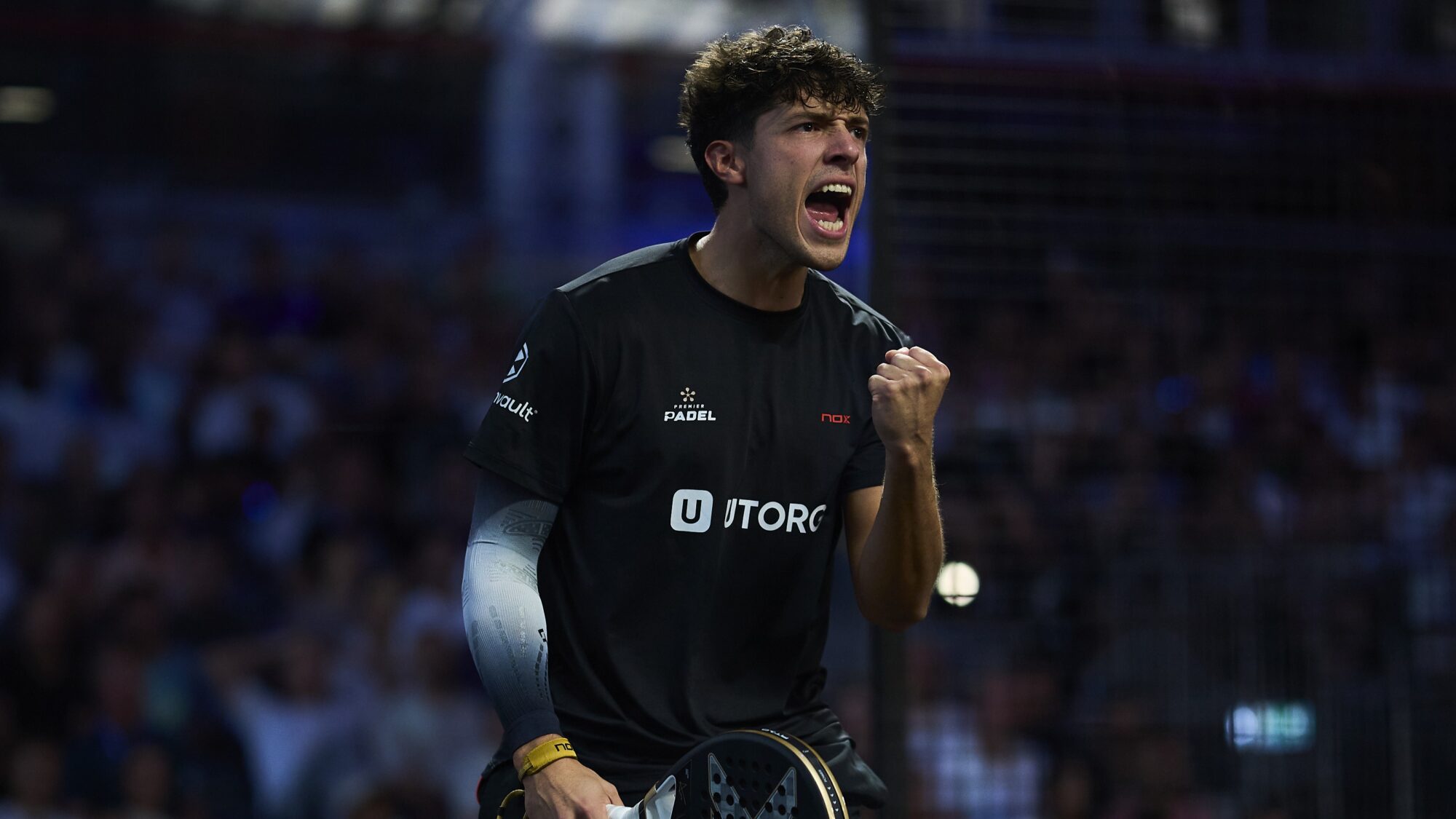 Tapia reveals his recipe for beating Coello / Tapia: "I would bet everything on myself"
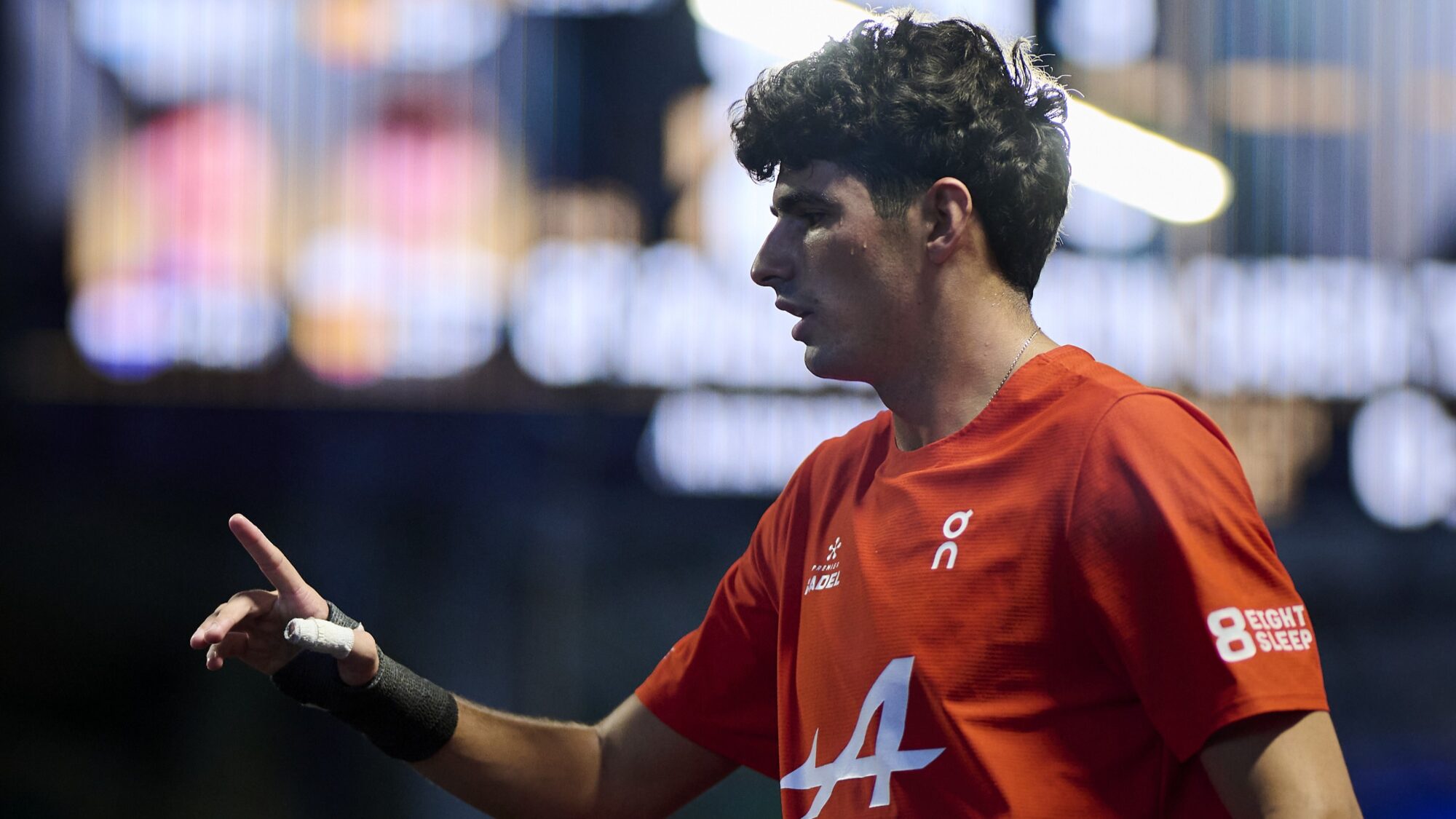 How Coello defused Chingotto's game plan
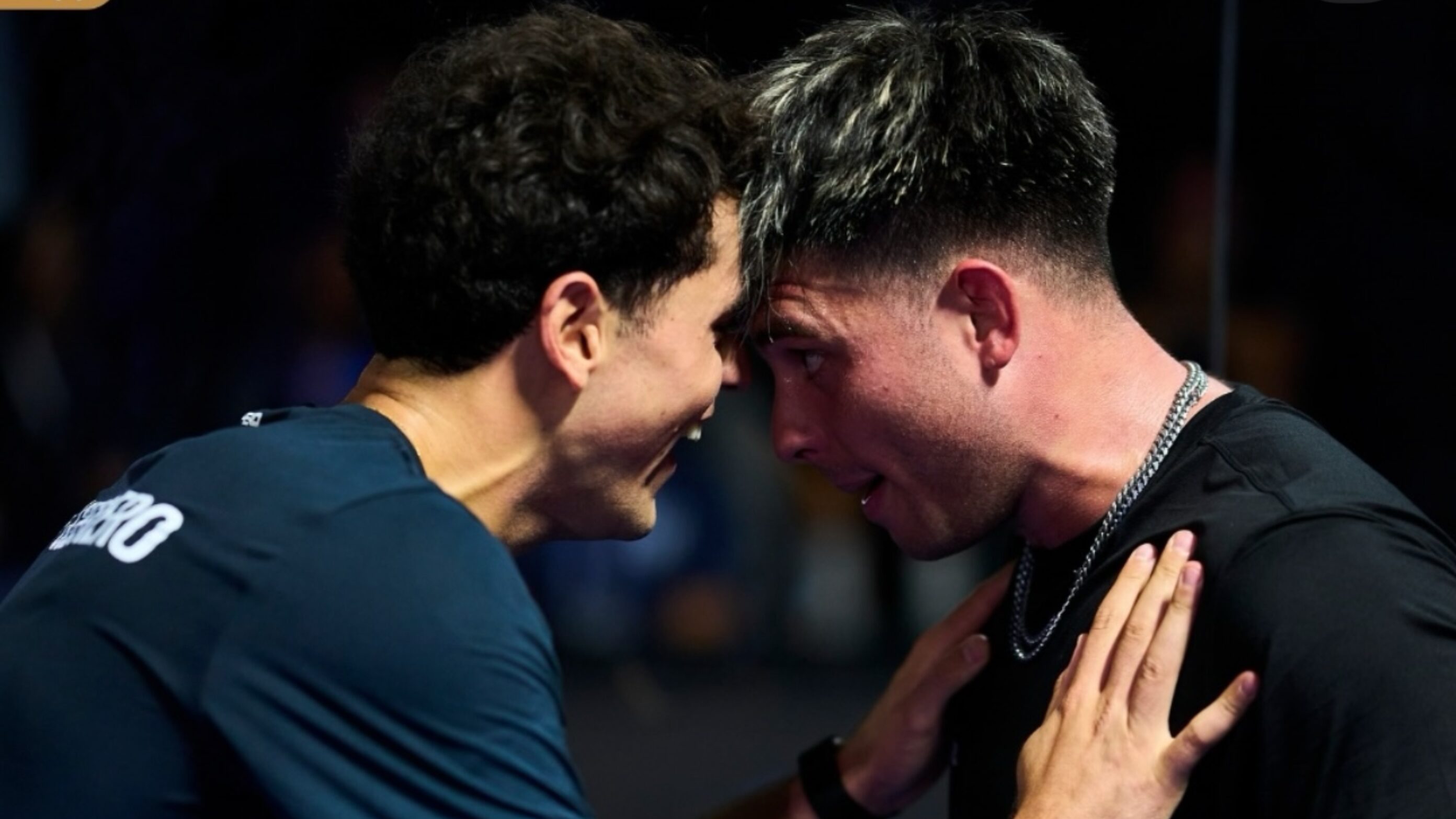 In padel, does the chemistry between a pair count as much as individual skill?
 Organising a P2000 or a P3000: how much does it really cost clubs?
 Do you lose your ranking? Padel FFT after more than a year without a license / without competition?
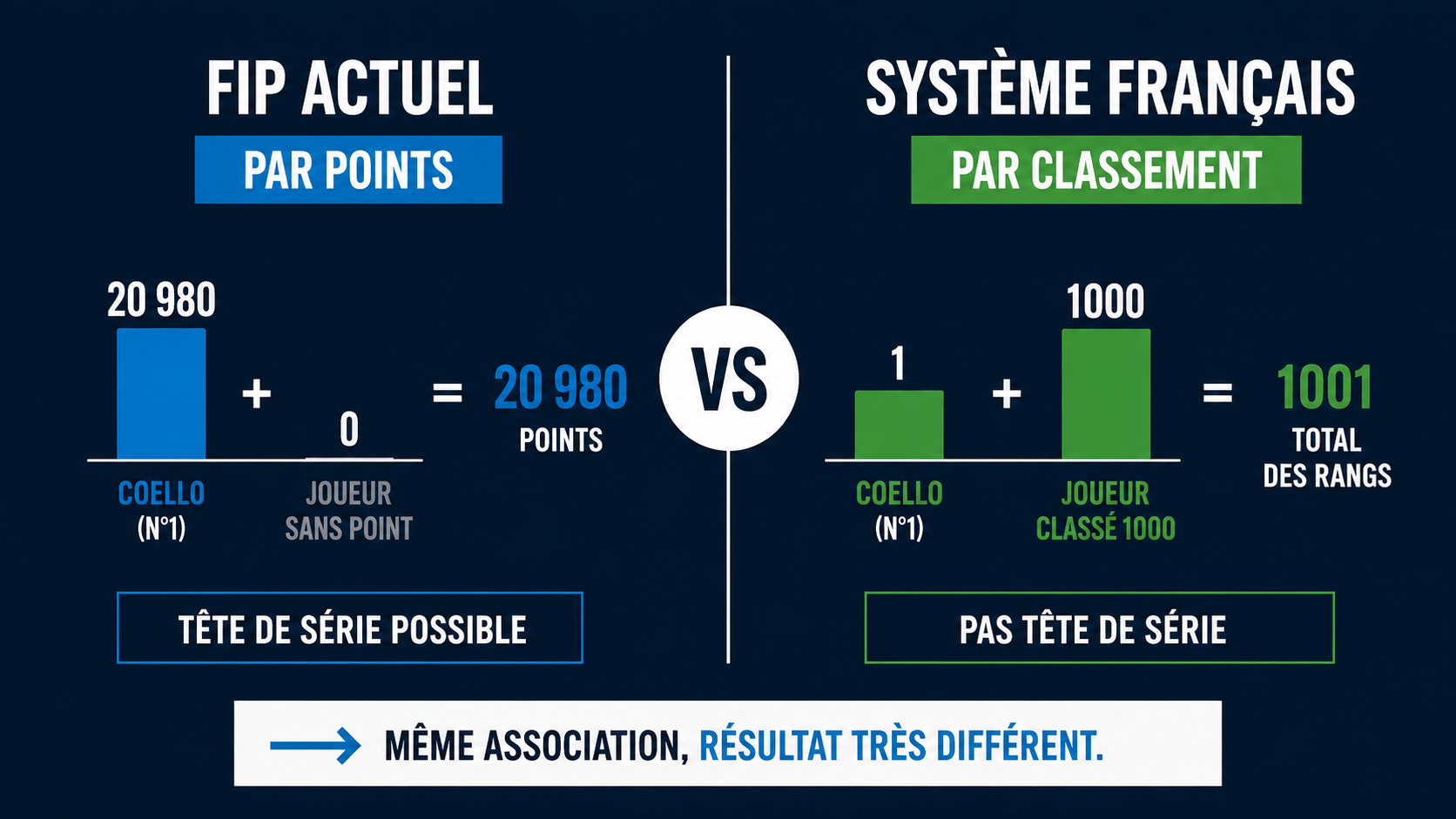 Coello with a player at 0 points ahead of two top 10 players: should the FIP ranking be reviewed?
 Kuwait Major: Chingotto/Galán out, Alejandro Galán injured, Coello/Tapia the only favorites?
 Julien Seurin opens up about his mental state: "There are far more doubts than moments of happiness."
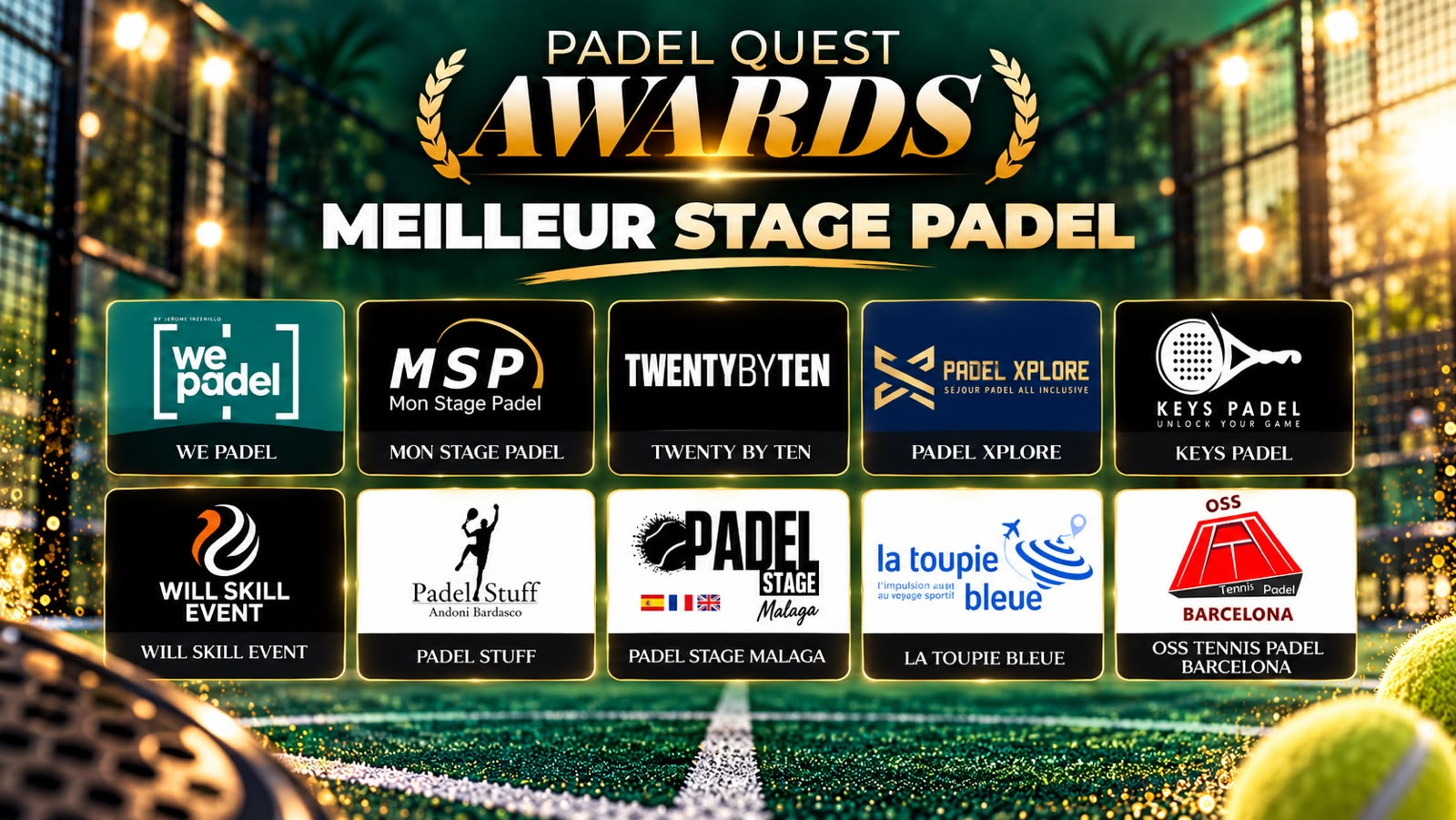 Padel Quest Awards: Ten specialists in the running for the title of best padel training camp of the year
 Padel Xperience: The Academy opens on November 2nd in Marcheprime, ahead of the complex's inauguration in 2027
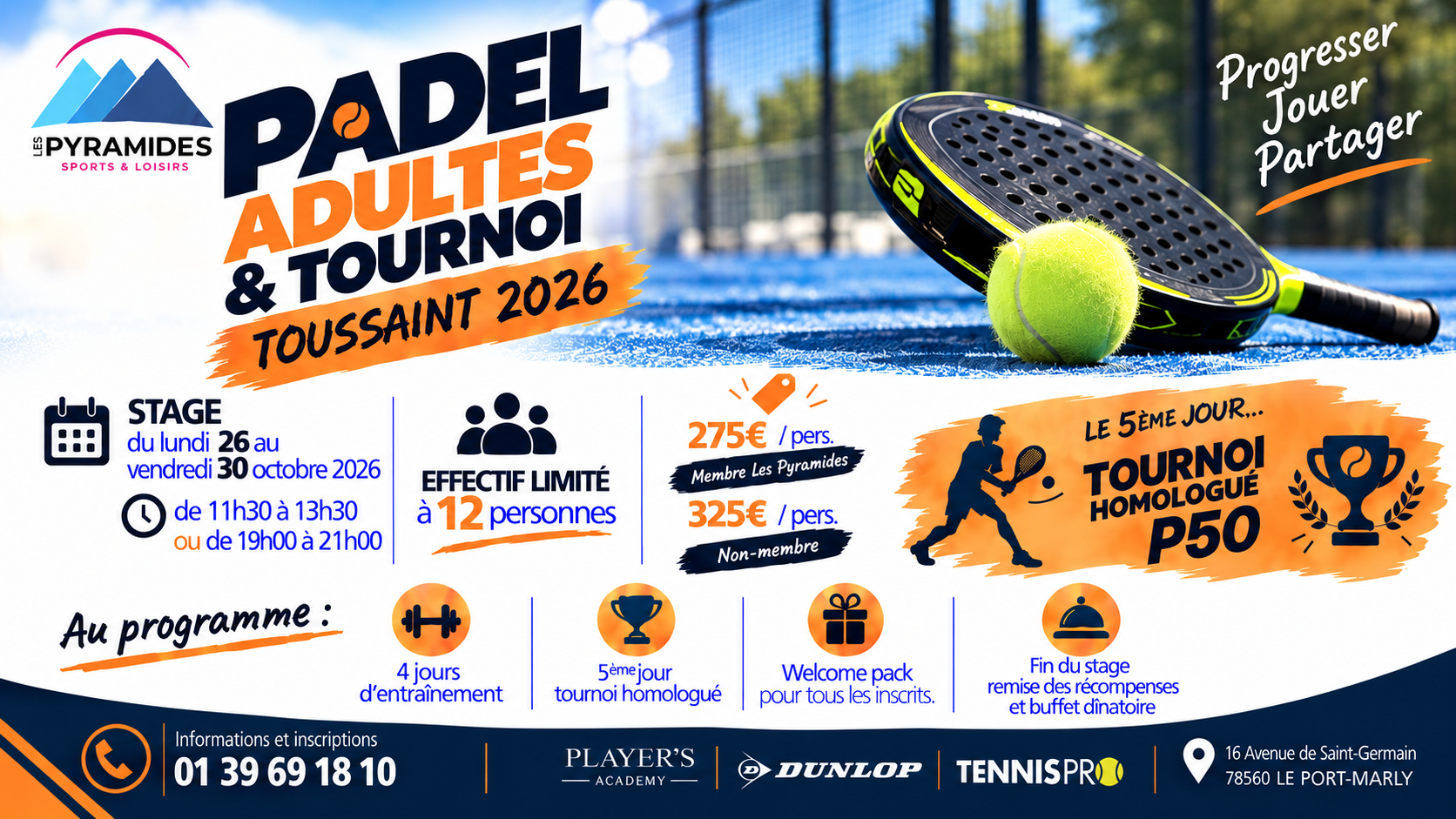 All Saints' Day – Les Pyramides are organizing a padel training camp for adults with a P50 tournament to close out the week
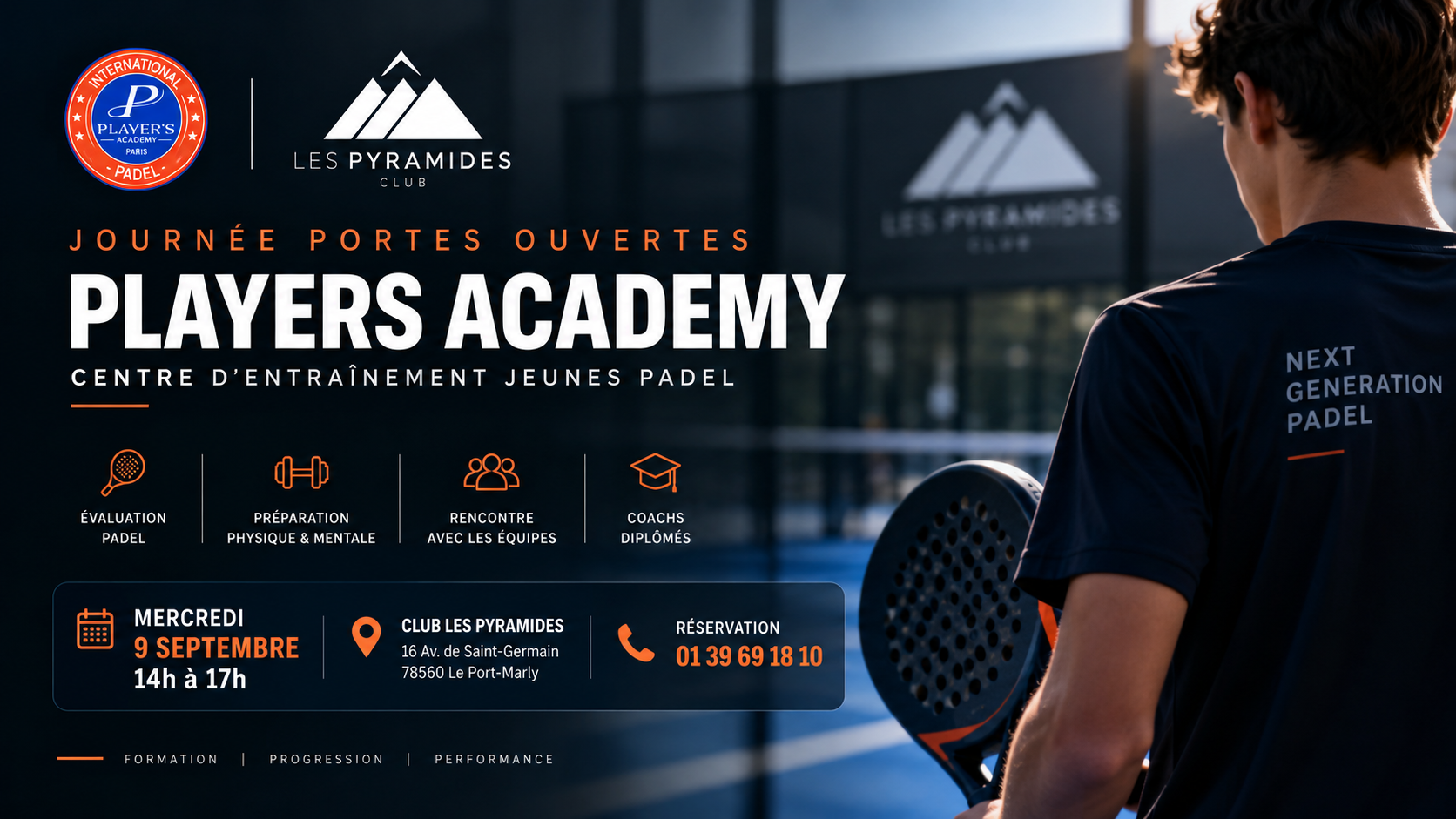 Les Pyramides: after 12 padel courts, the club is focusing on youth training