









How many kilometers do the world's best players cover during a final? Who makes numerous sprints? How do the pairs occupy the court? At the Düsseldorf P2, Padel Review has conducted a particularly thorough statistical analysis of the men's and women's finals. Unprecedented data on player movement, physical intensity, and positioning provides a better understanding of what happened on the court.
Jon Sanz, a true marathon runner in the men's final
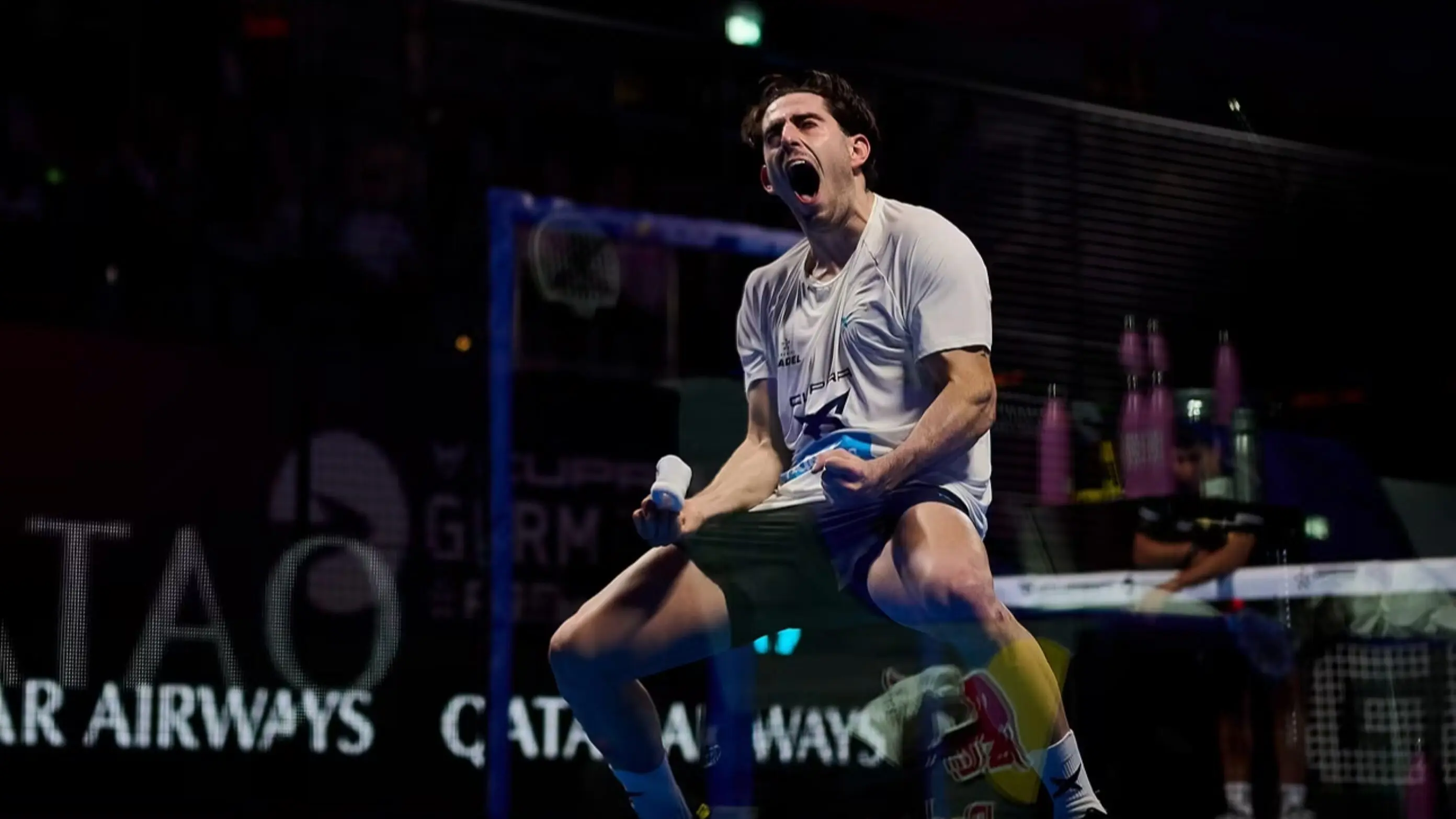
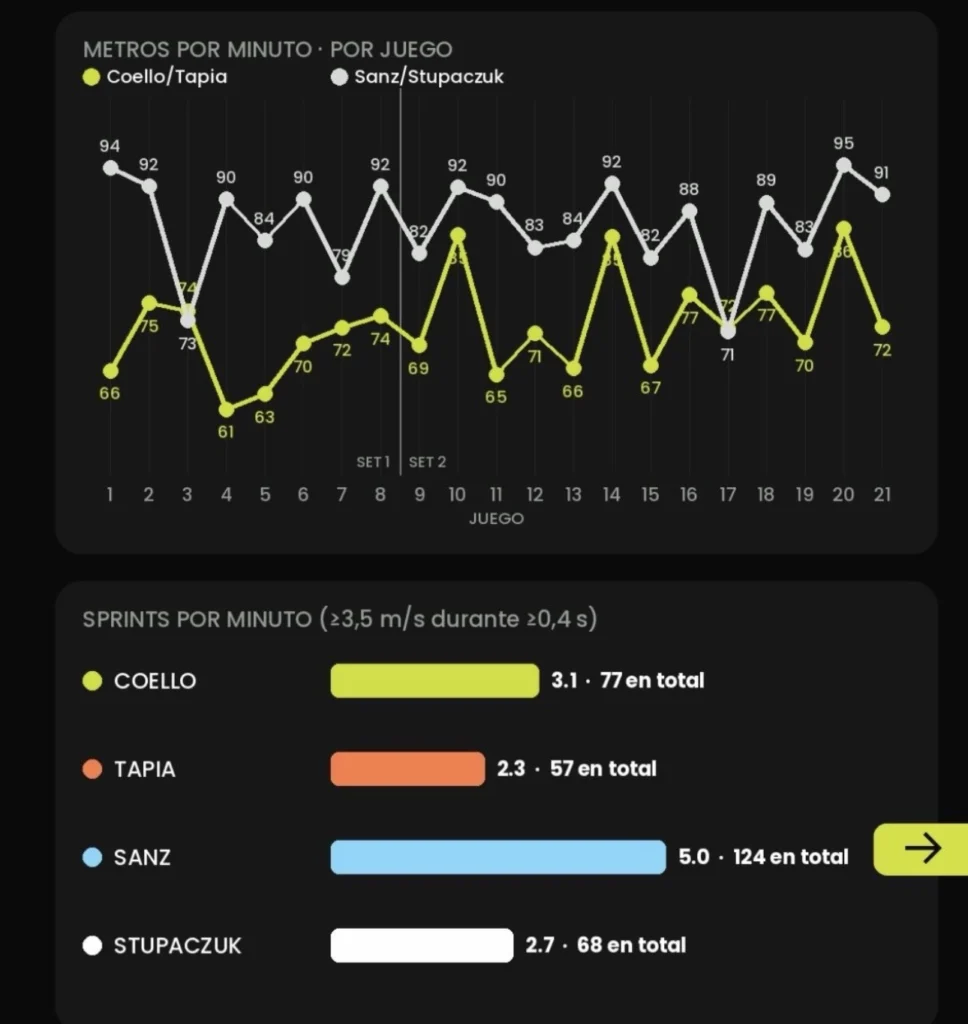
This is probably one of the most impressive figures in this analysis. During the men's final won by Arturo Coello and Agustín Tapia face Jon Sanz and Franco Stupaczuk (6/2 7/6), one player particularly distinguished himself through his physical activity: Jon sanz .
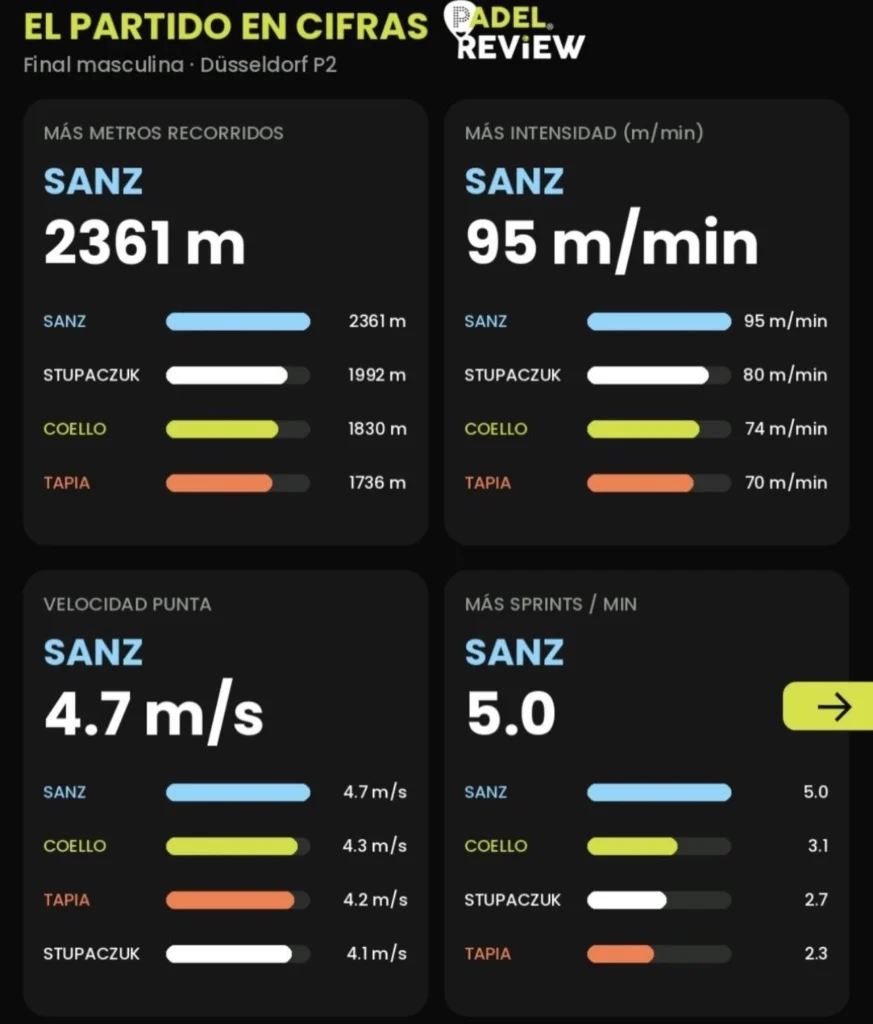
The Spaniard traveled 2 361 meters That's more than 2,3 kilometers during the match. He's well ahead of his partner Franco Stupaczuk (1,992 meters) , But also Arturo Coello (1,830 meters) et Agustín Tapia (1,736 meters) . In other words, Sanz covered 625 meters more than Tapia during this final. A considerable difference at this level of competition, which illustrates the enormous activity of the Spanish player on his right side.
And that's not all. Sanz also holds the speed record for this final, with a top speed of 4,7 m / s , Almost 17 km/h .
124 sprints for Sanz: an impressive intensity
Analysis of Padel Review reveals another particularly telling statistic: Jon Sanz completed 124 sprints during this final.
For comparison:
- Jon Sanz: 124 sprints
- Arturo Coello: 77 sprints
- Franco Stupaczuk: 68 sprints
- Agustín Tapia: 57 sprints
The Spanish player therefore carried out more than twice as many sprints as Tapia On average, Sanz achieved 5 sprints per minute , compared to 3,1 for Coello, 2,7 for Stupaczuk, and 2,3 for Tapia. The difference is also reflected in the distances covered at high intensity. Sanz covered 1,016 meters at over 2,5 m/s , against only 526 meters for Tapia .
These figures show how physically demanding Sanz was, with numerous accelerations and repeated changes of direction.
Tapia and Coello ran almost 800 meters less… but won
This is probably the most interesting lesson to be learned from this men's final.
To them two, Tapia and Coello covered 3,566 meters , against 4,353 meters for Sanz and Stupaczuk . Is 787 additional meters for the Spanish-Argentine pair. The same observation applies regarding the average intensity of their movements: 87 meters per minute for Sanz / Stupaczuk , against 72 meters per minute for the world number ones .
However, it was Tapia and Coello who won the title.
This difference does not necessarily mean that the winners were tactically superior on every rally. It does, however, highlight a reality of top-level padel: Efficiency is not measured solely by the distance traveled. Positioning, anticipation, trajectory quality, and the ability to control exchanges can help limit movement.
Conversely, running more can also reflect significant pressure from the opposition and the need to increase defensive efforts.
A revealing occupation of the land
The heat maps published by Padel Review they also allow you to visualize the areas occupied by each player.
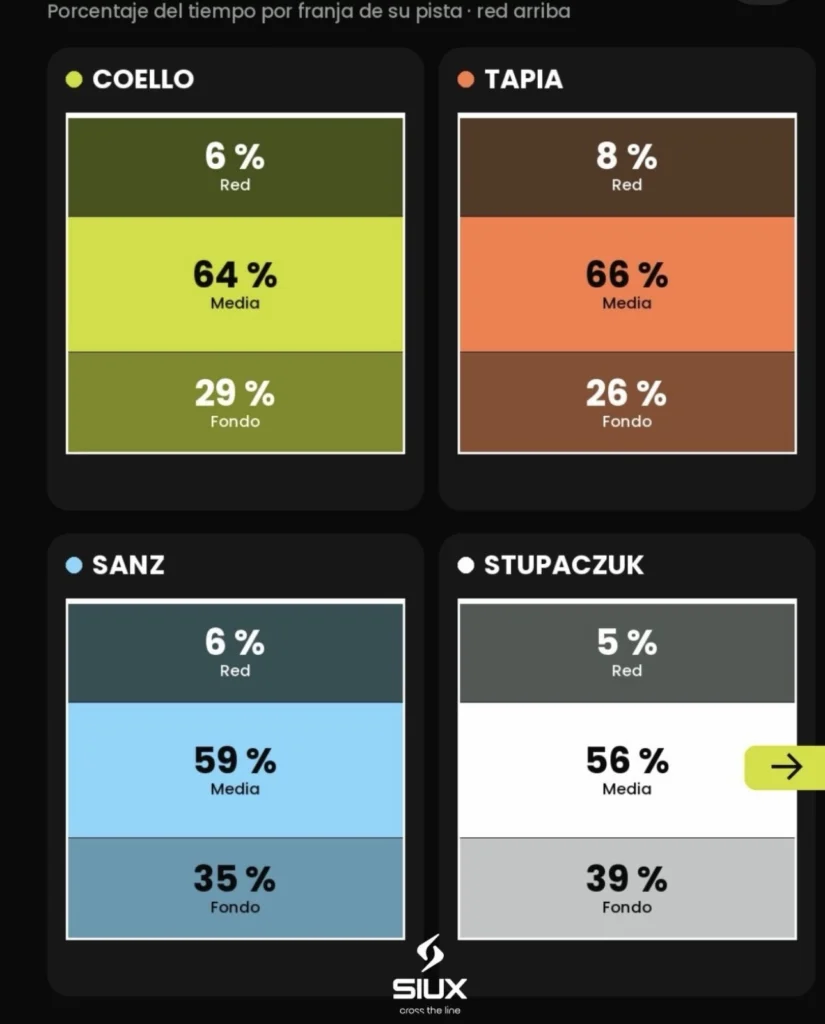
Among the winners, Coello spent 64% of his time in the middle zone of his own half of the field , compared to 29% at the back and 6% in the area near the net. For Tapia, the proportions are relatively similar: 66% in the intermediate zone 26% at the back and 8% near the net. Opposite, Stupaczuk spent 39% of his time at the back of the pitch , compared to 35% for Sanz. This difference suggests that the Sanz/Stupaczuk pair was forced to retreat more, particularly on the Argentinian side.
Another interesting piece of data: the two teams moved closer together laterally when they attacked.
Tapia and Coello were separated by an average of 3,7 meters near the net, compared to 5,5 meters in defense. A trend also observed among their opponents.
An additional indicator of how pairs adapt their positioning to the different phases of the game.
In the women's competition, Calvo and Fernández imposed a superior intensity.
The women's final offered a different scenario, but the statistics are just as interesting.
Martina Calvo and Claudia Fernández imposed themselves in the face of Ari Sánchez and Andrea Ustero on the score of 6 / 3 6 / 0 And unlike the men's final, this time it was the winners who displayed the most physical activity.
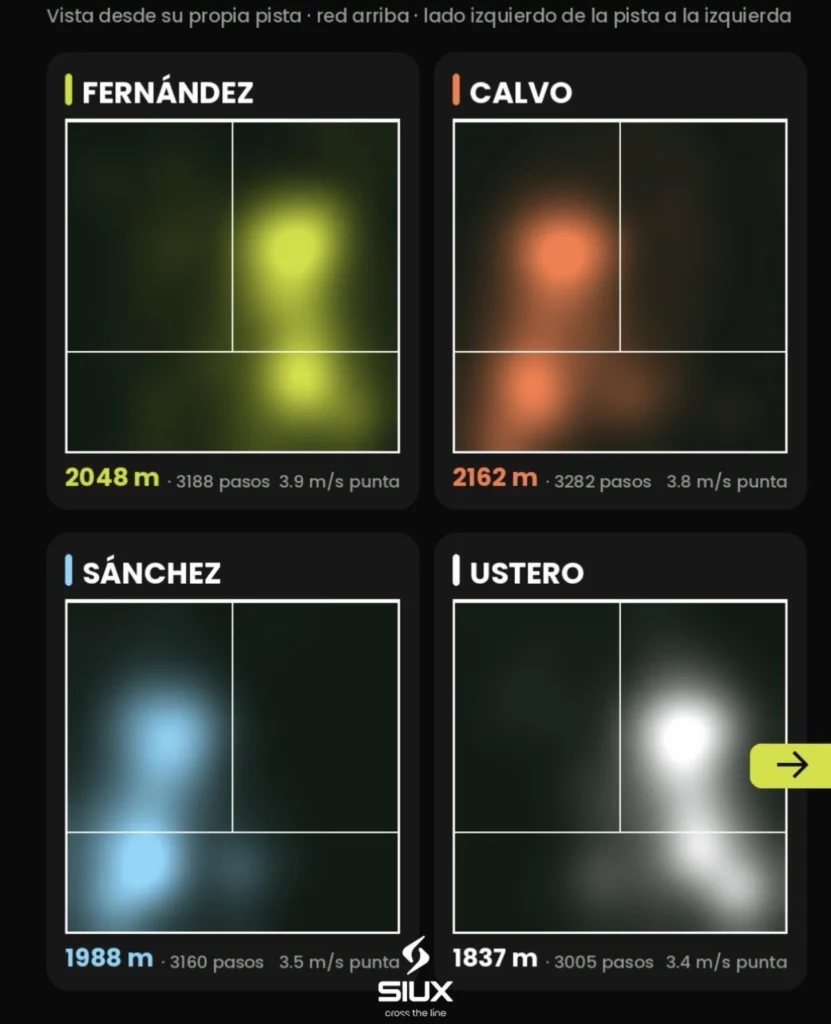
Martina Calvo covered 2,162 meters , which is the greatest distance among the four players.
Behind her, we find:
- Claudia Fernández: 2,048 meters
- Ari Sánchez: 1,988 meters
- Andrea Ustero: 1,837 meters
In total, Fernández and Calvo covered 4,210 meters , against 3,825 meters for Sánchez and Ustero . A difference of 385 meters in favor of the winners.
Fernández and Calvo made numerous sprints.
Data from Padel Reviews also highlight a very clear difference in accelerations.
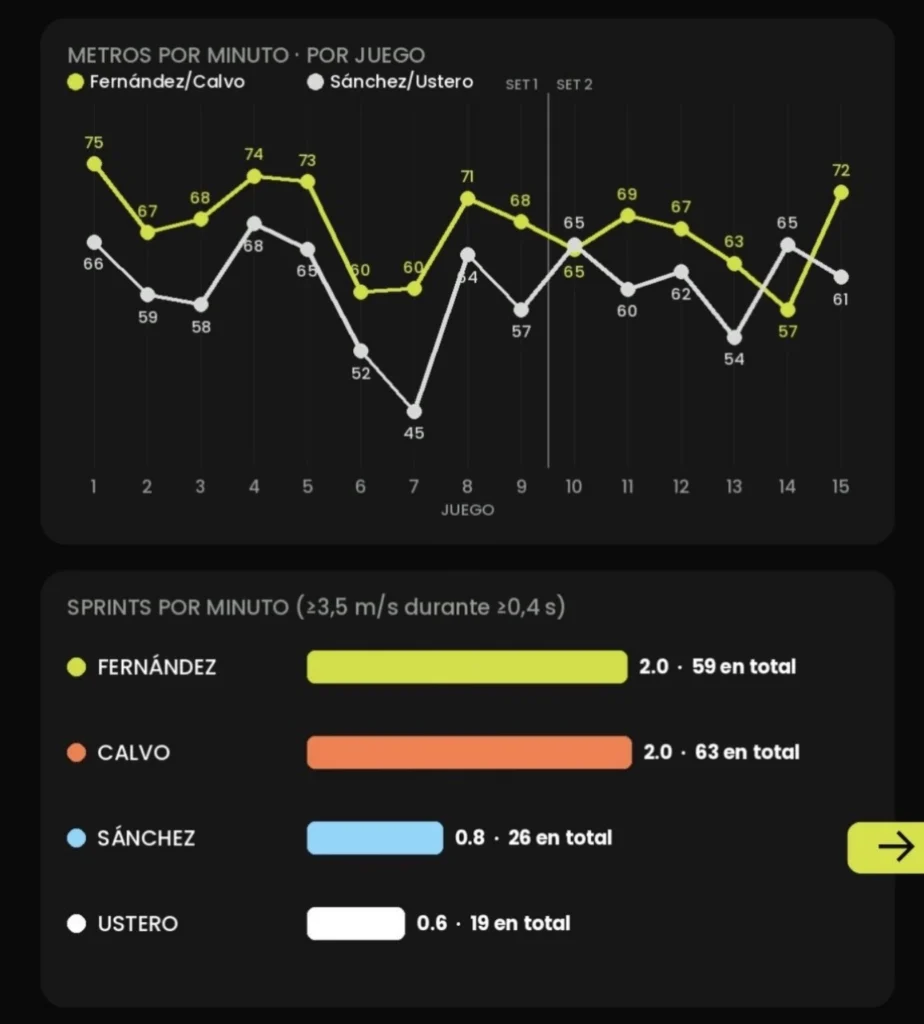
Bea Calvo completed 63 sprints while his partner Claudia Fernández has completed 59 . Opposite, Ari Sánchez only directed 26 and Andrea Ustero only 19. . This represents 122 sprints for Fernández / Calvo, compared to 45 for Sánchez / Ustero . A particularly significant gap, with the winners completing almost three times as many sprints.
The difference is also visible in fast travel. Calvo covered 699 meters at over 2,5 m/s , compared to 562 meters for Fernández, 485 for Sánchez and 350 for Ustero.
These data reflect a particularly high level of activity from the winning pair, capable of multiplying accelerations throughout the match.
62% of the short points won by Fernández and Calvo
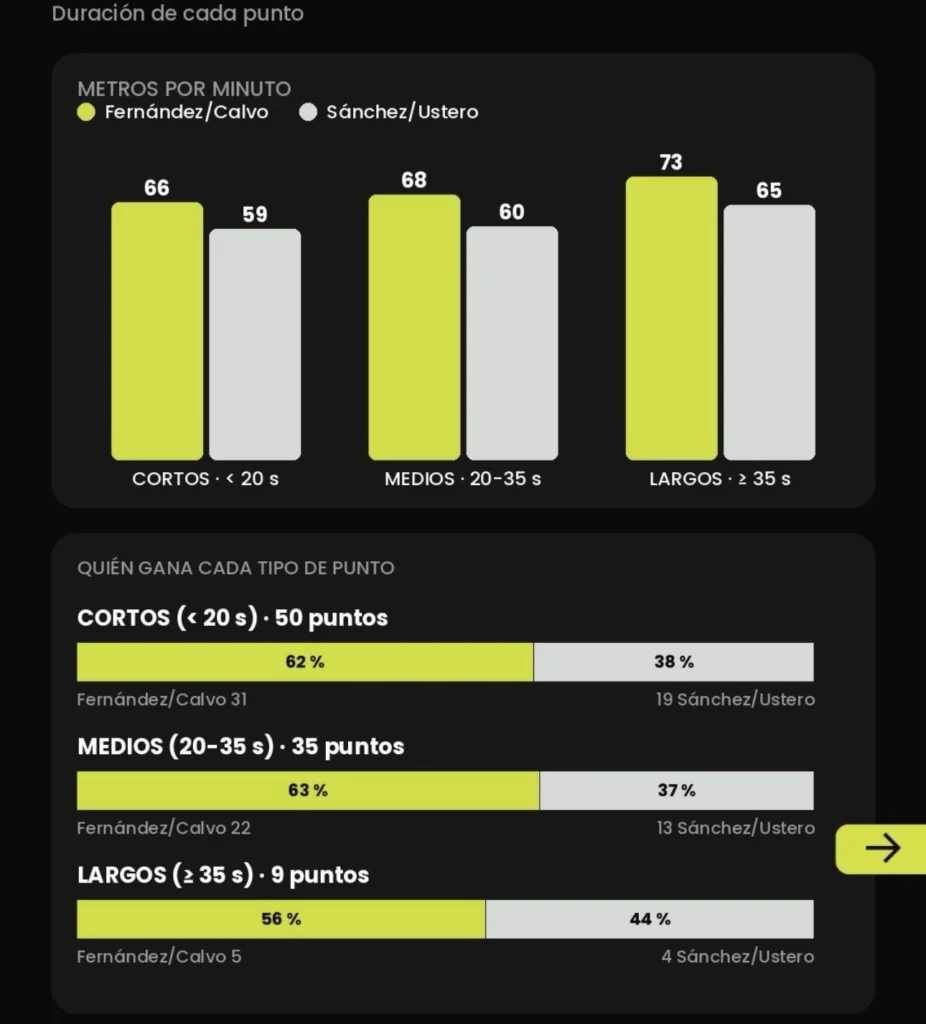
The analysis is not limited to movements. Padel Review was also interested in the duration of the exchanges and their outcome.
And the figures confirm the dominance of Fernández and Calvo , regardless of the length of the points. On the 50 exchanges of less than 20 seconds The winners won 31, or 62% The same trend is observed in intermediate trades, between 20 and 35 seconds: 22 points won out of 35, or 63% Finally, in the nine exchanges lasting more than 35 seconds, they won five points, or 56% .
In other words, Fernández and Calvo dominated both short and long exchanges. .
This consistency helps to better understand the particularly harsh scoreline of this final.
Two finals, two very different lessons
These analyses carried out by Padel Review ultimately allow us to draw two interesting conclusions.
At men's, Sanz and Stupaczuk ran, accelerated and sprinted more than Tapia and Coello , without managing to win the final. In the women's competition, on the other hand, Fernández and Calvo combined superior physical activity with a clear dominance in the score These two scenarios serve as a reminder that physical data must always be placed within its tactical context.
Running more doesn't necessarily mean playing better. But knowing when to accelerate, how to position yourself, and how to move with your partner can make all the difference.
With these heat maps, displacement measurements, and synchronization analyses, Padel Review provides a particularly interesting perspective on a still little-explored dimension of professional padel: physical and collective performance, beyond the simple result.

Maceo Zerhat discovered padel in 2020 in Savigny-sur-Clairis, Burgundy. He contributed to the club's expansion by bringing his energy and curiosity. Padel Magazinehe transmits his Padel"mania" by skillfully bouncing on all the latest news about your favorite sport!



























































 FIP rankings – Guichard drops, Fonteny moves closer to the top 100, Robert makes a great move
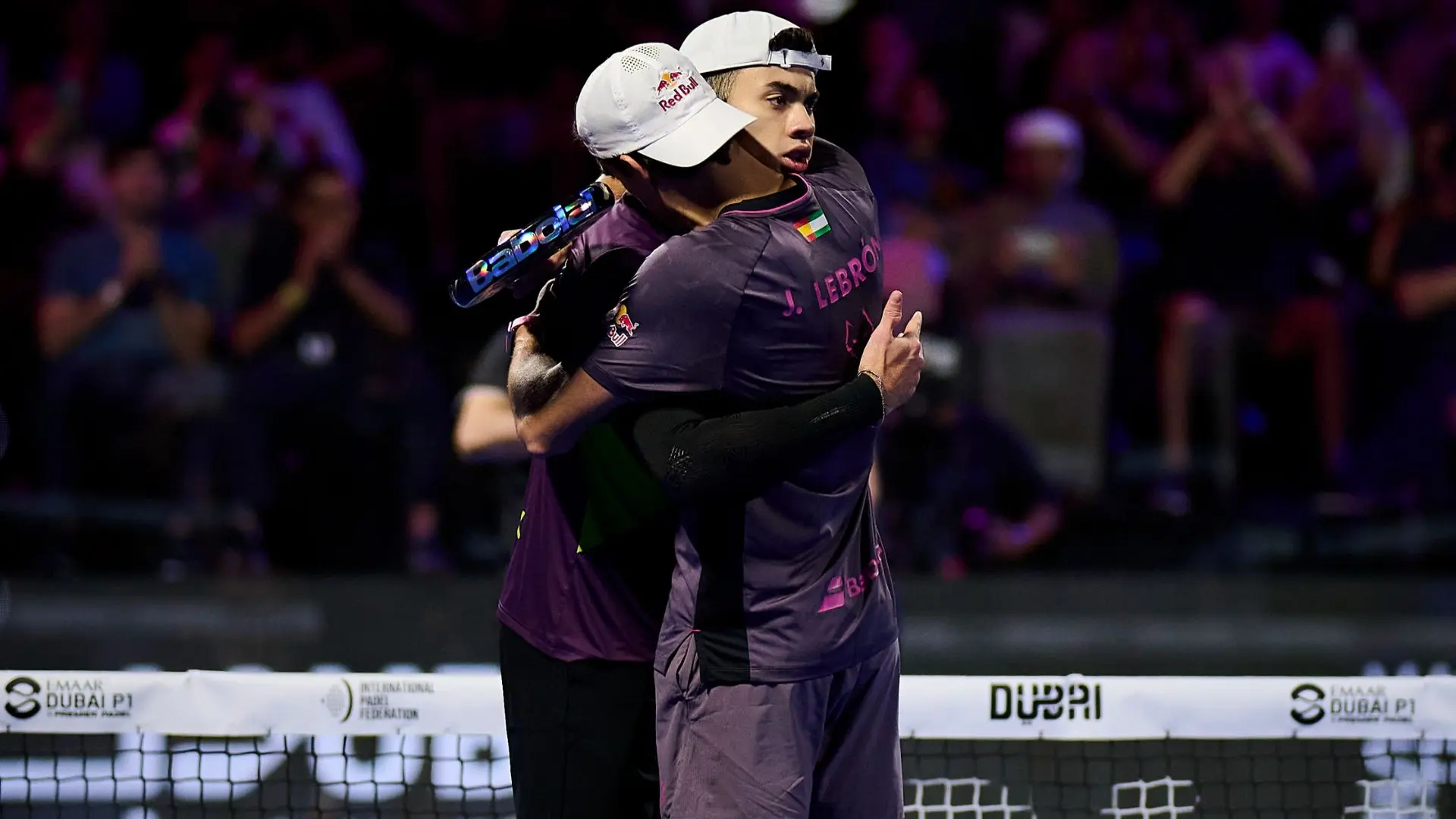 Lebrón / Augsburger: Brussels had sent a message, Dubai reinforces the threat
 Dubai P1 – Fernández / Calvo: “Any of the three best pairs could be world number 1”
 4PADEL is recruiting a padel coach in Reunion Island: permanent contract or freelance
 Two and a half years to create a padel racket: HEAD reveals the manufacturing secrets of its 2027 models
 Javier Rodríguez Piris: “I would like Spain to host the World Championships in 2030”
 "We're not a tournament club": the gamble taken by the two Henry sisters who are hosting a P3000 at The Break Padel Club
 “Victim of Padel ": The Adventure Padel Jack Troster and Jack Troster are back with a new track and a crazy music video.
 Bullpadel 2027 in the feminine: the queens take to the track
 Blanqué and Joris remain untouchable, securing the title at the P3000 Break Padel Club
 Three consecutive serves in the Dubai final: the recurring umpiring error Premier Padel
 Padel, weight training, and even HYROX: clubs are changing their model
 Padel court rentals: a global market estimated at 4,6 billion euros
 FIP Beyond: the new global padel circuit for amateurs and seniors
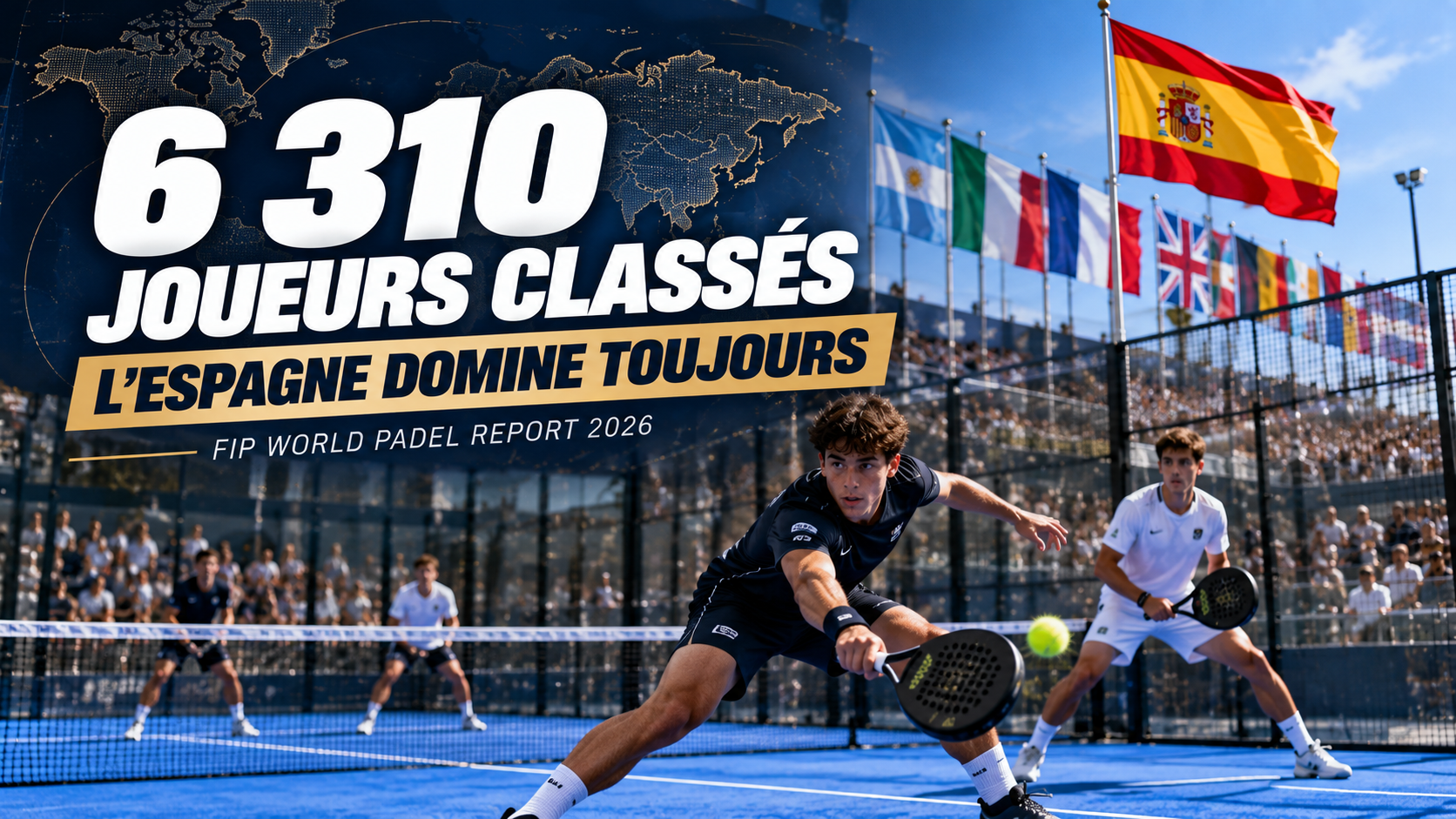 More than 6,300 FIP-ranked players: professional padel is becoming international, but Spain dominates
 OSS Barcelona – Why Spain and France aren't yet playing in the same league
 Cancer and rehabilitation: could padel become a therapeutic tool?
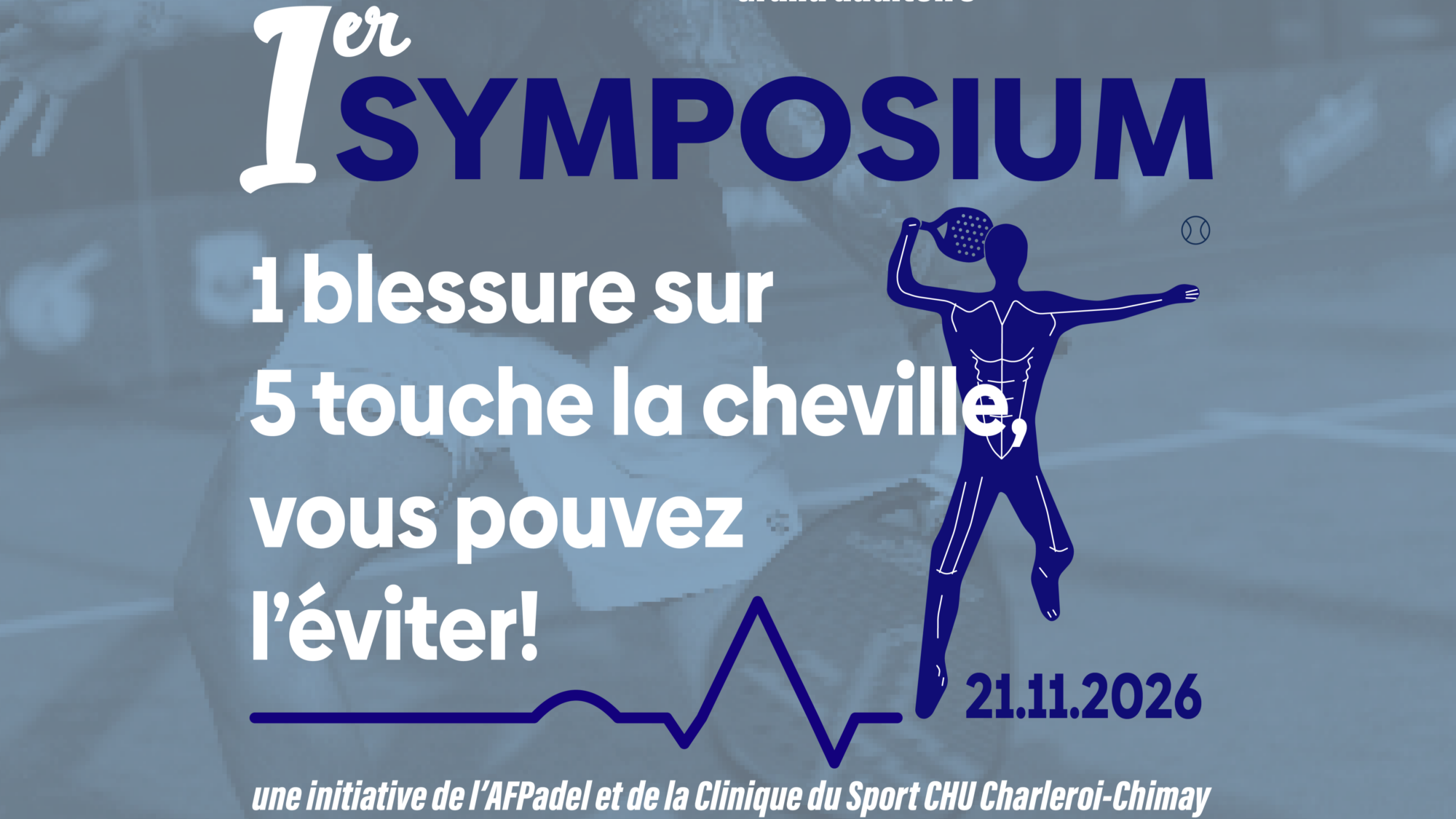 Padel injuries: ankle, knee, elbow, eye… what the latest figures reveal
 Shocking turn of events at Dubai P1: Coello and Tapia have also withdrawn!
 Padel serve: a good serve is especially good preparation for the third shot.
 What the analysis of the stroke reveals: tennis forehand vs. padel bandeja
 Has the bandeja disappeared from modern padel?
 Flat forehand in padel: 5 exercises from Cristian Álvarez to gain control and efficiency
 Why can Libaak/Alfonso beat almost everyone… except Coello/Tapia?
 Tapia reveals his recipe for beating Coello / Tapia: "I would bet everything on myself"
 How Coello defused Chingotto's game plan
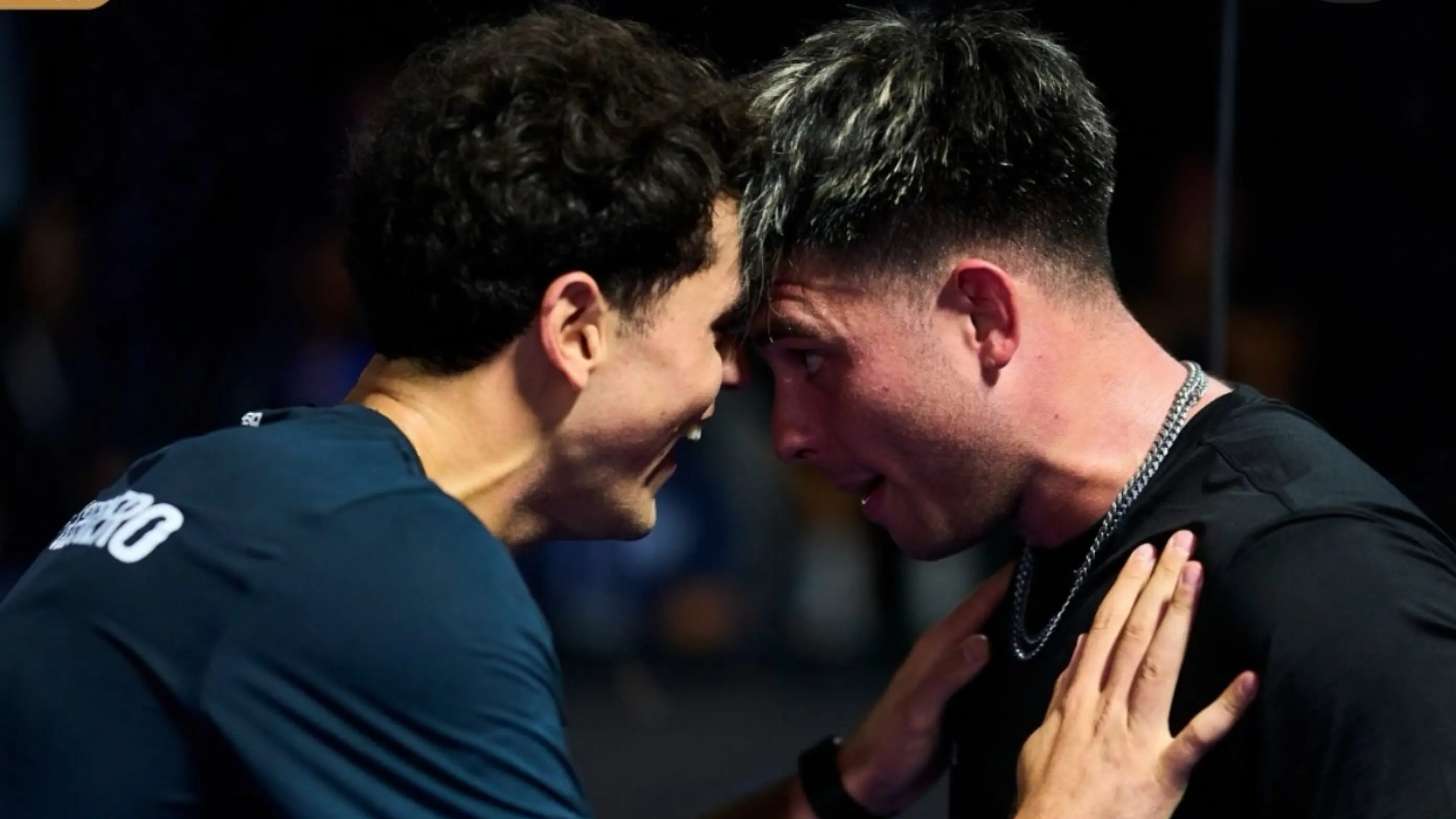 In padel, does the chemistry between a pair count as much as individual skill?
 Organising a national padel competition: what are the FFT's requirements for clubs?
 Organising a P2000 or a P3000: how much does it really cost clubs?
 P2000 or P3000: what are the differences in prize money, format and organization in 2028?
 Do you lose your ranking? Padel FFT after more than a year without a license / without competition?
 Memory, reflexes, concentration: what happens in our brain when we play padel?
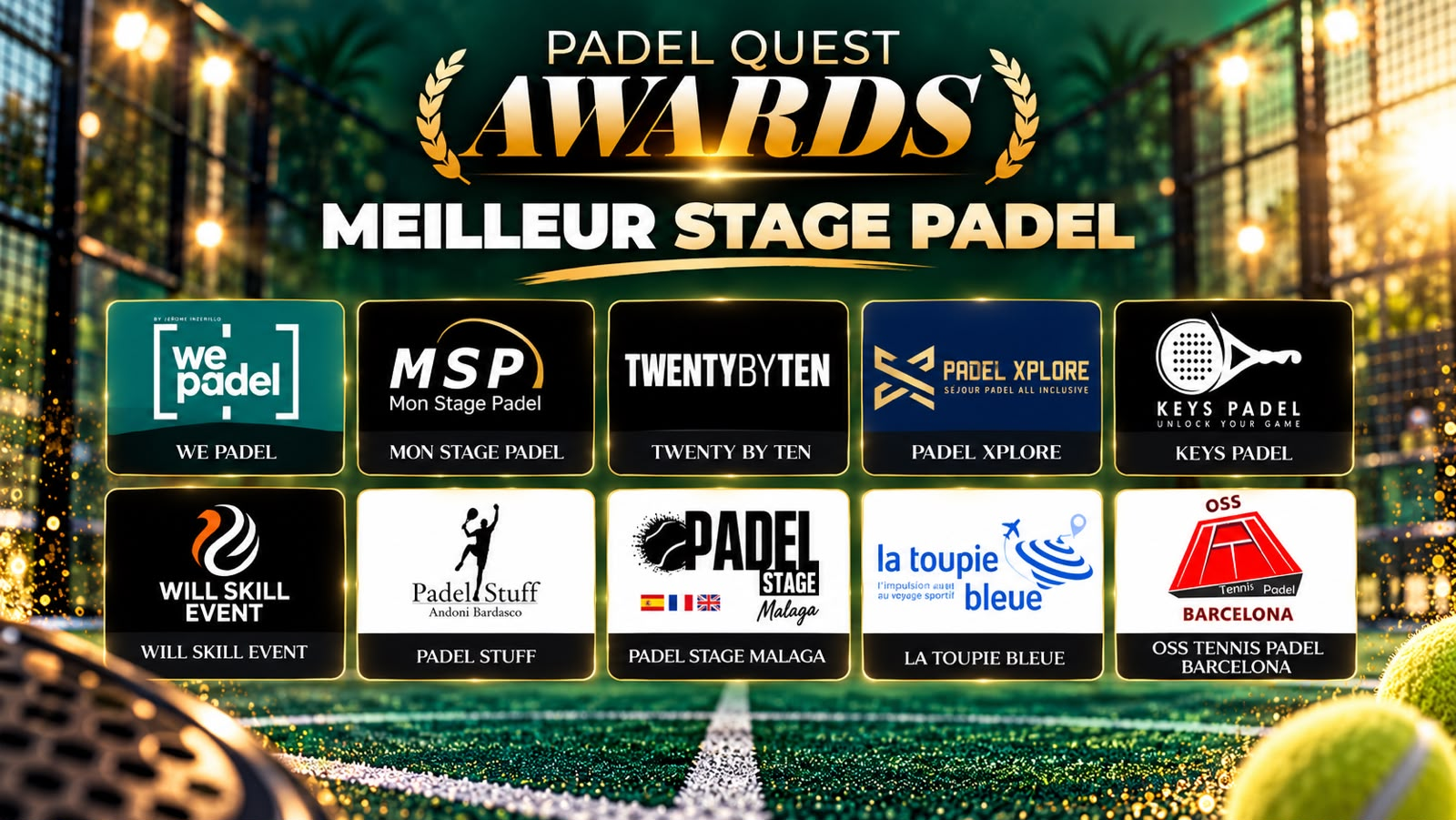 Padel Quest Awards: Ten specialists in the running for the title of best padel training camp of the year
 Padel Xperience: The Academy opens on November 2nd in Marcheprime, ahead of the complex's inauguration in 2027
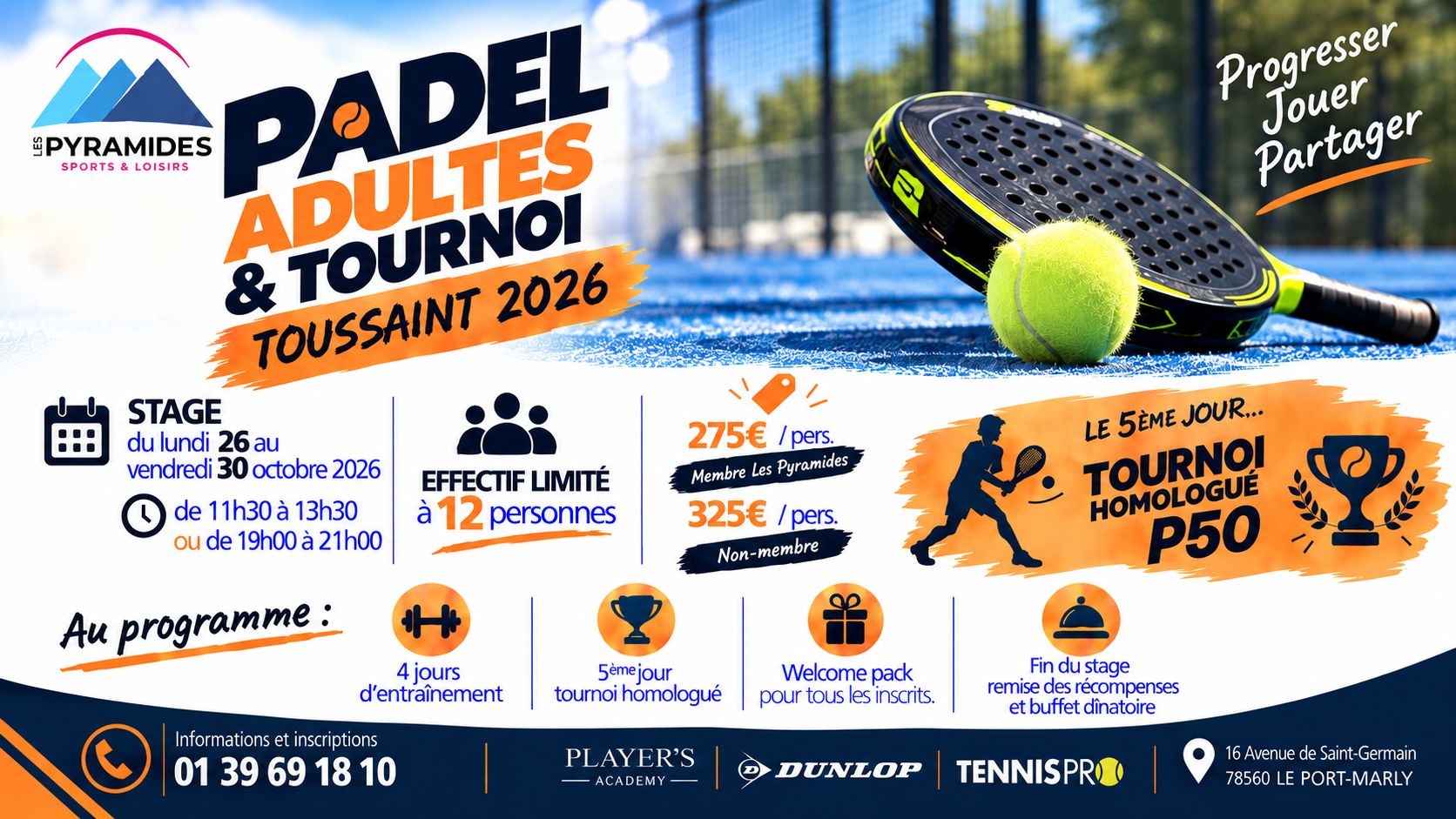 All Saints' Day – Les Pyramides are organizing a padel training camp for adults with a P50 tournament to close out the week