

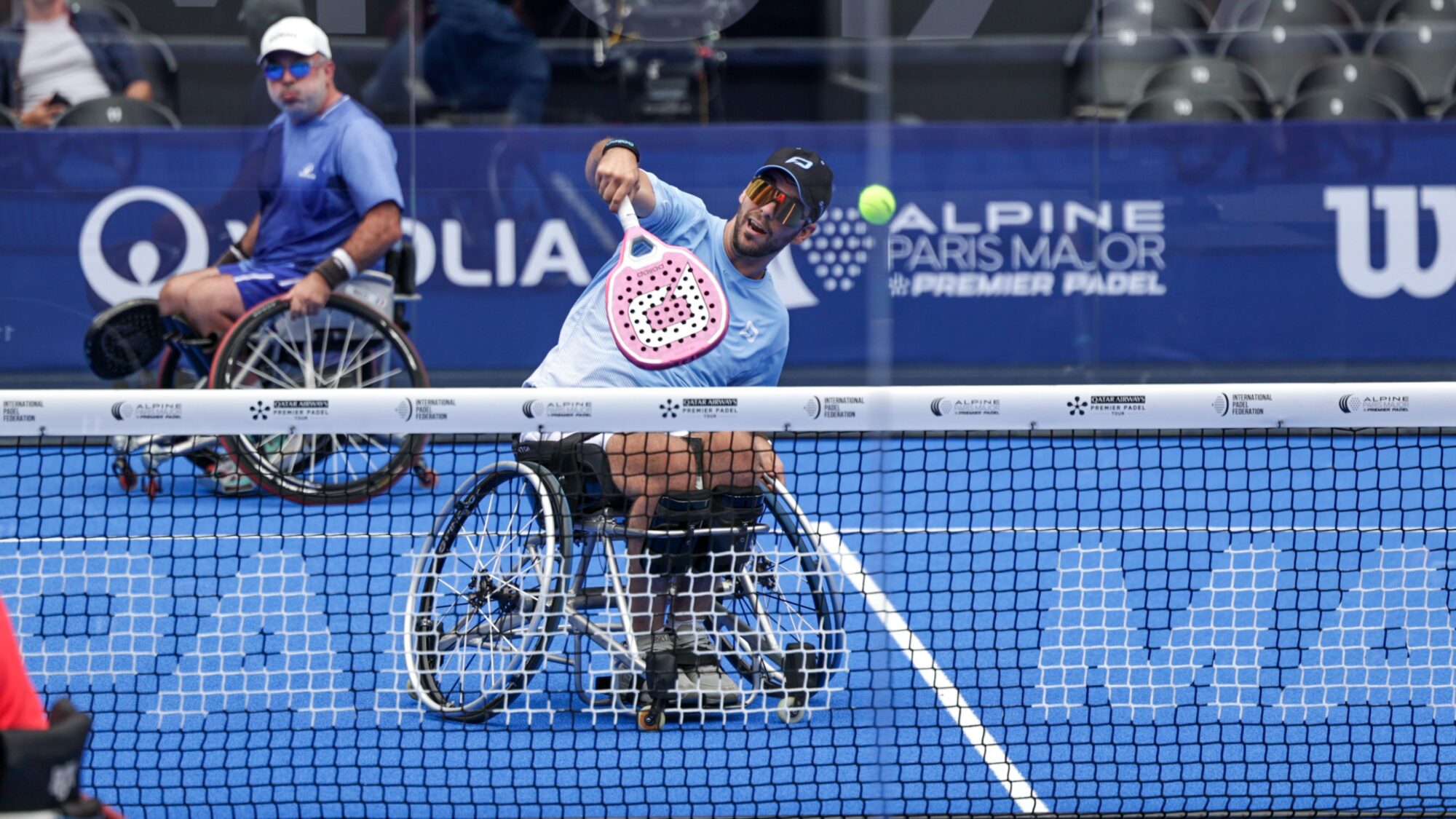








On the occasion of Paris Major 2026 at Roland-Garros Dorian Navarro spoke to address the reality of the wheelchair padel in France its rules, its development, but above all the obstacles that still hinder its structuring on an international scale.
At 28, the Frenchman is one of the leading figures in the discipline. French champion in 2024 and runner-up in 2025 It tells the story of a still young sport, which is now looking to take a new step.
From the first attempt in 2021 to the highest French level
The story between Dorian Navarro and padel begins relatively recently.
"I tried padel for the first time at the end of 2021 and I really started around September 2022."
It only took him a few years to establish himself among the best French wheelchair padel players.
Since January 2024, he has been coached by Jean-Michel Pequery in Antibes This is a rather favorable situation, since Navarro can also count on several players in his region.
"I'm very lucky because there are three of us in my department, in Nice, but that's not the case for everyone."
Because one of the first problems encountered by practitioners remains precisely finding training partners.
"Many people are forced to train on their own or with people who are not wheelchair users. That works very well too, but having a training group of four wheelchair users is complicated."
What is the difference between wheelchair padel and classic padel?
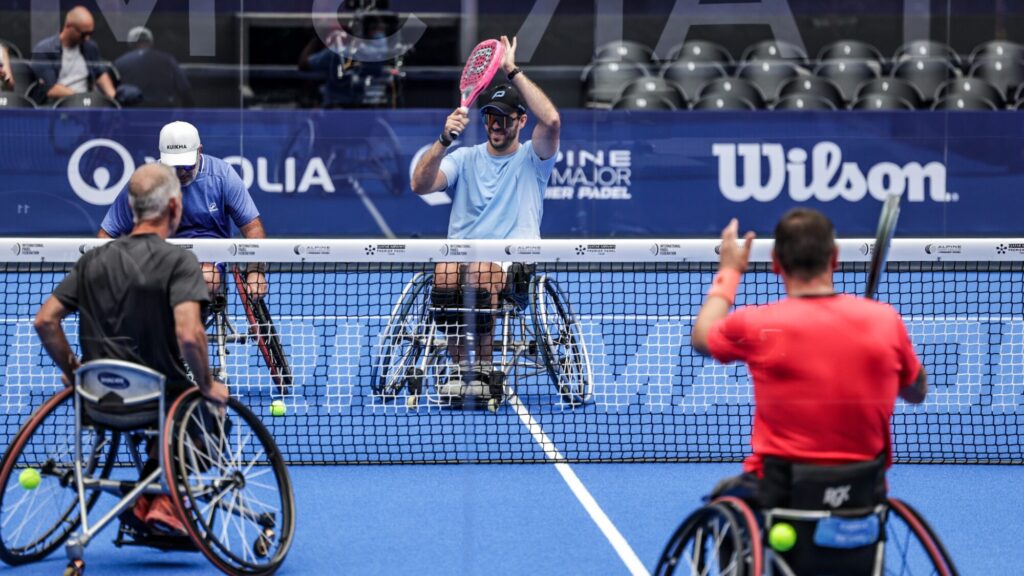
On the court, the rules remain very similar to those of traditional padel. The main adaptation concerns the number of bounces allowed.
"The rule that really differs is the double bounce. On the third bounce, the point ends. In standard padel, on the second bounce, the point ends. Otherwise, we have the same rules as the others."
An essential adaptation that allows the characteristics of padel to be retained while taking into account wheelchair mobility.
Around fifteen tournaments per year in France
Le French wheelchair padel circuit it also incorporates some of the nomenclature used in traditional padel.
Navarro explains, in particular, that the P250 represent the highest level of the circuit, comparable in its hierarchy to P3000 among able-bodied people, while the P100 approach the P2000 .
But the timeline is still limited.
"We need to have about fifteen tournaments a year. We can't do them all because sometimes they're a bit far away."
The low density of players and the necessary travel further complicate the construction of a real sporting season.
Roland-Garros 2027, the possible start of a new era
This is probably the main topic raised by Dorian Navarro: the current absence of a truly structured international circuit .
However, this situation could begin to change as early as 2027, with the prospect of a wheelchair padel tournament being organized as part of the Paris Major.
Navarro welcomed the announcement as a significant step forward.
"This is a really big step forward thanks to Mr. Moretton, and it's going to be great. I hope it will then have a knock-on effect and allow us to have a FIP circuit and a ranking system."
The objective is clear: to take advantage of the exposure of Roland-Garros to lay the first stones of an international organization.
"There is no international circuit. That's precisely why we're campaigning and pushing for it. I hope that the French Open next year will be a precursor to this circuit."
No prize money: the players depend on sponsors and charities
The economic question constitutes another important challenge.
While professional players on the traditional circuit can count on their sponsors in addition to prize money, the situation is even more complicated in wheelchair padel.
Dorian Navarro sums it up humorously:
"For us, it's great because there's no prize money, so at least we're sure we don't make any money from the prize money!"
Players must therefore find other ways to finance their training and travel.
"It comes solely from sponsors and financial support that we can obtain through associations, committees, or leagues. But it's much more complicated than that."
The sports associations They thus play an essential role in allowing players to continue their season.
The Spanish circuit is still difficult for French players to access.
Spain could naturally be an alternative for the best French players, given the development of wheelchair padel in the country.
But here again, an obstacle exists.
"At first, we were allowed to play, then it got complicated and now we're not allowed anymore. You have to be a Spanish resident to be able to play it."
Navarro regrets this situation, both for the foreign players and for the Spanish players.
"It's a shame because everyone was happy to have different players, new faces coming onto the circuit. The Spanish are very happy too because they've been playing amongst themselves for a while now."
The Frenchman is hoping for a change in the rules soon.

Franck Binisti discovered padel at the Club des Pyramides in 2009 in the Paris region. Since then, padel has been part of his life. You often see him touring France to cover major French padel events.







































 FIP Silver Côme – Boronad / Robert have a scare but advance to the quarter-finals, Potel / Étienne exit with honors
 Dubai P1 – Dal Bianco / Abbate cause a sensation, Lebrón / Augsburger deliver: an unexpected semi-final!
 JAP1, JAP2: How to become a padel referee and what are the prospects?
 Gonzalo Alfonso on his split with Tolito Aguirre: "It was painful, sad"
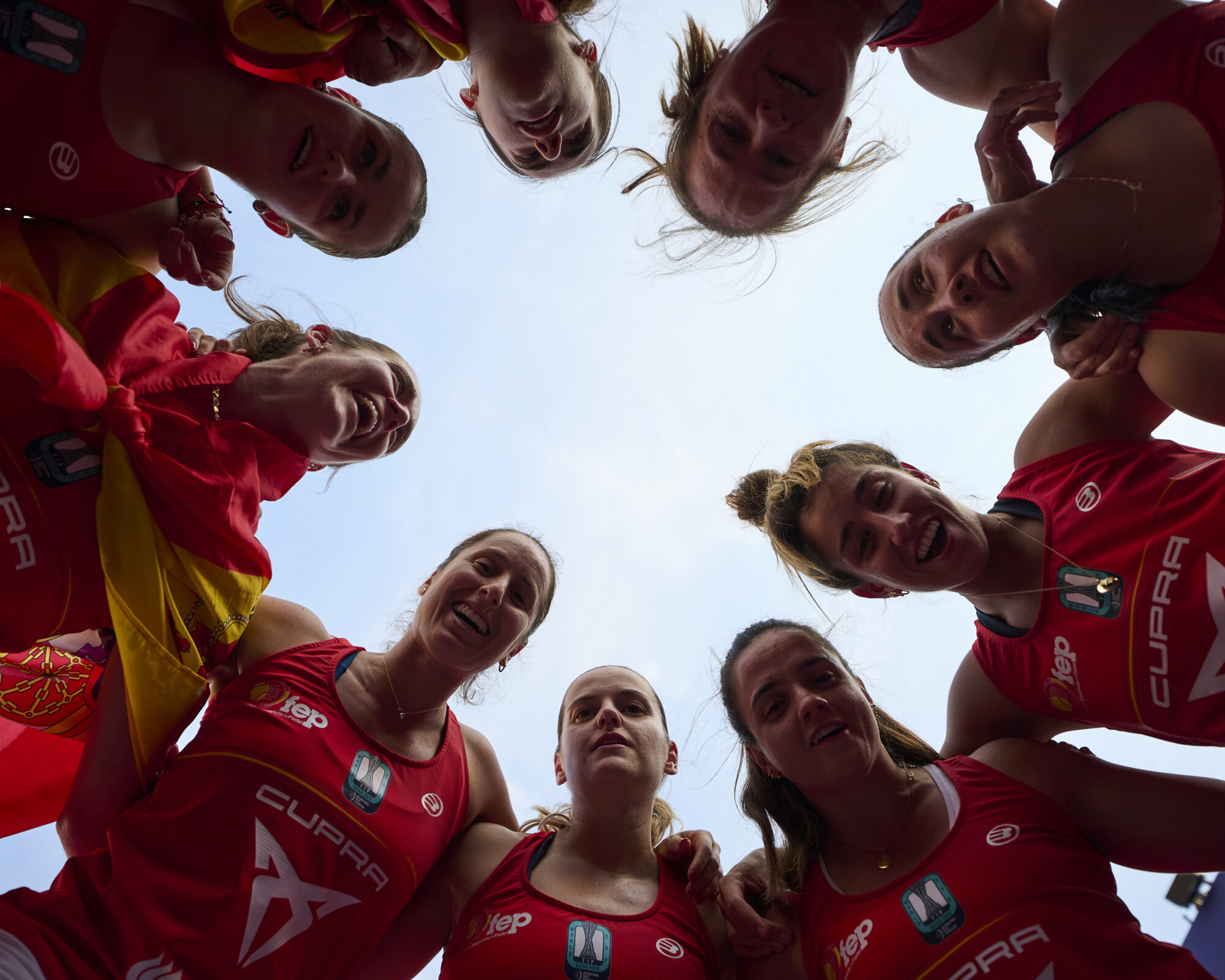 2026 World Championships – Ustero in tears, Triay facing Brea: the world champions' confessions
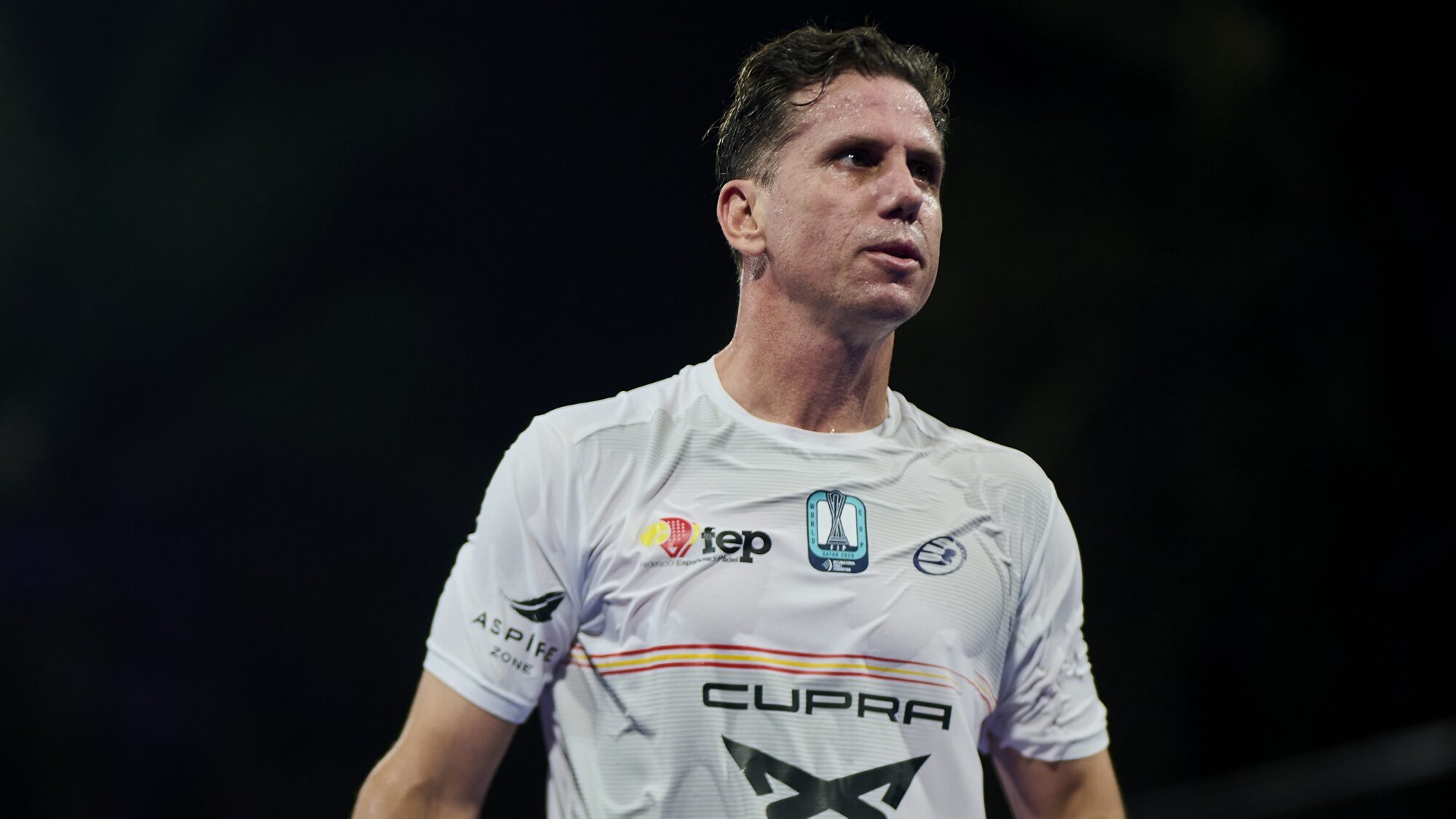 Paquito Navarro: "This is probably my last match with Spain."
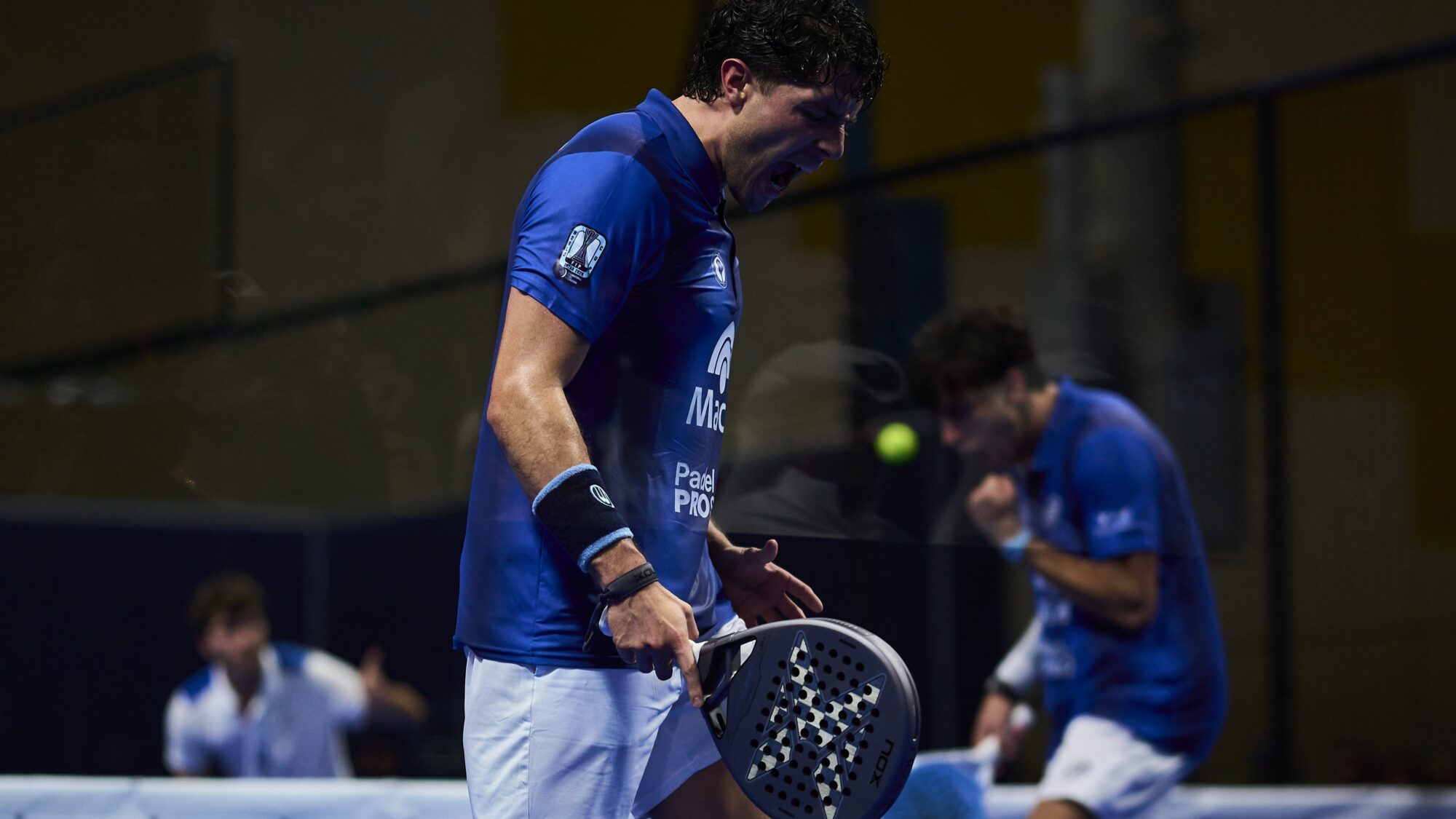 2026 World Championships: Tapia pays tribute to Fonteny/Joris, Chingotto discusses the pressure, and Reca warns Spain
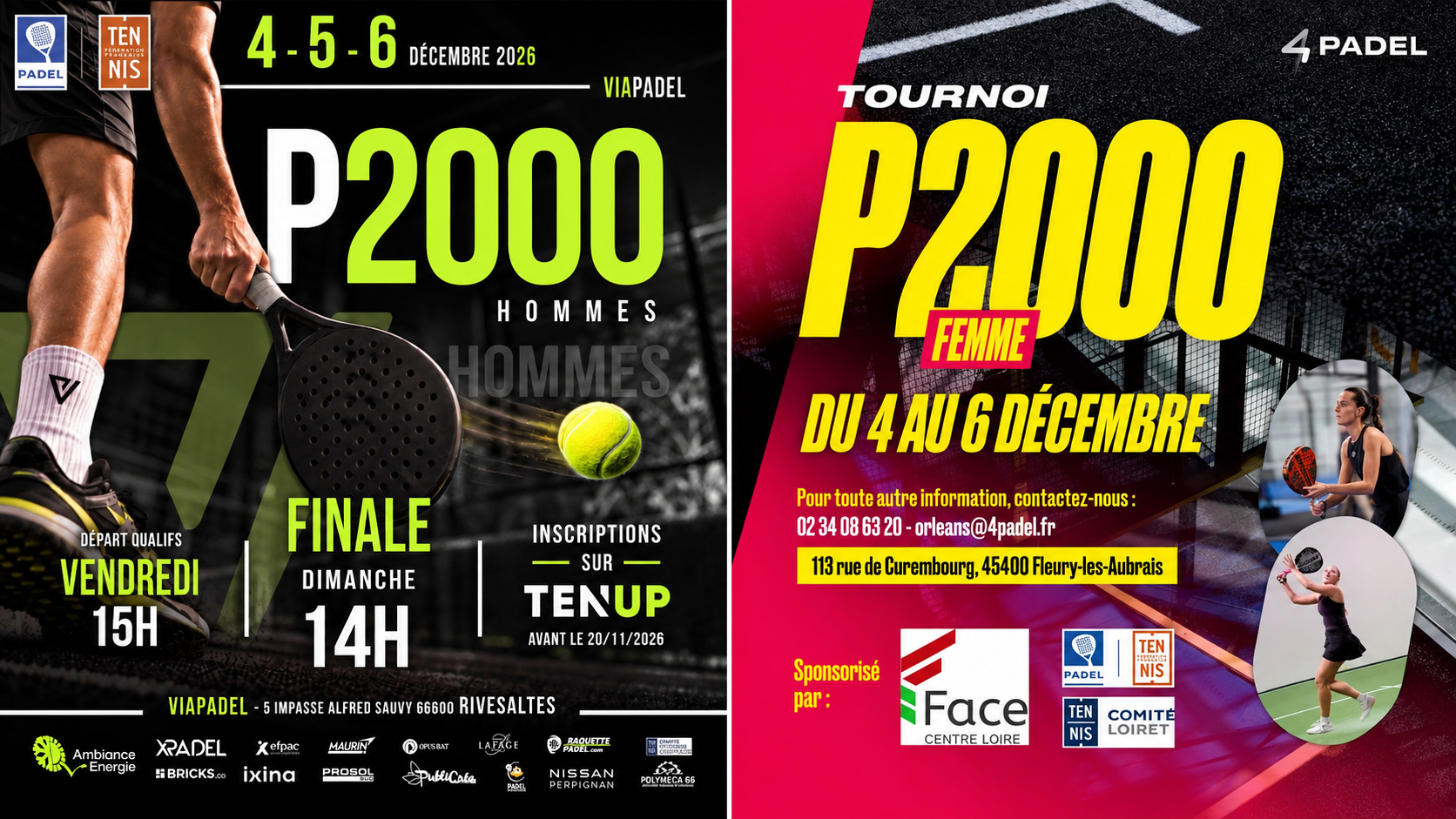 P2000: Scatena / Sescun, Courrin / Basso, Mansart / Bognard… the first pairs entered for the December events
 4PADEL Football Cup: Lille kicks off season 2 with a victory for Cheyrou/Cygan against Mandanda/Danic
 P3000 Bouillargues – Results / Live / Schedule
 Dubai P1 – Very open quarter-finals, with a Tello / Arce shock against Lebrón / Augsburger
 Padel, weight training, and even HYROX: clubs are changing their model
 Padel court rentals: a global market estimated at 4,6 billion euros
 FIP Beyond: the new global padel circuit for amateurs and seniors
 More than 6,300 FIP-ranked players: professional padel is becoming international, but Spain dominates
 Cancer and rehabilitation: could padel become a therapeutic tool?
 Padel injuries: ankle, knee, elbow, eye… what the latest figures reveal
 Shocking turn of events at Dubai P1: Coello and Tapia have also withdrawn!
 Organising a national padel competition: what are the FFT's requirements for clubs?
 What the analysis of the stroke reveals: tennis forehand vs. padel bandeja
 Has the bandeja disappeared from modern padel?
 Flat forehand in padel: 5 exercises from Cristian Álvarez to gain control and efficiency
 Why knowing how to play on the right and left can make all the difference
 Why can Libaak/Alfonso beat almost everyone… except Coello/Tapia?
 Tapia reveals his recipe for beating Coello / Tapia: "I would bet everything on myself"
 How Coello defused Chingotto's game plan
 In padel, does the chemistry between a pair count as much as individual skill?
 Organising a P2000 or a P3000: how much does it really cost clubs?
 P2000 or P3000: what are the differences in prize money, format and organization in 2028?
 Do you lose your ranking? Padel FFT after more than a year without a license / without competition?
 Memory, reflexes, concentration: what happens in our brain when we play padel?
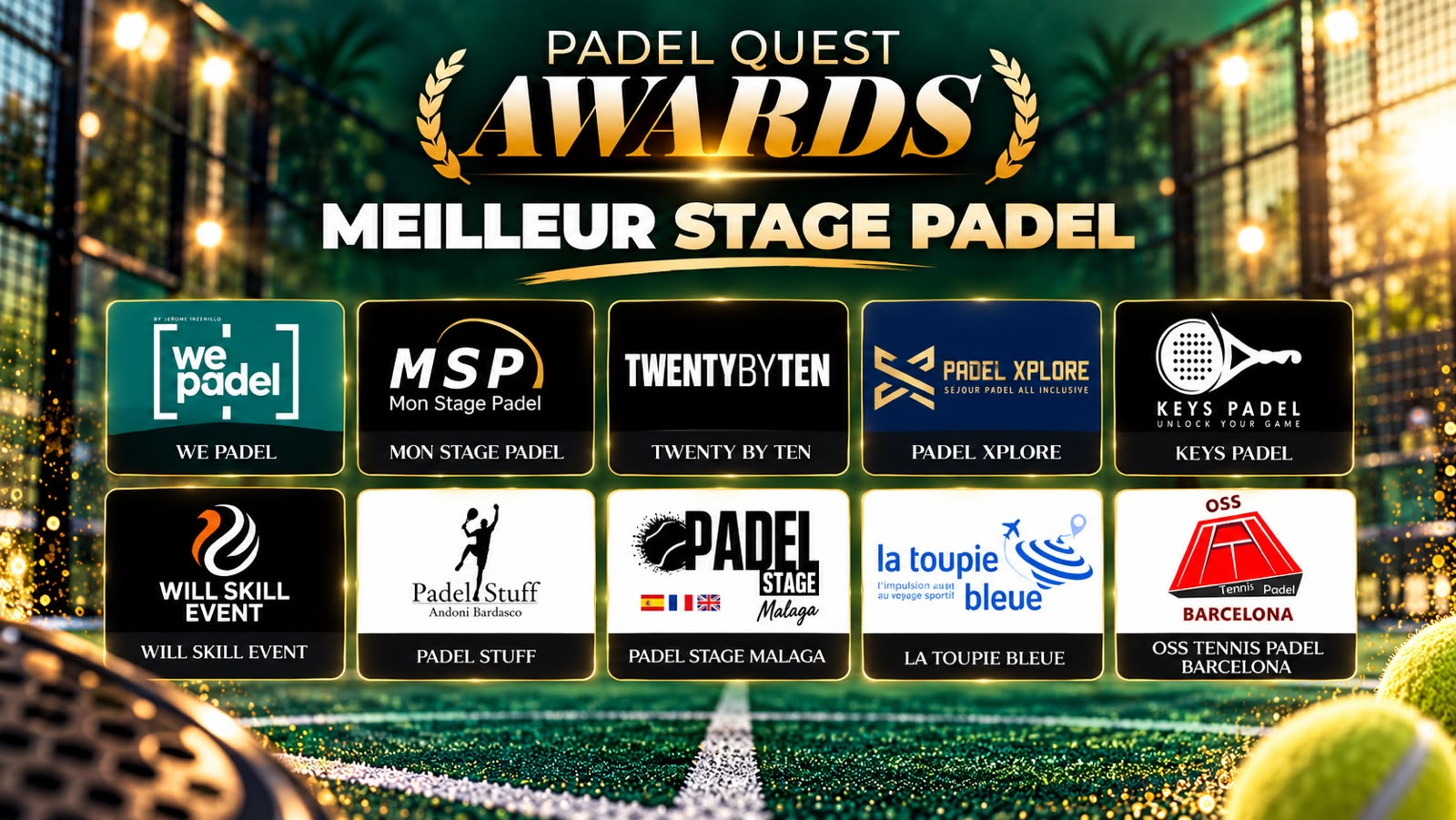 Padel Quest Awards: Ten specialists in the running for the title of best padel training camp of the year
 Padel Xperience: The Academy opens on November 2nd in Marcheprime, ahead of the complex's inauguration in 2027
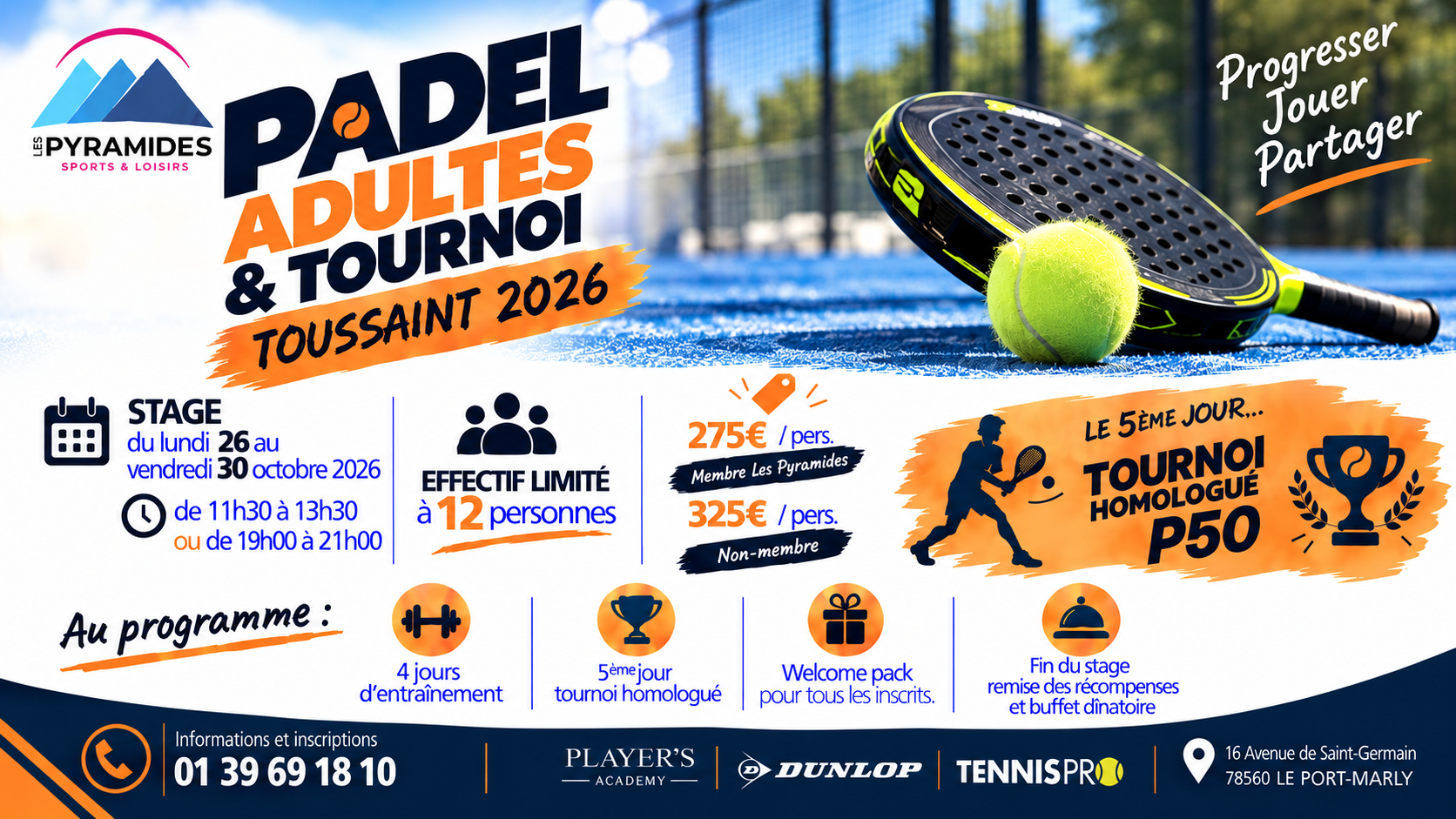 All Saints' Day – Les Pyramides are organizing a padel training camp for adults with a P50 tournament to close out the week
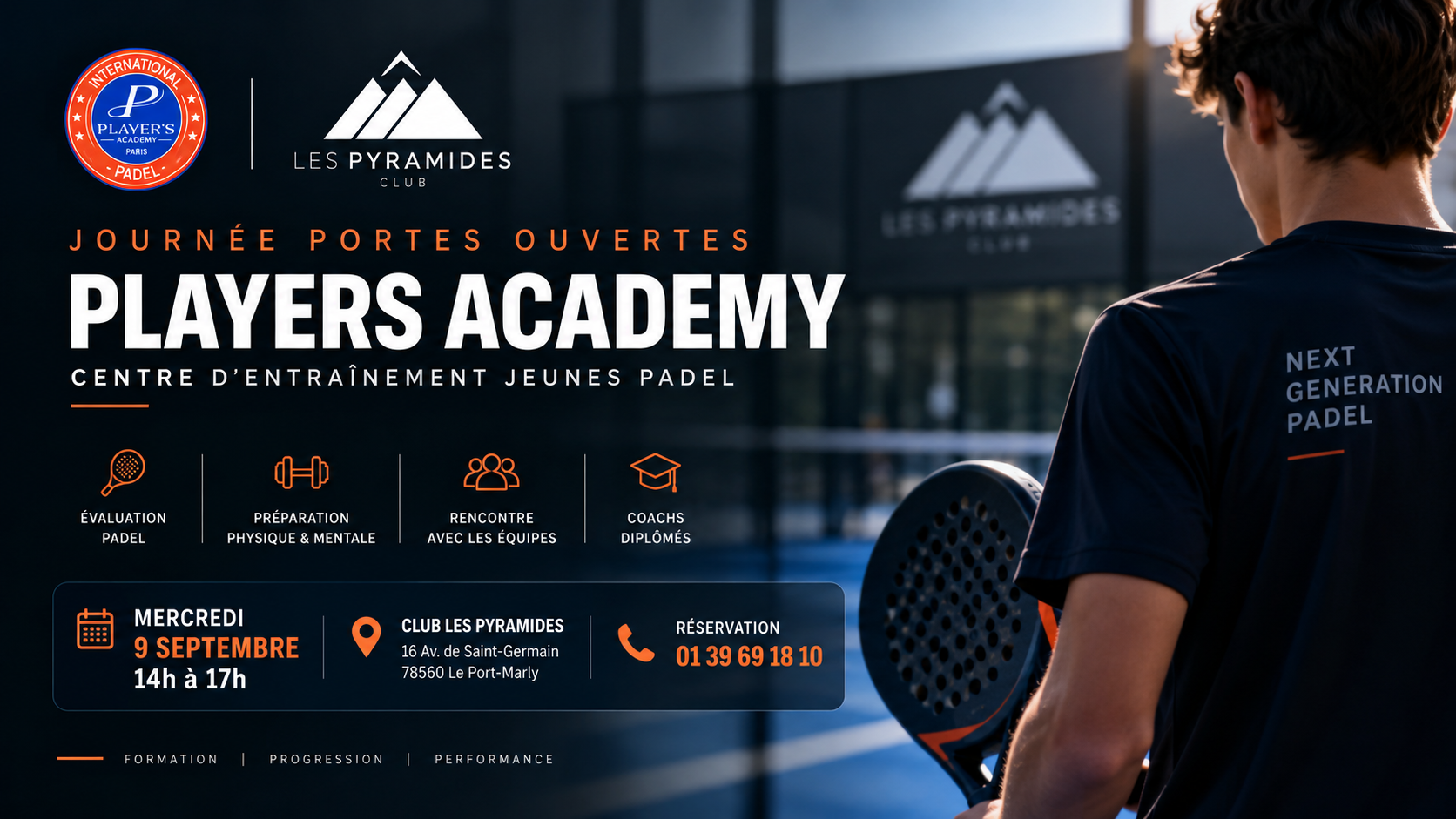 Les Pyramides: after 12 padel courts, the club is focusing on youth training