








French padel continues to grow at an impressive rate, but this growth now brings new problems: multiplication of tournaments, competition between clubs, P500s which have sometimes become too accessible, last-minute WOs, rankings to be adapted and the need to better control the organization of competitions.
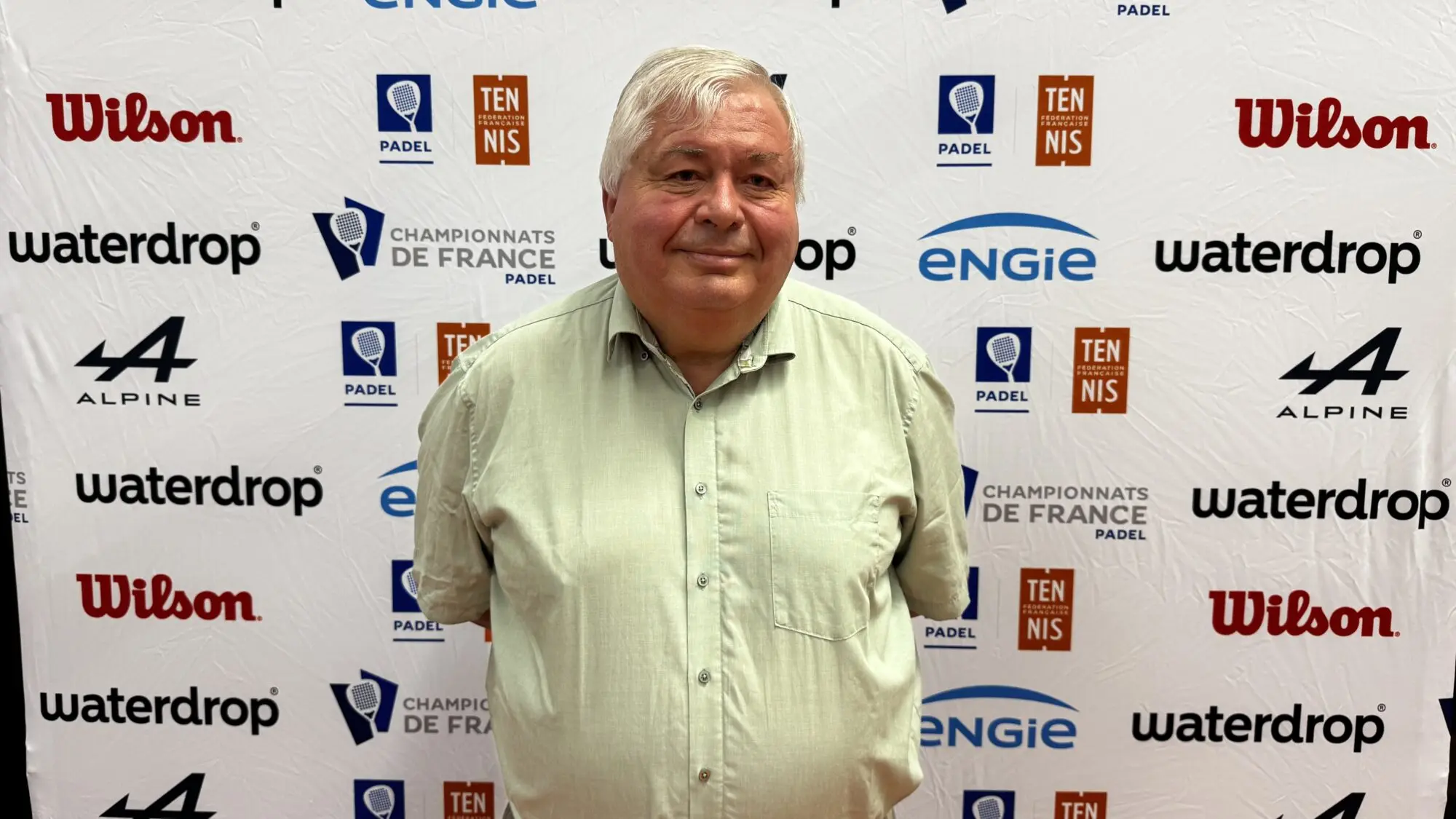
On the occasion of French Padel Championships 2026 Padel Plus Agen , Padel Magazine talked with Éric Largeron, vice-president of the French Tennis Federation and elected official in charge of padel .
In this interview, he addresses several sensitive issues head-on. He acknowledges, in particular, that, In some areas, the number of tournaments has become excessive. that the current P500 system is experiencing a "reverse drift" after the changes made to its scale, and that the FFT is considering new ways to combat forfeits and walkovers
He also mentions the dialogue with private structures, the tool Moja The constant evolution of the cuts and a figure that alone illustrates the change in scale of French padel: approximately 170,000 ranked players .
"In this sport, you have to be very reactive."
Padel Magazine The French Championships are also an opportunity to take stock. How do you analyze the evolution of French padel in 2026?
Eric Largeron: For us, the new season has already begun, as we have been operating since September 1st. We have therefore already carried out initial assessments and implemented regulatory and IT changes, as well as various tests.
We are in a sport that always knows extremely significant growth and constant movement .
So we need to be very responsive. It's not always easy for us, but that's the game and we gladly play along.
"Is the truth of three years ago still the same today?"
Padel Magazine Padel is evolving so rapidly that some good decisions made a few years ago may now need to be reviewed.
Eric Largeron: Exactly. There are many examples.
The first one that comes to mind is that of indexing , that is to say the quota of licenses required from clubs in order to be able to organize a certain number of tournaments, with also the work of harmonization.
When we put this system in place three years ago, the situation was different.
The question we must ask ourselves today is simple: Is the truth from three years ago still the same today?
We are therefore considering these issues. And we are also involving private groups in this reflection, particularly through their association.
The goal is to be able to make rapid changes when necessary. but without rushing .
Private clubs are now involved in the discussions.
Padel Magazine An association representing private clubs has recently been formed. Is the dialogue with the FFT working?
Eric Largeron: Yes, dialogue exists.
Obviously, there are requests that we can respond to favorably and others for which it will not be possible.
But what I take away most of all is that this association shares our desire to develop French padel .
So it's a positive thing to work together.
This association can also alert us to a part of the Federation's operations that we are less historically familiar with: the commercial dimension of the structures .
We come from a more community-based culture, particularly with tennis. Private structures sometimes have a different approach.
Since we need to move forward together, it is very interesting to have these different points of view.
P500: "A reverse drift has occurred"
Padel Magazine Let's talk about the P500, a category that continues to generate a lot of discussion. Does the current system still need to evolve?
Eric Largeron: The P500 has long struggled to find its place.
With our cut system and the way the P250, P500 and P1000 were organized, a good P250 player could sometimes prefer to continue playing P250s.
Why? Because he had a better chance of scoring points there than in a more competitive P500, where he had to achieve a very good position to truly improve his ranking.
So we changed the system this year with a fixed scale .
But another problem has emerged.
Relatively weak players, located at the back of the cut in a P500, can now leave with a significant number of points.
A player accustomed to P100s can, Without winning a match in a P500, he leaves with more points than if he had won a P100. .
It's kind of the opposite drift.
We are aware of that.
Limit the number of P500s per club?
Faced with this situation, Éric Largeron suggests a particularly interesting possibility: possibly limit the number of P500s that a single club can organize .
However, please note: at this stage, this is an idea that has been raised in the discussion, and not a final decision.
Eric Largeron: Changing the rules every other day isn't necessarily the best solution.
But perhaps we could limit the number of P500s per club , in order to prevent this category from becoming a kind of easy points factory.
The idea would be, on the contrary, for the P500 to once again become a sought-after event in a club, with players coming to try and achieve the best possible result.
It's just an idea, nothing more at this stage.
Padel Magazine So the objective would also be to restore a true hierarchy between the categories?
Eric Largeron: Yes.
What we want is for a P250 to bring together players who are generally weaker than on a P500, for the P500 to be below the P1000, but above the P100, and so on.
We must maintain a sporting consistency between categories .
Could prize money return to the P500s?
Padel Magazine A few years ago, prize money was mandatory for P500 tournaments. This requirement mechanically limited the number of tournaments. Could its return be a solution?
Eric Largeron: We need to remember why we removed it.
In particular, many private organizations had asked us to remove this prize money requirement.
And our statistics also showed that there was too few P500s organized in France .
We therefore granted this request.
Since then, we have not changed the rule.
But it's important to understand that we returned the prize money. not required We did not ban it.
An organizer can perfectly well decide to offer a financial prize on their P500.
"The players might go to the best organizations."
With the proliferation of clubs and competitions, Éric Largeron also believes that a form of selection could gradually take place on the players' side.
Eric Largeron: At some point, there may be choices to be made by the players.
There will be so many clubs and so many tournaments on offer that they will naturally gravitate towards the best organizations , those that offer the best conditions, possibly the best prizes or gifts, and that show the most respect for the player.
I'm not necessarily very comfortable with the word "competition", but in French padel today, we have to take it into account.
There are a huge number of structures and, sometimes, a huge number of clubs concentrated in the same areas.
"In some places, there are far too many tournaments."
Padel Magazine We now see players participating in one tournament in the morning, sometimes another in the afternoon, and possibly yet another competition afterwards. Some clubs even explain that they are forced to organize more and more tournaments to avoid losing their players to a competitor. Is this proliferation starting to become a problem?
Eric Largeron: Several things need to be distinguished.
When a structure opens, the Federation does not intend to prevent it from obtaining an authorization allowing it to develop federal padel.
We cannot implement a kind of quota system and say, "There are too many of you, so we are refusing your application."
That's not how we operate.
But once a private club is open, it obviously has to be profitable.
The tournament can then be viewed in two ways: as a club activities which is very positive, but also as a way to filling off-peak hours .
This also explains the abundance of competitions.
When we see certain structures organizing a huge number of tournaments, we can wonder if this does not also reflect a difficulty in filling certain time slots with traditional rentals.
And we must be careful.
If players only participate in tournaments, they no longer necessarily train and no longer necessarily reserve lanes for recreational games.
The leagues can already harmonize their schedules.
For Éric Largeron, part of the answer may come from the leagues and departmental committees who already have levers at their disposal to avoid certain absurd situations.
Eric Largeron: The leagues and departmental committees can harmonize.
If you have, for example, two P100 races organized five kilometers apart the territory can intervene and decide that there will only be one of the two.
This does not completely eliminate the problem of the number of tournaments for structures with many licenses, but it at least gives competitions a better chance of filling up.
Alternatively, you could have two geographically close tournaments that don't fulfill either of the requirements and which, ultimately, pull each other down .
Are clubs being "held hostage" by tournaments?
Padel Magazine A club manager recently told me he felt almost "held hostage": he sometimes wishes he could organize fewer tournaments, but if he doesn't, his players will go play at the neighboring club. Do you understand this feeling?
Eric Largeron: I don't like excessive terms.
But it is true that organizing a tournament can sometimes be simpler than setting up a casual game with four players of the same level.
For a recreational game, the organization sometimes needs to find two people, then two other players of a comparable level so that everyone can have a pleasant hour and a half.
With a tournament, registration opens and players come.
This obviously requires work from the referee, because they have to manage withdrawals, changes of partners and everything else that can happen.
But the tournament can still represent a form of ease.
And my message is clear: There are many tournaments. In some places, there are far too many.
After that, everyone has to take responsibility.
Some organizations may need these tournaments because, without them, they would have empty tracks.
Could there also be too many clubs in certain areas?
Padel Magazine If some regions have too many tournaments, does that mean there are also sometimes too many clubs?
Eric Largeron: Yes, that can be felt.
The structures themselves are noticing this.
They are seeing some tournaments fill up less than before. Booking schedules may be very full during peak hours, but much less so over the course of the day.
I naively thought that a new investor wishing to open a facility would naturally go to an area where there was little supply.
That's not necessarily what happens.
Some people see that a club is doing well, generating a certain turnover with a certain number of tracks, and think they can do the same thing right next door.
But it's not that simple.
At one point, the structures risk pulling each other down .
There are undeniably more and more padel players. But they won't necessarily allow all facilities to operate at maximum capacity.
Moja: More transparency in tournaments
Among the changes already undertaken by the FFT, Éric Largeron emphasizes the deployment of Moja for sports management of competitions .
The objective is, in particular, to have a tool to better manage the organization of tournaments and to avoid certain inconsistencies.
Eric Largeron: This is something quite new in the organization of padel tournaments.
The work began in June, but now clubs and referees need to truly take ownership of the tool.
With Moja, we can find out, among other things, if a referee is appointed to two tournaments simultaneously or if a player participates in two tournaments at the same time .
There is also the requirement to register the pair and not just one player.
This brings greater transparency and helps to limit certain abuses or arrangements.
We are very vigilant about this.
The goal now is to consolidate Moja because everything is not working perfectly yet and not everyone has fully mastered the tool yet.
WO: The FFT is considering ranking penalties
This is one of the most important statements from the interview.
The FFT wants to better combat players who withdraw very late and is considering forms of penalty that could impact the ranking .
Here again, no specific measures have been announced as definitively adopted.
Eric Largeron: We're going to speed up on some things we don't like to see.
I'm thinking in particular of the players who multiply the WO who announced the night before that they would not be coming after all.
We are considering forms of penalization. for example in terms of ranking .
This will not be implemented immediately, but the packages are causing us problems.
Our tool should allow us to better respond to some of these situations.
To restore the referee's role as guarantor of the competition
Beyond the computer tool, Éric Largeron also wants to emphasize the central role of arbitrary judge .
Eric Largeron: Padel has a unique characteristic.
The referee is often closely linked to a particular organization. And the players are also clients of that organization.
We come from a culture in which the referee must be a neutral person who makes the decisions and ensures competition.
We would like to fully regain this role.
The referee does not necessarily have to side with the players. Above all, he must be the guarantor of the smooth running of the competition .
"We'd almost have to change the cuts every two months."
Padel Magazine From a regulatory standpoint, can we expect further changes in the coming months, particularly in 2027?
Eric Largeron: We are constantly evolving.
We are observing everything that is happening and all the points that are becoming difficult.
Let's take the cuts : with the current growth, they would almost need to be changed every two months.
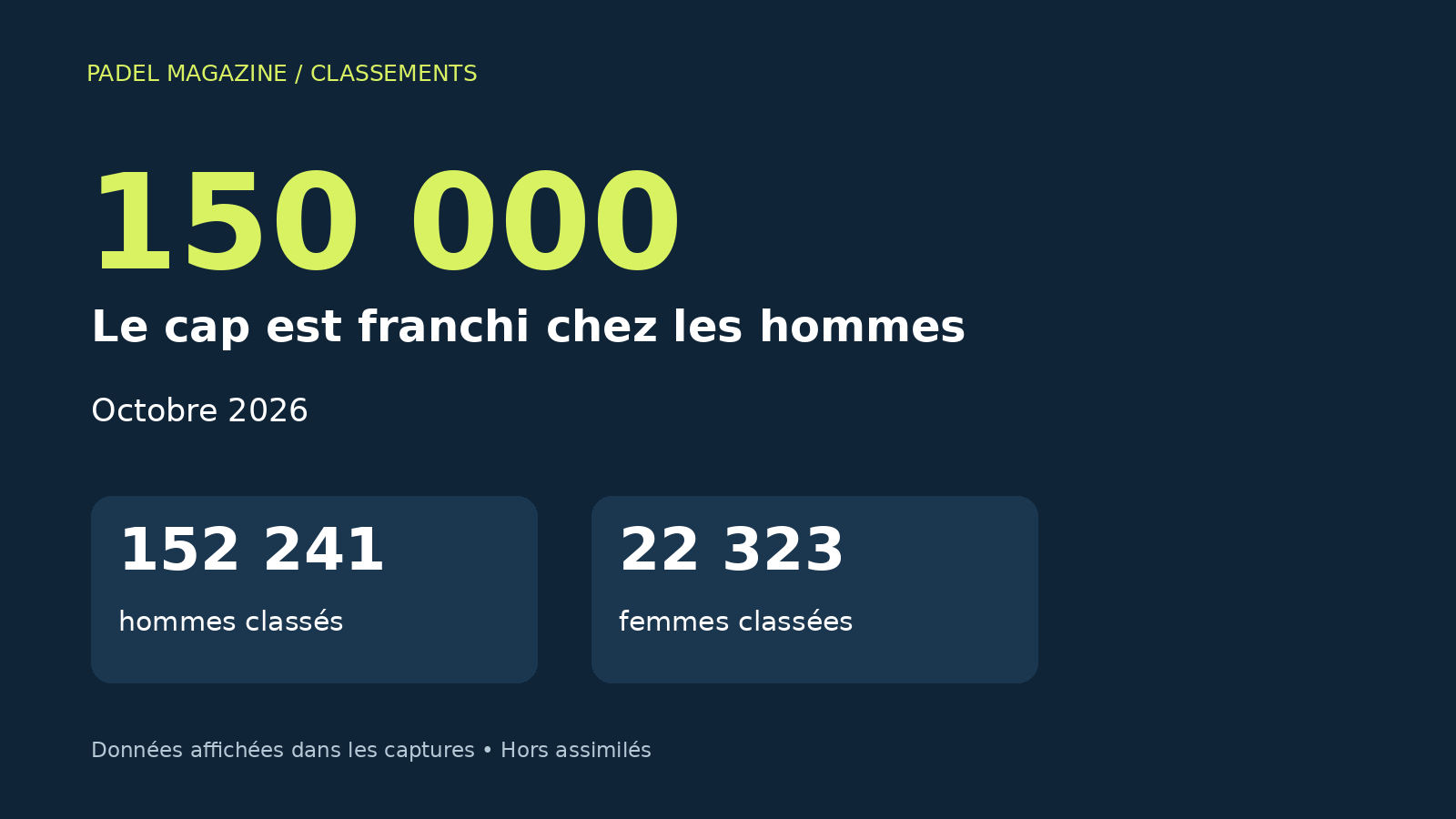
Today we have approximately 170,000 people classified .
At one time, I myself was around 4,000th place, but there were only about 4,200 ranked players at the time.
Today, being the 4,000th Frenchman means having a completely different level.
The ranking is built from the top down and we are currently filling the base of the pyramid very much.
This makes thinking about cuts and categories much more complex.
Padel Against tennis: far fewer competitors, but a very intense level of activity
Padel Magazine : With this increase in competitions, doesn't the padel player ultimately participate in tournaments much more often than a tennis player?
Eric Largeron: A distinction must be made between the number of competitors and their frequency of participation.
In tennis, we are around 350 ranked players , against around 170,000 in padel .
Therefore, there are more competitors left in tennis.
But there are a lot of padel tournaments.
En Occitanie For example, we were around 8,200 to 8,600 tournaments in the 2026 season , All categories.
It should be remembered, however, that a tennis tournament can accommodate 300, 400 or 500 people, while a padel tournament can have 12, 16 or 24 pairs.
And it's often the same players who participate in several competitions.
So I would say that padel is much more active in terms of competition frequency , because padel players participate in tournaments much more regularly than tennis players.
That's my perception. I don't necessarily have all the measurements to confirm it statistically, but the available figures show this very high level of activity.

Franck Binisti discovered padel at the Club des Pyramides in 2009 in the Paris region. Since then, padel has been part of his life. You often see him touring France to cover major French padel events.







































































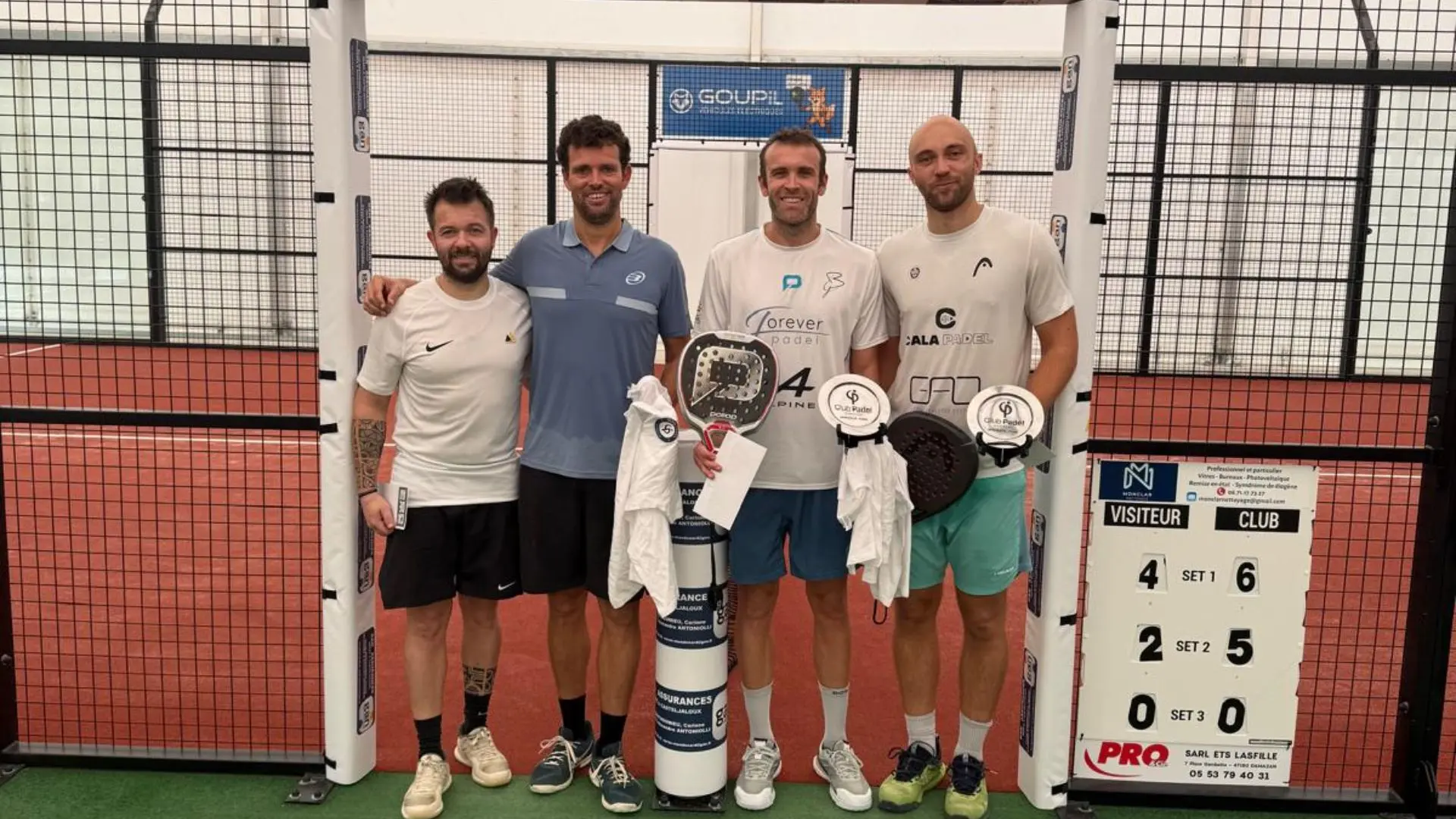 P1000 Padel Club Damazan: no surprise, Grue and Vanbauce live up to their status as favorites and clinch the title
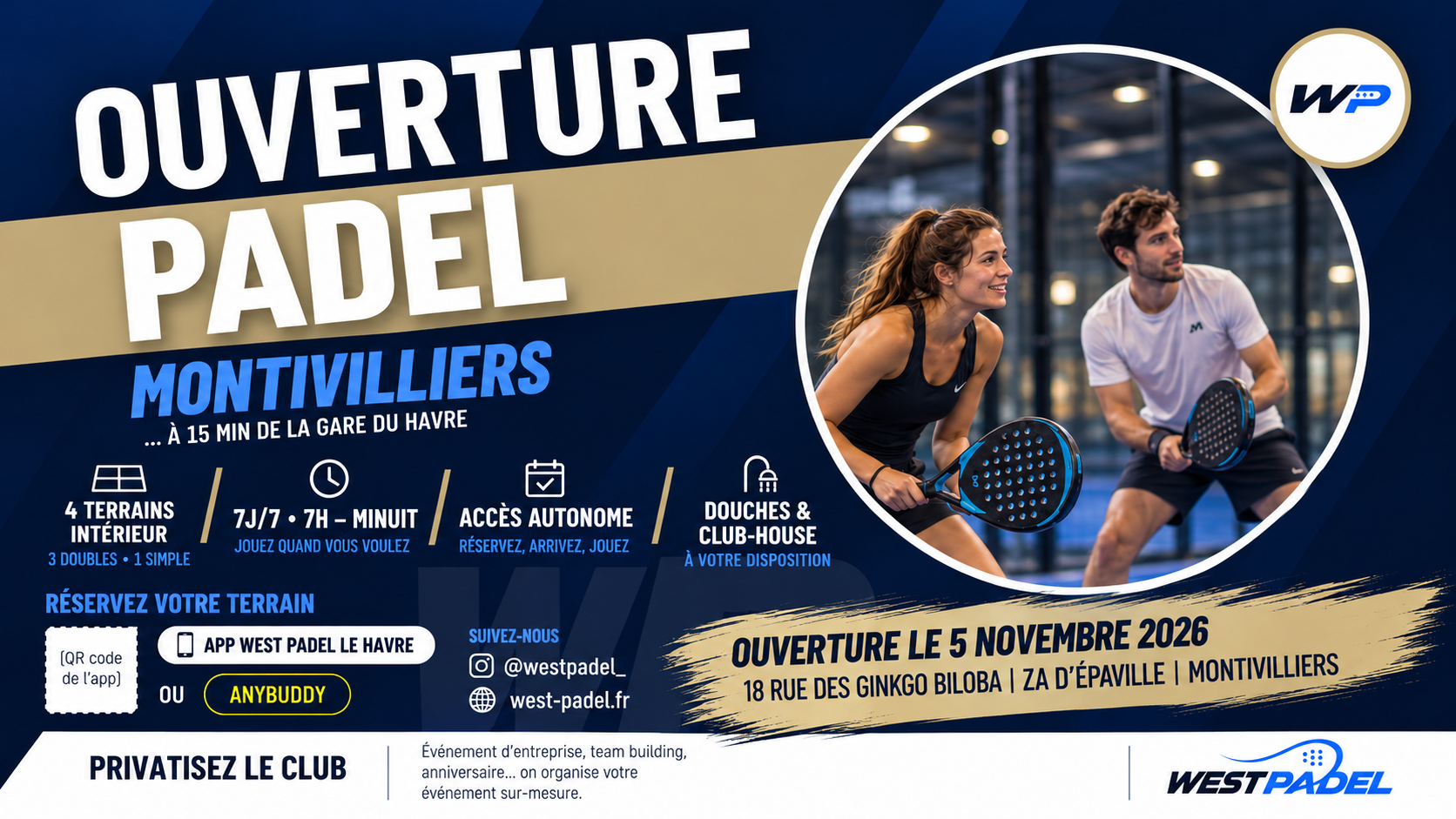 West Padel A new indoor 4-lane ski club opens near Le Havre on November 5th.
 Leal / Guerrero, two defeats in three sets: why do Libaak / Alfonso always have the last word?
 France or Portugal, Spain or Argentina: Miguel Lamperti ranks the best padel nations
 Cédric Lavoye: "Hard work pays off" and a first FIP tournament in Guadeloupe is in his sights
 Nicolas Rouanet is preparing his return in 2027: “With Bastien Blanqué, I would never say no”
 Leygue/Blanqué respond bluntly to the criticism: "You can say what you want... We're putting all our money and our lives into this."
 Padel rankings October 2026: more than 150,000 men ranked in France
 P1000 Verneuil Padel Club – Results / Live / Schedule
 West Padel opens its 4 indoor courts in Montivilliers on November 5th
 FIP Promises Copenhagen: Tyrone Pottier shows no signs of stopping and secures his 10th title on the circuit
 Black Crown Hurricane: Hurricane power 4
 Düsseldorf P2: Tapia/Coello still too strong for Stupa/Sanz, third consecutive title for the world number 1s
 For sale: two padel clubs in Mauritius, starting from 330,000 euros
 How much does it actually cost to organize a FIP Bronze event?
 Padel How Lidl is transforming Crivit into a fully-fledged sports brand with Steffi Graf
 Compagnie des Alpes is accelerating its involvement in padel with PadelCity: a new step in its European strategy
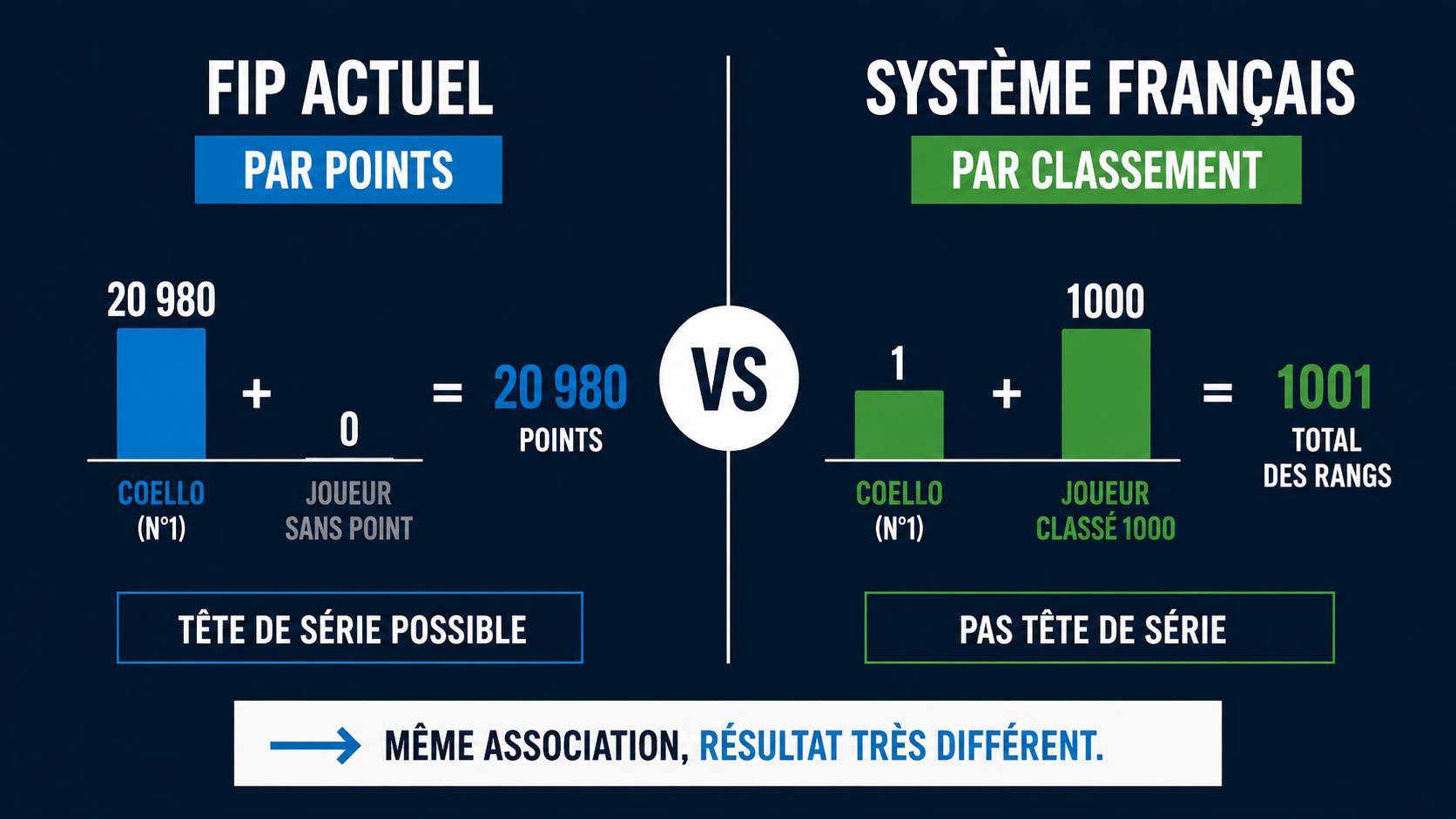 Coello with a player at 0 points ahead of two top 10 players: should the FIP ranking be reviewed?
 Les Pyramides: after 12 padel courts, the club is focusing on youth training
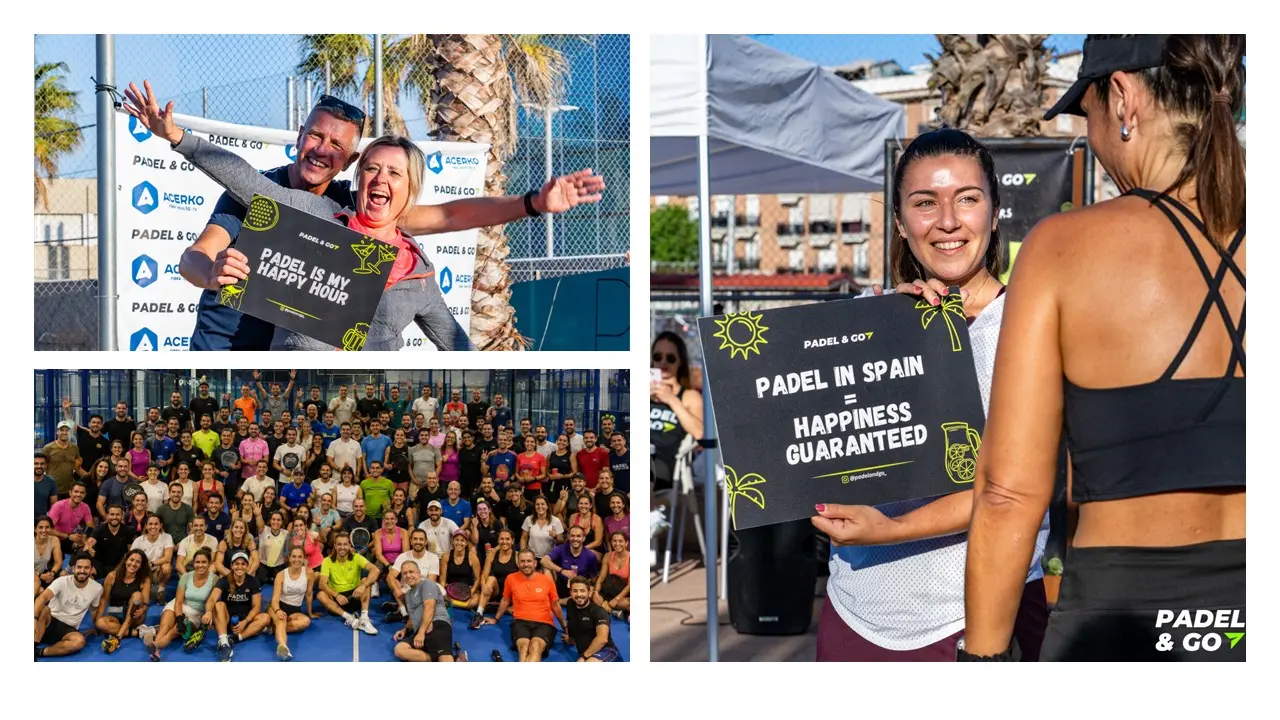 Health Care Padel Tour 2026: What if your next padel tournament was played in Barcelona?
 FAST Padel Academy continues its development and establishes itself in Liège.
 What the analysis of the stroke reveals: tennis forehand vs. padel bandeja
 Has the bandeja disappeared from modern padel?
 Flat forehand in padel: 5 exercises from Cristian Álvarez to gain control and efficiency
 Why knowing how to play on the right and left can make all the difference
 Tapia reveals his recipe for beating Coello / Tapia: "I would bet everything on myself"
 How Coello defused Chingotto's game plan
 In padel, does the chemistry between a pair count as much as individual skill?
 Summer changes padel… but what if the real challenge wasn't hitting harder?
 Neither FIP Tour nor World Team Championship: the unique format of padel at the Mediterranean Games
 Premier Padel : when television can lengthen players' breaks
 Premier Padel Yes, a referee can refuse a player permission to go to the toilet
 Julien Seurin opens up about his mental state: "There are far more doubts than moments of happiness."
 More than a year later, Thomas Leygue is back in the top 150: behind the scenes of a comeback that's still unfinished
 Padel vs squash vs badminton: the scientific ranking of cardio intensity
 Why does Arturo Coello play with his right hand bandaged?
 What if your progress in padel depended on what nobody else is looking at?