

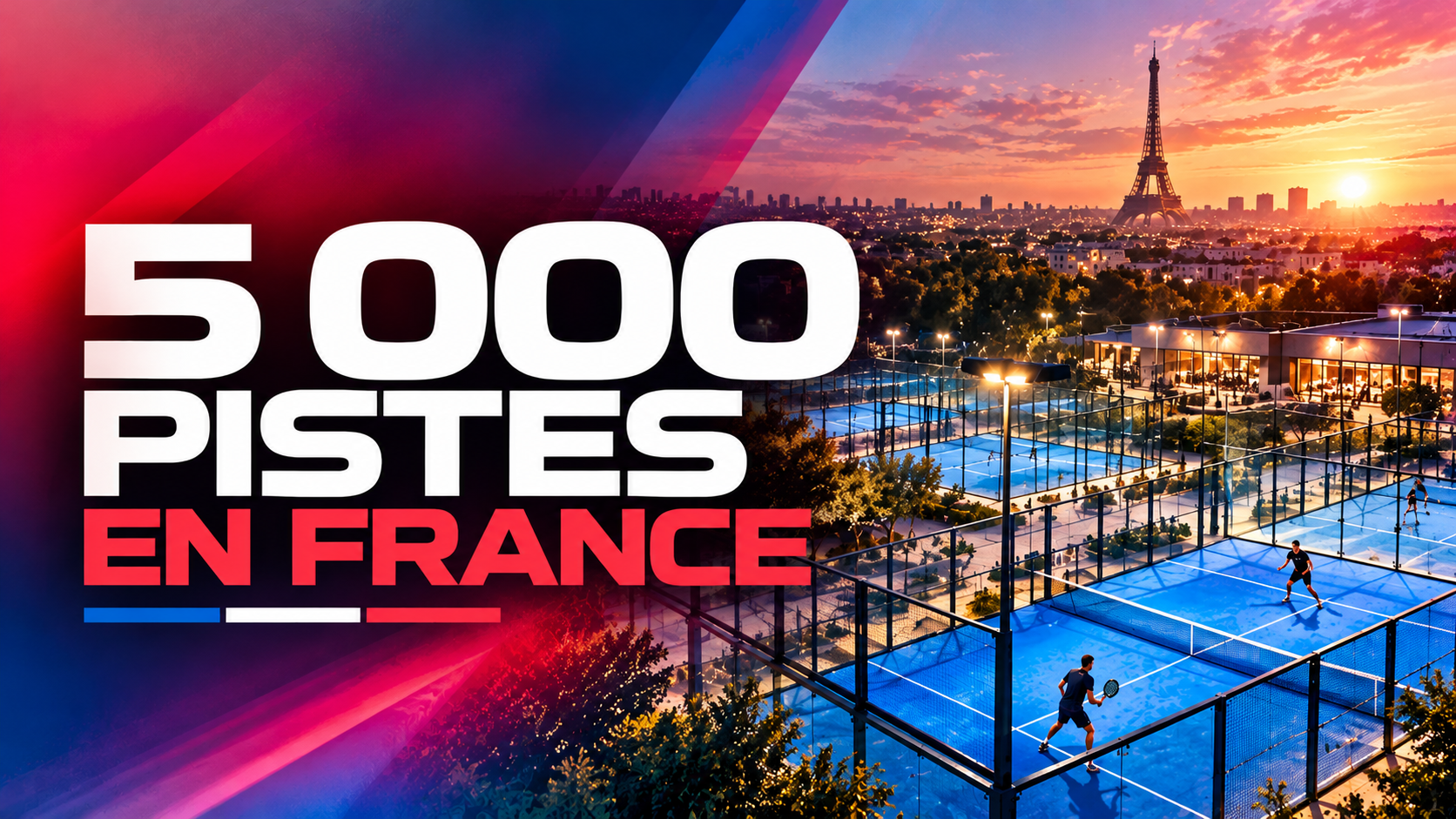








Le French padel continues its development at a sustained pace. According to the FIP World Padel Report 2026 , published by the International Padel Federation, France has crossed the symbolic threshold of 5 tracks . By 889 new tracks et 277 new clubs or practice sites Based on the data collected in the last period studied, France confirms its place among the main drivers of European growth.
France surpasses 5,000 ski slopes
This is a new stage for the development of padel in France. Long concentrated around a few large urban areas, the sport has gradually spread to many territories, driven by investments from clubs, private operators and sports structures.
In its 2026 report, the International Padel Federation (FIP) indicates that France has reached the threshold of 5 tracks , with almost 900 new installations since the beginning of the year.
More specifically, the data presented in the European ranking indicates:
- 889 additional tracks ;
- 277 new clubs and establishments offering padel ;
- another estimated annual growth of 28,8% for the tracks;
- another estimated annual growth of 28,1% for clubs and establishments.
These figures illustrate the dynamics of the French market, even if the annual percentages correspond to FIP projections and not to final results for the whole of 2026.
France, Germany and the United Kingdom: the three driving forces of European padel
France is not alone in experiencing this growth. The FIP identifies three particularly dynamic markets in Europe: France, Germany and the United Kingdom .
Although France has a larger network of ski slopes, its two neighbors are experiencing particularly high growth rates.
| Country | New tracks | New clubs and sites | Estimated annual growth of runways |
|---|---|---|---|
| United Kingdom | 978 | 244 | 109,9% |
| Germany | 911 | 197 | 111,5% |
| France | 889 | 277 | 28,8% |
Source: FIP World Padel Report 2026, growth data published for September 2026 and annual projections.
The United Kingdom and Germany have thus both exceeded the threshold of 2 tracks , joining the group of fifteen countries with the largest number of facilities in the world.
Their progress is all the more spectacular given that they start from a lower level of equipment than France.
Significant French growth, but slower in percentage terms
With an estimated annual increase of nearly 29% of the number of tracks France maintains a solid momentum.
However, its growth rate remains lower than that of Germany and the United Kingdom, whose infrastructure stock is still in a phase of expansion.
This difference should be put into perspective: the more a country already has a high number of tracks, the more difficult it becomes to show percentages of progress comparable to those of an emerging market.
France therefore continues to install a significant volume of new infrastructure, while evolving towards a progressively more structured market.
European padel continues its transformation
The FIP report also highlights a change in the geography of European development.
After several years of strong expansion in Spain, Italy and Sweden Growth is now more concentrated in France, the United Kingdom, Germany and several neighboring countries.
Europe remains the main continent for padel worldwide, with 56,981 tracks identified , About 62,5% of global installations .
The continent also includes 16,768 clubs and establishments offering padel.
This growth is accompanied by market diversification. Some countries are still experiencing a phase of rapid expansion, while others are gradually entering a period of consolidation.
Can France maintain this pace?
Crossing the 5 tracks confirms the importance that padel has taken in the French sporting landscape.
But beyond the number of new facilities, the coming years will primarily allow us to assess the clubs' ability to support this growth.
Developing the sport, retaining players, training teachers, organizing competitions and maintaining the economic balance of structures are all key issues for stakeholders in the sector.
With nearly 900 new leads identified Over the period studied, France demonstrates that its market remains particularly active.
The question is therefore no longer just how many tracks will be built, but also how to sustainably support the increase in supply and practice.

Franck Binisti discovered padel at the Club des Pyramides in 2009 in the Paris region. Since then, padel has been part of his life. You often see him touring France to cover major French padel events.


































































 Dubai P1 – The main draw starts this Tuesday: full schedule and where to watch the matches live?
 Dubai P1 – Three Frenchmen in action this Tuesday: Leygue can seize his opportunity, Guichard and Collombon face tough challenges
 Organising a national padel competition: what are the FFT's requirements for clubs?
 "I applied to become the coach of the French national team": an objective for Adrien Maigret
 Fonteny/Joris after their “almost” upset against Tapia/Libaak: “We believed until the very last point”
 2026 World Cup – Five players barred from World Cup with the United Arab Emirates: Íñigo Jofre denounces the situation
 Coello/Tapia ahead of the Kuwait Major final against Tello/Arce: “These are two players who cause us a lot of problems”
 A PADEL, the club that made Thuir the capital of Catalan padel
 Dubai P1 – Leygue and Moya secure their qualification through sheer willpower and earn a spot in the main draw
 P1000 Padel Saint-Charles – Gourre / Armand claim the title by defeating the top two seeds
 Keeping Coello for the third match: why Juanjo Gutiérrez took that risk
 2026 World Championships – Final standings of the 32 nations: Spain achieves a double victory
 One million euros to train the next generation: Italy is banking on cooperation between clubs
 2026 World Championships – Paquito Navarro bows out with Spain and secures a fourth world title to conclude 18 years of history
 Padel, weight training, and even HYROX: clubs are changing their model
 Padel court rentals: a global market estimated at 4,6 billion euros
 FIP Beyond: the new global padel circuit for amateurs and seniors
 More than 6,300 FIP-ranked players: professional padel is becoming international, but Spain dominates
 Memory, reflexes, concentration: what happens in our brain when we play padel?
 P2000 or P3000: what are the differences in prize money, format and organization in 2028?
 Why can Libaak/Alfonso beat almost everyone… except Coello/Tapia?
 Could padel help the brain recover after chemotherapy?
 What the analysis of the stroke reveals: tennis forehand vs. padel bandeja
 Has the bandeja disappeared from modern padel?
 Flat forehand in padel: 5 exercises from Cristian Álvarez to gain control and efficiency
 Why knowing how to play on the right and left can make all the difference
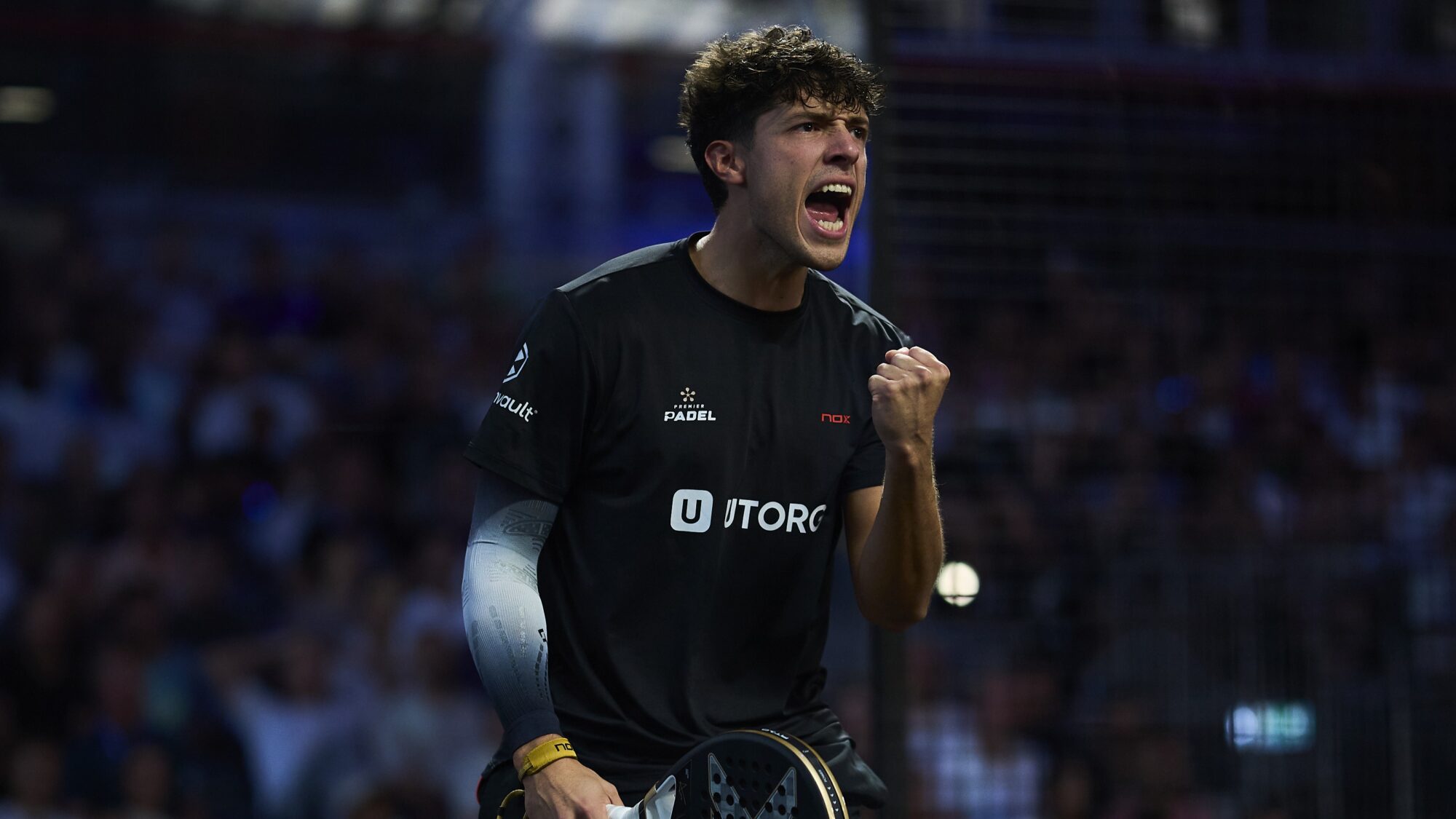 Tapia reveals his recipe for beating Coello / Tapia: "I would bet everything on myself"
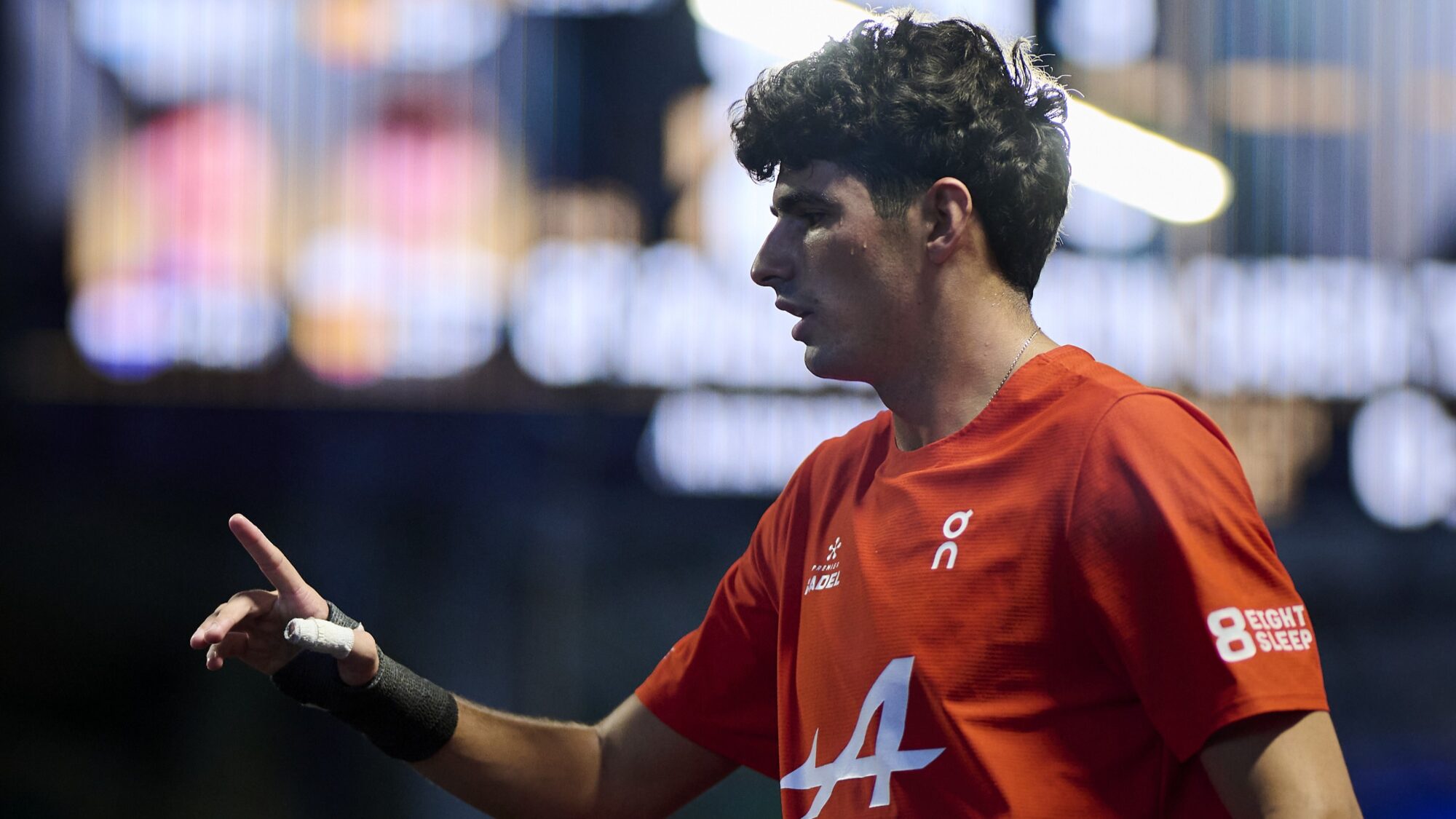 How Coello defused Chingotto's game plan
 In padel, does the chemistry between a pair count as much as individual skill?
 Organising a P2000 or a P3000: how much does it really cost clubs?
 Do you lose your ranking? Padel FFT after more than a year without a license / without competition?
 Kuwait Major: Chingotto/Galán out, Alejandro Galán injured, Coello/Tapia the only favorites?
 Julien Seurin opens up about his mental state: "There are far more doubts than moments of happiness."
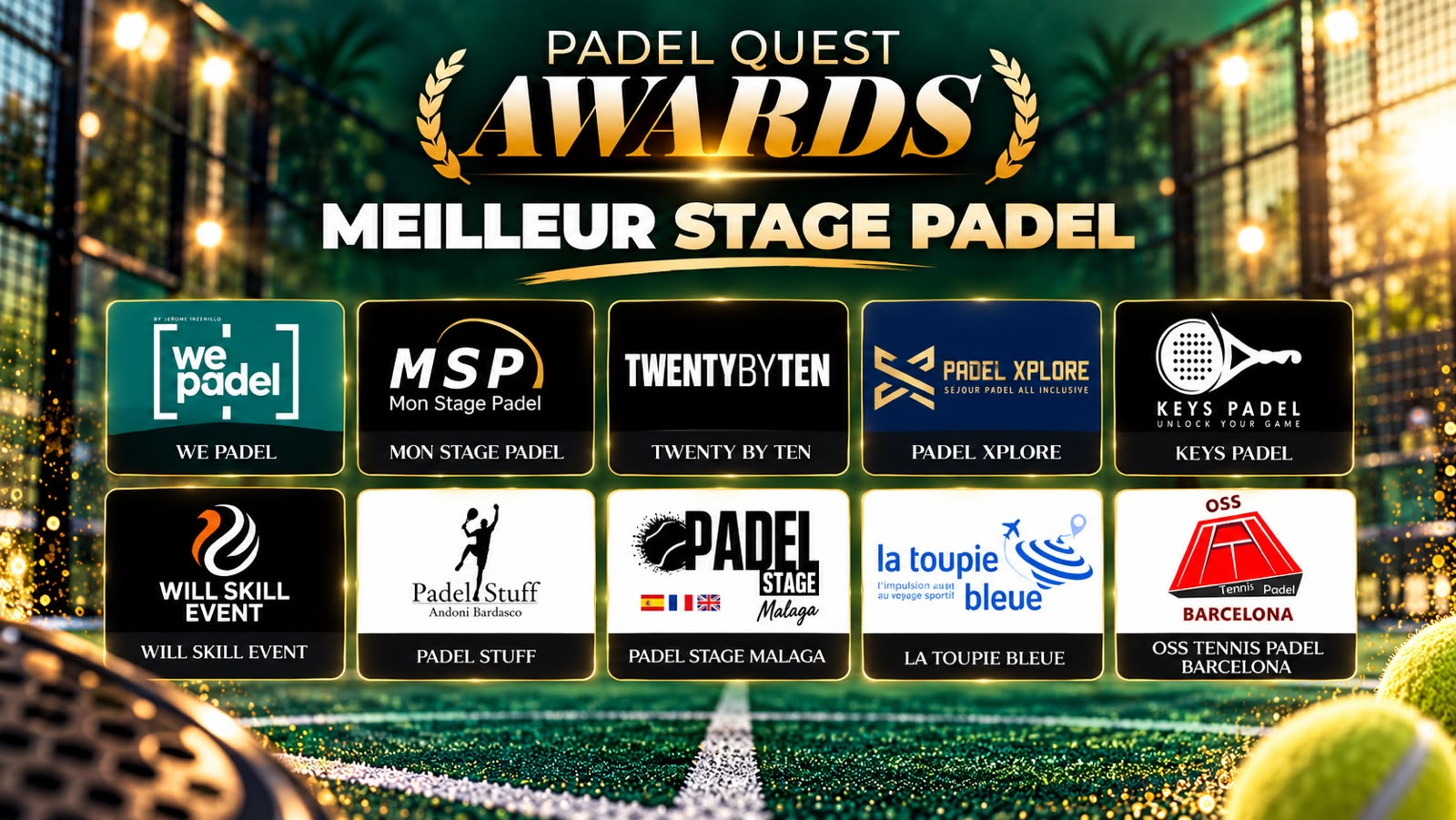 Padel Quest Awards: Ten specialists in the running for the title of best padel training camp of the year
 Padel Xperience: The Academy opens on November 2nd in Marcheprime, ahead of the complex's inauguration in 2027
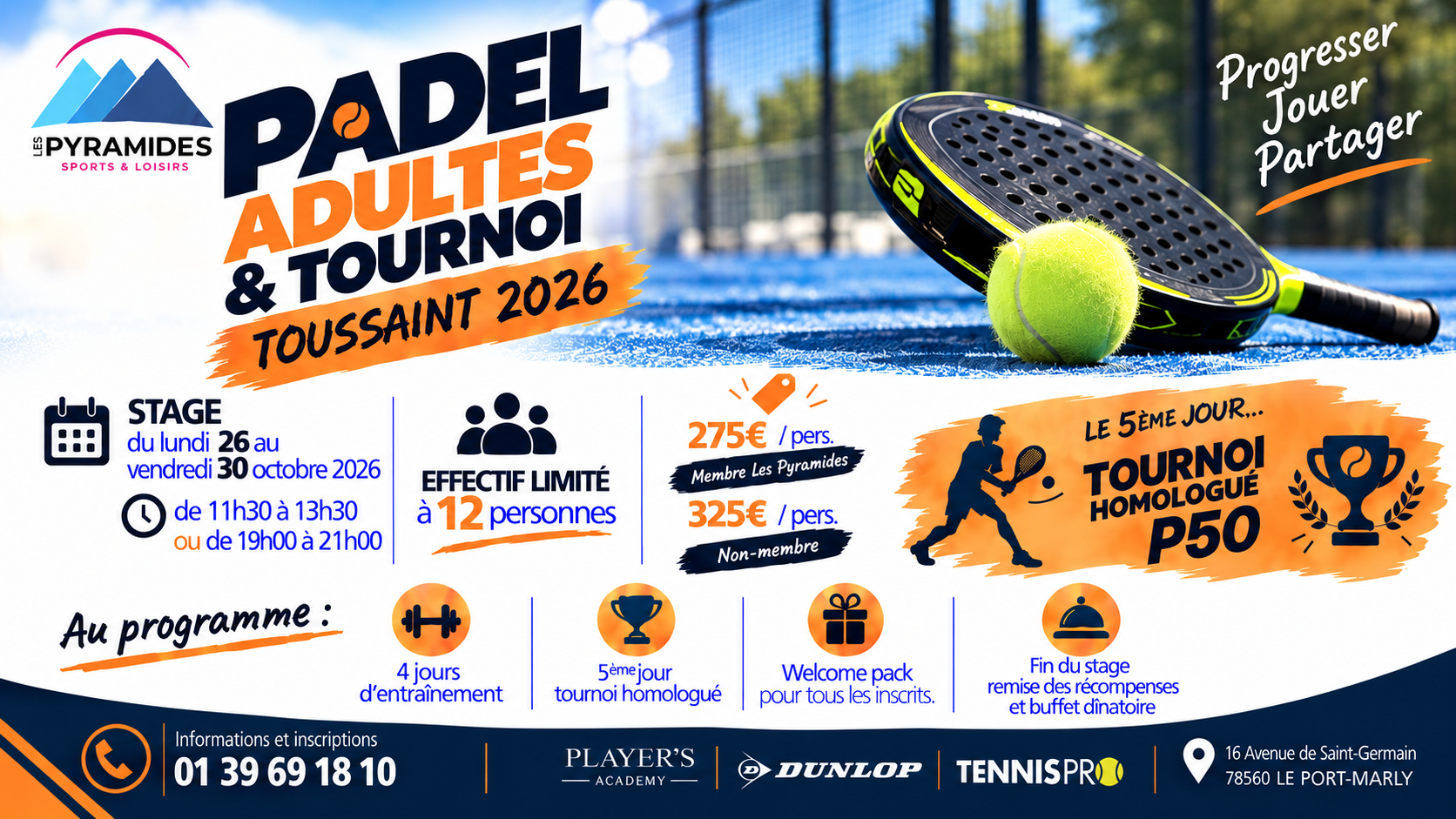 All Saints' Day – Les Pyramides are organizing a padel training camp for adults with a P50 tournament to close out the week
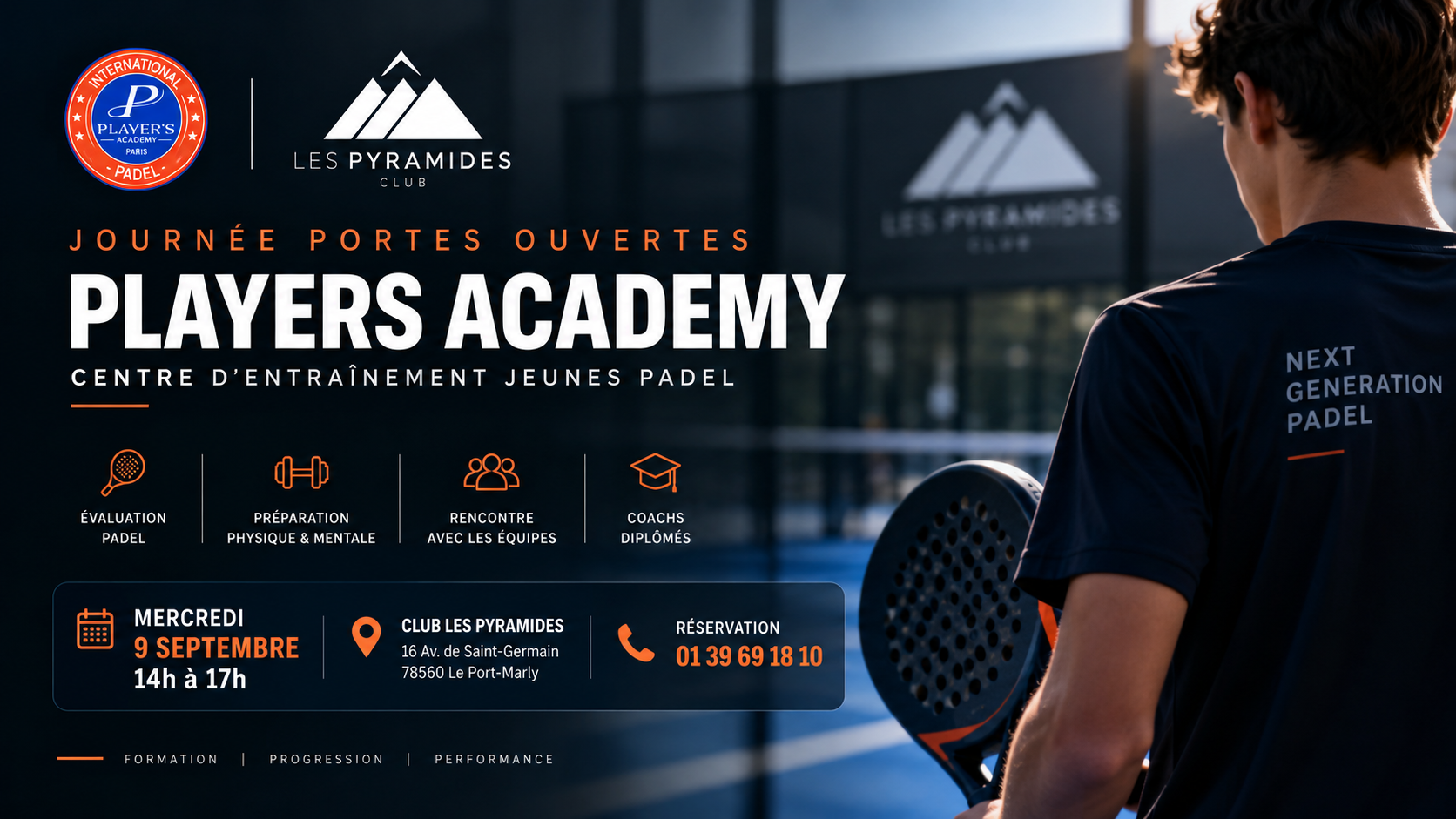 Les Pyramides: after 12 padel courts, the club is focusing on youth training