


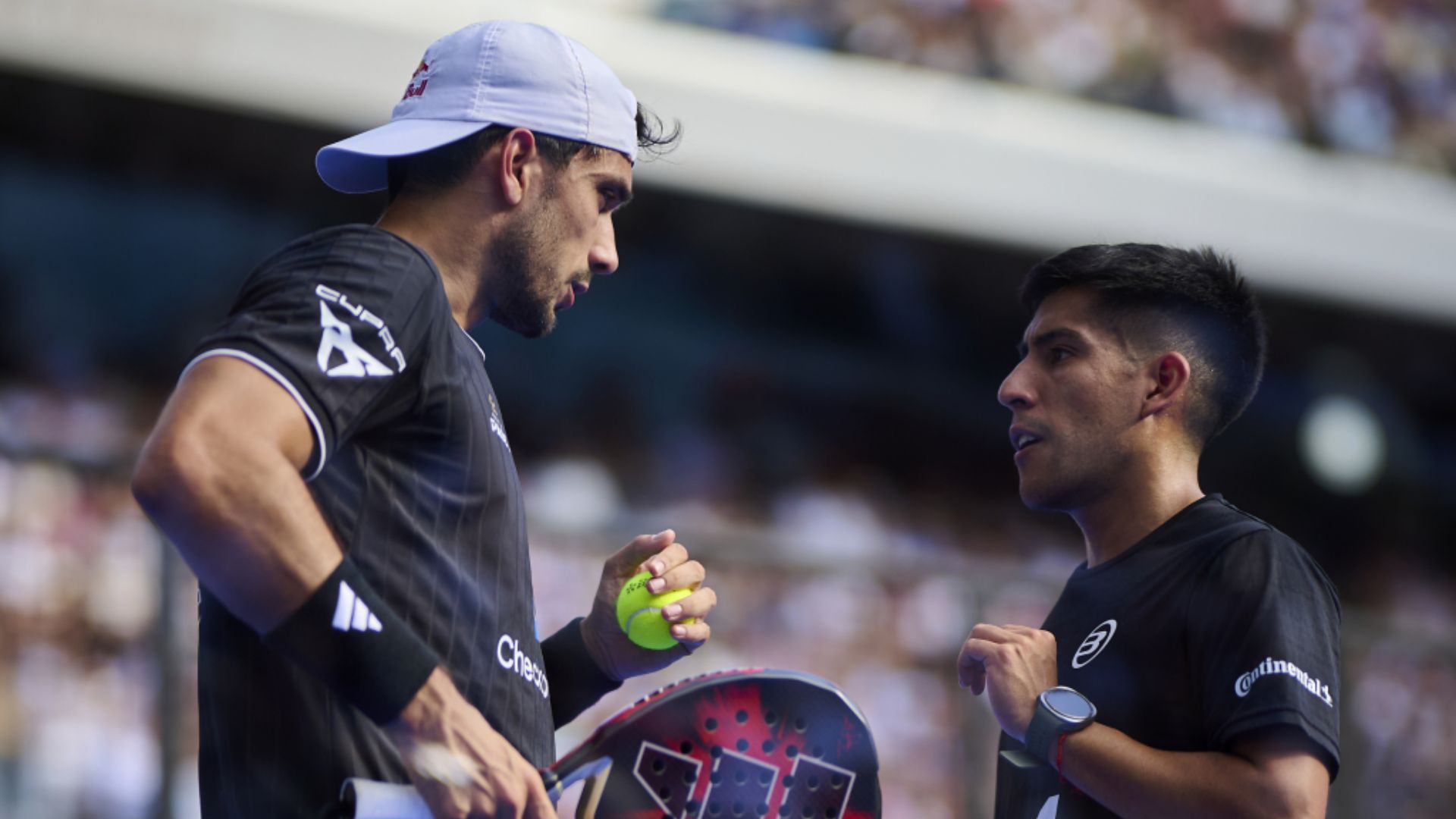








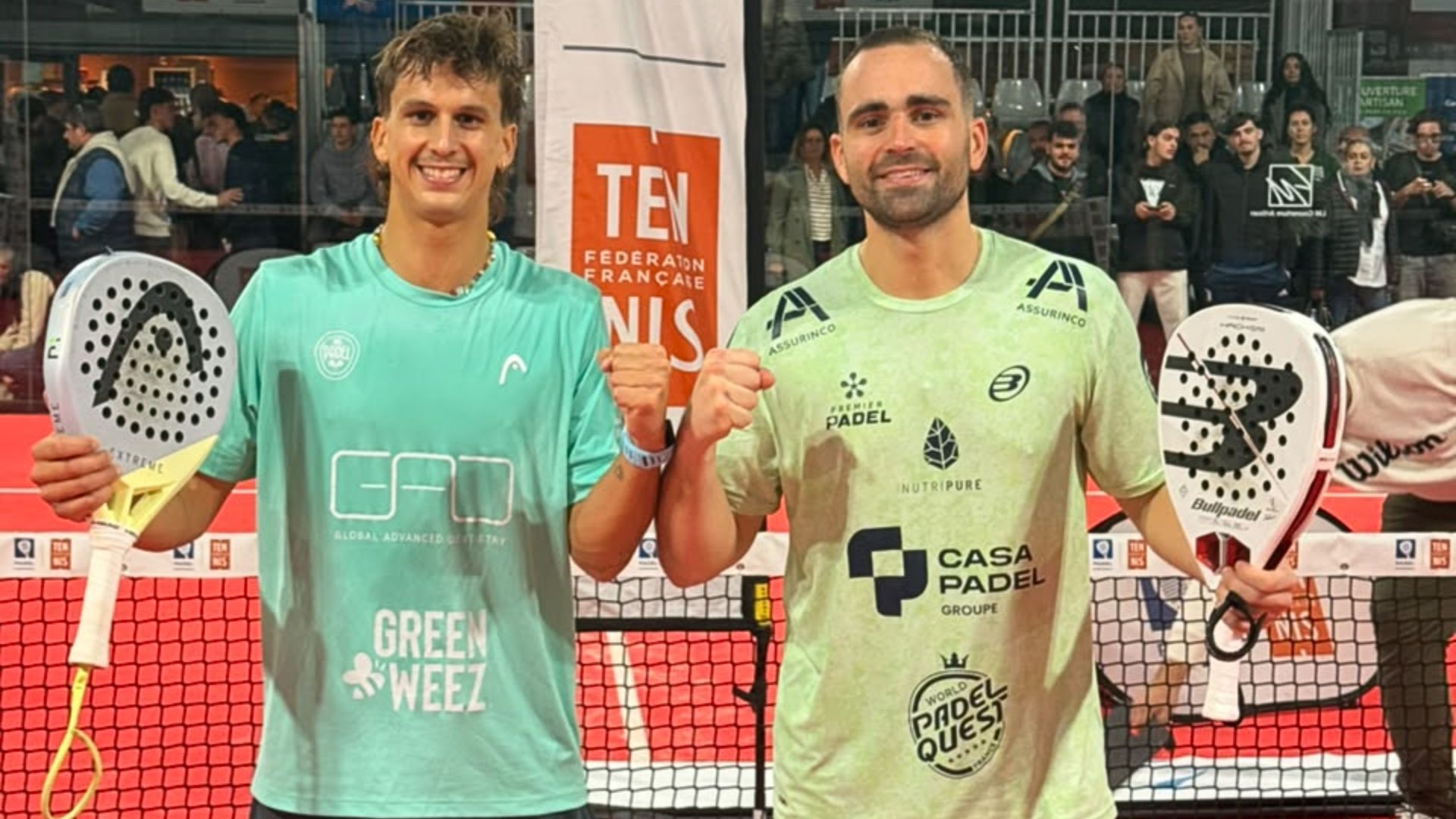
Two defeats against the same pair in eight days change the nature of the situation. In Rotterdam, Franco Stupaczuk and Jon Sanz had defeated Alejandro Galán and Federico Chingotto 6-4, 6-4. In Düsseldorf, the number 4 seeds confirmed their form with a 7-6, 6-4 victory.
The first result could still be considered an accident. The second raises a broader question: have Stupaczuk and Sanz found a reproducible answer, or are Galán and Chingotto experiencing a dip in form as their world number one ranking slips away?
Stupaczuk / Sanz, two matches and no sets conceded
In Düsseldorf, Galán and Chingotto had the first opportunity to take control. At 5-4 in the first set, they earned a set point on their opponent's serve. Stupaczuk and Sanz saved it, before creating two opportunities of their own on the return. The set ultimately went to a tiebreak, which Stupaczuk and Sanz won 7-3.
The second set followed a different pattern. After an exchange of breaks, Stupaczuk and Sanz built a 5-2 lead. Galán and Chingotto saved three match points and pulled back to 5-4, but couldn't extend the match. The fourth opportunity proved decisive for their opponents.
In eight days, Stupaczuk and Sanz won four out of four sets against the world's second-ranked pair. Repetition makes it impossible to reduce these results to a few poorly executed points. However, it is not enough to establish a single tactical mechanism.
The Sanz/Chingotto diagonal, the first area to be studied
Sanz can look to accelerate from his side without having to single-handedly cover the entire offensive output of the pair. Stupaczuk, more consistent on the left, provides him with a structure within which Sanz can take more risks. The question then becomes whether Chingotto can maintain enough depth to prevent Sanz from hitting balls above net level.
When Sanz can advance and accelerate, Galán must decide whether to protect the center more or remain focused on his diagonal pass with Stupaczuk. This choice can create space, and during the match in Düsseldorf, we saw several winning Bajadas from Sanz directly to Galán to surprise him and prevent him from reaching the center.
On the other side, Stupaczuk's role appears just as important. His mission isn't necessarily to beat Galán with power. He can try to take away favorable balls, prolong rallies, and keep the pair in a balanced position until Sanz can intervene.
Since Paris, a succession of matches that have slipped through Galán/Chingotto's fingers
These two defeats take on a different dimension when compared to the Paris Major final.
Against Arturo Coello and Agustín Tapia, Galán and Chingotto led 5-2 in the third set and served for the title at 5-3. They ultimately lost the set in a tiebreak, 7 points to 1. Since then, they have not reached another final and have just lost twice against Stupaczuk and Sanz.
The timeline is striking: a major opportunity missed in Paris, then two tournaments ended by the same pair. But it doesn't yet suggest a mental problem. In Düsseldorf, Galán and Chingotto saved three match points and came back from 2-5 down to 4-5. This response doesn't indicate a pair who have given up fighting.
The real question is their current ability to maintain their level of precision until the end of sets. In Paris, they failed to close out sets when serving for the title. In Düsseldorf, they missed their first-set point. In both cases, the margin narrowed precisely when the points became most crucial.
Galán acknowledges that the number 1 spot is slipping away.
Before the German semi-final, Galán made an important statement. He acknowledged that the fight for the world number one ranking now seemed "very complicated" to him, due to the gap and the proximity of the end of the season.
In the FIP rankings of October 12, Coello and Tapia each have 19,840 points, compared to 16,860 for Galán and Chingotto: a difference of 2,980 points. The Spaniard is therefore not giving up publicly, but admits that the rankings are no longer a completely controllable objective.
Does this mean he's no longer playing with the same intensity? His full statement suggests we should avoid that conclusion. Galán explains that he wants to focus on getting back to his best form rather than on calculations. He also affirms that he still has the same desire to win and wants to give everything to finish the season with Jorge Martínez, who will not be joining them next year.
His speech sounds more like a shift in priorities than a sign of resignation. First place becomes a possible consequence, rather than a controllable objective. This clarity of thought may ease the pressure, but it may also change how he approaches crucial moments after a very demanding season.
A real fatigue, but difficult to isolate
The possibility of a physical issue cannot be ruled out. Galán mentioned fatigue during a period that included Paris, Rotterdam, Düsseldorf, and then Milan. His game demands a lot of explosiveness: covering the middle, repeated smashes, moving forward, and intervening in Chingotto's space.
Even a slight dip in form can have several consequences. He might arrive less well-positioned on some high balls, select his attacks with less leeway, or have to let the rally drag on. Against a pair like Stupaczuk-Sanz, capable of maintaining a high level of activity, this loss can become noticeable without necessarily resulting in a complete collapse.
However, it remains impossible to attribute the two defeats solely to fatigue. Galán and Chingotto easily won their Düsseldorf quarter-final against Sanyo Gutiérrez and Maxi Sánchez, 6-4, 6-1. The problem therefore also seems to depend on the opposition posed by Stupa and Sanz.
Doubts about the level, but not yet about the pair
Two consecutive defeats open up a tactical challenge. They do not yet constitute a crisis of the project.
Galán and Chingotto remain tied for third place in the individual rankings and have already won several titles this season. Crucially, their statements reveal no rift between the two players. Chingotto continues to display the same ambition, while Galán speaks first and foremost about rediscovering their best form.
The first doubts may therefore concern their form, their ability to close out tight sets, and their response to Stupaczuk-Sanz. They do not yet call into question the complementary nature of the pair.
Milan will offer an initial answer. The question won't simply be how far Galán and Chingotto will progress in the draw. It will be crucial to observe whether Galán can maintain his intensity over the long haul, whether Chingotto can regain control of his diagonal, and whether the pair can once again capitalize on opportunities when the score becomes tight.
Because the most worrying sign isn't the admission that first place is slipping away. It lies in the repetition of important matches that they initially control or evenly balance, but then fail to close out.

I discovered the Padel I stumbled into Spain at a campsite. I was instantly hooked; passionate about padel, I follow international and regional news with the same excitement as the sport itself.






















































































 FIP rankings – Guichard drops, Fonteny moves closer to the top 100, Robert makes a great move
 Lebrón / Augsburger: Brussels had sent a message, Dubai reinforces the threat
 Dubai P1 – Fernández / Calvo: “Any of the three best pairs could be world number 1”
 4PADEL is recruiting a padel coach in Reunion Island: permanent contract or freelance
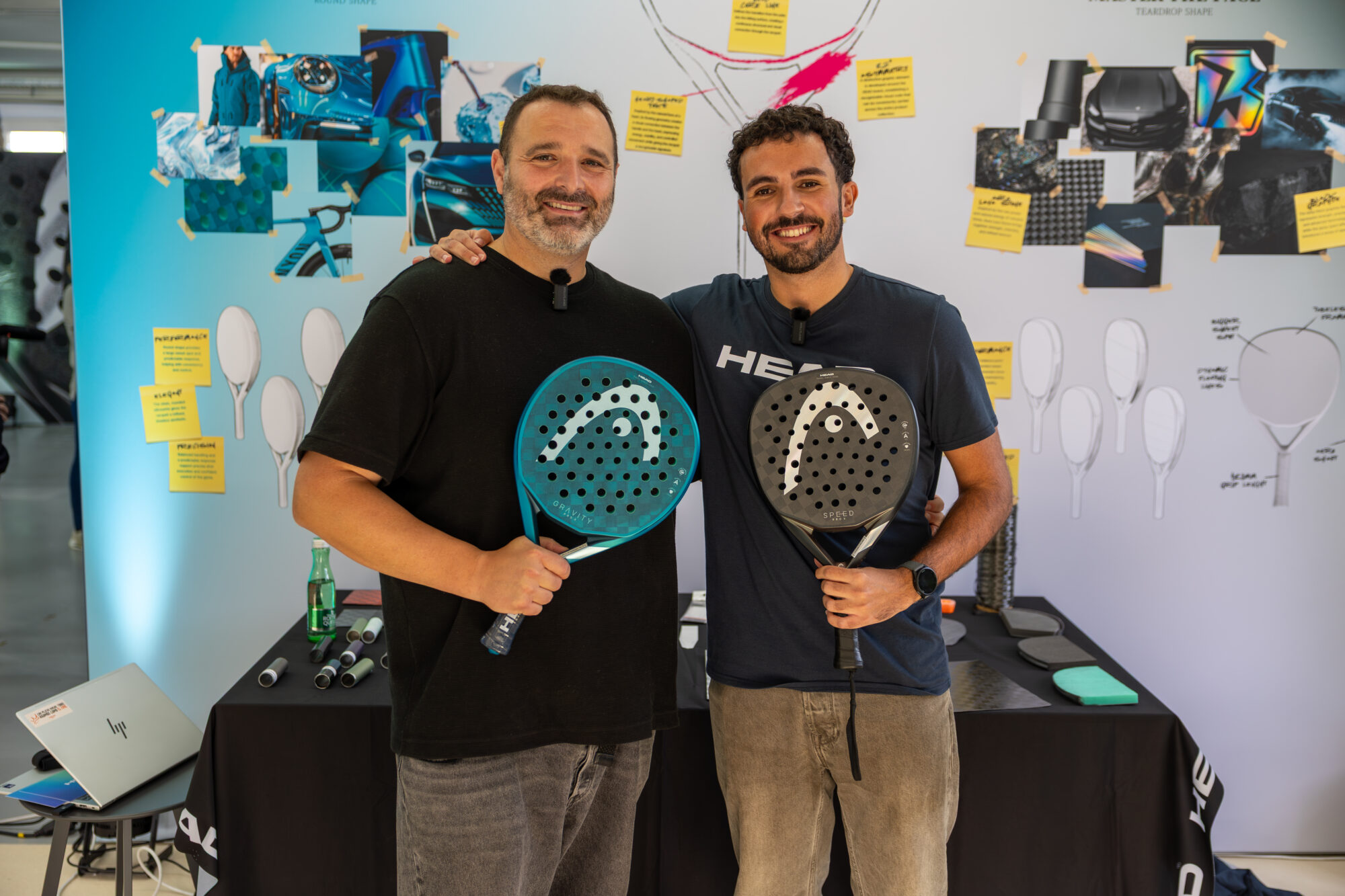 Two and a half years to create a padel racket: HEAD reveals the manufacturing secrets of its 2027 models
 Javier Rodríguez Piris: “I would like Spain to host the World Championships in 2030”
 "We're not a tournament club": the gamble taken by the two Henry sisters who are hosting a P3000 at The Break Padel Club
 “Victim of Padel ": The Adventure Padel Jack Troster and Jack Troster are back with a new track and a crazy music video.
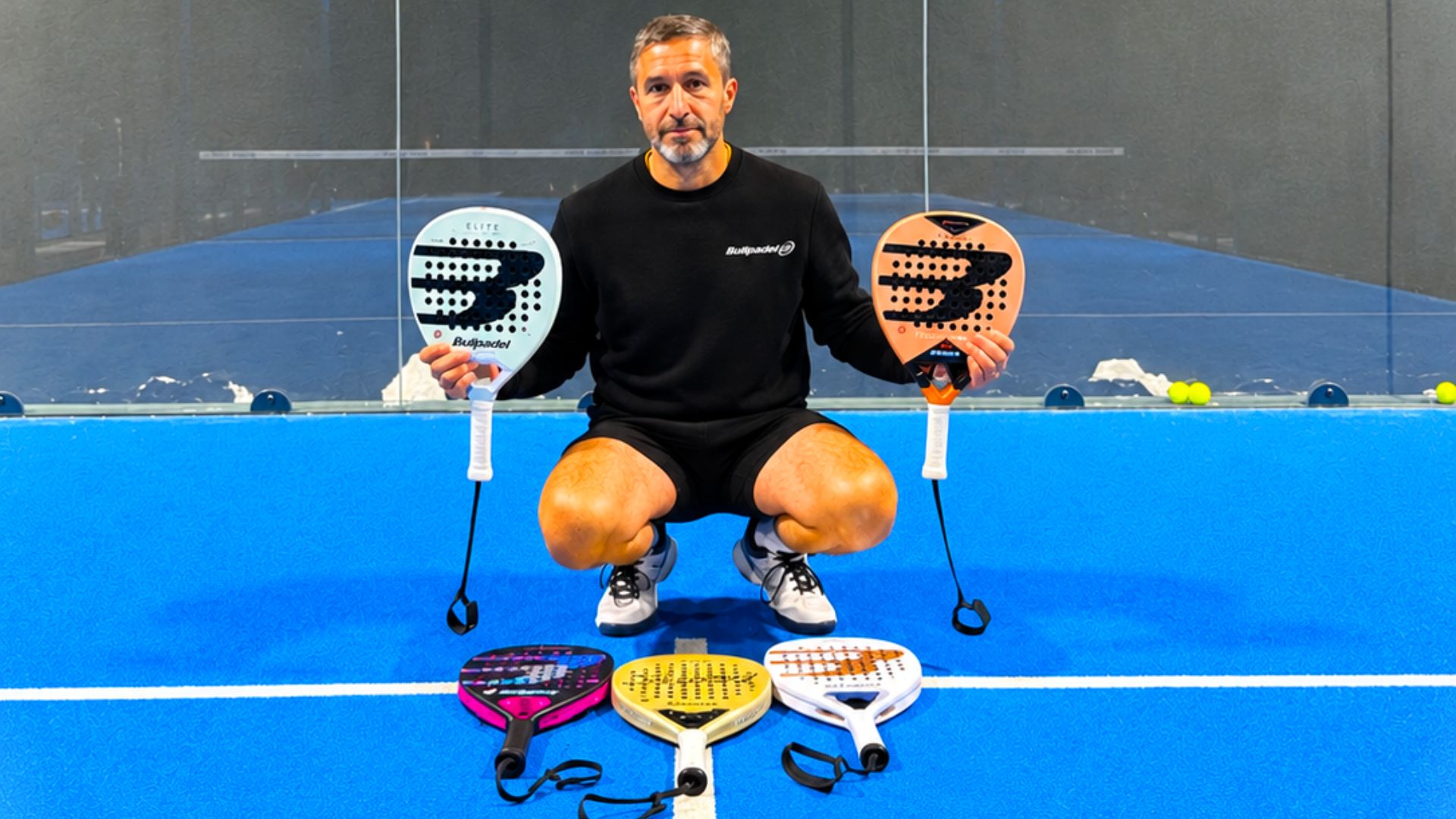 Bullpadel 2027 in the feminine: the queens take to the track
 Blanqué and Joris remain untouchable, securing the title at the P3000 Break Padel Club
 Three consecutive serves in the Dubai final: the recurring umpiring error Premier Padel
 Padel, weight training, and even HYROX: clubs are changing their model
 Padel court rentals: a global market estimated at 4,6 billion euros
 FIP Beyond: the new global padel circuit for amateurs and seniors
 More than 6,300 FIP-ranked players: professional padel is becoming international, but Spain dominates
 OSS Barcelona – Why Spain and France aren't yet playing in the same league
 Cancer and rehabilitation: could padel become a therapeutic tool?
 Padel injuries: ankle, knee, elbow, eye… what the latest figures reveal
 Shocking turn of events at Dubai P1: Coello and Tapia have also withdrawn!
 Padel serve: a good serve is especially good preparation for the third shot.
 What the analysis of the stroke reveals: tennis forehand vs. padel bandeja
 Has the bandeja disappeared from modern padel?
 Flat forehand in padel: 5 exercises from Cristian Álvarez to gain control and efficiency
 Why can Libaak/Alfonso beat almost everyone… except Coello/Tapia?
 Tapia reveals his recipe for beating Coello / Tapia: "I would bet everything on myself"
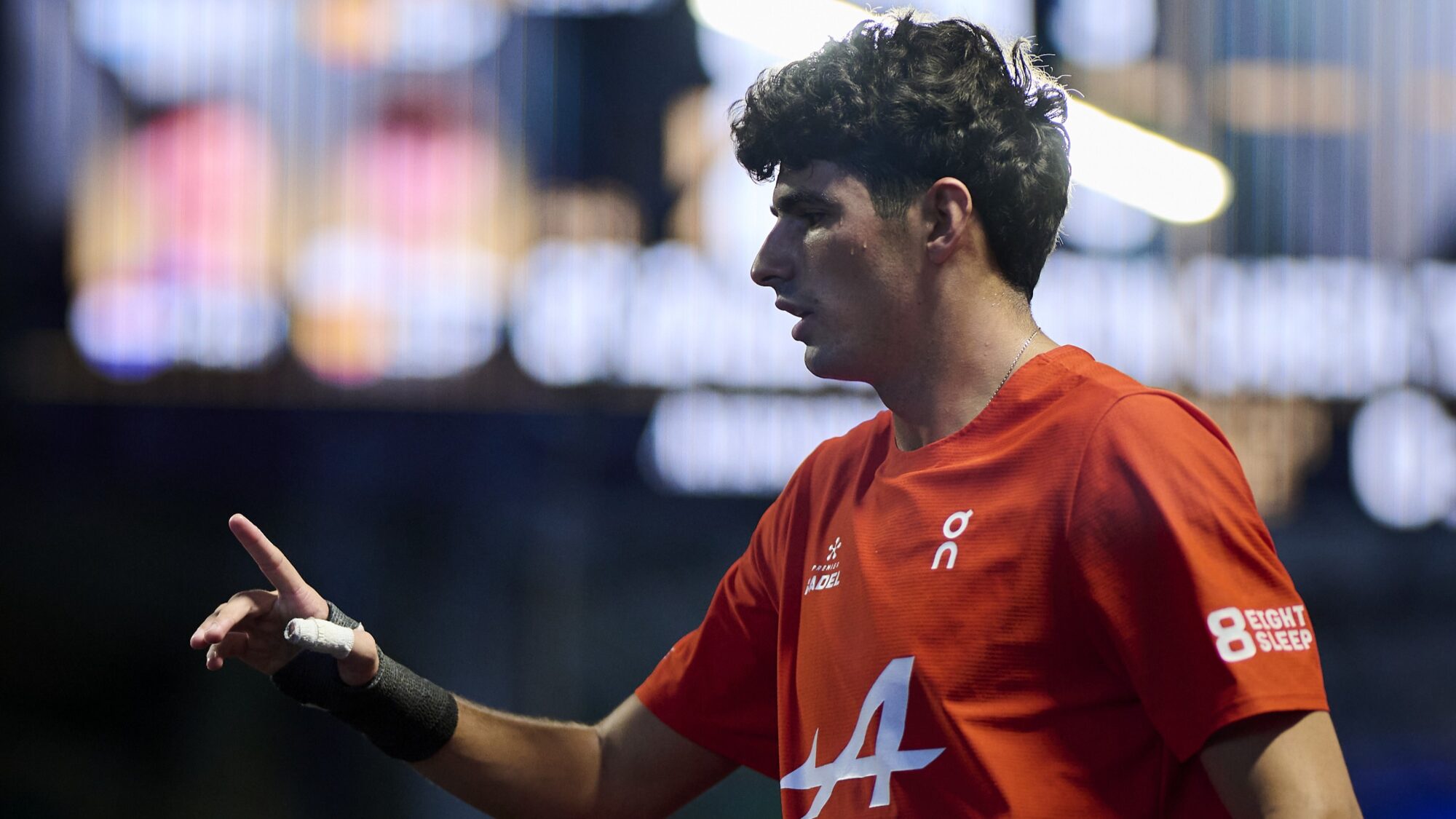 How Coello defused Chingotto's game plan
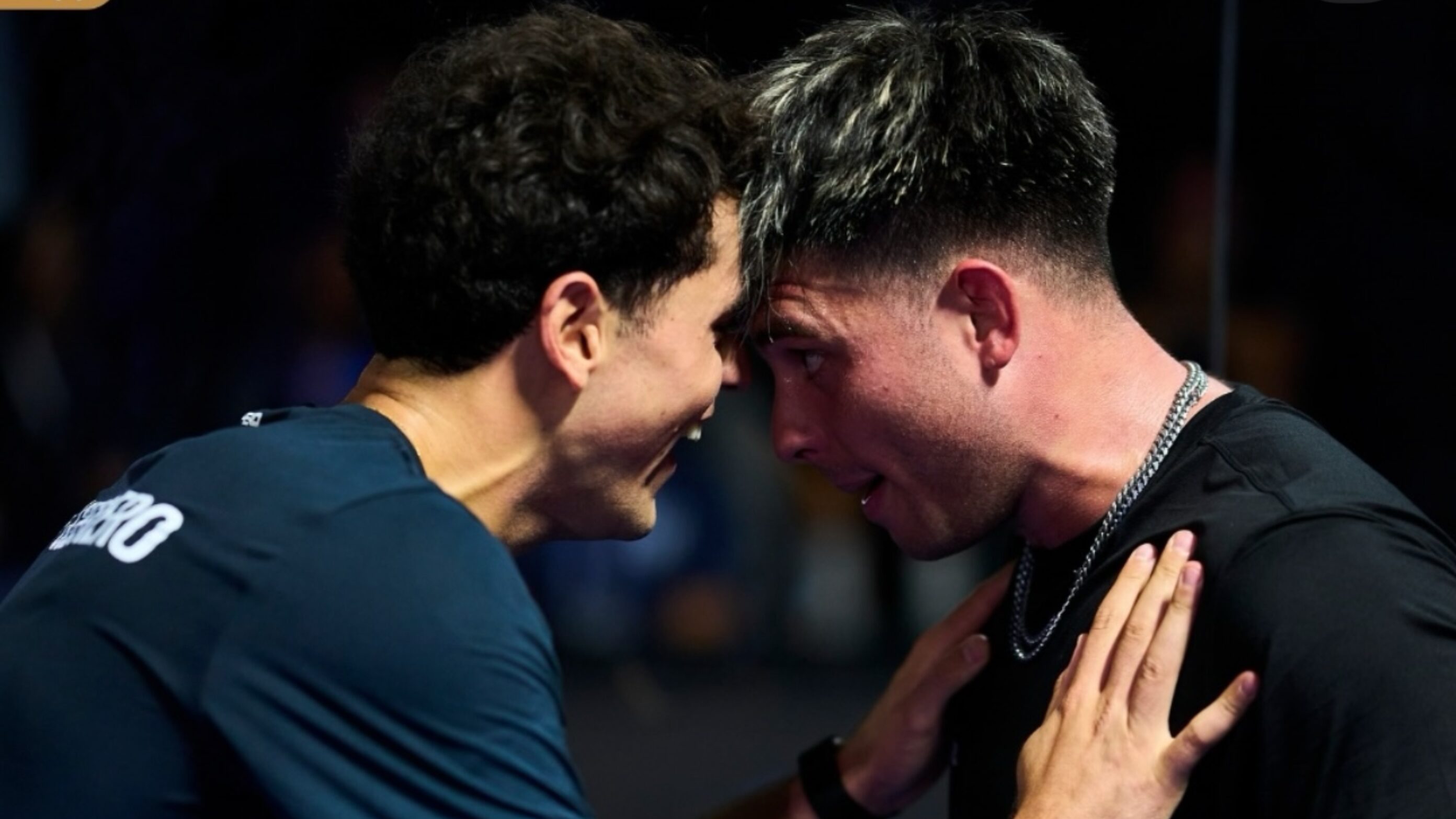 In padel, does the chemistry between a pair count as much as individual skill?
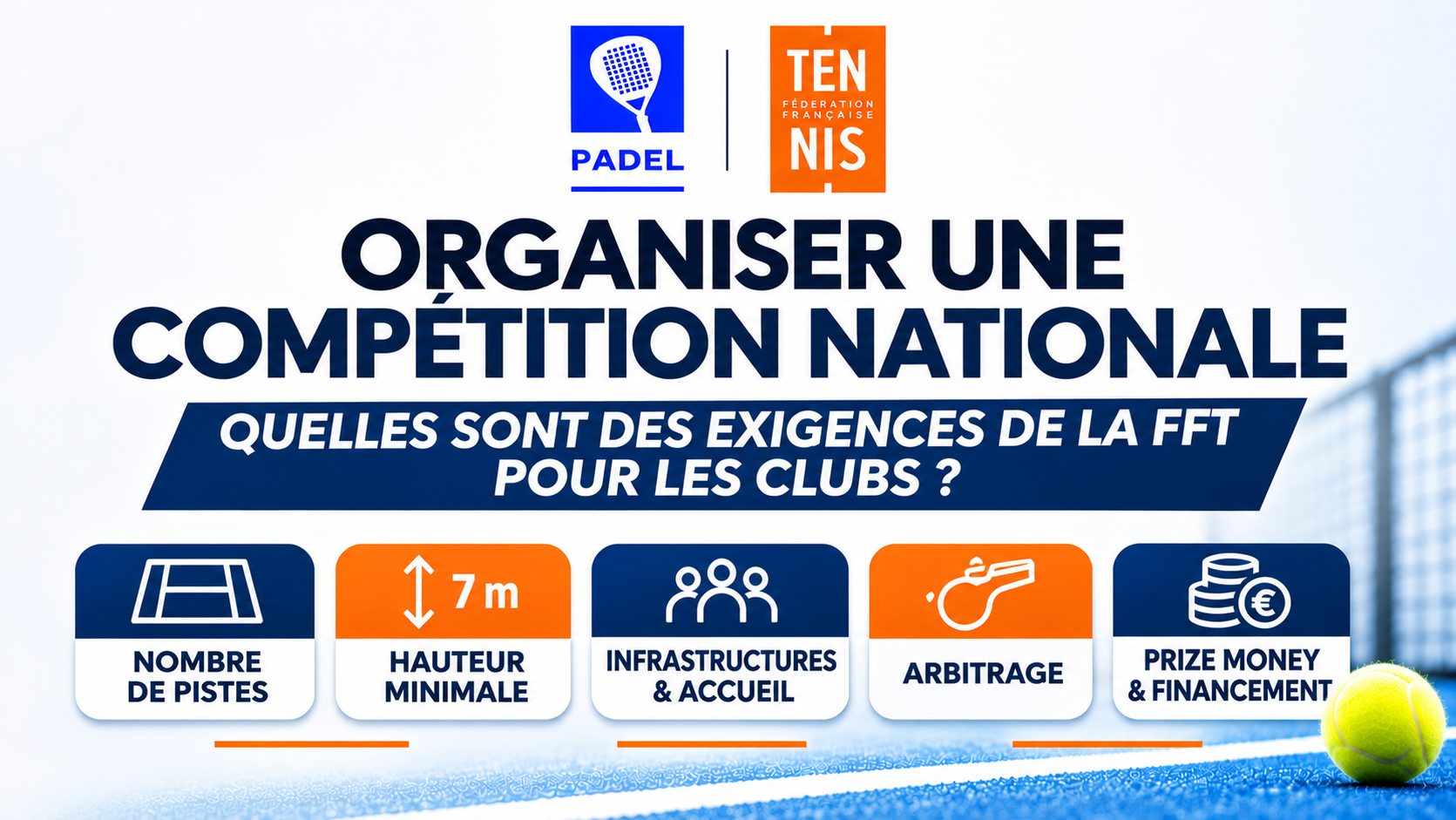 Organising a national padel competition: what are the FFT's requirements for clubs?
 Organising a P2000 or a P3000: how much does it really cost clubs?
 P2000 or P3000: what are the differences in prize money, format and organization in 2028?
 Do you lose your ranking? Padel FFT after more than a year without a license / without competition?
 Memory, reflexes, concentration: what happens in our brain when we play padel?
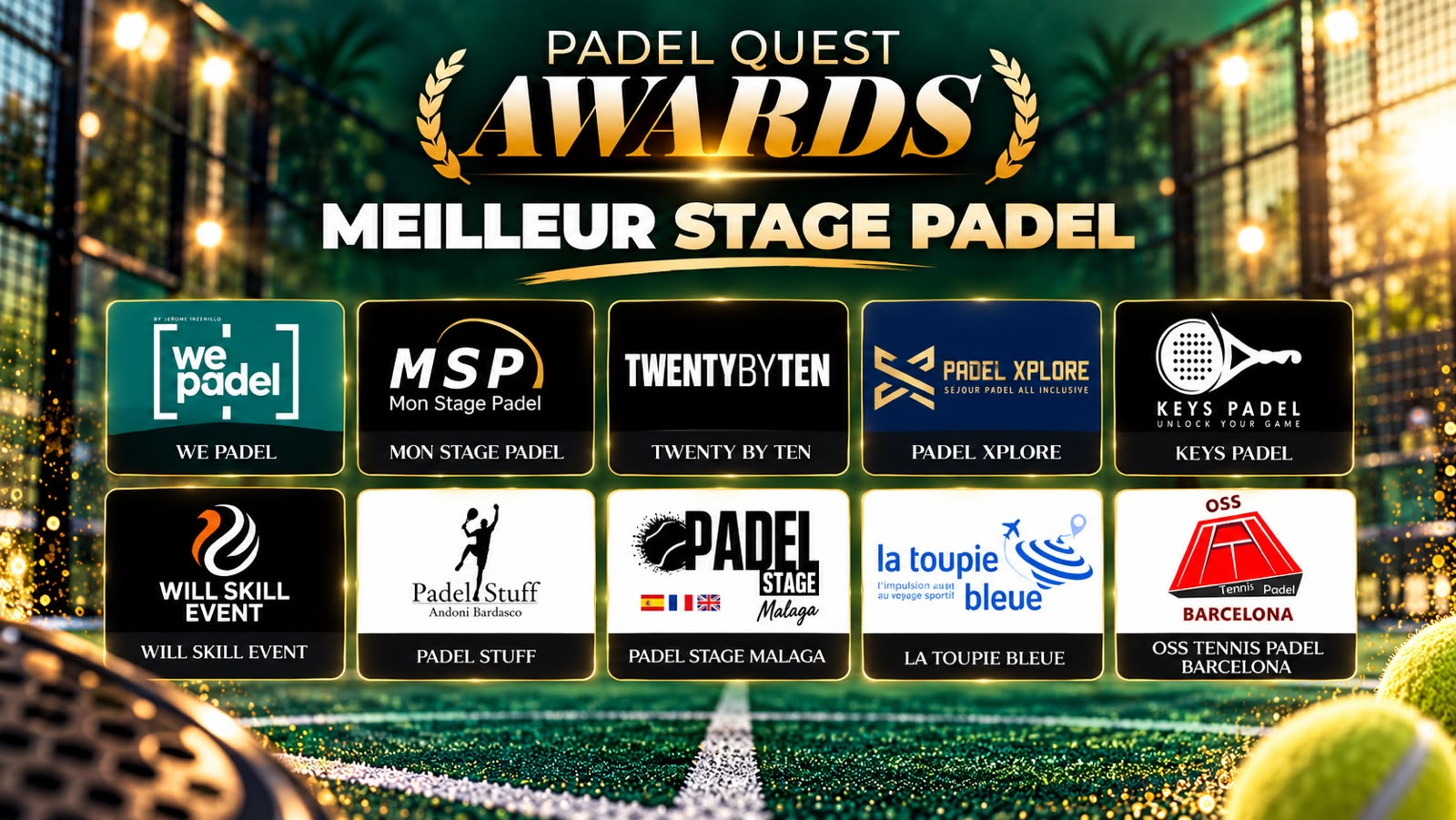 Padel Quest Awards: Ten specialists in the running for the title of best padel training camp of the year
 Padel Xperience: The Academy opens on November 2nd in Marcheprime, ahead of the complex's inauguration in 2027
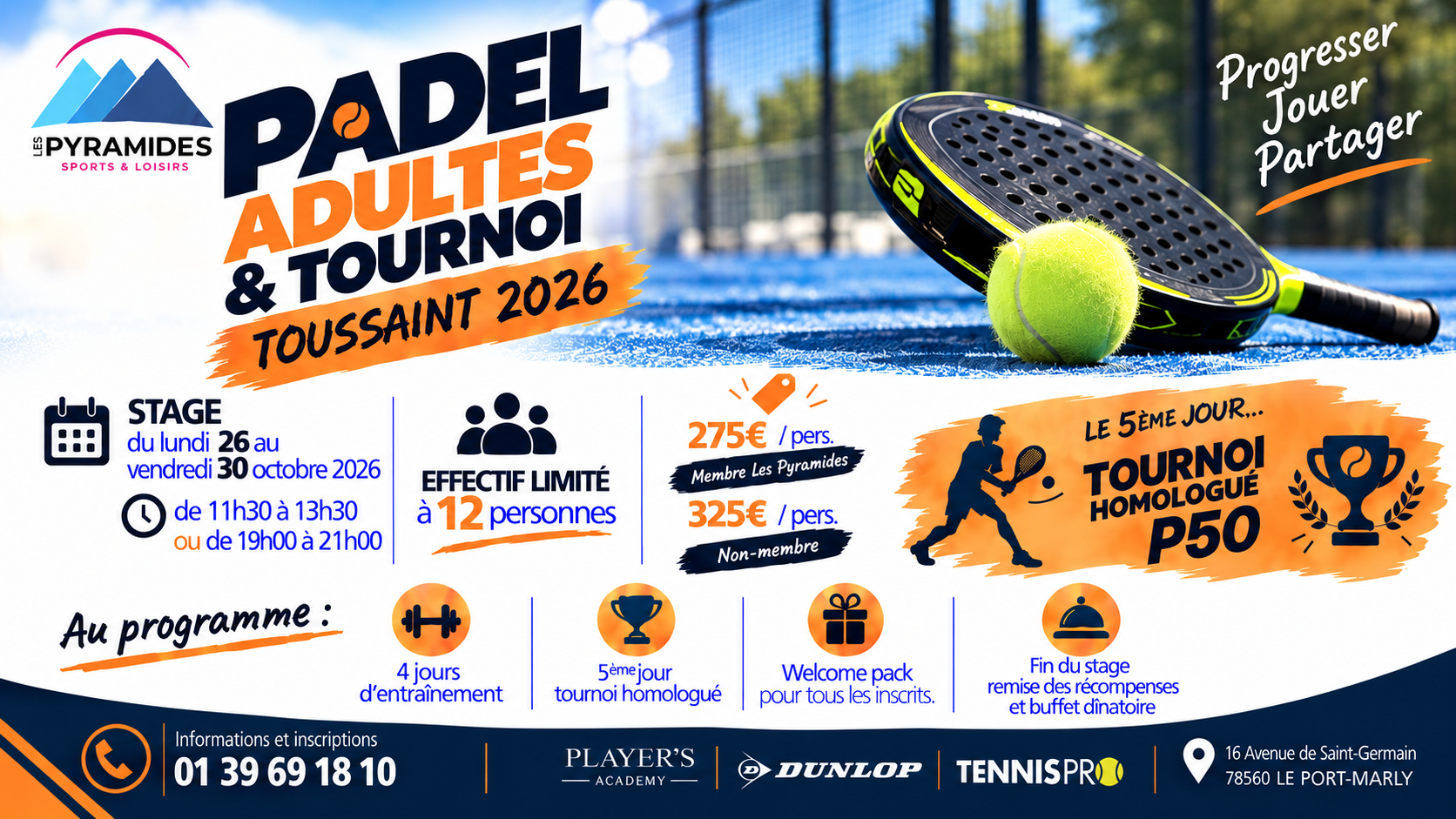 All Saints' Day – Les Pyramides are organizing a padel training camp for adults with a P50 tournament to close out the week