

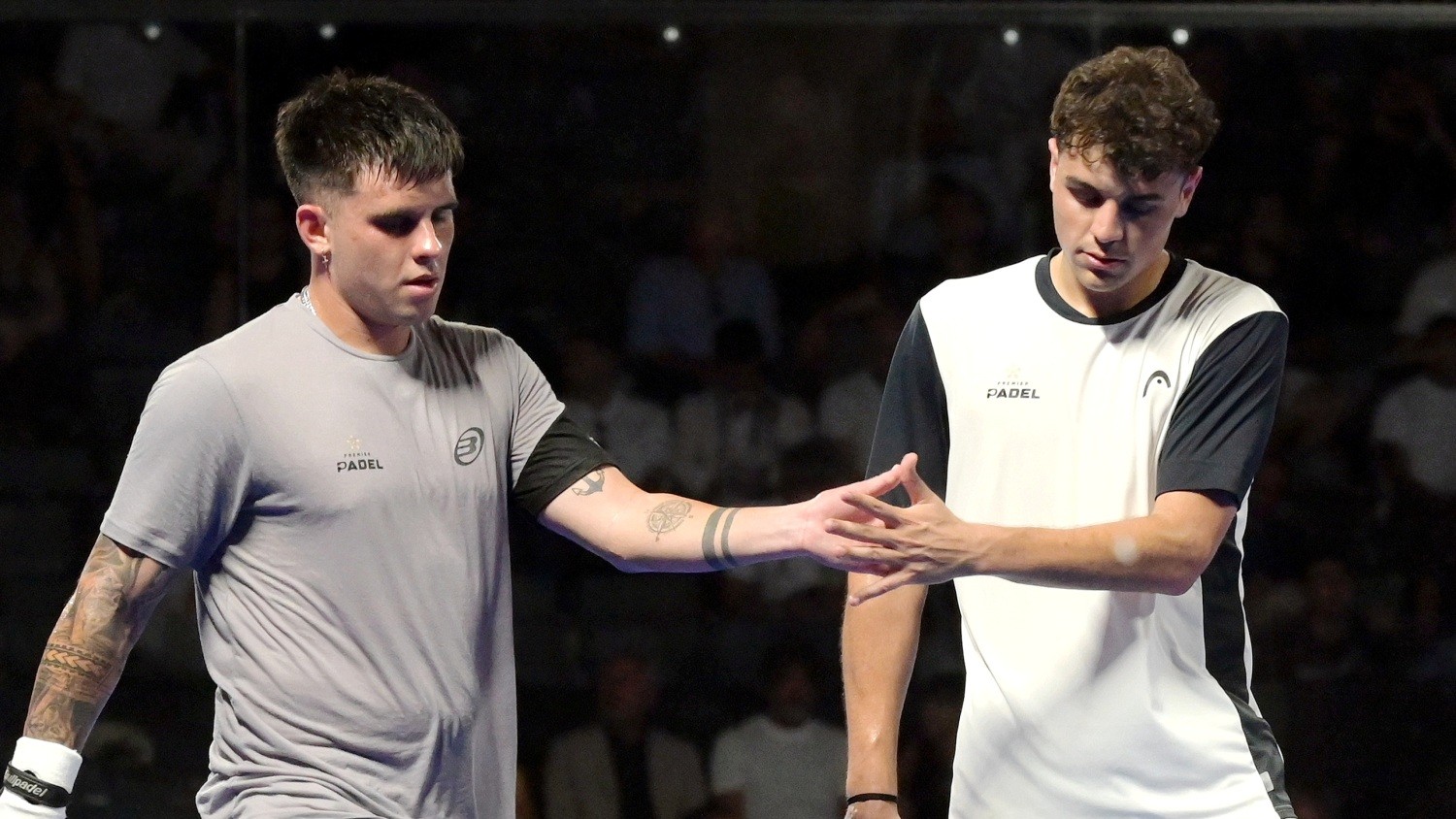








Two encounters in one week, two close matches, and two Argentine victories. In Rotterdam as in Düsseldorf, Javi Leal and Fran Guerrero competed fiercely with Tino Libaak and Gonza Alfonso but couldn't turn the tide. This pattern raises questions about their handling of crucial moments, as well as the tactical responses offered by the Argentinians.
The story begins in Rotterdam. Fresh from their FIP Platinum title in Lyon, Javi Leal and Fran Guerrero arrived with confidence and high hopes. Yet, against Tino Libaak and Gonza Alfonso, the Spaniards were defeated after a 2-hour, 19-minute battle (7-5, 3-6, 6-4). A frustrating loss, as they had managed to regain the initiative in the second set before succumbing in the deciding set. A week later, in Düsseldorf, the four players faced off again, with a different scenario but an identical outcome. This time, Leal and Guerrero took control, winning the first set 6-3. The Argentinians fought back, clinching the second in a tiebreak (7-2), and then winning the final set 7-5.
The observation is quite surprising: over the two matches, Libaak and Alfonso won only one more game than their opponents, 33 against 32. A tiny gap that perfectly illustrates this emerging rivalry. The Argentinians don't dominate the exchanges by a large margin, but they consistently manage to make the difference when the match is decided.
Leal's power against the Argentinians' tempo control
One of the main questions concerns how Alfonso and Libaak manage to contain Javi Leal's offensive power. The Spaniard possesses one of the most explosive smashes on the tour, capable of finishing points from sometimes improbable positions. Paired with Fran Guerrero, particularly mobile in transitions and effective when he can advance to the net, he poses a constant threat to opposing defenses.
But this power can also become more difficult to exploit when rallies become longer and attacking positions are less favorable. It is precisely in this area that the complementarity of the Argentinians deserves to be studied. Gonza Alfonso possesses a particularly varied technical repertoire and knows how to change the pace of a rally, while Tino Libaak has the necessary acceleration to regain the initiative.
One of the tactical keys could therefore lie in the preparation of points. Rather than trying to directly counter Leal's power, Alfonso can prioritize varying trajectories, the depth of his lobs, and creating situations more favorable to his partner. The objective would then be to force Leal to hit from less comfortable positions, or even to be more selective with his smashes, before allowing Libaak to accelerate on a shorter ball.
This analysis remains a tactical hypothesis rather than a definitive conclusion about the two matches. Nevertheless, it helps us understand how a pair less reliant on raw power can gradually reduce the effectiveness of a highly offensive opponent. Is the intensity displayed by Leal and Guerrero detrimental in crucial moments when the goal is simply to force the other into making a mistake?
In Düsseldorf, the match once again hinges on the key points.
The second match presented a particularly interesting element. After losing the first set, Libaak and Alfonso didn't immediately turn the match around. They remained neck and neck until the second-set tiebreak, which they won decisively 7-2. The third set then remained extremely close, with both teams holding serve for long periods. Finally, at 5-5, the Argentinians secured the decisive break before closing out the match 7-5.
This sequence pretty much sums up the difficulties faced by Leal and Guerrero. The Spaniards are capable of imposing their rhythm, winning rounds and competing for over two hours, but their effectiveness wanes at the precise moment when a few points are enough to tip the scales.
Should we see this as a problem of clarity in offensive choices, particularly in the selection of Leal's smashes? A difficulty in maintaining the same quality of return and first volley under pressure? Or simply a greater success rate for the Argentinians in decisive rallies? The two matches do not allow for a definitive answer.
It would be excessive to speak of a structural physical or mental problem for Leal and Guerrero. Their recent victory in Lyon, against Stupaczuk and Sanz in the final, demonstrates, on the contrary, their ability to handle demanding matches and rise to the occasion in crucial moments. However, against Libaak and Alfonso, the balance of power seems particularly favorable to the Argentinians when the pressure mounts.
Milan, an opportunity to find new answers
For Libaak and Alfonso, this double victory confirms the progress of a partnership formed in July. Already winners of two FIP Silver tournaments and semi-finalists at the Madrid P1, the two Argentinians have demonstrated their ability to challenge higher-ranked pairs. Their recent selection to represent Argentina at the FIP World Cup in Qatar is a further reward for this momentum.
For Leal and Guerrero, the challenge isn't necessarily to overhaul their playing style. Their aggression remains their main strength. However, learning to better choose when to accelerate, accepting a few extra exchanges, and securing key points could allow them to reach a new level.
With the Milan P1 match approaching, the two pairs are therefore tackling the rest of their season with different perspectives. The Argentinians want to confirm their rise in form, while the Spaniards need to rediscover the efficiency that allowed them to win in Lyon.
Ultimately, this double-header reveals less of a difference in skill level than a difference in effectiveness. Across two matches and six sets, only one game separates the two teams. But in the head-to-head record, Libaak and Alfonso already lead 2-0.

I discovered the Padel I stumbled into Spain at a campsite. I was instantly hooked; passionate about padel, I follow international and regional news with the same excitement as the sport itself.









































































 FIP rankings – Guichard drops, Fonteny moves closer to the top 100, Robert makes a great move
 Lebrón / Augsburger: Brussels had sent a message, Dubai reinforces the threat
 Dubai P1 – Fernández / Calvo: “Any of the three best pairs could be world number 1”
 4PADEL is recruiting a padel coach in Reunion Island: permanent contract or freelance
 Two and a half years to create a padel racket: HEAD reveals the manufacturing secrets of its 2027 models
 Javier Rodríguez Piris: “I would like Spain to host the World Championships in 2030”
 "We're not a tournament club": the gamble taken by the two Henry sisters who are hosting a P3000 at The Break Padel Club
 “Victim of Padel ": The Adventure Padel Jack Troster and Jack Troster are back with a new track and a crazy music video.
 Bullpadel 2027 in the feminine: the queens take to the track
 Blanqué and Joris remain untouchable, securing the title at the P3000 Break Padel Club
 Three consecutive serves in the Dubai final: the recurring umpiring error Premier Padel
 Padel, weight training, and even HYROX: clubs are changing their model
 Padel court rentals: a global market estimated at 4,6 billion euros
 FIP Beyond: the new global padel circuit for amateurs and seniors
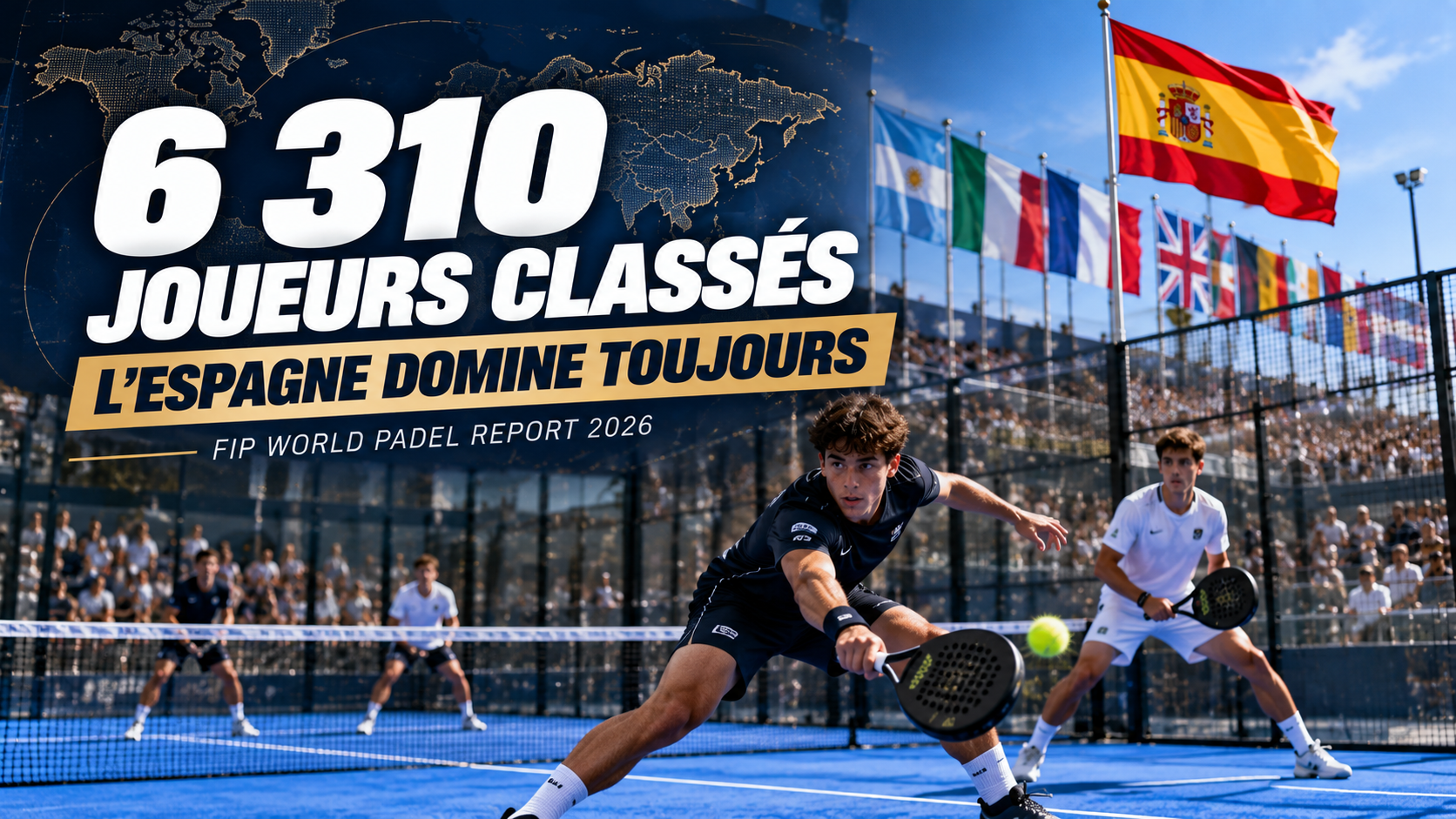 More than 6,300 FIP-ranked players: professional padel is becoming international, but Spain dominates
 OSS Barcelona – Why Spain and France aren't yet playing in the same league
 Cancer and rehabilitation: could padel become a therapeutic tool?
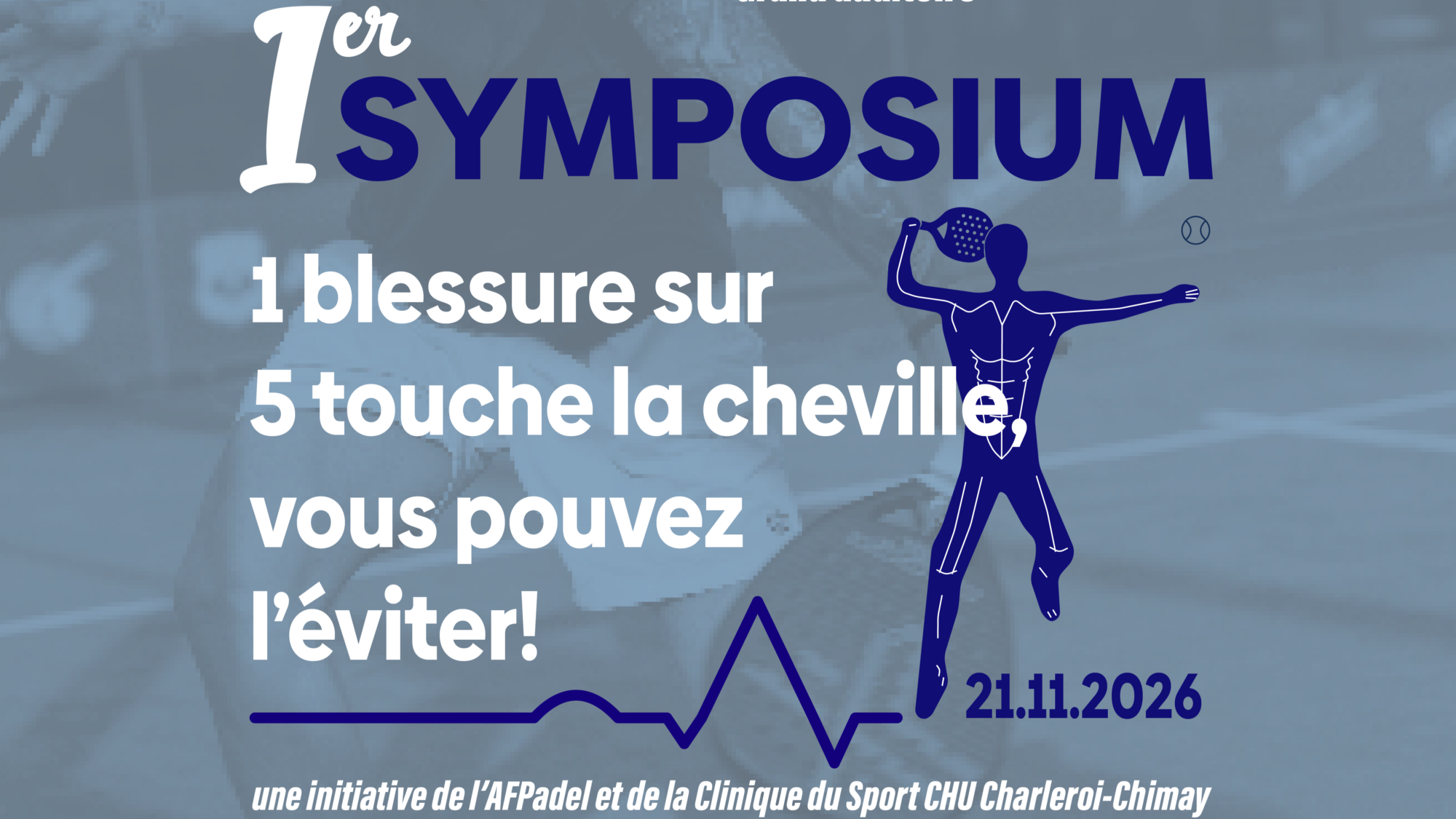 Padel injuries: ankle, knee, elbow, eye… what the latest figures reveal
 Shocking turn of events at Dubai P1: Coello and Tapia have also withdrawn!
 Padel serve: a good serve is especially good preparation for the third shot.
 What the analysis of the stroke reveals: tennis forehand vs. padel bandeja
 Has the bandeja disappeared from modern padel?
 Flat forehand in padel: 5 exercises from Cristian Álvarez to gain control and efficiency
 Why can Libaak/Alfonso beat almost everyone… except Coello/Tapia?
 Tapia reveals his recipe for beating Coello / Tapia: "I would bet everything on myself"
 How Coello defused Chingotto's game plan
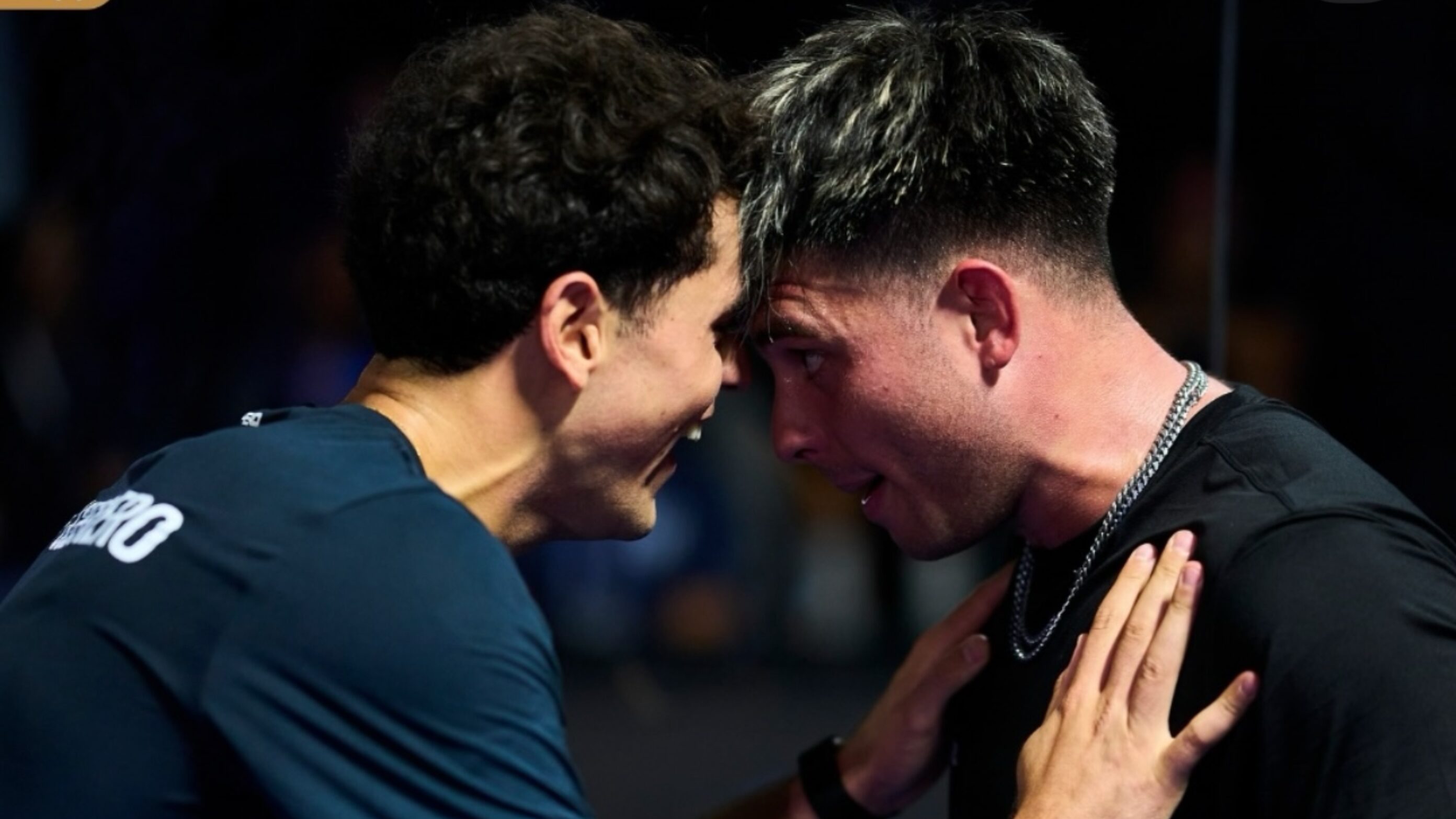 In padel, does the chemistry between a pair count as much as individual skill?
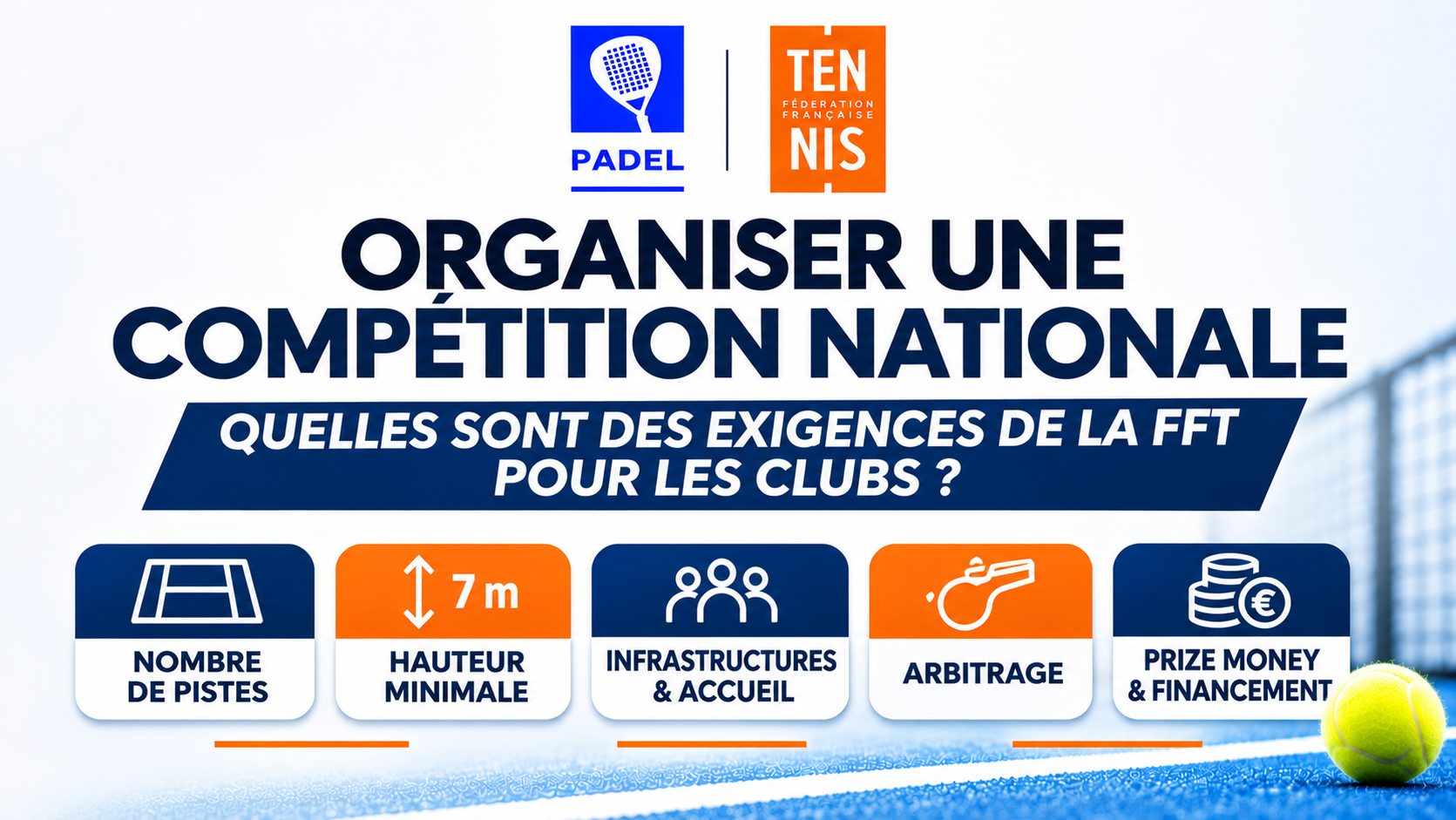 Organising a national padel competition: what are the FFT's requirements for clubs?
 Organising a P2000 or a P3000: how much does it really cost clubs?
 P2000 or P3000: what are the differences in prize money, format and organization in 2028?
 Do you lose your ranking? Padel FFT after more than a year without a license / without competition?
 Memory, reflexes, concentration: what happens in our brain when we play padel?
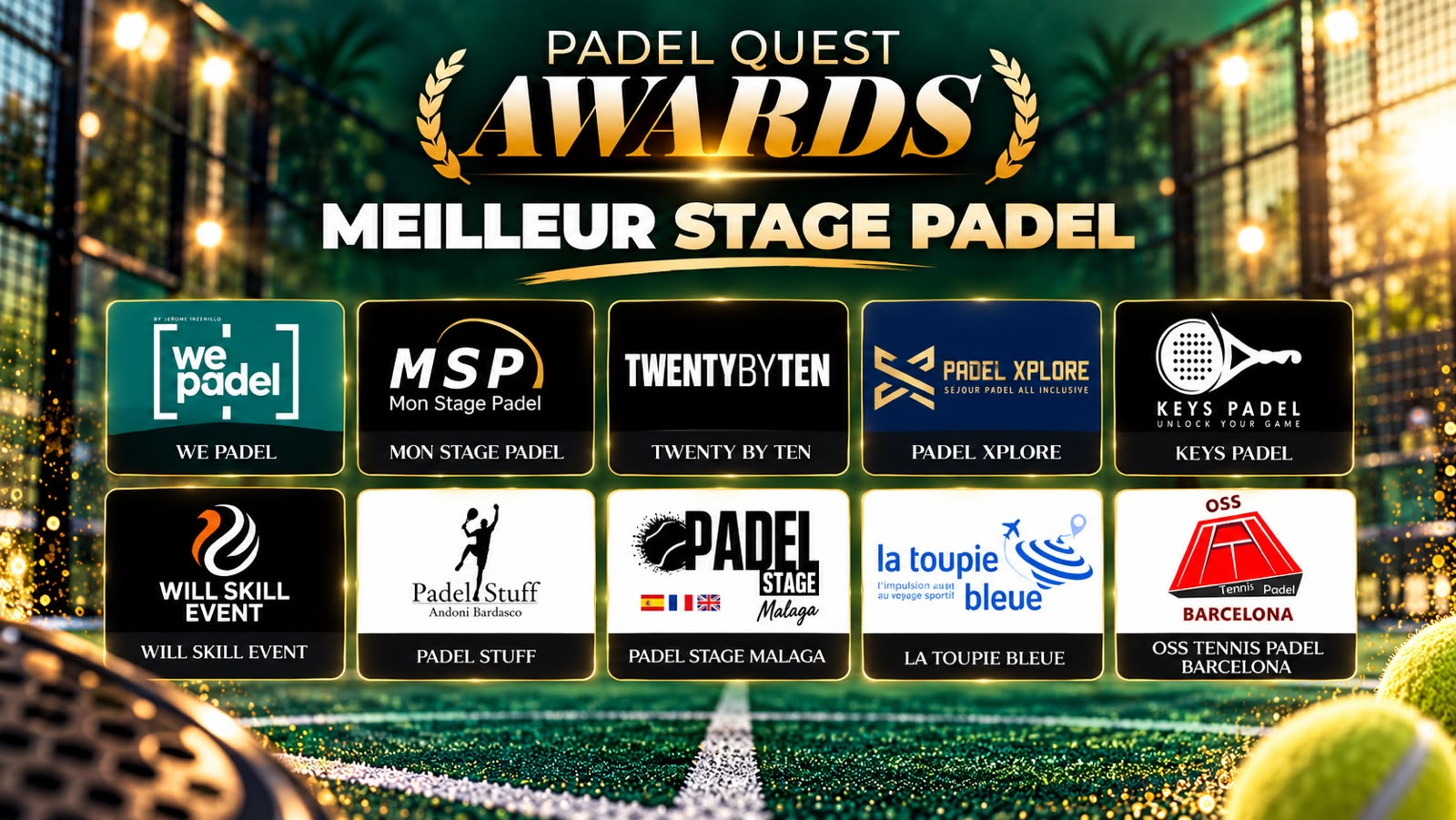 Padel Quest Awards: Ten specialists in the running for the title of best padel training camp of the year
 Padel Xperience: The Academy opens on November 2nd in Marcheprime, ahead of the complex's inauguration in 2027
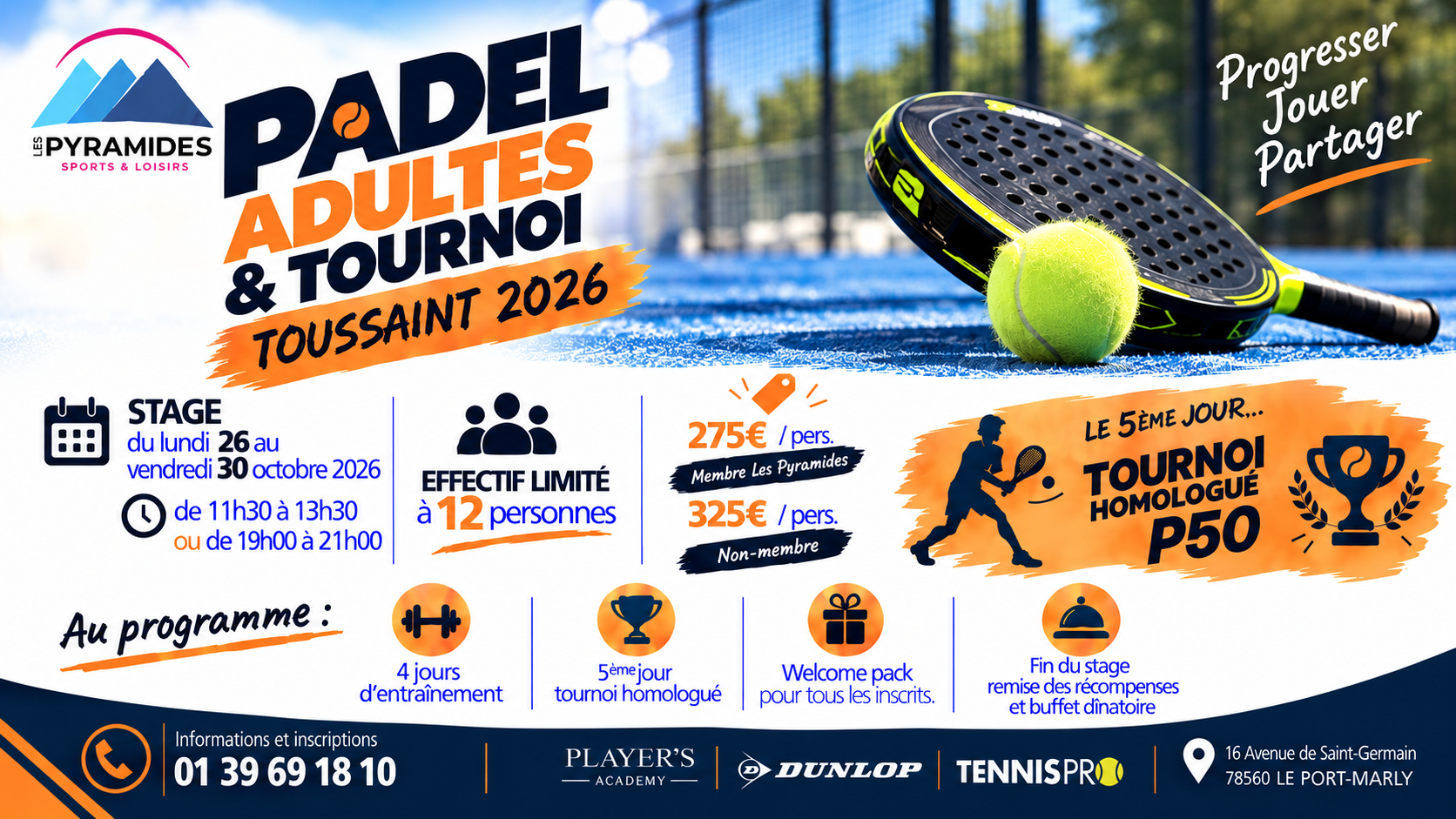 All Saints' Day – Les Pyramides are organizing a padel training camp for adults with a P50 tournament to close out the week