

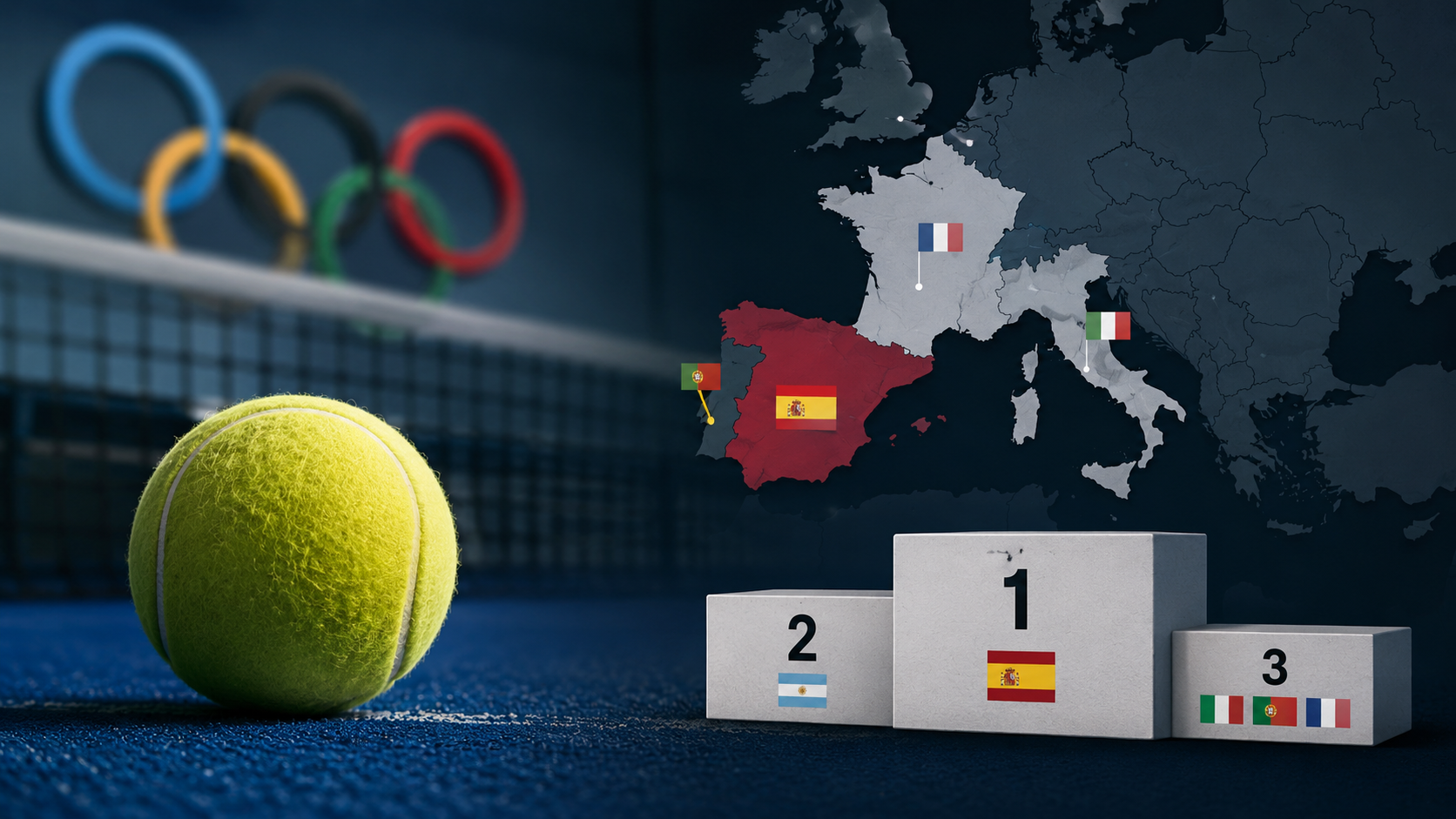







The International Federation of Padel no longer hides his objective: to one day see padel included in the Olympic Games In Taranto, on the occasion of the discipline's first appearance at the Mediterranean Games, its president Luigi Carraro once again emphasized the global growth of padel and its progressive integration into major multi-sport competitions.
On paper, the arguments are numerous. But these Mediterranean Games also revealed a much less flattering reality: From a sporting perspective, international padel remains extremely unbalanced. .
And for those who still doubt the Olympic maturity of the discipline, Taranto could almost provide some additional arguments.
Spain isn't sending its best players… and remains ahead
This is probably the most striking observation.
Spain obviously did not arrive in Taranto with Arturo Coello, Ale Galán, Juan Lebrón, Bea González, Ari Sánchez or Paula Josemaría .
Far from it.
For the men, the Spanish team relied in particular on David Gala and José Antonio Diestro . They are certainly very high-level players, but they absolutely do not represent what Spain could field at its best in a hypothetical Olympic competition.
In the ladies, Lucia Sainz and Patty Llaguno Former world number 1s, but now far from the top of the rankings, were among those accompanying Jimena Velasco and Nuria Rodríguez.
And yet, the result is particularly telling.
The two Spanish women's pairs met in the final. Even before it began, Spain was already assured of leaving with the gold and silver.
Spain can thus delve very deeply into its pool of players while still remaining capable of dominating an international competition.
Behind Spain and Argentina, what real counter-power exists?
The problem obviously does not only concern the Mediterranean Games.
One only needs to observe the World's Championships .
In 2024 in Doha, the two team finals once again pitted them against each other Spain to Argentina in both men and women. Argentina won the men's title while Spain secured a sixth consecutive women's world title.
In the realm of men, world history also remains almost entirely a matter between these two nations.
The observation is difficult to ignore: Spain and Argentina still live in another world .
Behind them, Italy is making tremendous progress. Portugal also has a strong padel culture and several players capable of competing at a very high level.
France is also moving forward, with a particularly involved Federation.
But between getting closer to the podium (the top 2) and to be truly capable of beating Spain or Argentina with their best players , there is still a chasm.
Sometimes enormous differences
Taranto also produced scores that reflect the current heterogeneity of international padel.
We notably saw Portugal inflict a 6-0 6-0 to Turkey In the women's competition, Italy achieved exactly the same result against Cyprus.
In other matches, the differences in level were also considerable.
This is obviously not about mocking these nations. On the contrary, their presence is essential to the development of padel.
But for a sport that aspires to the Olympic Games, the question deserves to be asked: How many countries today possess genuine high-level depth?
Major nations not yet fully invested?
There is another paradox.
The Mediterranean Games represent a historic milestone for padel, but not all major nations have necessarily treated the competition as an absolute priority.
Spain is the most obvious example, as it has dozens of players who, on paper, could aspire to a higher national team.
And that's precisely where part of the problem lies.
To fully demonstrate its Olympic potential, padel must not only be played in a large number of countries, but also succeed in giving these international competitions have real sporting importance .
Italy is clearly playing its part. So is Portugal. France is increasingly involved in international competitions. And for many emerging nations, simply participating in these Games is already a significant event.
But the level of involvement and especially the sporting resources still vary greatly from one country to another.
38 million practitioners… but how many nations are capable of competing for medals?
Luigi Carraro points out that padel now has approximately 38 million participants, 85,000 tracks and 27,000 clubs in 178 countries and territories .
These are impressive figures. (and certainly overestimated)
But above all, they recount the spread of padel as sport practiced .
The Olympic question raises another: that of its maturity as top-level international sport .
And in this area, photography is different.
There are many countries where padel is now played. But how many can currently build a team capable of competing with the best?
Spain boasts unparalleled depth. Argentina remains the other historical powerhouse. Behind them, Italy, Portugal, and France are trying to close the gap, while several emerging nations are still building their first generations of international players.
Taranto: a success… that also exposes the weaknesses of padel
This is the paradox of these Mediterranean Games.
For the FIP, Taranto undoubtedly represents an institutional victory. Following the European Games in Krakow, padel continues its establishment in multi-sport events and will also be present in other major continental competitions.
This internationalization is essential in the Olympic quest.
But Taranto simultaneously reveals the hidden side of this expansion: Being present in 178 countries does not yet mean having 178 competitive nations .
And when Spain can field a team without many of its best players while still remaining a natural contender for gold medals, the question of true international balance remains entirely open.
Padel is growing extremely fast.
But before the five rings, his next challenge may be less about adding new countries to a map than about bringing forth more nations truly capable of beating the two giants, Spain and Argentina .
Because for now, behind the impressive global growth shown by the FIP, the international sporting hierarchy remains terribly narrow.

Franck Binisti discovered padel at the Club des Pyramides in 2009 in the Paris region. Since then, padel has been part of his life. You often see him touring France to cover major French padel events.






































































 Do you lose your ranking? Padel FFT after more than a year without a license / without competition?
 P1000 4Padel Limoges – Results / Live / Schedule
 France will have over 5,000 padel courts by 2026: nearly 900 new courts
 France or Portugal, Spain or Argentina: Miguel Lamperti ranks the best padel nations
 Cédric Lavoye: "Hard work pays off" and a first FIP tournament in Guadeloupe is in his sights
 Nicolas Rouanet is preparing his return in 2027: “With Bastien Blanqué, I would never say no”
 Leygue/Blanqué respond bluntly to the criticism: "You can say what you want... We're putting all our money and our lives into this."
 P1000 Arsenal Padel – Cazaban/Rubio are the clear favorites, but there is strong competition.
 Doinsport and PISTA join forces: padel is finally coming alive!
 P1000 Drag'N Ball Draguignan: Biron / Tullou and Gourre / Vial, a duel for the title?
 Milan P1: Diestro and Sintes take down the twelfth pair and confirm their rise to power
 Sanyo Gutiérrez questions the future of Galán and Chingotto: "I don't see them returning for another year."
 Premier Padel Stupaczuk / Sanz: two consecutive finals, two victories against Galán / Chingotto… is a new hierarchy emerging?
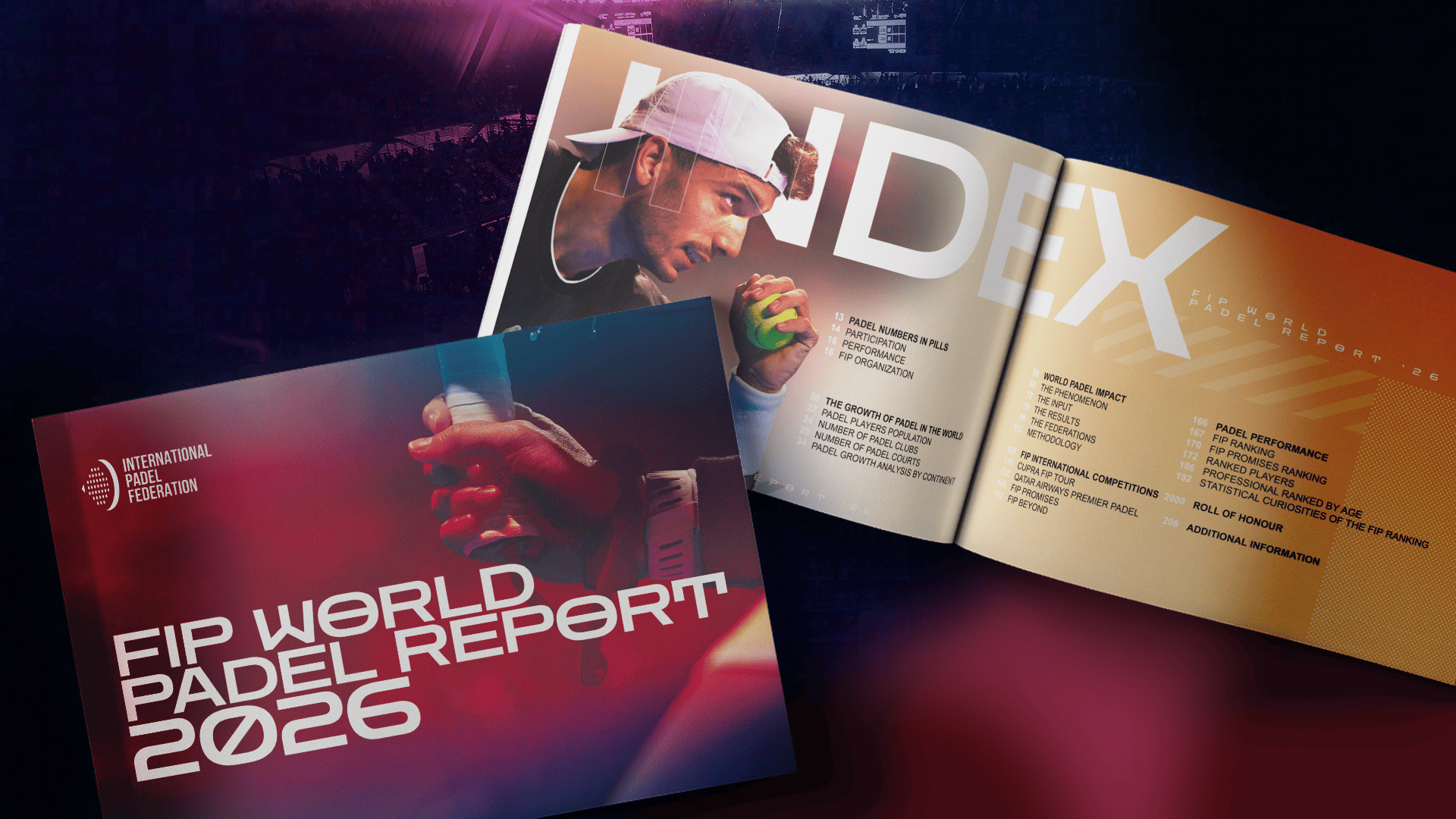 Padel is changing dimensions: the impressive figures of the 2026 global report
 Powerleague is changing its strategy: after the courts, it's now the coaches' turn to retain padel players.
 Guillaume Debelmas (4PADEL): "The padel market is developing faster than expected, but we must be careful about rents."
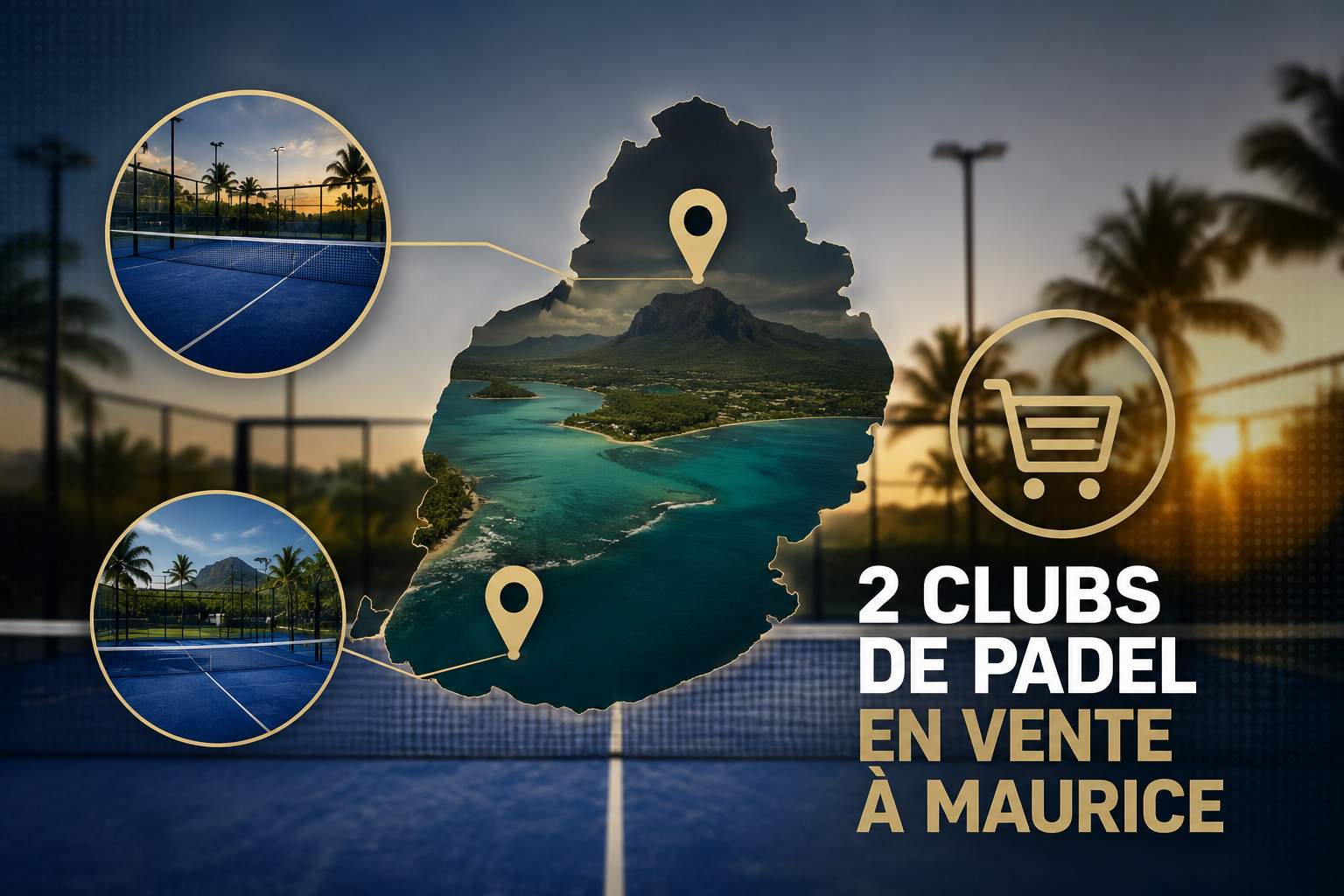 For sale: two padel clubs in Mauritius, starting from 330,000 euros
 How much does it actually cost to organize a FIP Bronze event?
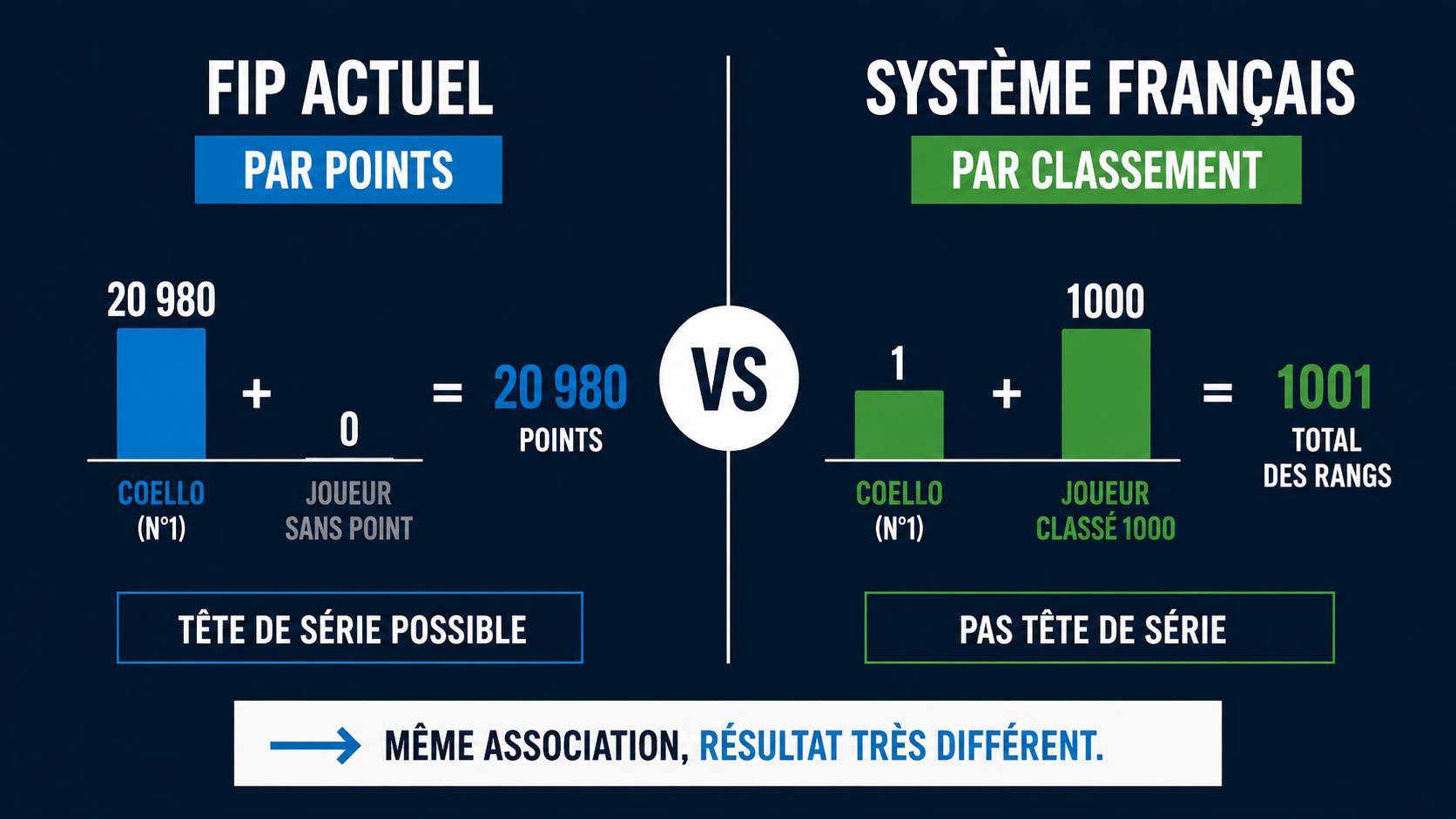 Coello with a player at 0 points ahead of two top 10 players: should the FIP ranking be reviewed?
 Les Pyramides: after 12 padel courts, the club is focusing on youth training
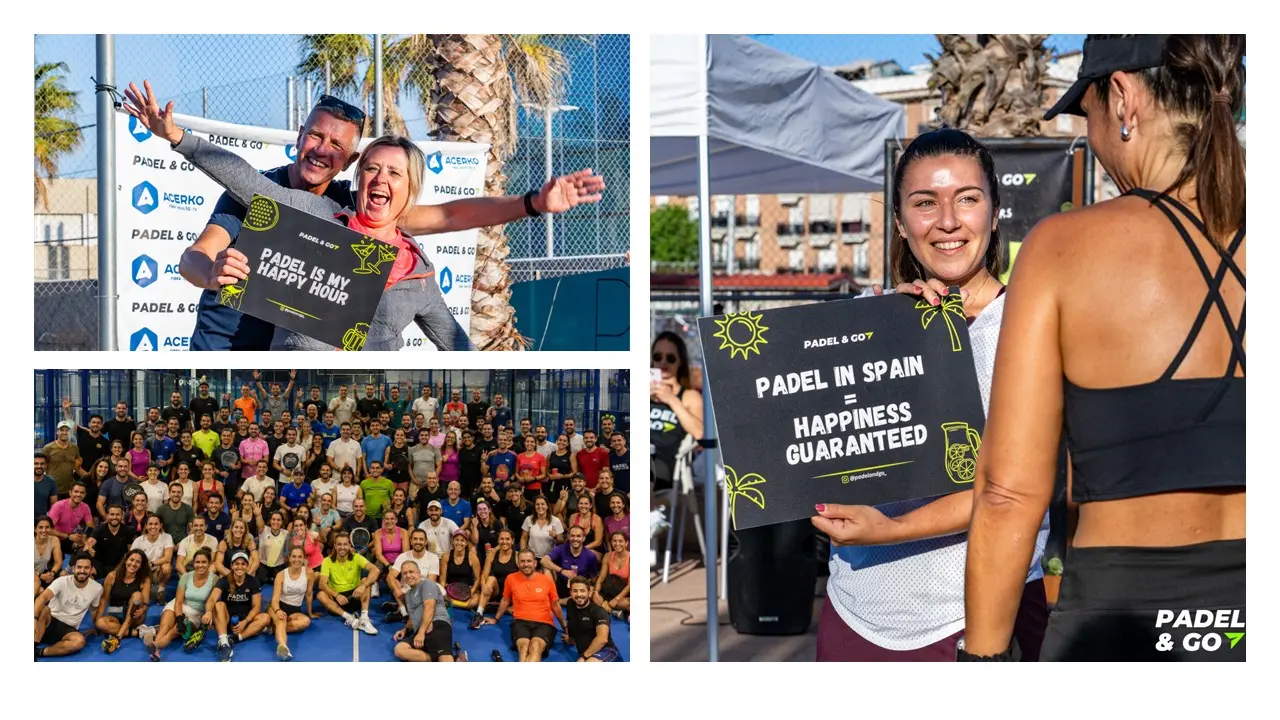 Health Care Padel Tour 2026: What if your next padel tournament was played in Barcelona?
 FAST Padel Academy continues its development and establishes itself in Liège.
 What the analysis of the stroke reveals: tennis forehand vs. padel bandeja
 Has the bandeja disappeared from modern padel?
 Flat forehand in padel: 5 exercises from Cristian Álvarez to gain control and efficiency
 Why knowing how to play on the right and left can make all the difference
 Tapia reveals his recipe for beating Coello / Tapia: "I would bet everything on myself"
 How Coello defused Chingotto's game plan
 In padel, does the chemistry between a pair count as much as individual skill?
 Summer changes padel… but what if the real challenge wasn't hitting harder?
 Neither FIP Tour nor World Team Championship: the unique format of padel at the Mediterranean Games
 Premier Padel : when television can lengthen players' breaks
 Premier Padel Yes, a referee can refuse a player permission to go to the toilet
 Julien Seurin opens up about his mental state: "There are far more doubts than moments of happiness."
 More than a year later, Thomas Leygue is back in the top 150: behind the scenes of a comeback that's still unfinished
 Padel vs squash vs badminton: the scientific ranking of cardio intensity
 Why does Arturo Coello play with his right hand bandaged?
 What if your progress in padel depended on what nobody else is looking at?