

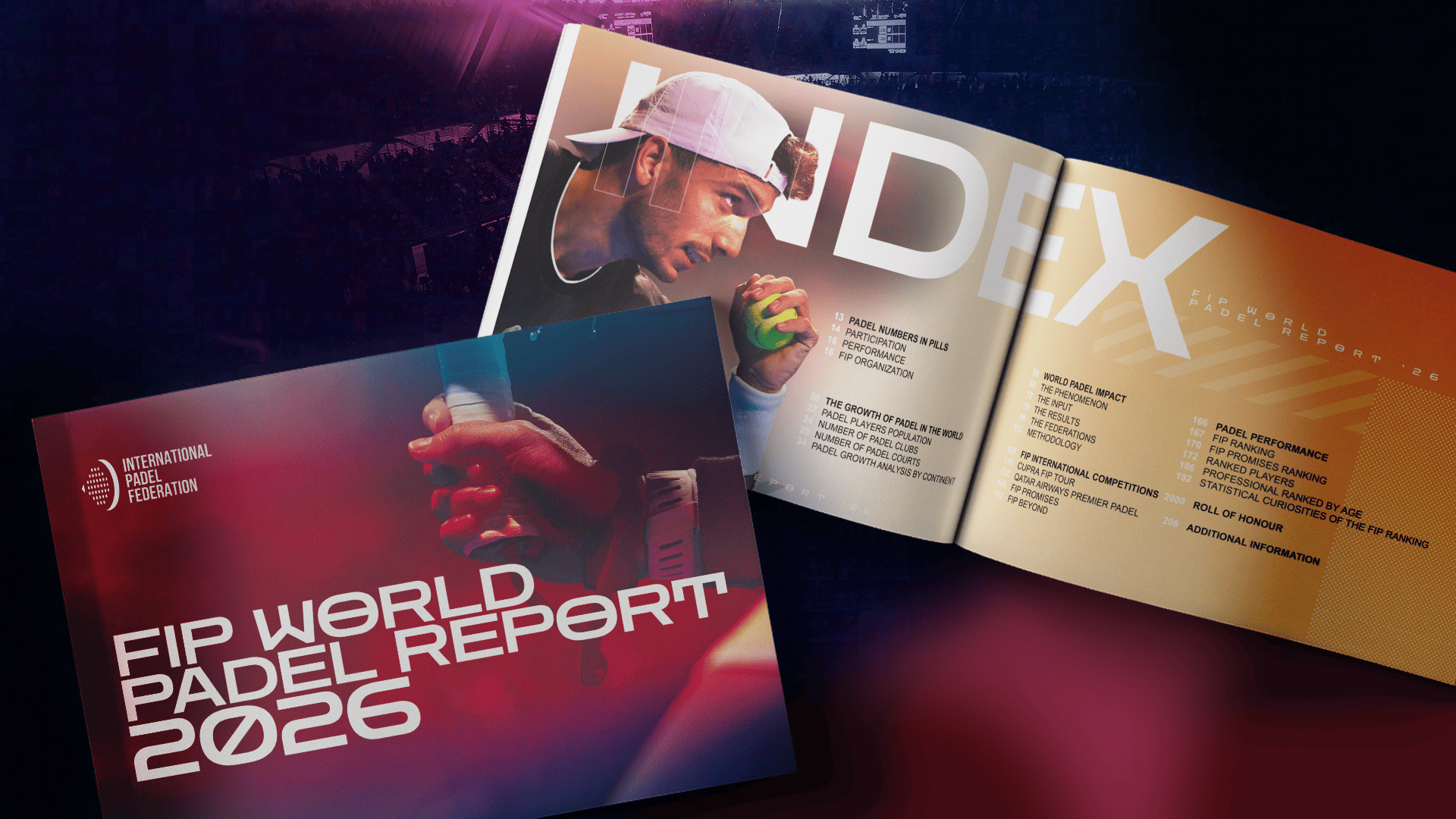








With 40 million players, over 91,000 courts and nearly 28,500 clubs, padel continues to grow internationally. In its World Padel In its 2026 report, the International Padel Federation (FIP) unveils the figures for a sport that is now developing on almost every continent. While Spain remains the global benchmark, new markets, particularly in Asia, are experiencing spectacular growth. And behind this growing popularity lies an industry already worth several billion euros.
40 million players: padel is reaching an ever-growing audience
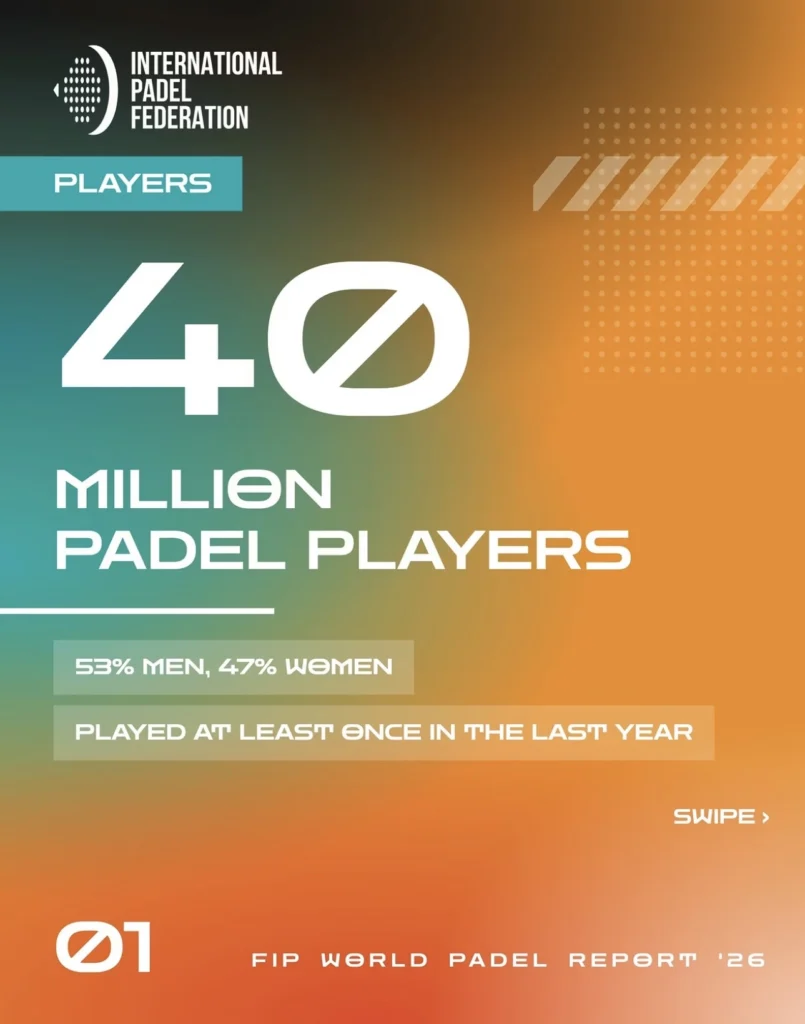
This is one of the most striking figures in the World Cup. Padel 2026 forecast: according to FIP estimates, 40 million people have played padel at least once over the past twelve months.
This figure reflects the growing popularity of the sport, although a distinction must be made between occasional and regular players. The International Federation estimates that approximately 27 million people play padel at least once a week or every two weeks.
Another interesting statistic is the distribution between men and women. On a global scale, 53% practitioners are men et 47% some women This proportion shows that padel appeals to a particularly wide audience, even though the situation varies considerably from country to country. The number of registered players is also increasing. With more than 1,1 million players affiliated with a federation , the FIP records a increase of about 31% compared to the previous assessment.
These figures confirm that padel is no longer limited to a few historically dominant countries.
More than 91,000 runs: nearly 40 new ones built every day
The expansion of padel can also be measured through the development of its infrastructure.
The FIP now lists 91,234 tracks spread across the world , against 77,355 in the previous report . This represents 13,879 additional tracks in about ten months, representing an increase of 17,9% over the period studied.
To better understand the scale of the phenomenon, this is equivalent to approximately 40 new tracks built every day The number of structures follows the same trend, with 28,497 clubs and facilities i.e 3,863 more than in the last census In just a few years, padel has become a particularly attractive sector for investors, with numerous projects for private clubs, multi-sports complexes and centers entirely dedicated to the sport.
But this progress is not the same everywhere. Some countries already have a very developed network, while others are only just beginning to structure their market.
Spain remains the benchmark, but the competition is catching up.
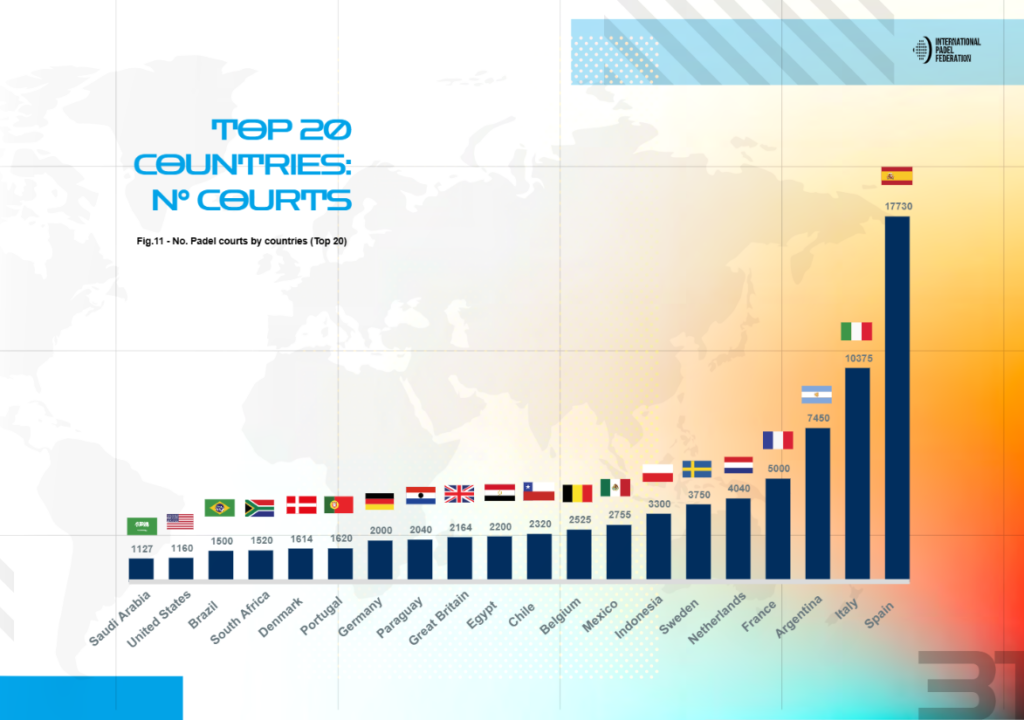
Unsurprisingly, Spain retains its position as the world's leading country in terms of infrastructure.
With 17,730 slopes and 4,705 clubs, it remains far ahead of its competitors. Italy and Argentina are also among the most important markets, with 3,855 and 3,300 clubs and facilities respectively.
But the report's figures reveal an interesting trend: the most developed countries are no longer necessarily the fastest growing. In Spain, the number of runways increased by only about 3% over the period studied. In Italy, this increase reached just 1,9%. Conversely, several European countries are experiencing a much faster expansion.
This is particularly true of France, which has now reached 5,000 runways, having added approximately 900 during the period analyzed. The United Kingdom and Germany have also surpassed the 2,000-runway mark, with particularly strong growth prospects.
Europe therefore remains the main global market, but the gaps between countries are beginning to change.
Asia is becoming one of the new driving forces of padel
This is perhaps one of the most interesting pieces of information in this report.
While Europe still boasts 56,981 courts, representing nearly 62,5% of the global total, padel's development is accelerating considerably in Asia. The continent now has 9,026 courts, an increase of almost 95% compared to the previous census.
Even more revealing, 31,7% of the new ski runs projected for 2026 are located in Asia. The continent also accounts for 39% of new club and facility openings during the period analyzed, ahead of Europe. And this growth is no longer limited to the Gulf countries. Indonesia, in particular, is among the most dynamic emerging markets, with 2,534 runs and 769 clubs and facilities. Pakistan, India, and China are also beginning to develop their infrastructure.
This is an important development for the future of padel, which seeks to establish itself permanently beyond its traditional territories.
A sport now played in 191 countries and territories
The internationalization of padel is also confirmed geographically.
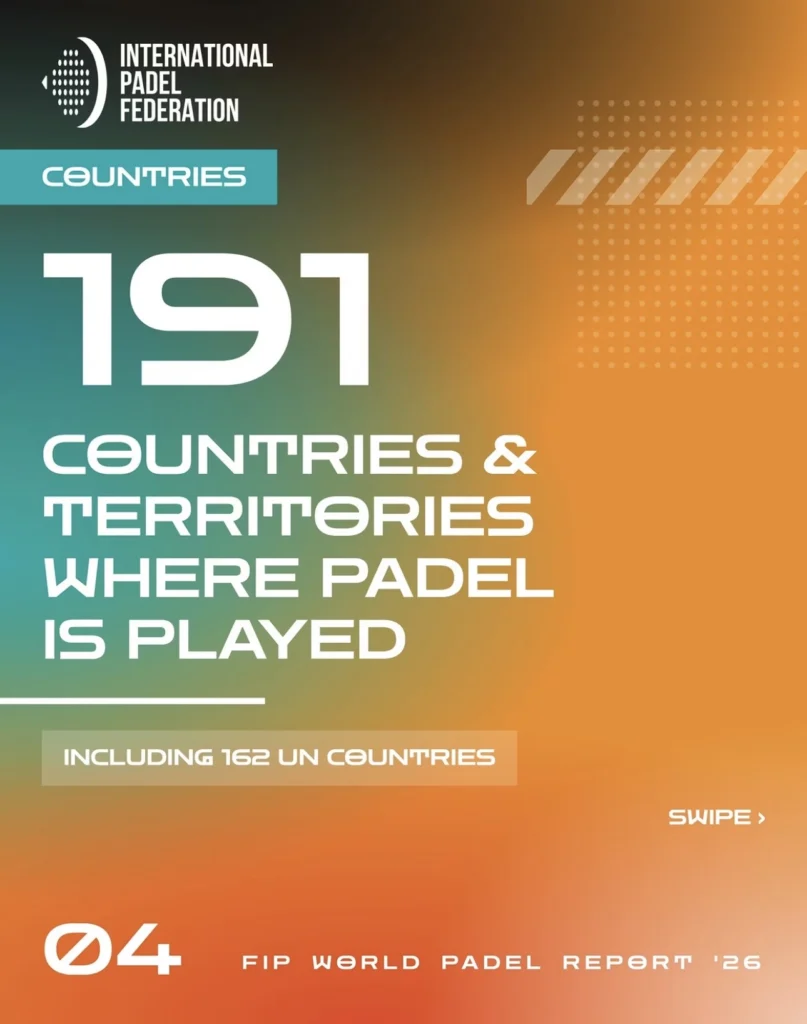
According to the FIP, the sport is now practiced in 191 countries and territories, including 162 United Nations member states. This represents an increase of 21 countries and territories compared to the previous figures. The international federation also has 100 affiliated national federations, indicating that the sport's structure is gradually accompanying its development.
This global presence is essential for padel's Olympic ambitions. If the sport hopes to one day be included in the Olympic Games program, it will need to demonstrate its international reach and the strength of its sporting organization.
Brisbane 2032 is a goal that is regularly mentioned, although no integration into the Olympic program has been achieved at this stage.
An industry that is already worth several billion euros
Beyond the courts and the players, padel now represents a real economic activity.
For this 2026 edition, the FIP worked with OpenEconomics to assess the financial impact of the discipline through a study entitled World Padel Impact. According to their estimates, annual spending related to padel will reach 6,843 billion euros in 2026. The main source of revenue comes from renting courts, with nearly 4,6 billion euros, or about 67% of the spending studied.
The sale of equipment, the construction and maintenance of infrastructure, and the organization of competitions also contribute to this activity. The study estimates the economic impact on global GDP at €8,6 billion, taking into account both direct and indirect effects. Another striking figure: this activity represents the equivalent of 235,663 full-time jobs annually.
These are, however, economic estimates, not an exact count of existing jobs. Furthermore, certain activities, such as padel lessons, commercial partnerships, and sports tourism, are not included in the overall calculations.
The economic potential of the discipline could therefore be even greater than these initial estimates suggest.
434 international tournaments announced for 2026
This growth also applies to competitive padel.
The international calendar continues to expand, with 434 tournaments announced in 62 countries for 2026, according to data presented by the FIP. This increase in events allows more players to access international competitions without necessarily having to travel to Spain or Italy.
The development of the CUPRA FIP Tour, of Premier PadelThe FIP Promises junior circuit and other international competitions are contributing to this evolution. For young players, the stakes are high: having more tournaments, points to distribute, and opportunities to improve their world ranking.
This increased scheduling also raises new questions, particularly regarding travel, participation costs and the ability of players to finance an international season.
The next challenge: transforming this growth into sustainable development
World figures Padel The 2026 projections are impressive. But they also highlight a significant shift in the evolution of global padel.
For a long time, the discipline mainly grew around a few countries such as Spain, Argentina, and Italy. Now, new markets are taking over, particularly in Asia, while European countries like France, Germany, and the United Kingdom continue their development.
The challenge in the coming years will therefore not be solely about building more courts. It will also be necessary to fill clubs, retain players, train coaches, develop competitions, and enable new generations to progress. Because behind the millions of players and the thousands of new facilities, a question now arises: how far can padel still grow?
One thing is certain: with 40 million players, more than 91,000 courts and a presence in 191 countries and territories, padel has already changed scale.

Maceo Zerhat discovered padel in 2020 in Savigny-sur-Clairis, Burgundy. He contributed to the club's expansion by bringing his energy and curiosity. Padel Magazinehe transmits his Padel"mania" by skillfully bouncing on all the latest news about your favorite sport!



































































 Coello on ice, Nieto decisive: the limits of partner targeting
 Where to watch Dubai P1? TV schedule, times and broadcast information
 FIP rankings – Josemaría falls to 7th place, Di Nenno returns to the top 10
 "I applied to become the coach of the French national team": an objective for Adrien Maigret
 Fonteny/Joris after their “almost” upset against Tapia/Libaak: “We believed until the very last point”
 2026 World Cup – Five players barred from World Cup with the United Arab Emirates: Íñigo Jofre denounces the situation
 Coello/Tapia ahead of the Kuwait Major final against Tello/Arce: “These are two players who cause us a lot of problems”
 Organising a national padel competition: what are the FFT's requirements for clubs?
 A PADEL, the club that made Thuir the capital of Catalan padel
 Dubai P1 – Leygue and Moya secure their qualification through sheer willpower and earn a spot in the main draw
 P1000 Padel Saint-Charles – Gourre / Armand claim the title by defeating the top two seeds
 Dubai P1 – Three Frenchmen in action this Tuesday: Leygue can seize his opportunity, Guichard and Collombon face tough challenges
 Padel, weight training, and even HYROX: clubs are changing their model
 Padel court rentals: a global market estimated at 4,6 billion euros
 FIP Beyond: the new global padel circuit for amateurs and seniors
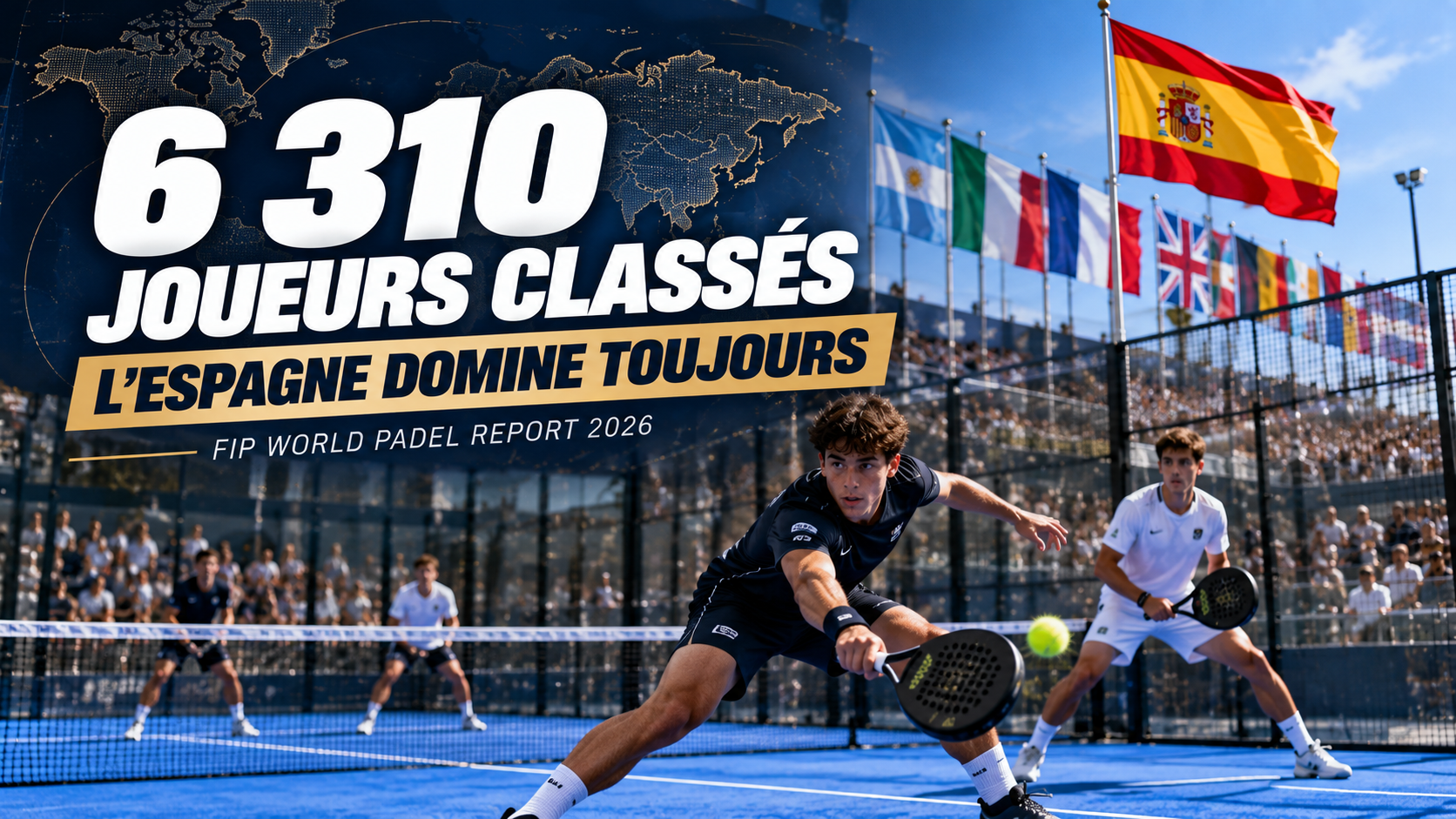 More than 6,300 FIP-ranked players: professional padel is becoming international, but Spain dominates
 Memory, reflexes, concentration: what happens in our brain when we play padel?
 P2000 or P3000: what are the differences in prize money, format and organization in 2028?
 Why can Libaak/Alfonso beat almost everyone… except Coello/Tapia?
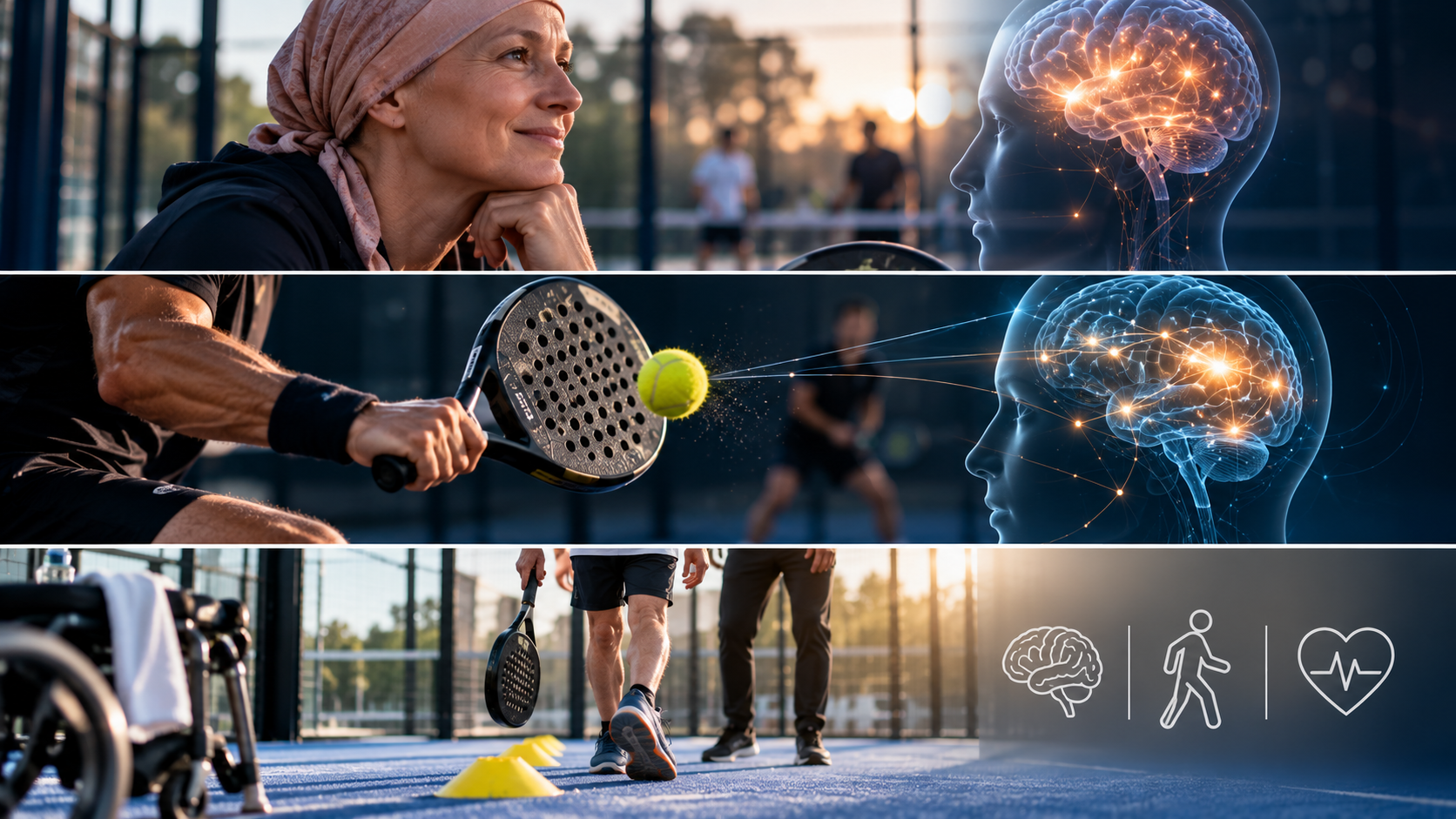 Could padel help the brain recover after chemotherapy?
 What the analysis of the stroke reveals: tennis forehand vs. padel bandeja
 Has the bandeja disappeared from modern padel?
 Flat forehand in padel: 5 exercises from Cristian Álvarez to gain control and efficiency
 Why knowing how to play on the right and left can make all the difference
 Tapia reveals his recipe for beating Coello / Tapia: "I would bet everything on myself"
 How Coello defused Chingotto's game plan
 In padel, does the chemistry between a pair count as much as individual skill?
 Organising a P2000 or a P3000: how much does it really cost clubs?
 Do you lose your ranking? Padel FFT after more than a year without a license / without competition?
 Kuwait Major: Chingotto/Galán out, Alejandro Galán injured, Coello/Tapia the only favorites?
 Julien Seurin opens up about his mental state: "There are far more doubts than moments of happiness."
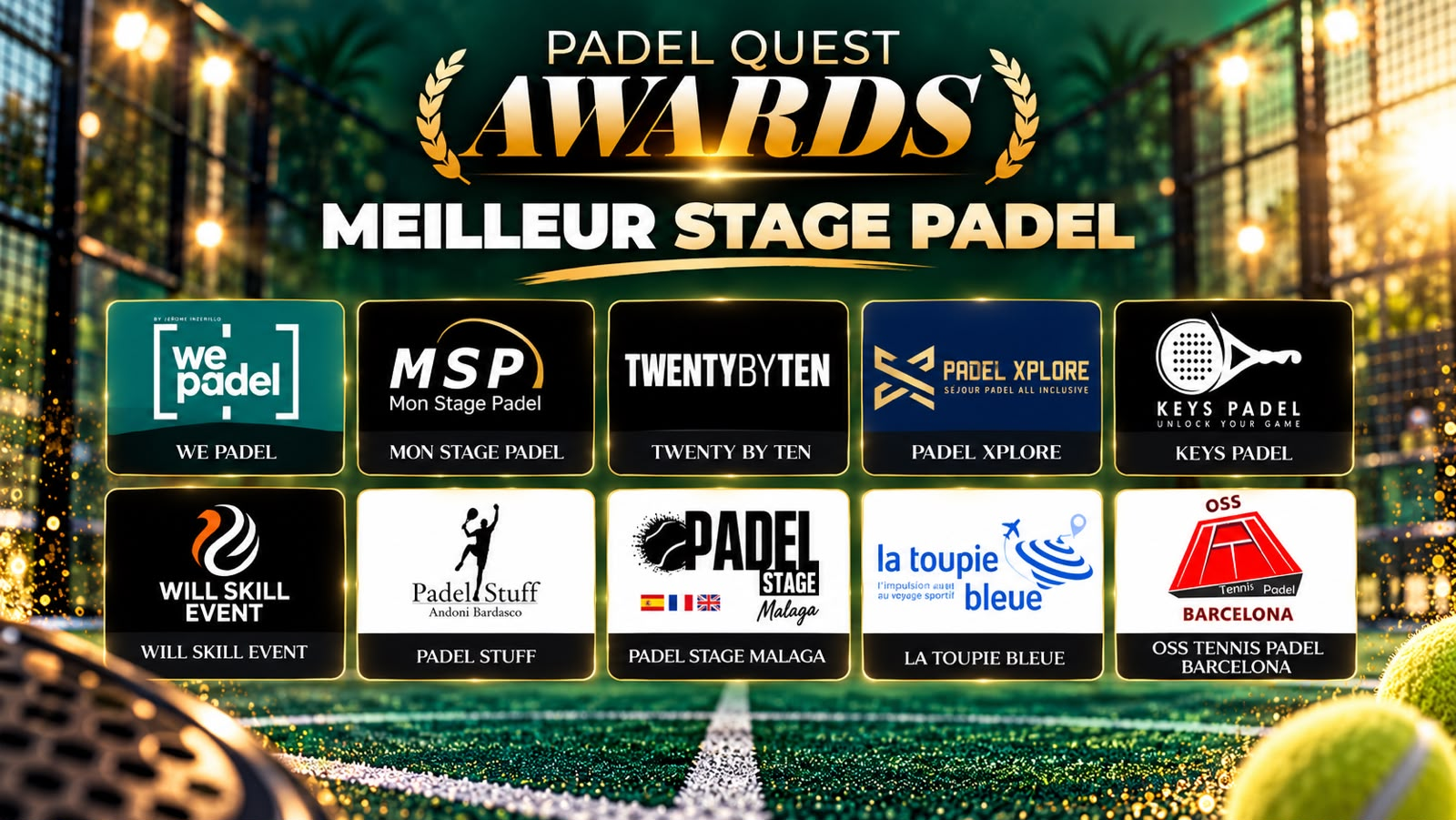 Padel Quest Awards: Ten specialists in the running for the title of best padel training camp of the year
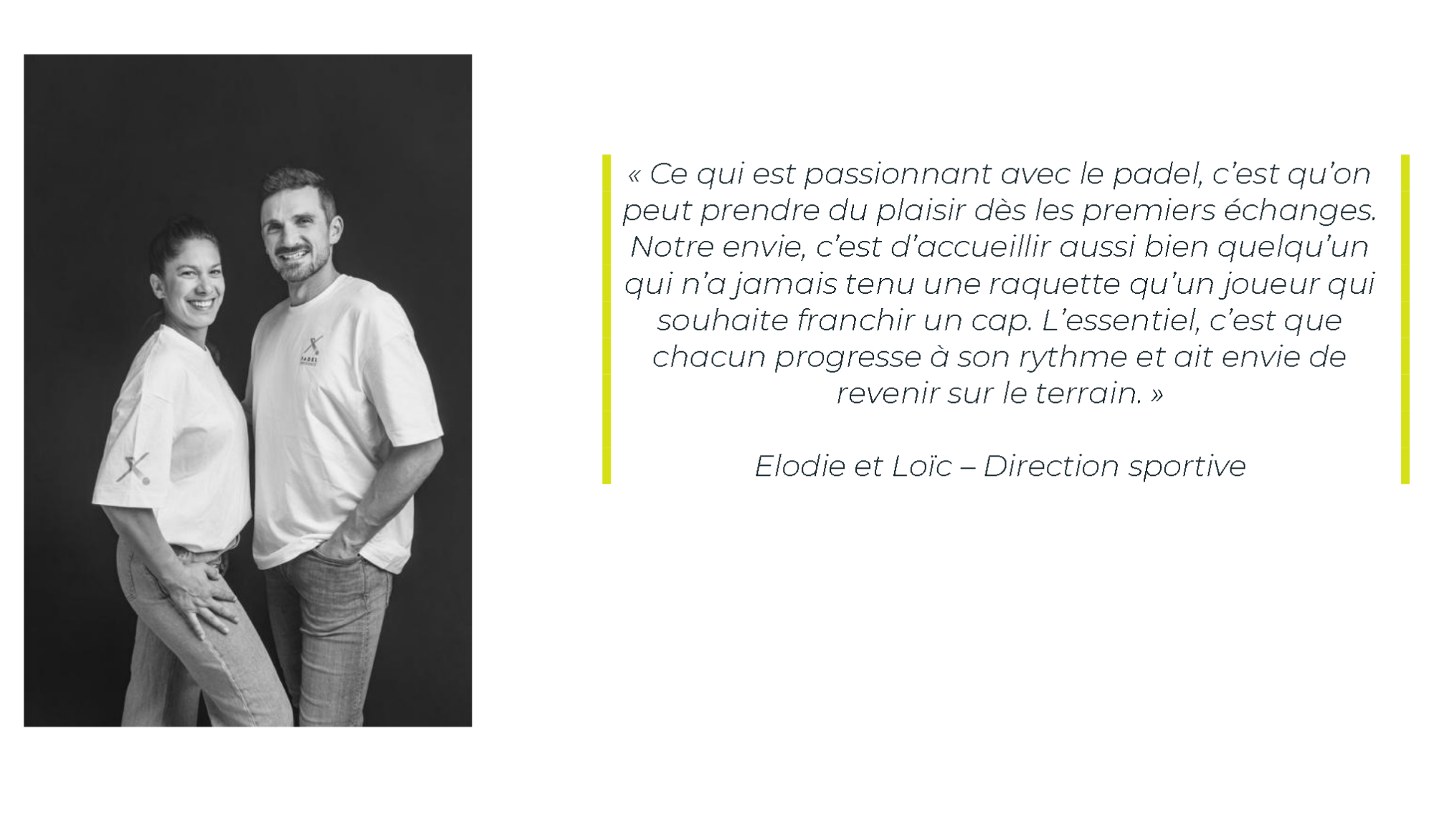 Padel Xperience: The Academy opens on November 2nd in Marcheprime, ahead of the complex's inauguration in 2027
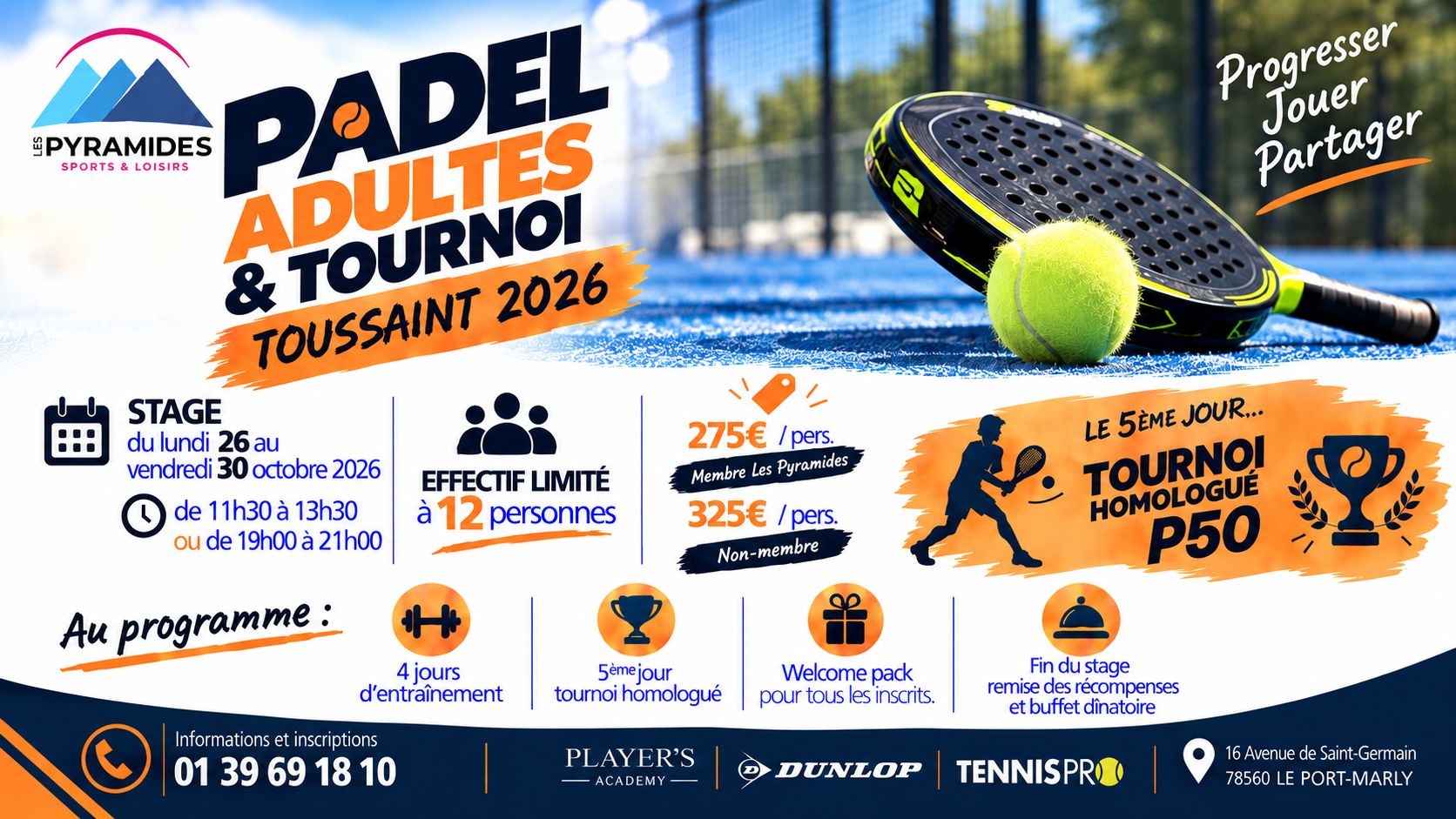 All Saints' Day – Les Pyramides are organizing a padel training camp for adults with a P50 tournament to close out the week
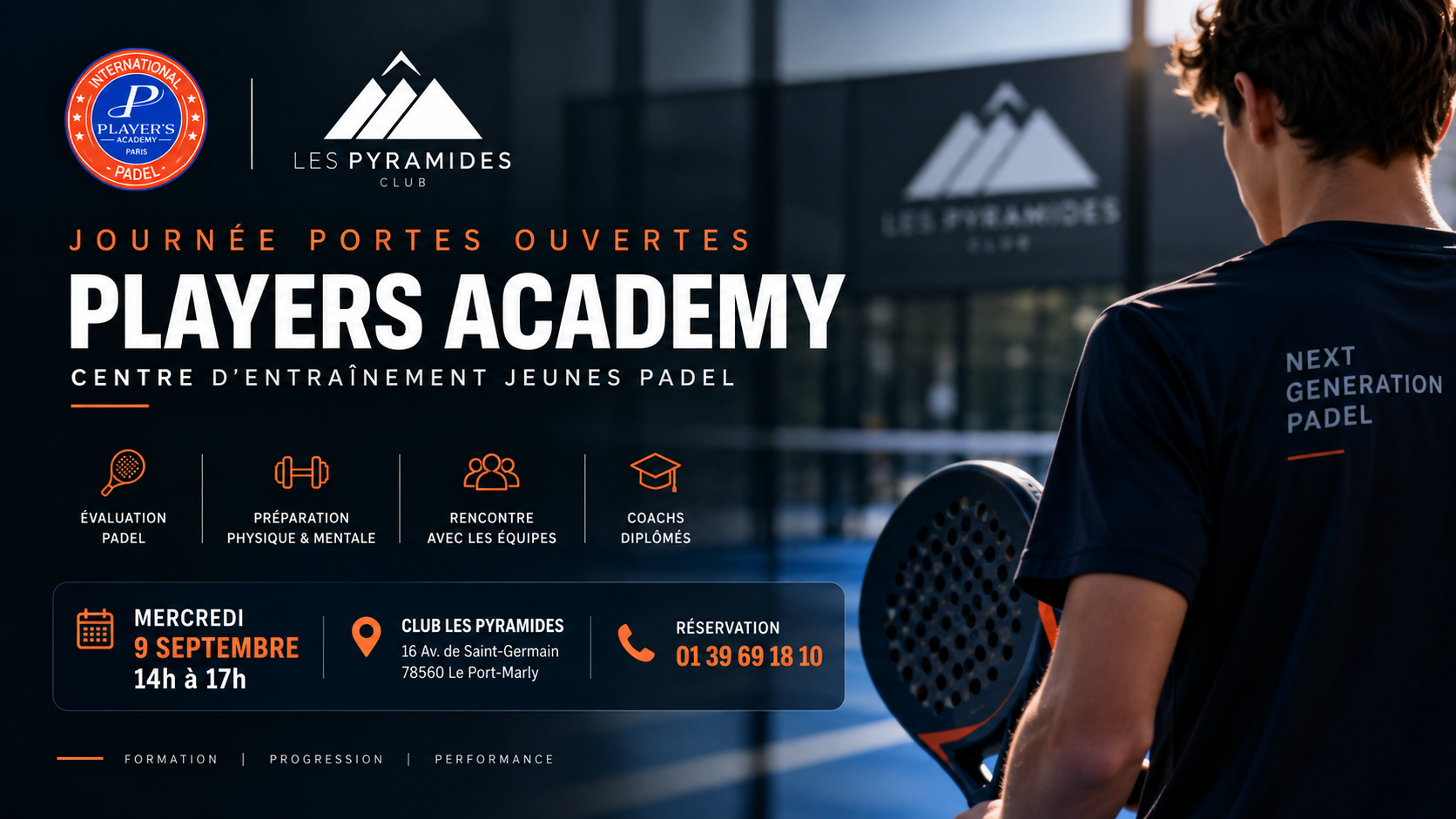 Les Pyramides: after 12 padel courts, the club is focusing on youth training