

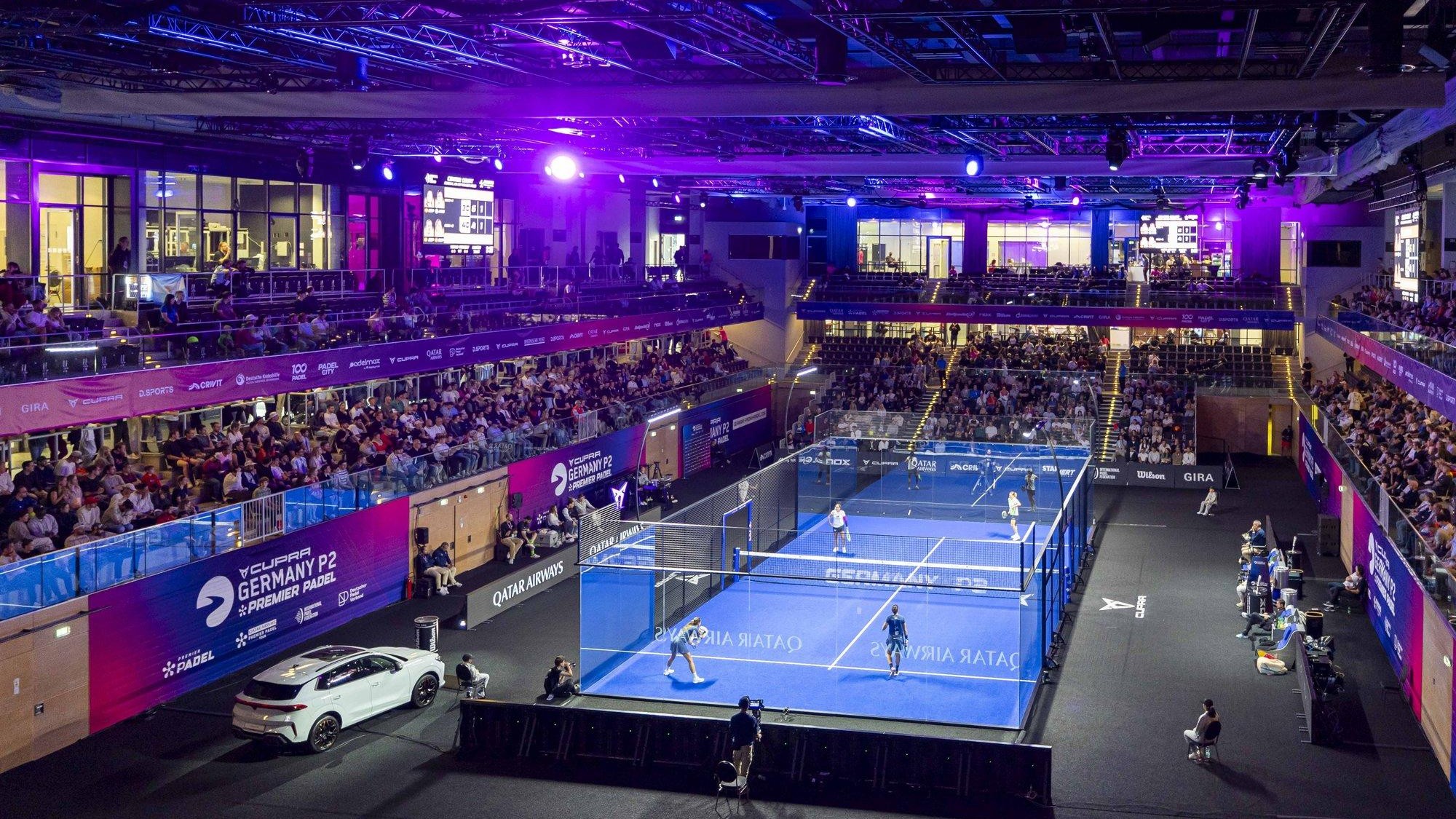








On paper, Rotterdam, Düsseldorf and Milan form a fairly homogeneous sequence: three European tournaments, three venues, three consecutive weeks of Premier PadelIn reality, however, players never play exactly the same game of padel. The court speed, the type of carpet, the ball used, the temperature, and even the characteristics of the hall can profoundly alter the course of a match. And in this final stretch of the season, this ability to adapt could become almost as important as pure skill level.
A fast track is more than just its carpet.
Talking about a "fast court" is convenient, but inevitably reductive. The speed perceived by players is the result of a combination of factors. The surface plays a role, obviously, but the ball, its pressure, temperature, humidity, altitude, and whether the court is being played indoors or outdoors can completely transform the conditions.
Valladolid remains one of the most spectacular examples on the circuit. The Plaza Mayor sits at an altitude of around 700 meters, and the tournament is played outdoors in the middle of June, with high temperatures: everything contributes to making the ball move more freely and facilitating aerial play. At the other extreme, Roland-Garros has already shown how cold and damp conditions can slow down the game, make shots off the glass more difficult, and considerably lengthen rallies.
Between these two extremes lies a whole range of conditions that players must decipher almost every week.
And the current tour provides a perfect illustration of this. In Rotterdam, the players were playing indoors on carpet. TenCate Padeluxe Ultimate Supercourt Blue With the Bullpadel Next Pro In Düsseldorf, also an indoor tournament, a Padel Pro Silver and passes into the realm of men at the Wilson Premier Padel A week later, Milan will keep the Wilson but will change surfaces again with a Mondo at the Allianz Cloud. Three consecutive indoor tournaments, therefore, but already three different configurations.
Speed redistributes qualities
These differences obviously do not determine the outcome of a tournament on their own. But they do alter the value of certain qualities.
When the ball travels fast and bounces easily off the glass, power becomes more advantageous. A player capable of hitting from deep behind the service line can take more risks, the player on the left has more opportunities to finish the point, and a pair positioned at the net can significantly shorten rallies. Players like Leo Augsburger, Jon Sanz, Ale Galán or Arturo Coello They then possess a weapon that is particularly difficult to neutralize.
When conditions slow down, the hierarchy of shots changes. The smash obviously remains crucial at the highest level, but it becomes more difficult to consistently finish the point. Players must be willing to play an extra bandeja, construct more shots, defend one more ball, and above all, choose the moment to accelerate more effectively. Players like Fede Chingotto or Martin Di Nenno , capable of maintaining a very high quality in repetition and of defending without immediately offering an easy ball, then mechanically recover value.
This is also where the concept of "best pair" becomes interesting. Being unplayable in favorable conditions is one thing. Being able to maintain the same level when those conditions disappear is another.
Rotterdam has already provided some clues
The Dutch P2 tournament served as a reminder of how quickly a week can shake up the rankings. Galán–Chingotto fell to Stupaczuk–Sanz, Lebrón–Augsburger were eliminated by Yanguas–Nieto, and Paquito Navarro–Di Nenno succumbed after a grueling battle against Momo González–Campagnolo. Three of the top four seeds were thus eliminated before the semifinals.
One pair, however, made it through the tournament: Arturo Coello and Agustín Tapia The number 1 team secured their tenth title of the 2026 season in Rotterdam.
And this is probably where their greatest strength lies today. Coello–Tapia not only possess exceptional weapons: they have enough solutions to change their approach.
If the lane allows for good hitting, Coello can turn a slightly short ball into a finishing opportunity, and Tapia probably possesses one of the most unpredictable aerial skills on tour. If conditions slow down, they may be willing to build up play more, defend, vary their heights, and wait for a more favorable situation. Therefore, they don't always win in the same way.
This is perhaps the most relevant definition of a dominant pair: not to depend on just one type of padel to win .
Düsseldorf then Milan: a true test of adaptation
The transition to Düsseldorf will be interesting to watch. The tournament remains indoors, but the change of court and ball will force players to quickly readjust. The following week, the same exercise will take place in Milan with a new surface. Premier Padel In fact, this sequence was structured as a three-week consecutive tour before the final stretch of the season.
For very vertical pairs, the question will be how far they can maintain their aggressiveness if conditions become less favorable. Lebrón–Augsburger For example, they possess an exceptional ability to shorten points. But their maximum potential emerges when their constant forward pressure is rewarded. When the first smash no longer finishes the point and they have to replay, rebuild, and then defend behind a counter-attack, the balance becomes more delicate.
At Stupaczuk–Sanz The issue is different. Their potential is extremely high when Sanz finds his rhythm and can consistently accelerate. Rotterdam demonstrated this again with their victory against Galán–Chingotto. But maintaining this aggression without making mistakes when the point goes on longer remains one of the keys to their progress.
Conversely, Galán–Chingotto They probably possess one of the most portable game plans on the circuit. Their ability to defend, work the transition, and then gradually regain the net gives them many options when the point refuses to end. Galán himself explained it during the Paris Major: indoor padel is more precise, while outdoor padel requires more adaptation, especially on lobs.
What if the real hierarchy was that of adaptability?
It would be tempting to establish a definitive ranking of the courts on the circuit, from fastest to slowest. Valladolid would certainly be at the very top of the list when heat and altitude combine. Some Parisian editions, on the other hand, have shown what a cold and damp padel court can produce. But in between, the actual speed can vary from one day to the next, and sometimes even between an afternoon session and a night session.
The most interesting ranking might be elsewhere.
Which pairs win when the ball flies? Which ones win when it no longer goes out? Which ones remain dangerous outdoors in windy conditions? Which ones benefit from the precision of an indoor court? Which ones can go from a week dominated by the smash to one where they have to accept constructing ten additional shots?
Rotterdam, Düsseldorf and Milan will provide three successive responses in just three weeks.
And in this game, the best pair in the world may not simply be the one with the biggest smash or the best defense. She's the one who arrives on Monday in a new room, discovers a new court and finds before the others the padel court that she'll have to play on Sunday.

I discovered the Padel I stumbled into Spain at a campsite. I was instantly hooked; passionate about padel, I follow international and regional news with the same excitement as the sport itself.
































































 “My vision was blurry”: Clara Mansart recounts her eventful P3000 final – Lucile Pothier will tackle the FIP in France in 2027
 FIP rankings – Guichard drops, Fonteny moves closer to the top 100, Robert makes a great move
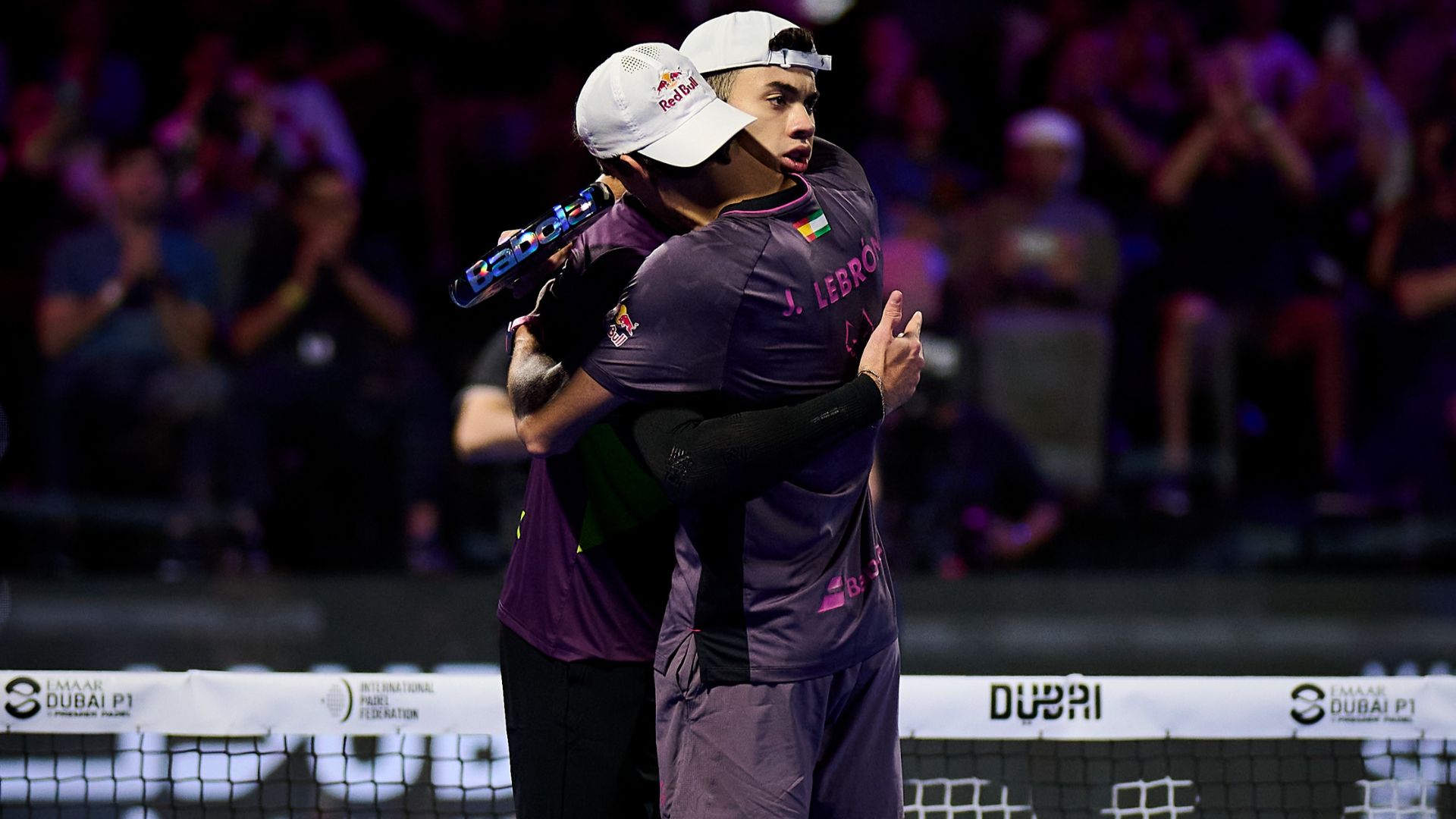 Lebrón / Augsburger: Brussels had sent a message, Dubai reinforces the threat
 Dubai P1 – Fernández / Calvo: “Any of the three best pairs could be world number 1”
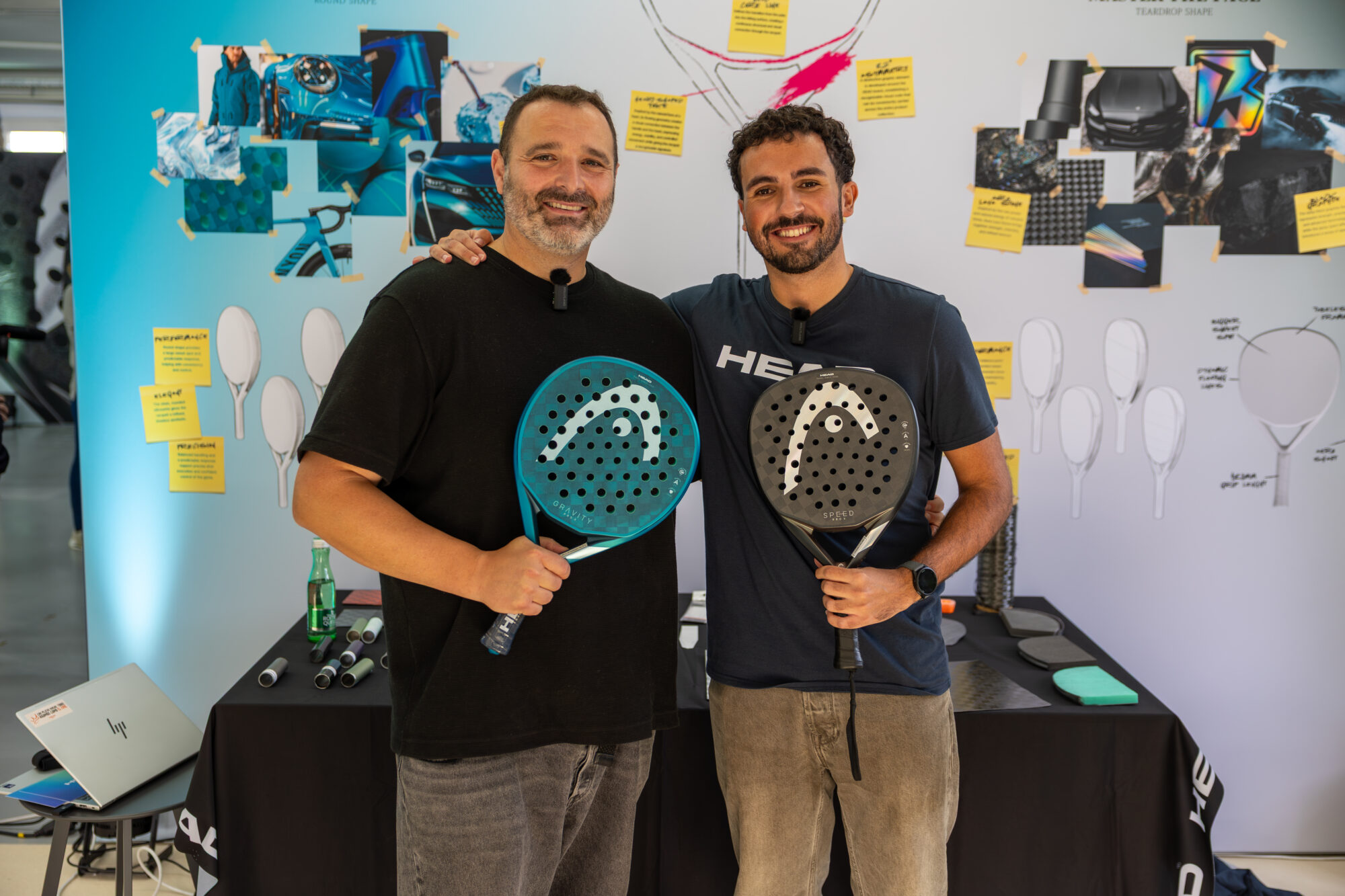 Two and a half years to create a padel racket: HEAD reveals the manufacturing secrets of its 2027 models
 Javier Rodríguez Piris: “I would like Spain to host the World Championships in 2030”
 “Victim of Padel ": The Adventure Padel Jack Troster and Jack Troster are back with a new track and a crazy music video.
 Bullpadel 2027 in the feminine: the queens take to the track
 Three consecutive serves in the Dubai final: the recurring umpiring error Premier Padel
 Padel, weight training, and even HYROX: clubs are changing their model
 Padel court rentals: a global market estimated at 4,6 billion euros
 FIP Beyond: the new global padel circuit for amateurs and seniors
 More than 6,300 FIP-ranked players: professional padel is becoming international, but Spain dominates
 OSS Barcelona – Why Spain and France aren't yet playing in the same league
 Cancer and rehabilitation: could padel become a therapeutic tool?
 Padel injuries: ankle, knee, elbow, eye… what the latest figures reveal
 Shocking turn of events at Dubai P1: Coello and Tapia have also withdrawn!
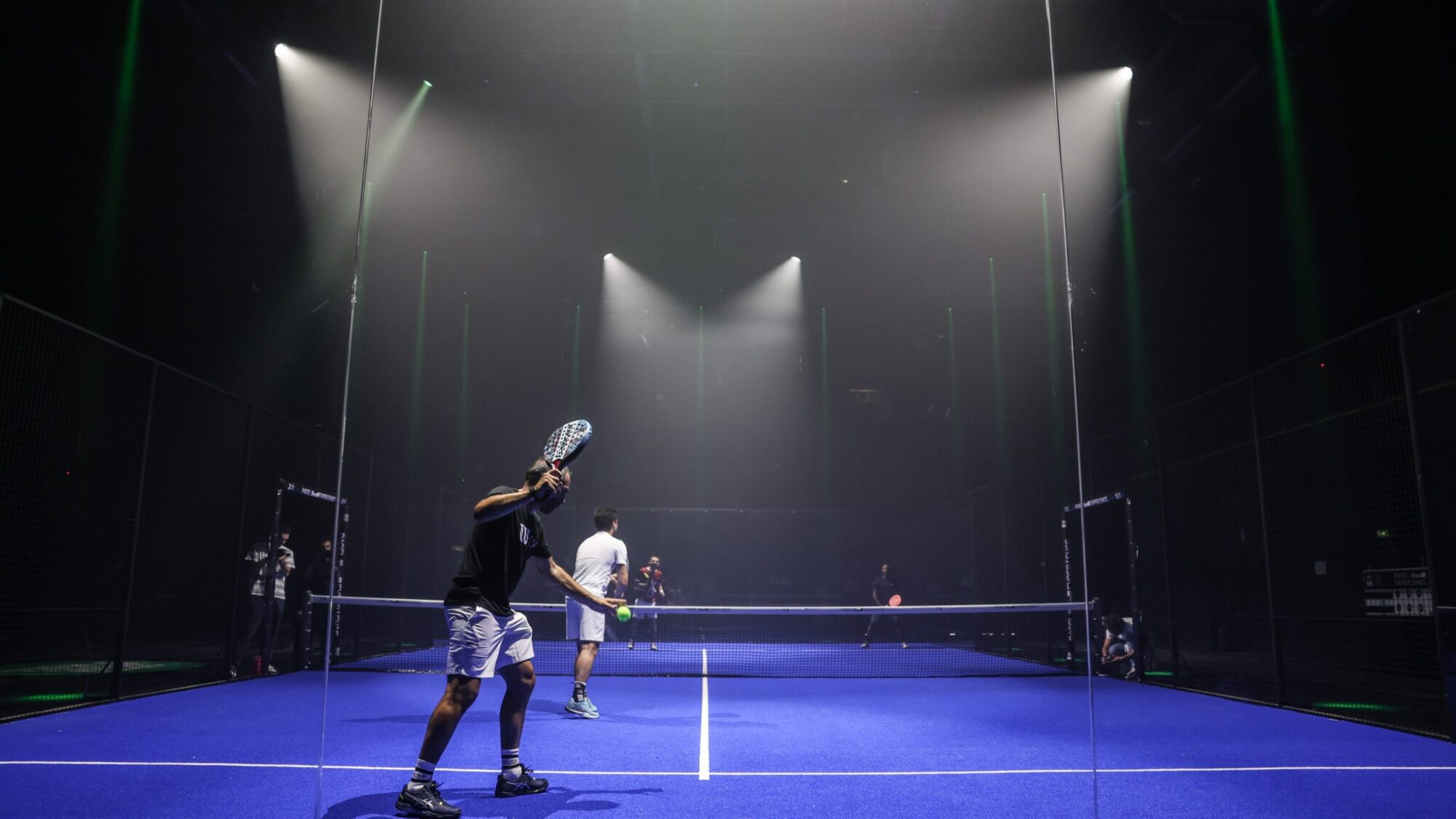 Padel serve: a good serve is especially good preparation for the third shot.
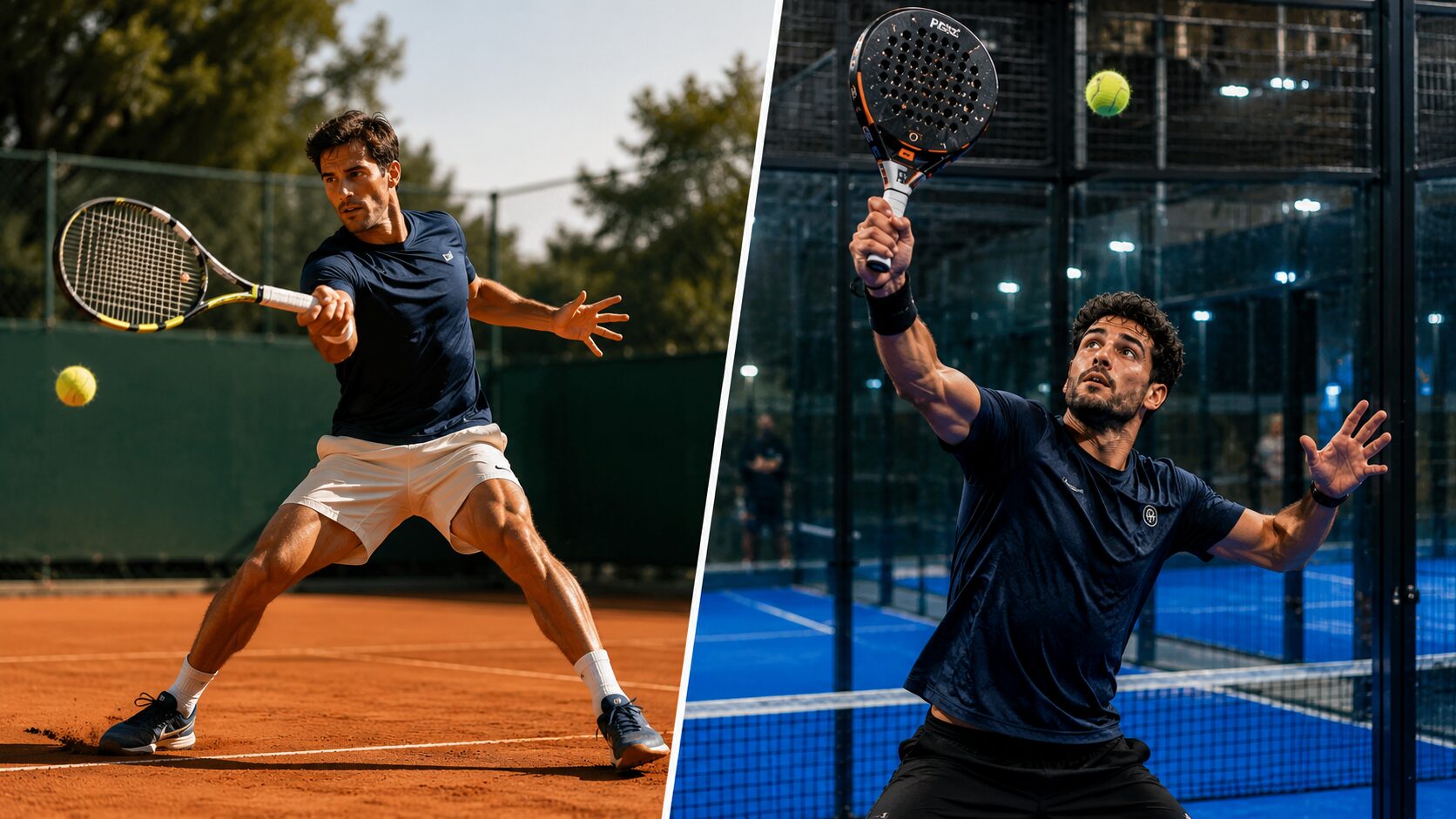 What the analysis of the stroke reveals: tennis forehand vs. padel bandeja
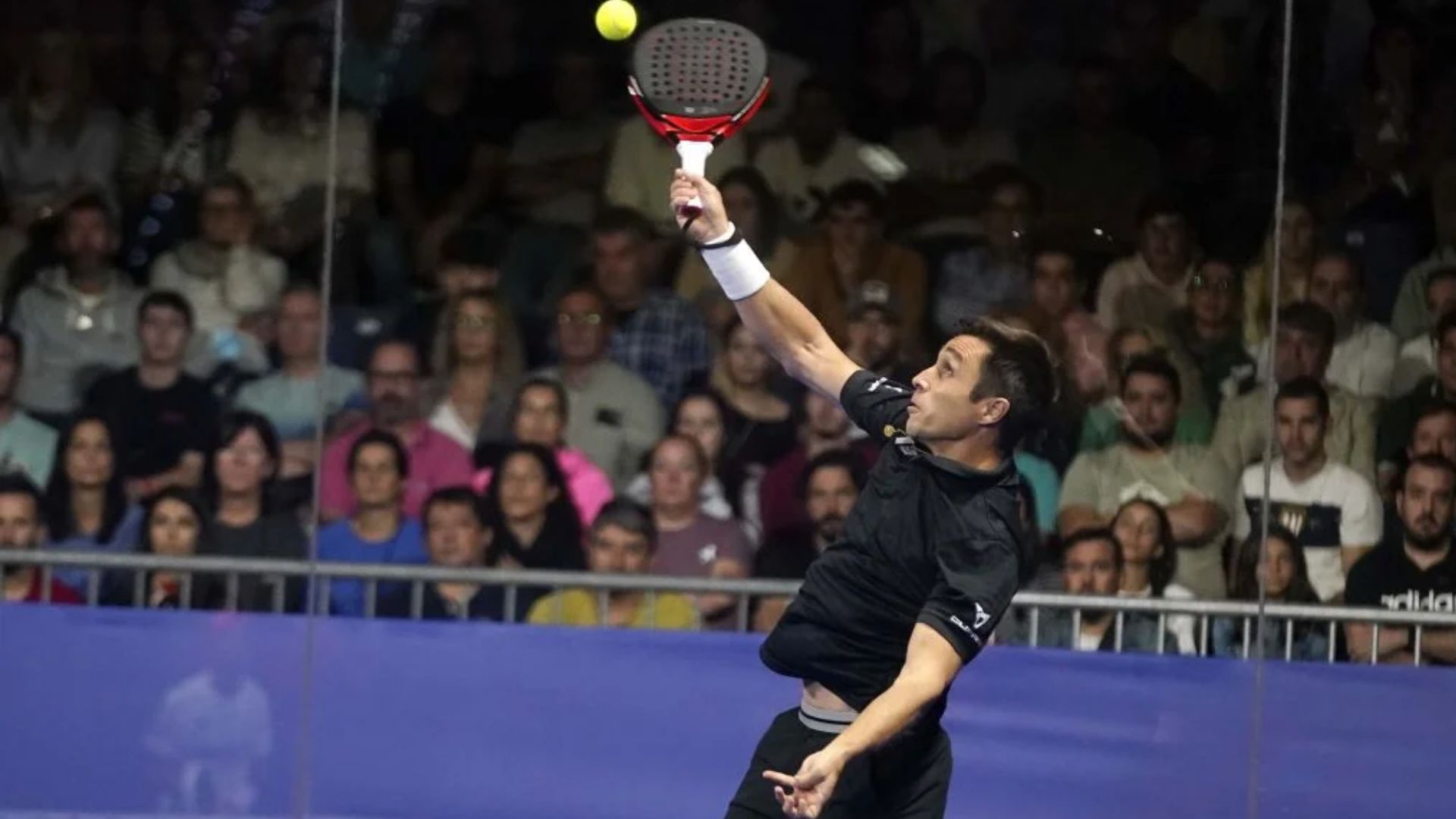 Has the bandeja disappeared from modern padel?
 Flat forehand in padel: 5 exercises from Cristian Álvarez to gain control and efficiency
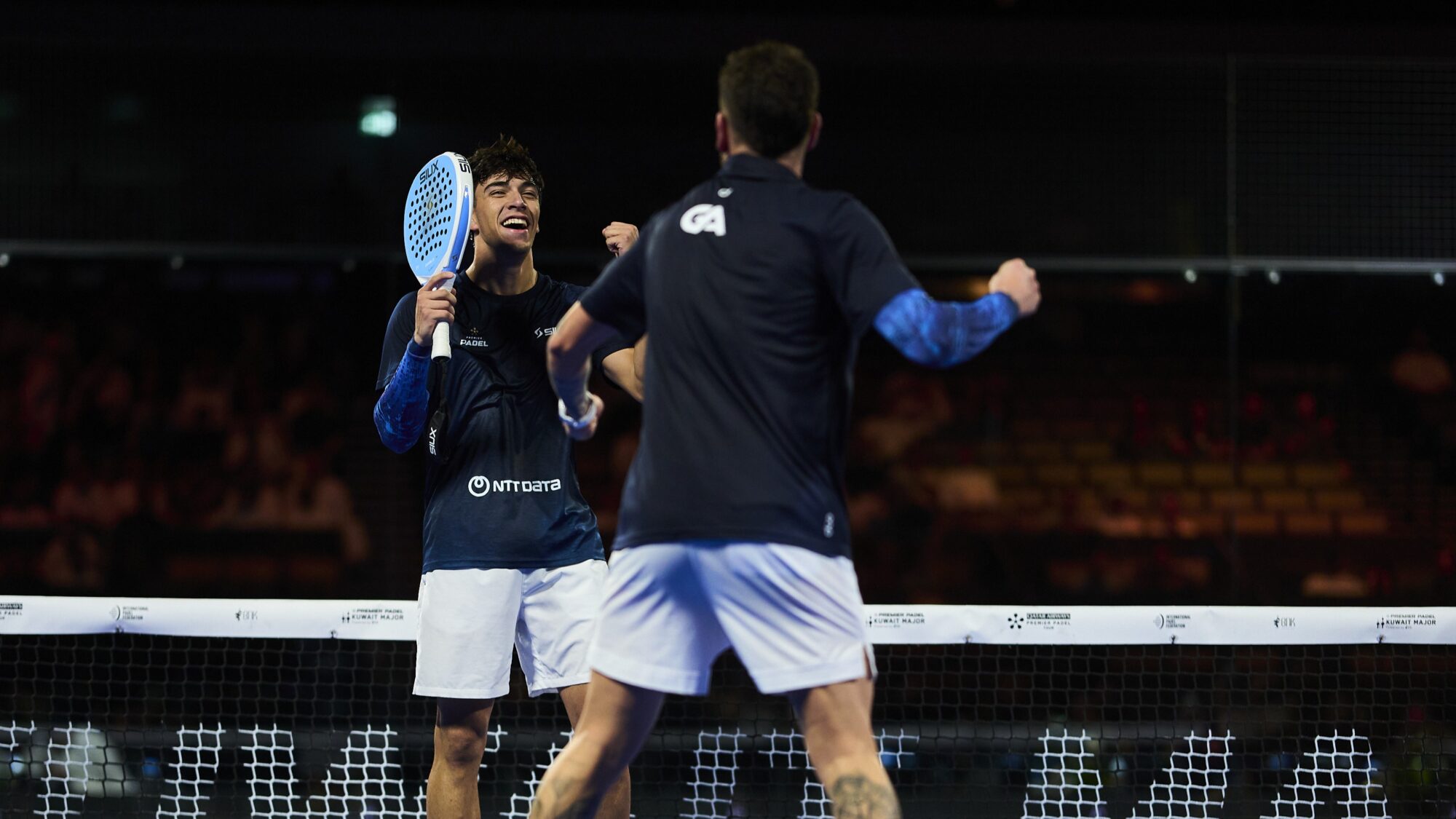 Why can Libaak/Alfonso beat almost everyone… except Coello/Tapia?
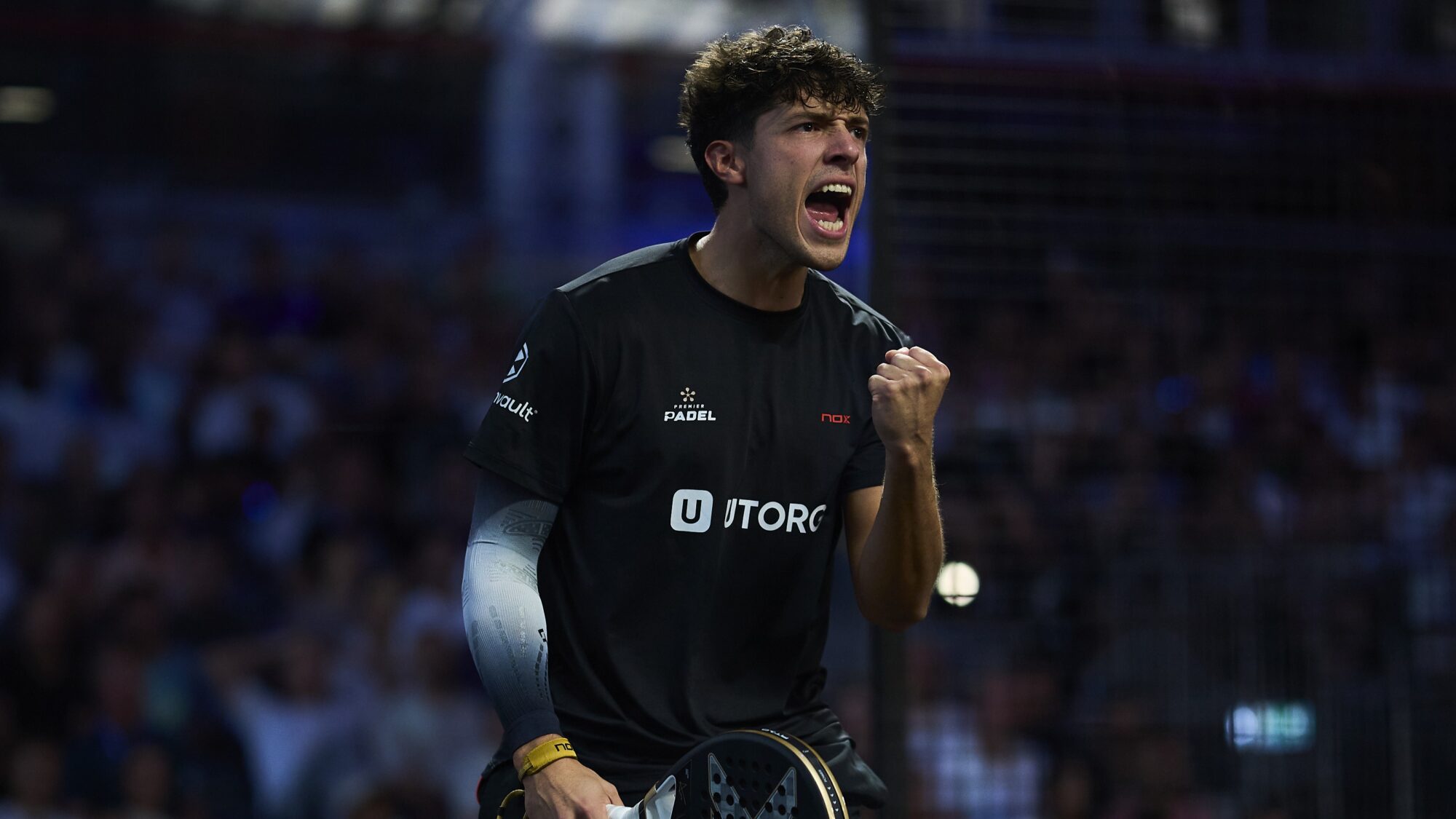 Tapia reveals his recipe for beating Coello / Tapia: "I would bet everything on myself"
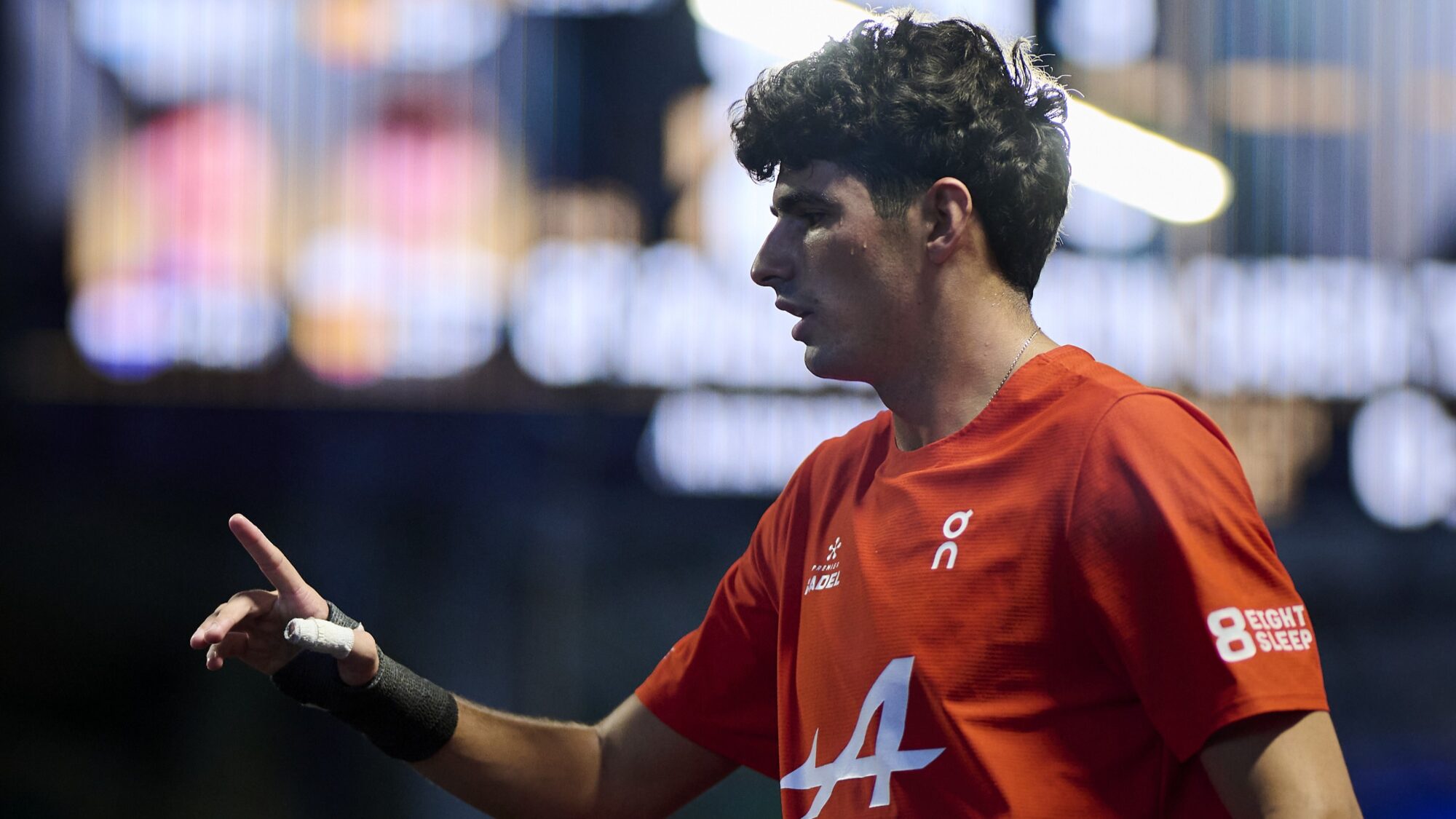 How Coello defused Chingotto's game plan
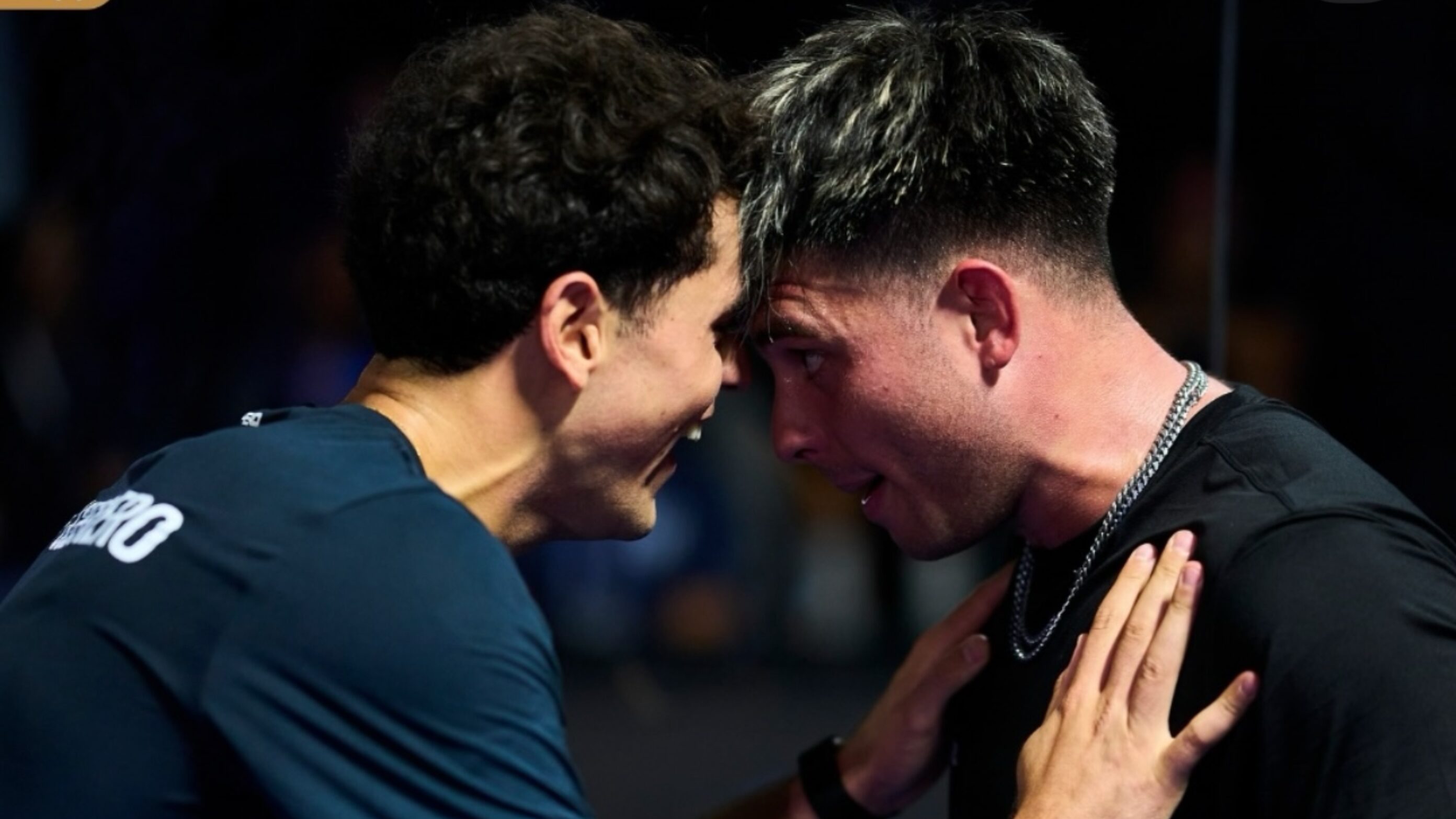 In padel, does the chemistry between a pair count as much as individual skill?
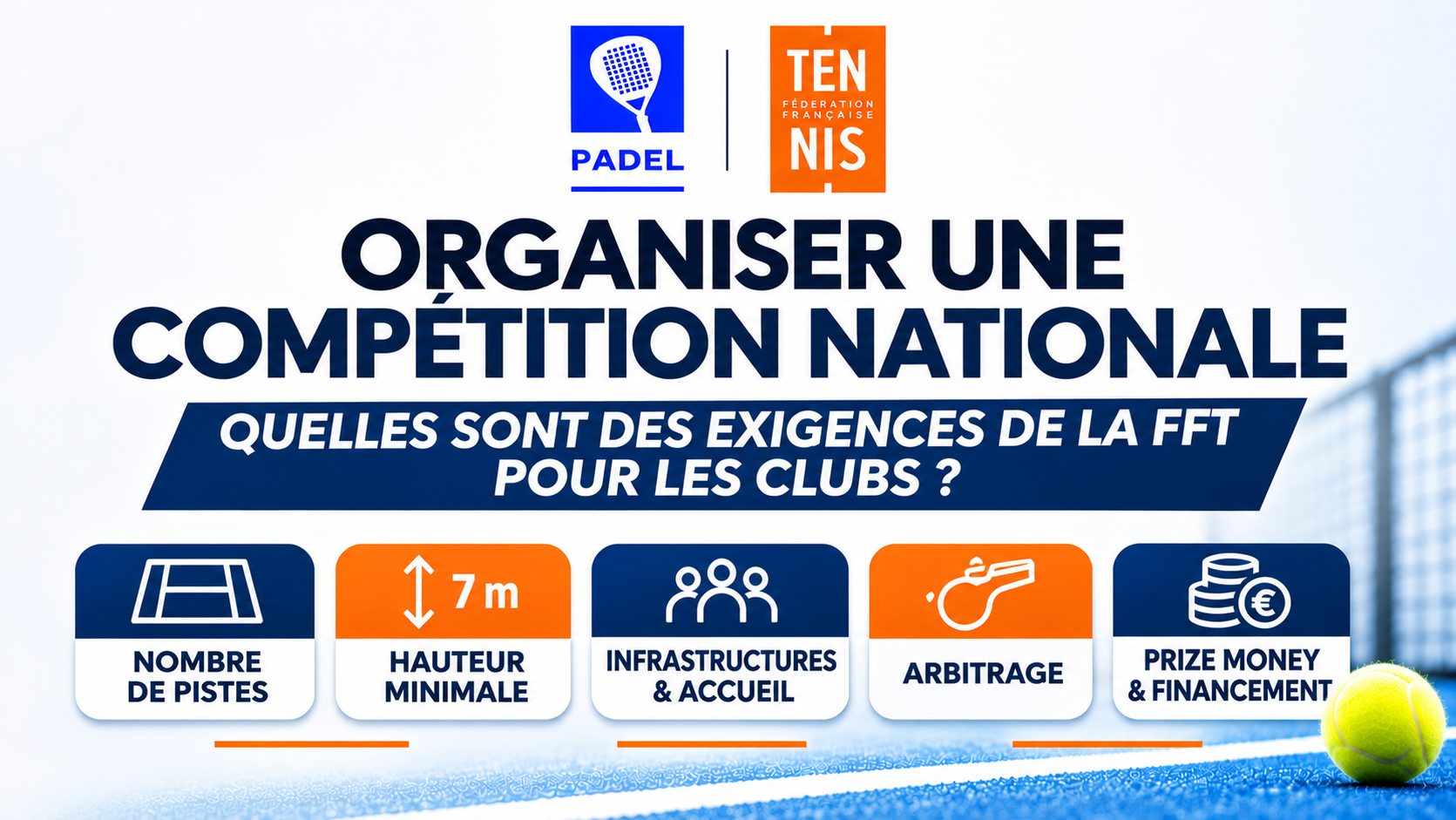 Organising a national padel competition: what are the FFT's requirements for clubs?
 Organising a P2000 or a P3000: how much does it really cost clubs?
 P2000 or P3000: what are the differences in prize money, format and organization in 2028?
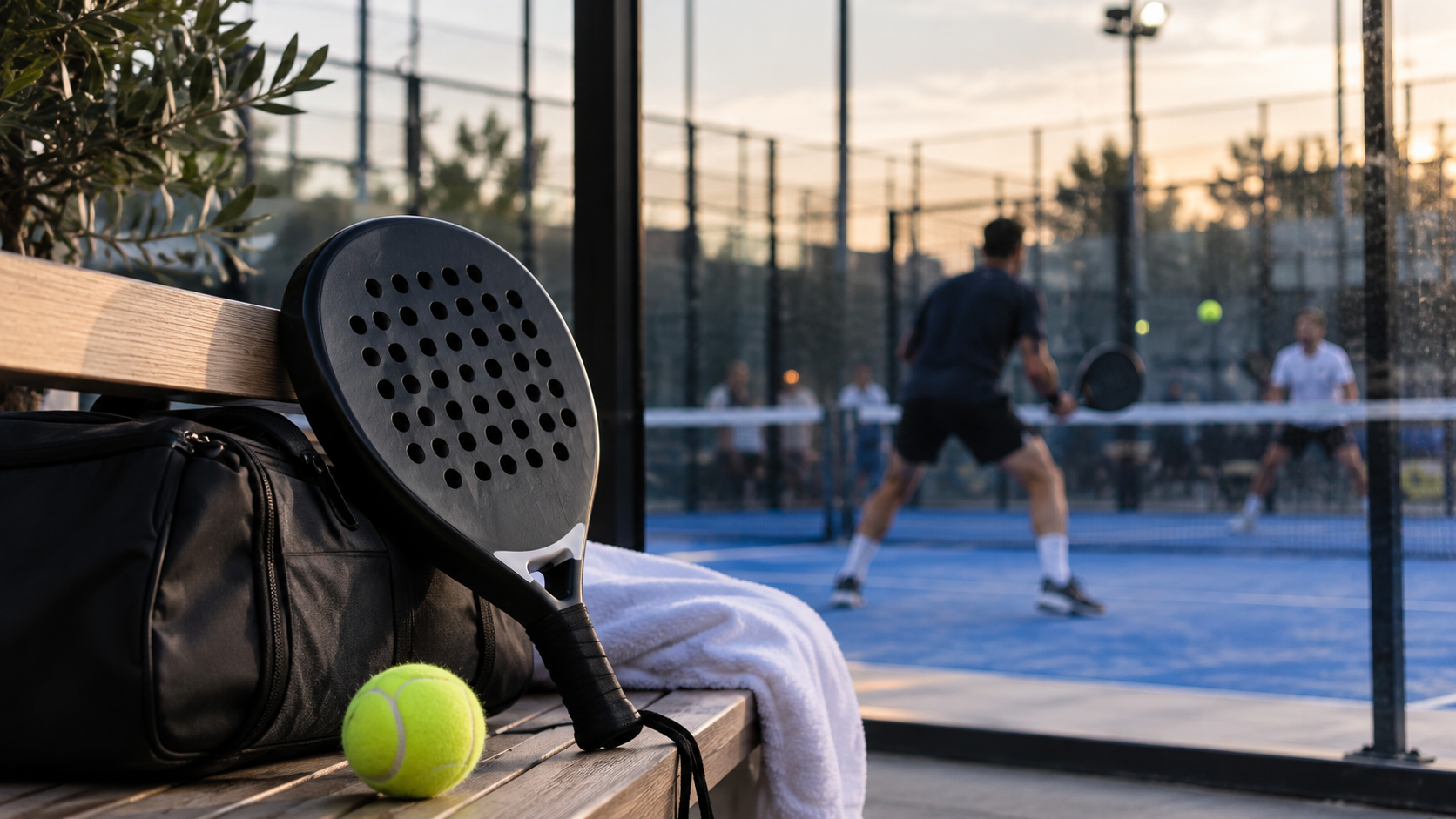 Do you lose your ranking? Padel FFT after more than a year without a license / without competition?
 Memory, reflexes, concentration: what happens in our brain when we play padel?
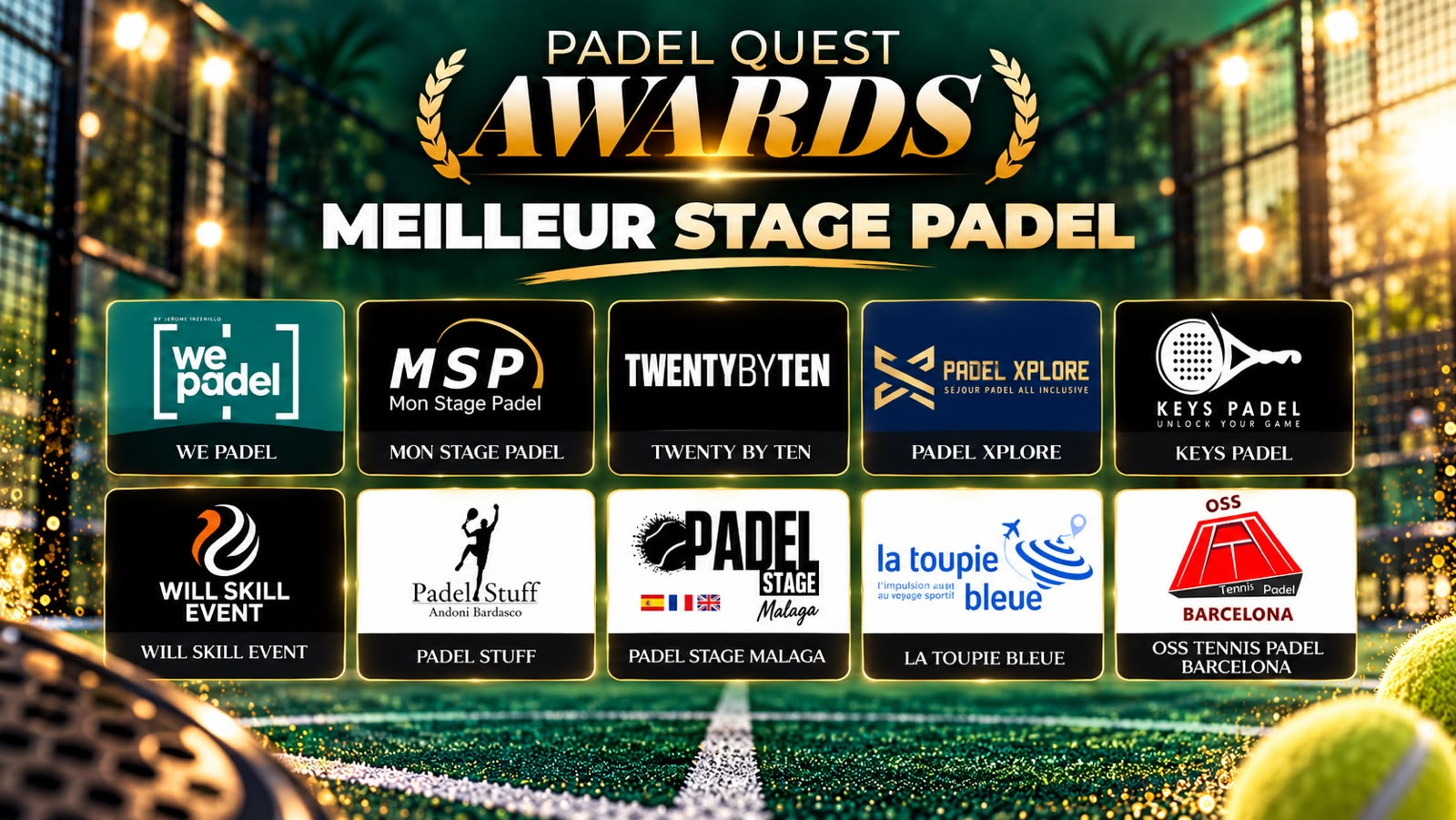 Padel Quest Awards: Ten specialists in the running for the title of best padel training camp of the year
 Padel Xperience: The Academy opens on November 2nd in Marcheprime, ahead of the complex's inauguration in 2027
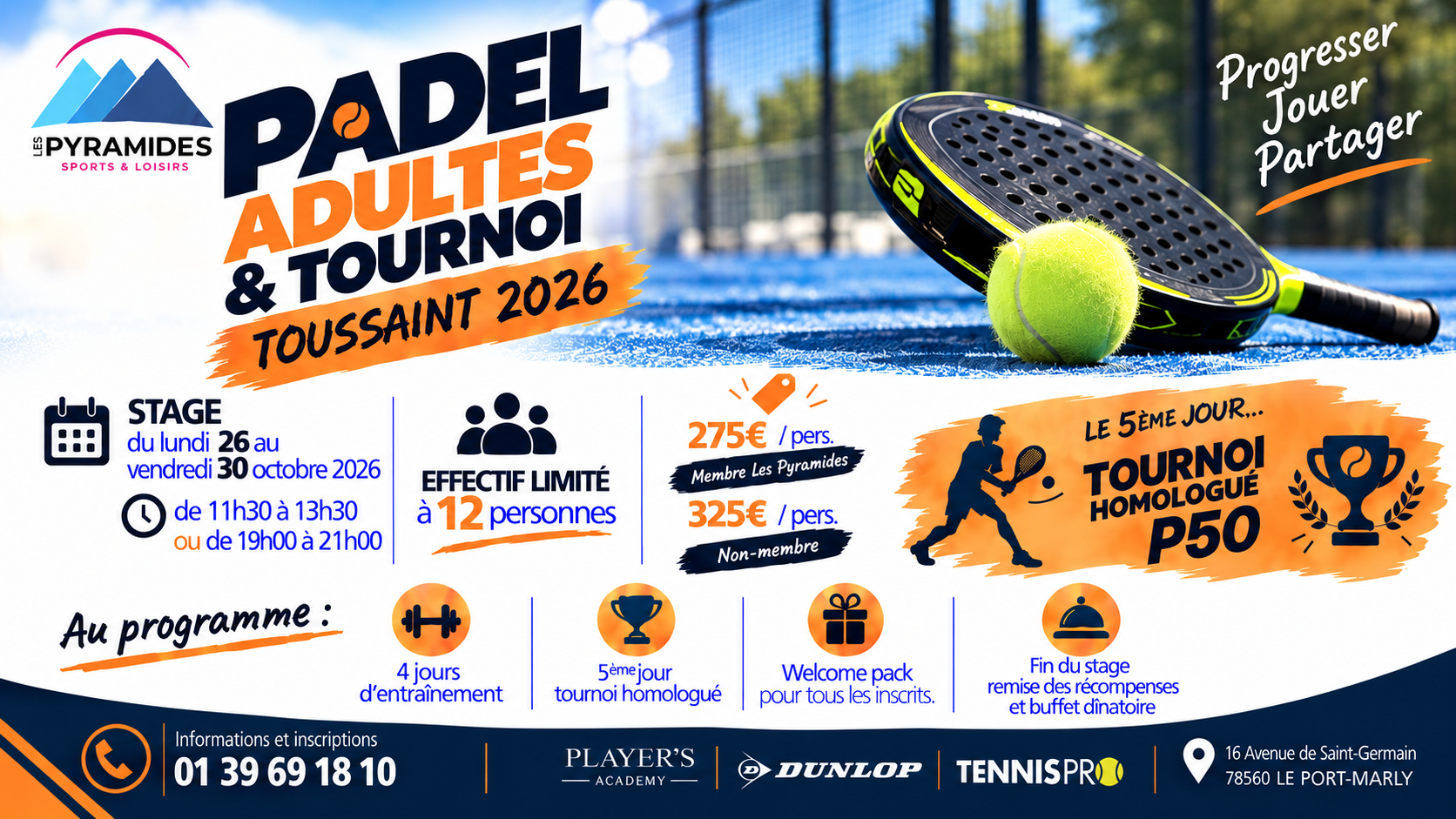 All Saints' Day – Les Pyramides are organizing a padel training camp for adults with a P50 tournament to close out the week