

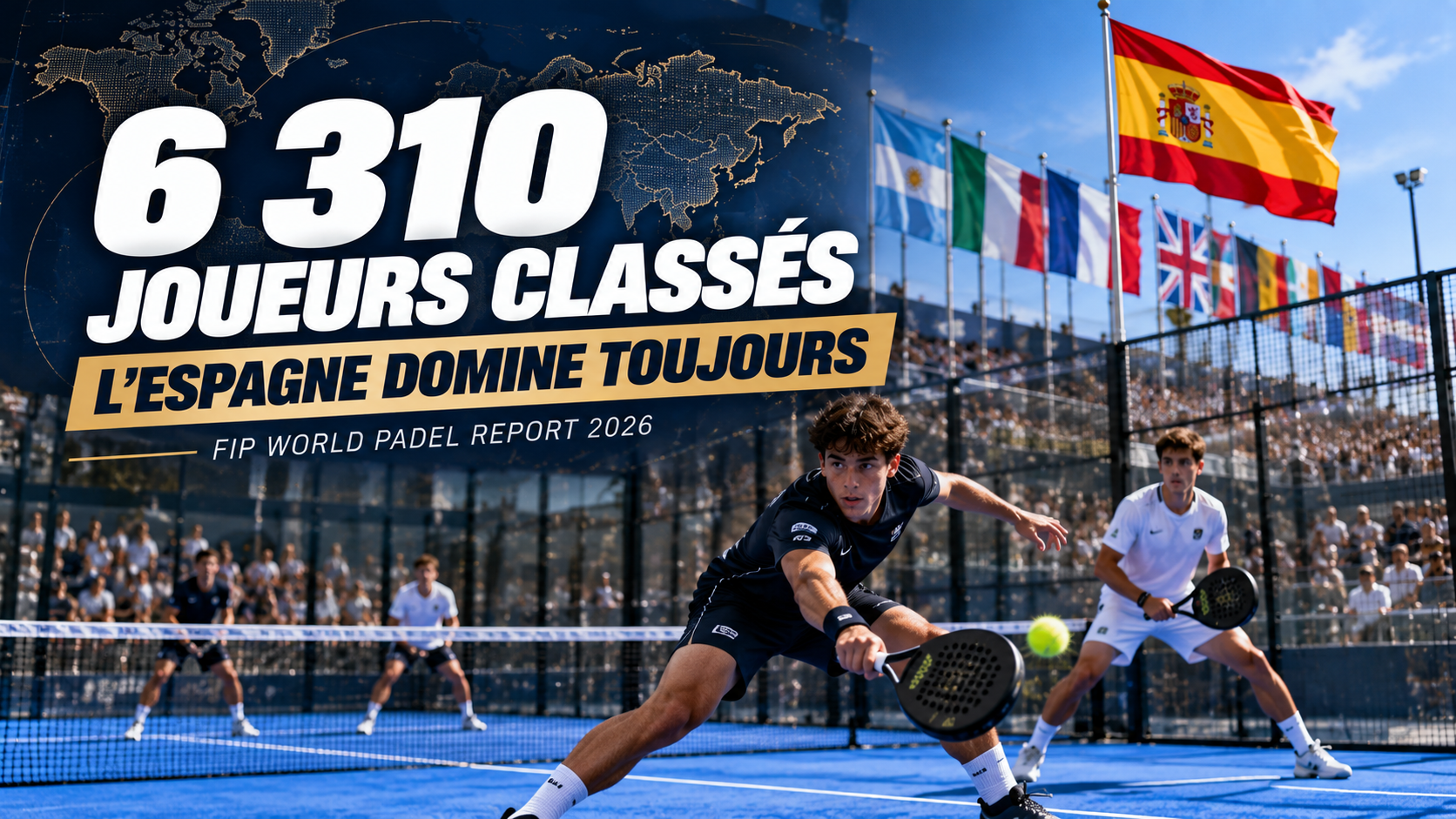








Le world professional padel continues to change in scale. According to the FIP World Padel Report 2026 The International Padel Federation now lists 6,310 players with a FIP professional ranking This figure reflects the expansion of the international circuit. However, behind this growth, one reality remains: Spain maintains considerable dominance at the highest level In the world's Top 300, nearly half the players are Spanish. And France? It remains among the leading padel nations, but its representation in the world elite reveals increasingly fierce competition.
6,310 professional players ranked in 2026
The development of CUPRA FIP Tour and Premier Padel is accompanied by an increase in the number of players with an international ranking.
According to data updated in 2026, the FIP lists 6,310 ranked professional players .
The distribution is as follows:
- 4 men , or about 71%;
- 1 828 women that is approximately 29%.
These figures show that the professional circuit is expanding, with a significant number of players involved in international competitions.
The FIP also specifies that these players represent 113 nations in the updated data in his report.
This geographical diversity is one of the indicators of the internationalization of padel.
An increasingly international professional circuit
The increase in the number of ranked players accompanies the expansion of the international calendar.
In 2026, CUPRA FIP Tour including 233 tournaments confirmed in 59 countries .
This increase in competitions offers more opportunities for players wishing to obtain points in the world ranking.
It also allows athletes from countries where padel is still developing to participate in international events.
But the increase in the number of ranked players does not necessarily mean that competition at the highest level is already balanced between nations.
The detailed statistics of the 2025 ranking show, on the contrary, a strong concentration of the best players in a few countries.
Spain represents 26,7% of ranked players
In the detailed analysis of the 2025 professional rankings, the Spain retains a dominant position.
The Spanish players represent 26,7% of all ranked professional players .
The country is ahead of, among others:
- Italy : 7,2%;
- Argentina : 5,6%;
- The France : 5%;
- Chili : 5%.
These five nations occupy an important place in the world rankings.
The FIP also indicates that 60,3% of professional players ranked in 2025 came from just ten countries .
The practice of padel is therefore rapidly becoming international, but its competitive structure remains highly concentrated.
In the Top 300, almost one in two players is Spanish
Spanish dominance becomes even more visible when we look at the top spots in the world rankings.
According to the FIP report, Spanish players represented 47,9% of the players in the Top 300 in 2025 .
This proportion is much higher than the 26,7% observed in the overall professional ranking.
| Country | Share of the world's Top 300 in 2025 |
|---|---|
| Spain | 47,9% |
| Argentina | 12,1% |
| Italie | 8,3% |
| Portugal | 6,3% |
| France | 4,7% |
Source: FIP World Padel Report 2026, analysis of professional rankings 2025, pages 178-179.
Spain and Argentina alone thus represent approximately 60% of the Top 300 players .
This concentration confirms the historical importance of both nations in high-level training and competition.
France represents 4,7% of the world's Top 300
The situation in France deserves special attention.
In the overall professional rankings of 2025, French players represent 5% of the workforce .
But their share goes down to 4,7% in the world's Top 300 .
The FIP also points out that French representation in this Top 300 has declined compared to 2024, when it reached 5,8% .
This development should be interpreted with caution.
A decrease in the relative share of French players does not necessarily mean a decrease in their absolute number.
It can also result from the arrival of new players of other nationalities in the top positions of the rankings.
The observation remains interesting nonetheless: France has a large base of international players, but faces increasing competition to place more representatives among the world's best. .
The Top 100 remains dominated by a small number of nations
The concentration is even greater when we observe the Top 100 worldwide .
According to the analysis of the 2025 rankings:
- 92% of the players in the Men's Top 100 came from only four nations;
- 92% of the players in the Women's Top 100 came from six nations.
These figures show that the global elite remains far less diverse than the overall pool of ranked players.
The report lists players from 16 nations among the 200 places in the Top 100 men's and women's lists.
In other words, despite the geographical expansion of competitions, reaching the top 100 places in the world remains a particularly difficult objective for players from emerging nations.
Women's padel is gradually becoming more international.
The world ranking data also shows interesting developments in women's padel.
Between 2024 and 2025, four new nationalities appeared in the Women's Top 100 :
- Germany ;
- United Kingdom ;
- Mexico ;
- USA .
In the women's Top 300, diversification is even more visible.
The FIP notably notes the arrival of players representing Armenia, Austria, China, Denmark, Estonia, Hong Kong, Indonesia, the Philippines, Romania, Serbia and Ukraine.
This development reflects a gradual expansion of international competition.
It does not yet challenge the dominance of the great historical nations, but shows that new countries are beginning to place players in the top hundreds of the rankings.
Among men, new nationalities are appearing in the Top 300
In the men's rankings, international progression is more measured at the top.
Between 2024 and 2025, no new nationalities entered the male Top 100.
However, three countries have appeared in the Top 300 :
- China ;
- Denmark ;
- USA .
These developments show that the internationalization of professional padel is first manifested in the expanded rankings, before possibly resulting in a lasting presence among the top one hundred players.
Europe is home to nearly two-thirds of professional players
The continental distribution confirms Europe's weight in professional padel.
According to detailed data from 2025, 64,6% of ranked professional players are European .
This proportion reaches:
- 63,6% among men ;
- 67,1% among women .
South America and Asia constitute the other main pools of international players.
European dominance is explained in particular by the historical importance of padel in Spain and by the development of professional circuits on the continent.
But the development of infrastructure in Asia and other regions could gradually change this distribution.
More ranked players, but access to the top remains difficult.
The development of the international calendar presents an opportunity for players.
Participating in numerous tournaments allows you to earn points and gradually build a world ranking.
But this growth is also accompanied by greater competition.
For players who wish to participate in major competitions Premier PadelIt is not enough to participate regularly in tournaments.
You need to achieve sufficiently significant results to progress in the world rankings.
Sporting and economic constraints also remain important: international travel, physical preparation, coaching and financing of seasons.
The increase in the number of ranked players does not therefore mean that all have the same means to build a professional career.
The world ranking reflects two realities of padel
Le FIP World Padel Report 2026 highlights a contrast.
On the one hand, the number of ranked players is increasing and competitions are taking place in a growing number of countries.
On the other hand, the very highest level remains highly concentrated around a few nations, with a particularly marked domination by Spain.
For emerging countries, the challenge is therefore not just about developing clubs or organizing international tournaments.
It is also about training players capable of making sustained progress in the rankings.
The quality of training, access to competitions and support for young talents could thus become determining factors in the evolution of international power dynamics.
The globalization of padel remains to be confirmed at the highest level.
With 6,310 professional players ranked in 2026 Padel continues its internationalization.
But statistics show that this opening is not yet accompanied by an equivalent redistribution of places at the top of the rankings.
By 2025, nearly half of the Top 300 players were Spanish, while the best players remained concentrated in a limited number of nations.
France retains a significant presence in the world rankings, but its relative share in the Top 300 declined between 2024 and 2025.
Padel is becoming increasingly global in terms of the number of players and competitions. The question now is how many new nations will be able to develop players who will establish themselves permanently among the best.

Franck Binisti discovered padel at the Club des Pyramides in 2009 in the Paris region. Since then, padel has been part of his life. You often see him touring France to cover major French padel events.









































































 P3000 Break Padel Club – Down a set, Pothier and Mansart find the strength to join Dardaine/Senjean in the final
 From the A1 to the final four in Dubai: three very different trajectories
 Dubai P1 – Where to watch the finals live? TV schedule, fixtures and times
 "We're not a tournament club": the gamble taken by the two Henry sisters who are hosting a P3000 at The Break Padel Club
 Gonzalo Alfonso on his split with Tolito Aguirre: "It was painful, sad"
 2026 World Championships – Ustero in tears, Triay facing Brea: the world champions' confessions
 Paquito Navarro: "This is probably my last match with Spain."
 JAP1, JAP2: How to become a padel referee and what are the prospects?
 P2000: Scatena / Sescun, Courrin / Basso, Mansart / Bognard… the first pairs entered for the December events
 4PADEL Football Cup: Lille kicks off season 2 with a victory for Cheyrou/Cygan against Mandanda/Danic
 P3000 Bouillargues – Results / Live / Schedule
 Dubai P1 – Triay and Brea can thank Josemaría/González: a semi-final in Mexico Major to end the year as world number 1
 Dubai P1 – Libaak and Alfonso solid against Garrido / De Pascual to secure their first final on Premier Padel and reignite the race to the Finals
 Padel, weight training, and even HYROX: clubs are changing their model
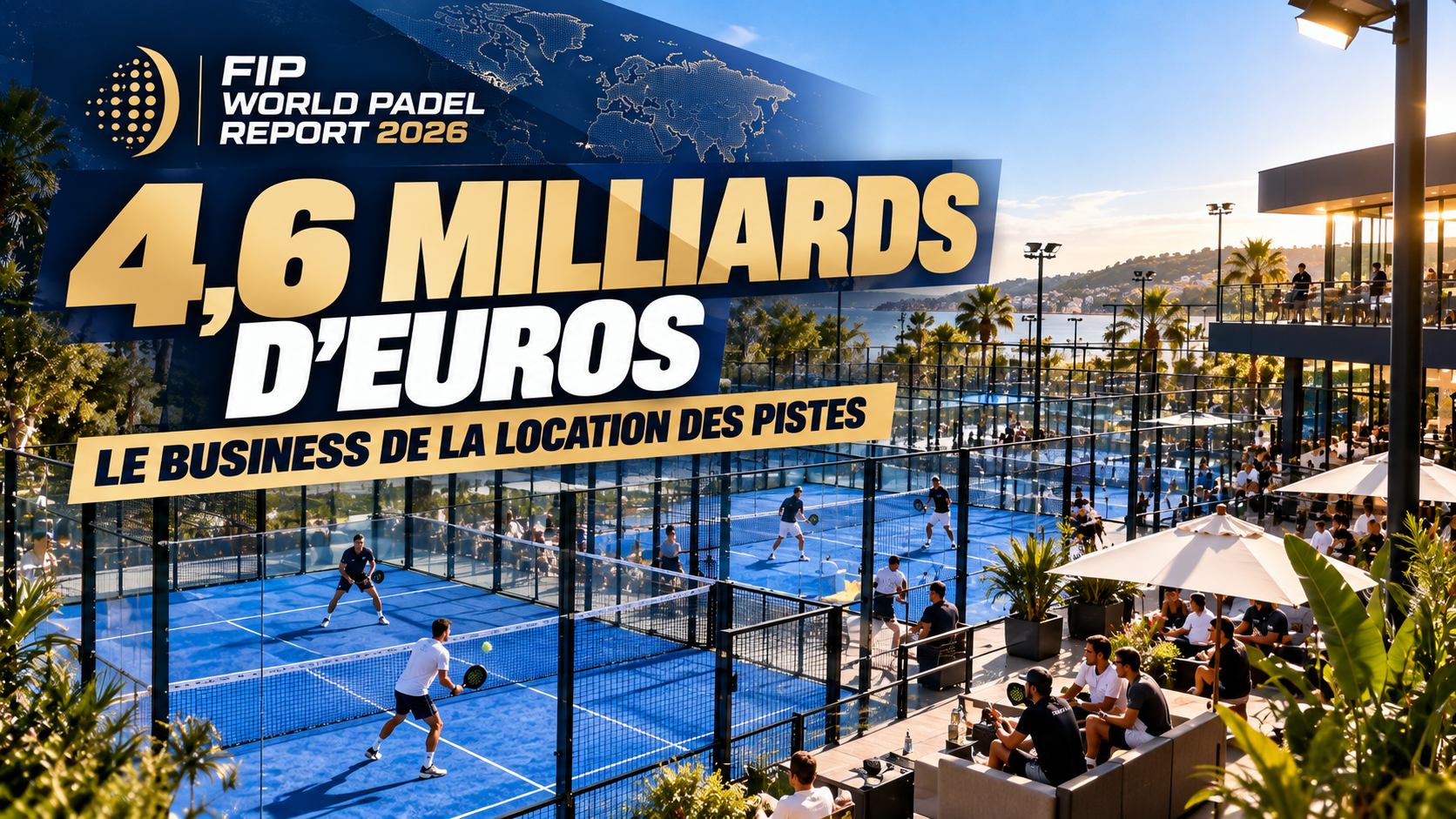 Padel court rentals: a global market estimated at 4,6 billion euros
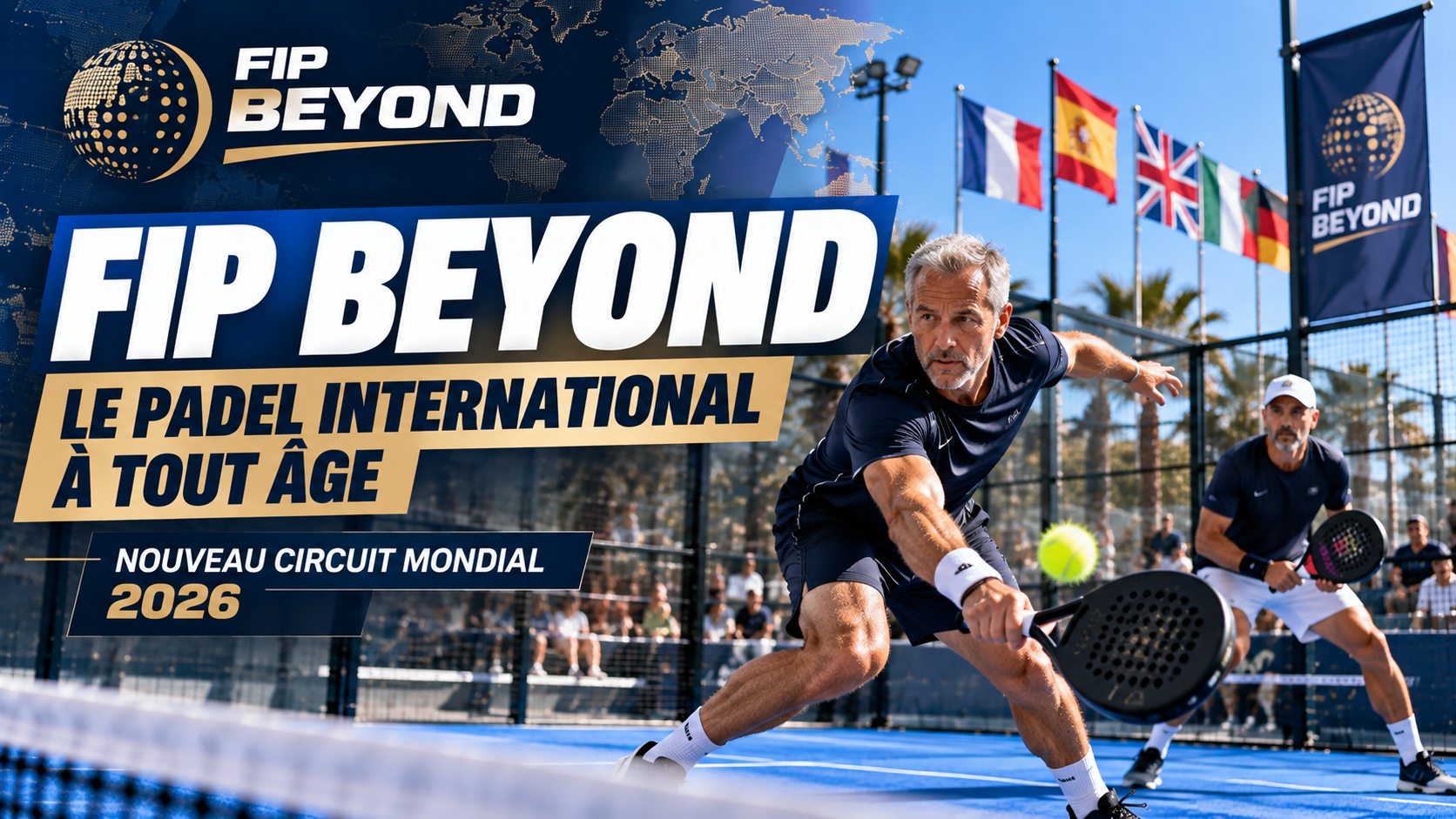 FIP Beyond: the new global padel circuit for amateurs and seniors
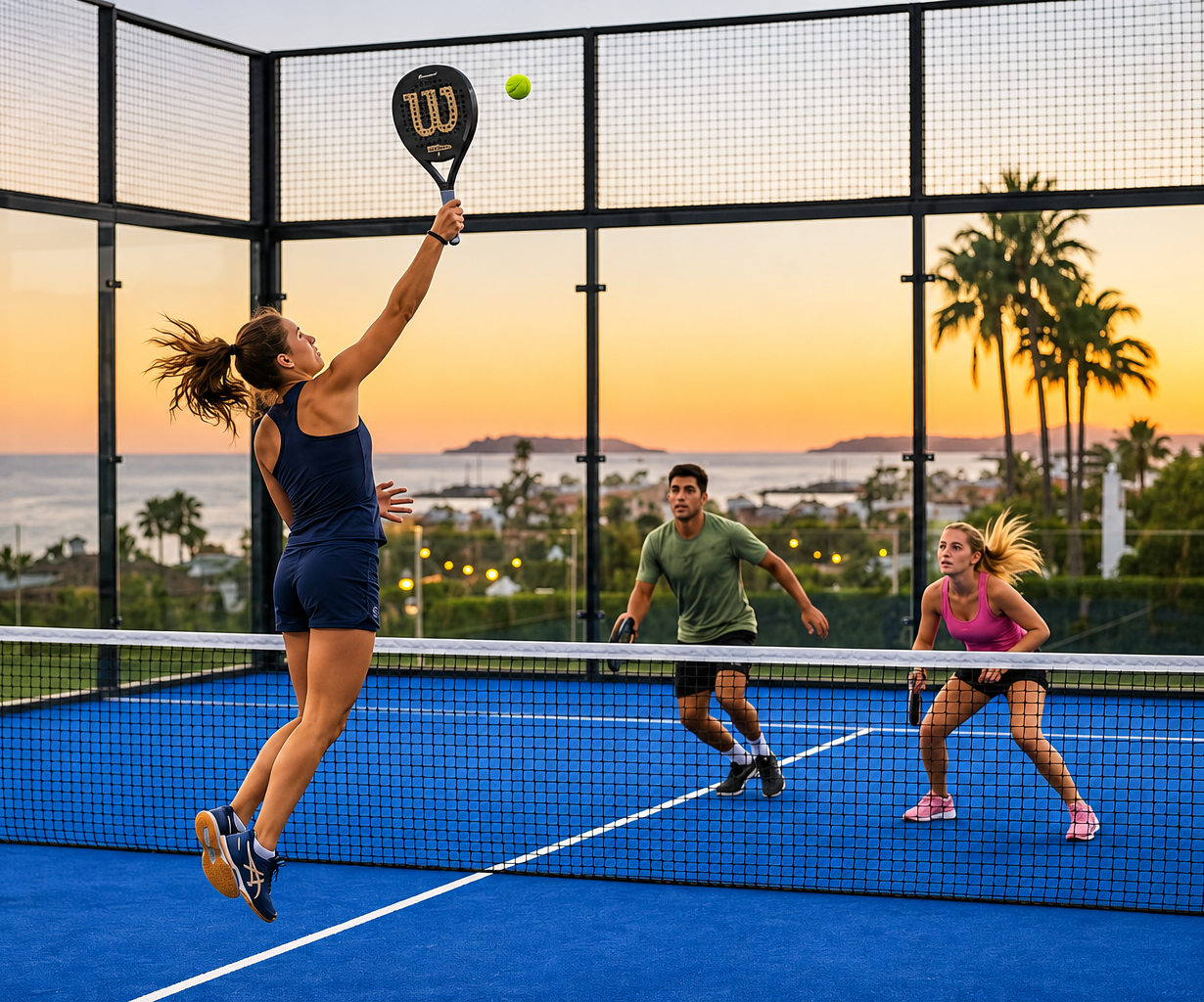 OSS Barcelona – Why Spain and France aren't yet playing in the same league
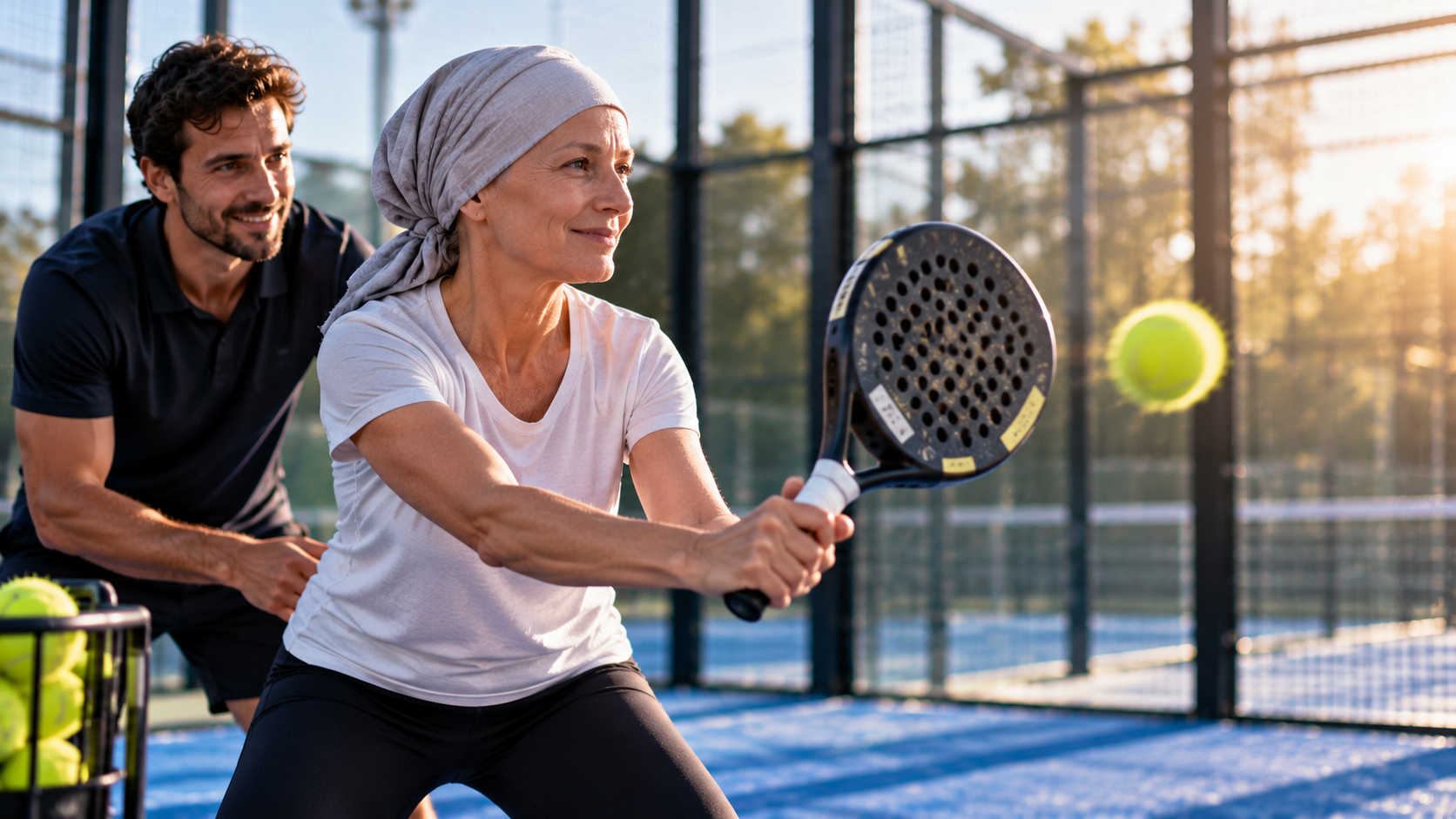 Cancer and rehabilitation: could padel become a therapeutic tool?
 Padel injuries: ankle, knee, elbow, eye… what the latest figures reveal
 Shocking turn of events at Dubai P1: Coello and Tapia have also withdrawn!
 Padel serve: a good serve is especially good preparation for the third shot.
 What the analysis of the stroke reveals: tennis forehand vs. padel bandeja
 Has the bandeja disappeared from modern padel?
 Flat forehand in padel: 5 exercises from Cristian Álvarez to gain control and efficiency
 Why can Libaak/Alfonso beat almost everyone… except Coello/Tapia?
 Tapia reveals his recipe for beating Coello / Tapia: "I would bet everything on myself"
 How Coello defused Chingotto's game plan
 In padel, does the chemistry between a pair count as much as individual skill?
 Organising a national padel competition: what are the FFT's requirements for clubs?
 Organising a P2000 or a P3000: how much does it really cost clubs?
 P2000 or P3000: what are the differences in prize money, format and organization in 2028?
 Do you lose your ranking? Padel FFT after more than a year without a license / without competition?
 Memory, reflexes, concentration: what happens in our brain when we play padel?
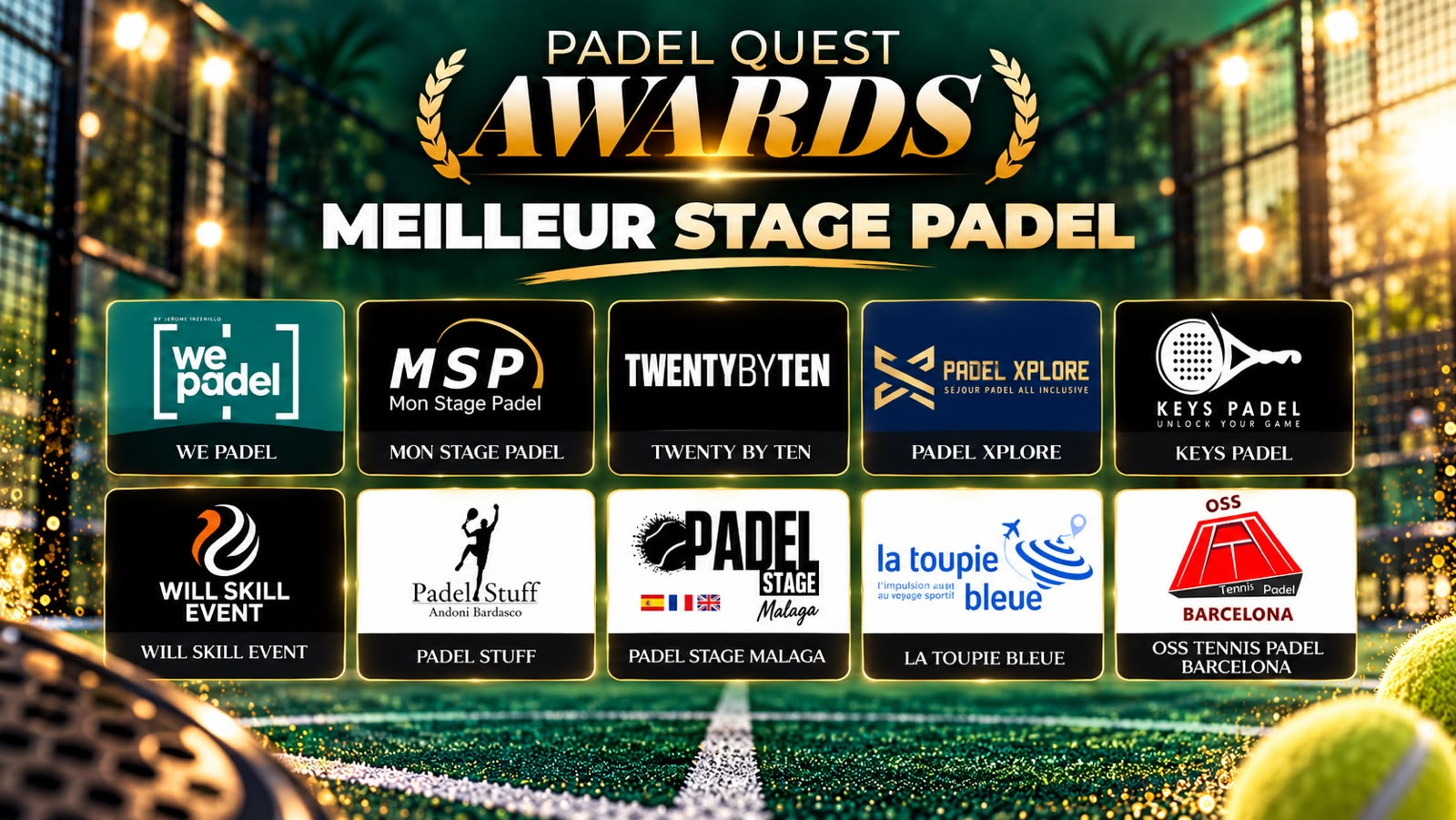 Padel Quest Awards: Ten specialists in the running for the title of best padel training camp of the year
 Padel Xperience: The Academy opens on November 2nd in Marcheprime, ahead of the complex's inauguration in 2027
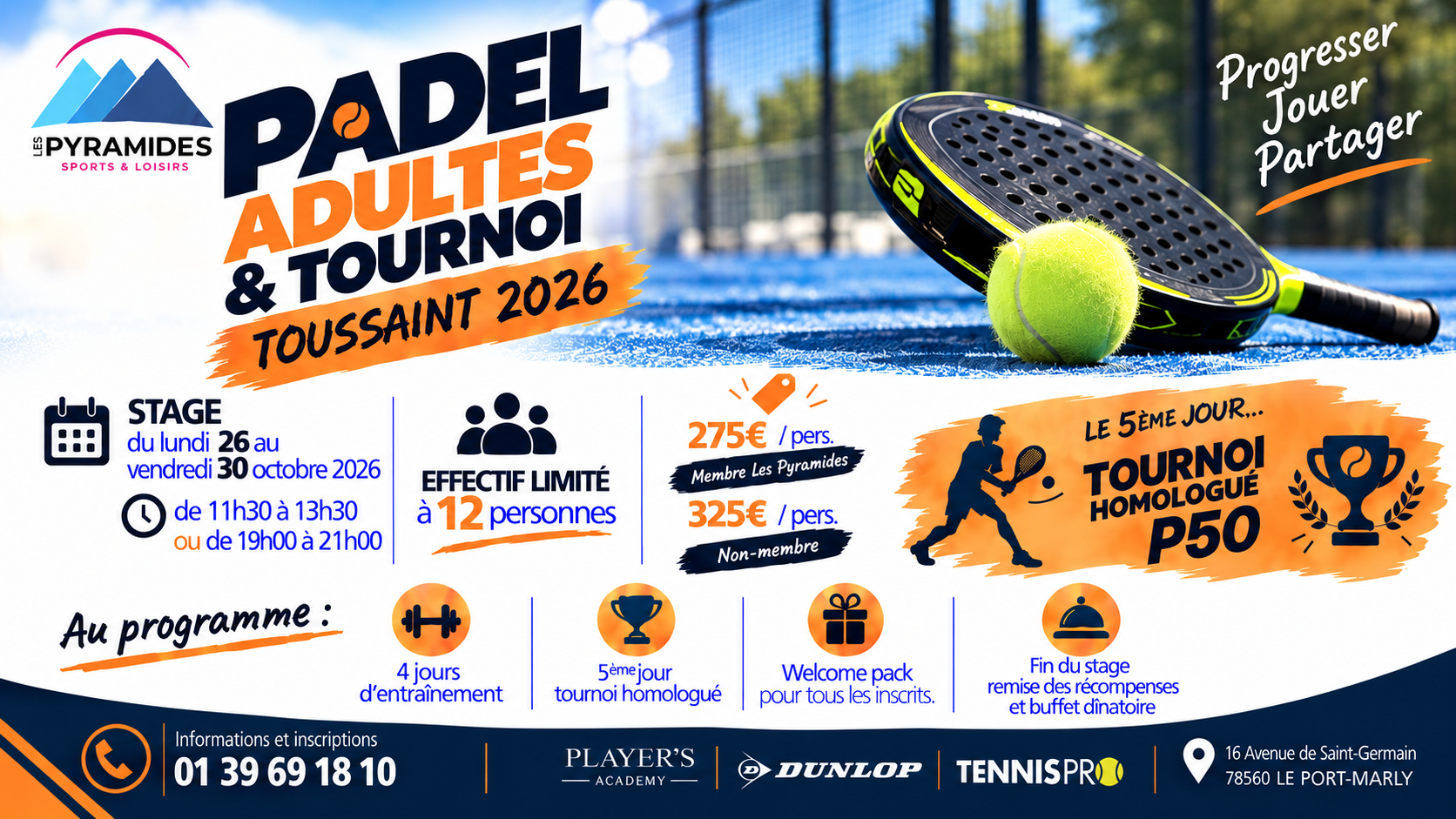 All Saints' Day – Les Pyramides are organizing a padel training camp for adults with a P50 tournament to close out the week