

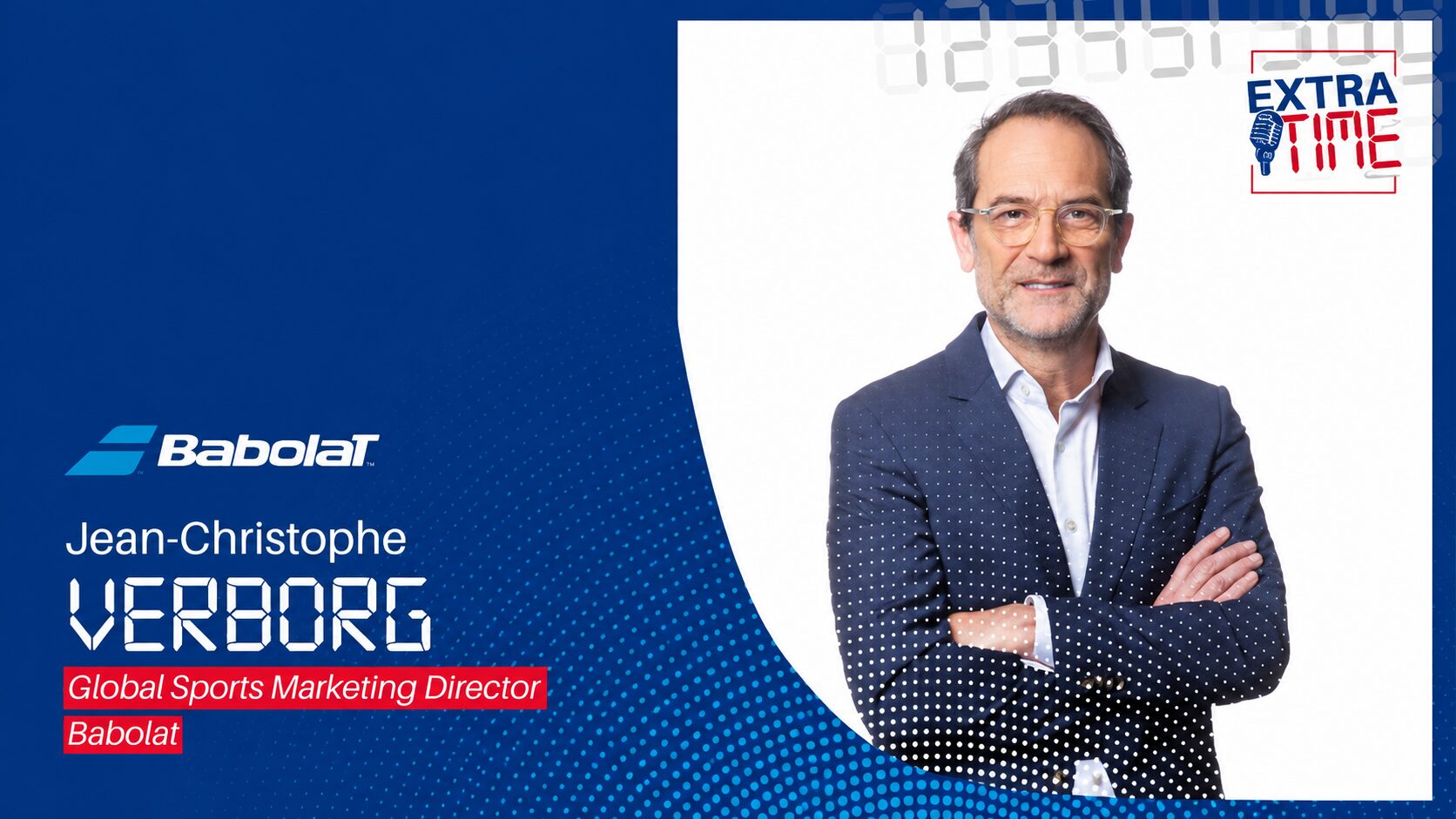







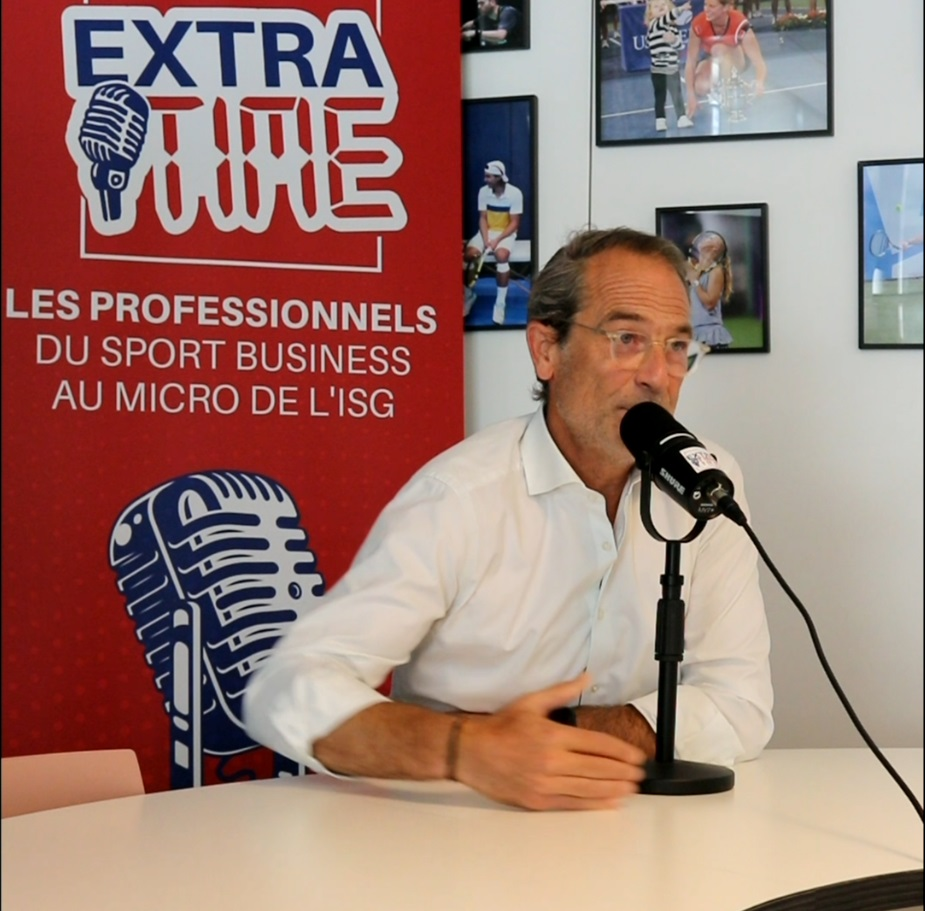
Global Sports Marketing Director BabolatJean-Christophe Verborg spoke at length on the EXTRA TIME podcast. While a large part of the interview focused on his 30 years with the French brand and his history with Rafael Nadal and Carlos Alcaraz, the executive also touched on another area that has become strategic for Babolat : padel. From Juan Lebrón to the progressive structuring of the market, via the brand's investment in Spain and the collaboration with Lamborghini, Verborg delivers his vision of a sport that is still young but in full transformation.
EXTRA TIME podcast produced by ISG Sport Business Management and hosted by Alexandre Bailleul
Padel, now a must-try at Babolat
Jean-Christophe Verborg has a long history associated with tennis and managing some of the biggest ambassadors of BabolatBut his focus has expanded to include padel, to the point of pushing him to seriously take up Spanish again.
"What forces me to get back into it is padel, because I also take care of padel players," he explains, recalling the considerable weight of Spanish players in the professional circuit.
For BabolatThe subject is obviously no longer secondary.
"It's an important sport," insists Verborg, who mentions "phenomenal growth worldwide" and a now widely established enthusiasm.
The leader also uses a rather telling phrase to describe the current development of the discipline:
"Padel is a bit like a fireworks display."
Clubs, competitions, exhibitions: everything is developing simultaneously and at great speed. This is a very different situation from that of tennis, a much older sport whose economic and media ecosystem is already highly structured.
Are TV rights a key factor in reaching a new level?
Verborg rightly points out one of the differences that remain between the two disciplines.
Tennis has long had major events capable of generating audiences, revenue, and above all, significant broadcasting rights .
For him, padel has not yet fully crossed that threshold.
"The small problem with padel, I think, is indeed the issue of TV rights," he believes.
An interesting point at the moment when Premier Padel continues its internationalization and is precisely trying to transform a rapidly growing sporting practice into a true entertainment product on a global scale.
Verborg also observes a much more immediate reality: the clubs work .
He himself plays occasionally and observes very busy tracks. It is this dynamic of practice, in particular, that justifies the commitment of Babolat in the discipline: "We are very invested at Babolat "For padel, because it's a trend."
Juan Lebrón, the ambassador who “has a considerable impact”
On the professional circuit, the most iconic face of Babolat obviously remains Juan Lebrón .
The former world number 1 has been associated with the French brand for several years and Jean-Christophe Verborg was directly involved in managing his contract.
A relationship that hasn't always been easy.
When the direction of Babolat He entrusted him with the management of padel players about four years ago, and Verborg happened to be in the middle of renegotiating with the Spaniard.
"It was right in the middle of renegotiations with Lebrón, which were complicated," he says with a smile, while explaining that he enjoyed this negotiation exercise.
But beyond the sometimes divisive personality of "The Lobo", Babolat Its strength is measured above all by its marketing power.
"Lebrón, whether divisive or not, has a considerable impact."
A sentence that ultimately sums up the strategy quite well.
Juan Lebrón does not leave anyone indifferent. His attitudes, his results and his personality regularly fuel discussions, but his image also constitutes a considerable strength in a sport where great figures capable of transcending the circle of enthusiasts remain few and far between.
"He might be a bit like the McEnroe of padel."
Verborg even goes so far as to draw a parallel with a tennis legend known, also, as much for her talent as for her temperament.
"He's perhaps a bit like the McEnroe of padel. You either love him or you hate him."
A particularly telling comparison.
Like John McEnroe in his day, Lebrón provokes reactions. And in a sport that is still trying to build its stars and develop its exposure beyond its core group of practitioners, this ability to evoke emotion obviously has value.
Verborg also explains that he got to know the man behind the player, after a more complicated start mainly related to contract discussions.
"Epic" negotiations with Lebrón
The leader recounts some behind-the-scenes details of these negotiations.
At the time, according to him, the professional environment of padel was still far from the degree of structuring observed in tennis.
"We had some epic moments during the negotiation," he recalls.
The very workings of the contracts might require further explanation. Verborg specifically mentions the mechanisms of bonuses and penalties linked to ranking or performance .
A player can thus benefit from remuneration corresponding to a certain ranking, but see the conditions change if he falls out of, for example, the Top 10.
"It was complicated to explain," he admits regarding the discussions with Lebrón's entourage.
An anecdote that mainly illustrates the extremely rapid professionalization of padel.
Babolat does not want to copy his tennis strategy
Another interesting lesson: Babolat does not necessarily wish to reproduce exactly the model that brought him success in tennis.
The French brand has considerable experience in identifying and supporting players, but padel follows different rules.
"At the competitive level, it's a little different from tennis. That is to say, we didn't say we were going to do with padel exactly what we did in tennis," explains Verborg.
The presence of such a powerful ambassador as Lebrón is therefore a major element, but not necessarily the starting point for a copy of the Nadal or Alcaraz model.
The market, the practitioners, and the ecosystem are different.
Padel continues to grow in popularity. Babolat
When asked about the precise economic impact of padel at BabolatJean-Christophe Verborg does not provide an updated figure.
The journalist reminds us that Eric Babolat had mentioned a few years earlier a share representing approximately 25% of turnover of the company. Verborg, however, does not confirm this percentage for the current period.
However, it gives a clear indication:
"It's progressing."
An important distinction: the development of padel does not necessarily mean a decline in tennis among BabolatVerborg, on the contrary, emphasizes that the brand is also having a very good year in its historical business.
Therefore, we should speak more of a new axis of growth than of a shift from one sport to another.
Spain as a laboratory for future tennis rackets
The industrial and technological strategy is probably one of the most interesting parts of the interview.
In 2024, Babolat had announced the opening in Spain of a center dedicated to padel rackets.
The project is still active.
Verborg clarifies, however, that it should primarily be considered from the perspective of the research and development .
The idea is simple: to be present "where it's happening".
Spain remains the leading market for padel worldwide, both in terms of the number of players and its ecosystem of clubs, coaches, and professional players. Establishing a base there therefore allows Babolat to work as closely as possible to market needs.
"This base in Spain is also a laboratory, like others, to explore everything that is possible," explains Verborg.
Innovation thus appears as one of the major axes of the French group's padel strategy.
The padel market is starting to take shape.
Jean-Christophe Verborg also provides an interesting picture of the evolution of brands present in padel.
Just a few years ago, the sector reminded him of surfing with a multitude of manufacturers .
The situation now seems to be changing.
"I have the impression that, at least in my world of sports marketing, things are becoming considerably more structured."
The market is therefore gradually entering a new phase.
In addition to brands specializing in padel, players from other sectors are now joining the fray. Verborg, in particular, is observing the arrival of watch brands and major names in textiles , even though their investments remain very targeted.
A further sign of the sector's progressive maturity.
Babolat Lamborghini: "That's typical of padel."
This market evolution is also reflected in collaborations that are much further removed from traditional partnerships between equipment manufacturers and players.
The most spectacular example at Babolat is probably the collaboration with Lamborghini .
Verborg did not work directly on the project, but he is particularly enthusiastic.
And above all, he believes that such an operation perfectly matches the current identity of padel.
"This is typical padel. I don't know if it would have been the same if it had been tennis."
According to him, the padel audience is probably more heterogeneous This opens the door to different brand partnerships and products capable of transcending the simple world of competition.
"It brings a bit of fresh blood," he believes.
Beyond marketing, Verborg also emphasizes the technological interest of this type of collaboration and the notions of innovation, expertise and quality that can be associated with the two brands.
From "fireworks" to structuring
Through the words of Jean-Christophe Verborg, it is ultimately the overall evolution of padel that is taking shape.
On the one hand, spectacular growth: Full clubs, numerous competitions, exhibitions, new participants, and external brands starting to invest .
On the other hand, there is a professional sport that still needs to consolidate its economic model, develop its media exposure and continue its structuring.
Babolat clearly intends to support this transformation without simply applying the methods used in tennis.
With Juan Lebrón as figurehead With a strengthened presence in Spain and a clear strategy focused on innovation and collaborations like Lamborghini, the French brand seems to view padel not as an extension of its historical activity, but as a world of its own. its own codes .
And perhaps Verborg's quote best sums up this particular period:
"Padel is a bit like a fireworks display."

Franck Binisti discovered padel at the Club des Pyramides in 2009 in the Paris region. Since then, padel has been part of his life. You often see him touring France to cover major French padel events.
























































 Padel Quest Awards: Which is the best padel app in France? Voting opens at 18 PM
 Paquito Navarro wants to leave at the top: "I'm giving myself until the end of 2028"
 At just 16 years old, Victoria Vílchez will play in the World Cup with Argentina: who is this young prodigy?
 France or Portugal, Spain or Argentina: Miguel Lamperti ranks the best padel nations
 Cédric Lavoye: "Hard work pays off" and a first FIP tournament in Guadeloupe is in his sights
 Nicolas Rouanet is preparing his return in 2027: “With Bastien Blanqué, I would never say no”
 Leygue/Blanqué respond bluntly to the criticism: "You can say what you want... We're putting all our money and our lives into this."
 Doinsport and PISTA join forces: padel is finally coming alive!
 P1000 4Padel Limoges: Sarrat/Fabre favorites, Bernard/Peloux and Henrion/Mitjana ready to play spoiler
 P1000 Drag'N Ball Draguignan: Biron / Tullou and Gourre / Vial, a duel for the title?
 Milan P1 – The journey ends for Alix Collombon and Léa Godallier, defeated in two sets in the first round
 Düsseldorf P2: Sanz runs more than anyone else, Fernández and Calvo dominate the numbers… what the finals statistics reveal
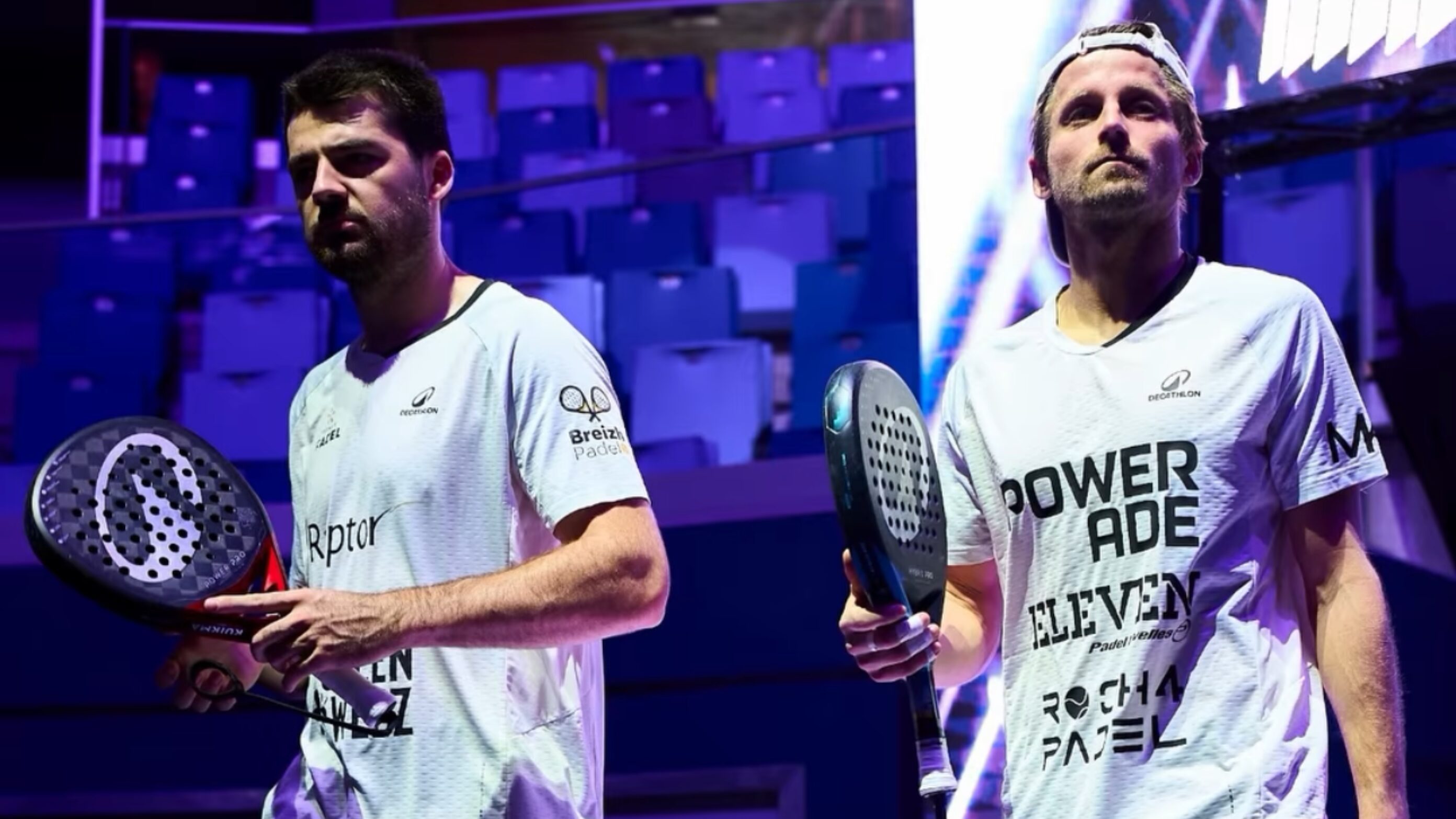 Milan P1 – Can Guichard and Geens repeat Leygue and Moya's feat against Goñi / Alonso?
 Leo Augsburger launches his own brand: a burger as the logo for the new Argentinian star
 Milan P1 – Guichard/Geens face a tough challenge, the favorites take to the court: Wednesday's schedule
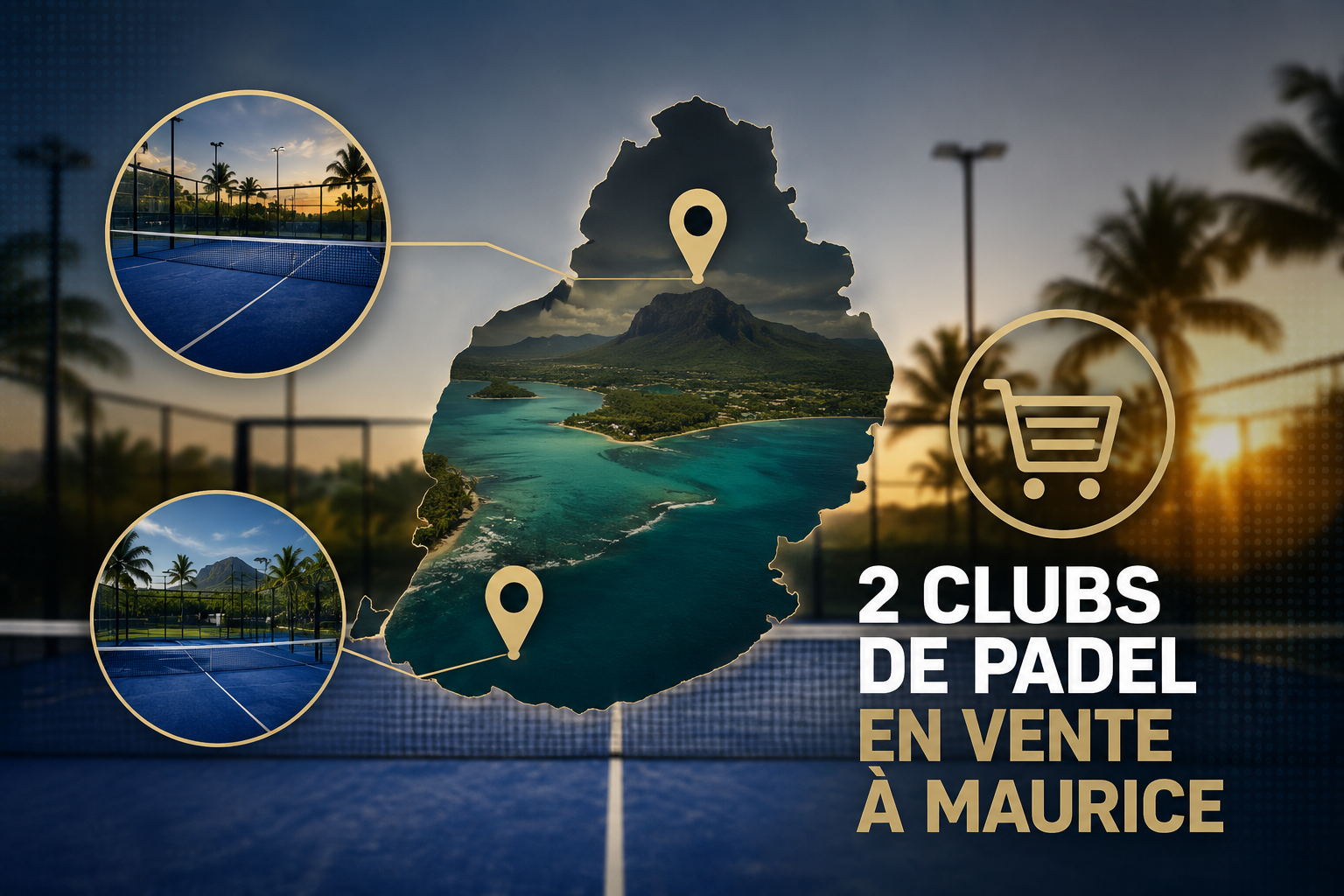 For sale: two padel clubs in Mauritius, starting from 330,000 euros
 How much does it actually cost to organize a FIP Bronze event?
 Padel How Lidl is transforming Crivit into a fully-fledged sports brand with Steffi Graf
 Compagnie des Alpes is accelerating its involvement in padel with PadelCity: a new step in its European strategy
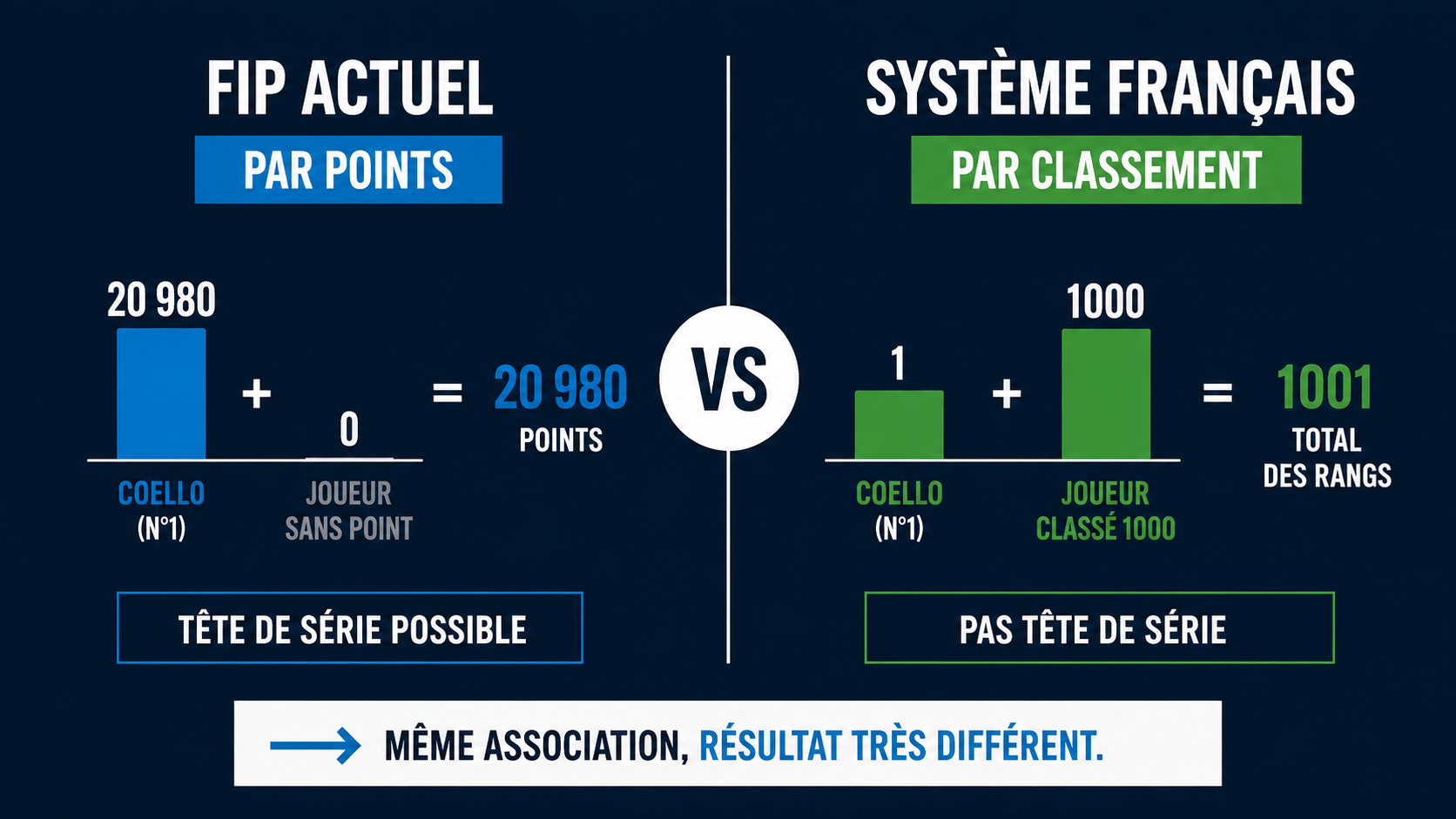 Coello with a player at 0 points ahead of two top 10 players: should the FIP ranking be reviewed?
 Les Pyramides: after 12 padel courts, the club is focusing on youth training
 Health Care Padel Tour 2026: What if your next padel tournament was played in Barcelona?
 FAST Padel Academy continues its development and establishes itself in Liège.
 What the analysis of the stroke reveals: tennis forehand vs. padel bandeja
 Has the bandeja disappeared from modern padel?
 Flat forehand in padel: 5 exercises from Cristian Álvarez to gain control and efficiency
 Why knowing how to play on the right and left can make all the difference
 Tapia reveals his recipe for beating Coello / Tapia: "I would bet everything on myself"
 How Coello defused Chingotto's game plan
 In padel, does the chemistry between a pair count as much as individual skill?
 Summer changes padel… but what if the real challenge wasn't hitting harder?
 Neither FIP Tour nor World Team Championship: the unique format of padel at the Mediterranean Games
 Premier Padel : when television can lengthen players' breaks
 Premier Padel Yes, a referee can refuse a player permission to go to the toilet
 Julien Seurin opens up about his mental state: "There are far more doubts than moments of happiness."
 More than a year later, Thomas Leygue is back in the top 150: behind the scenes of a comeback that's still unfinished
 Padel vs squash vs badminton: the scientific ranking of cardio intensity
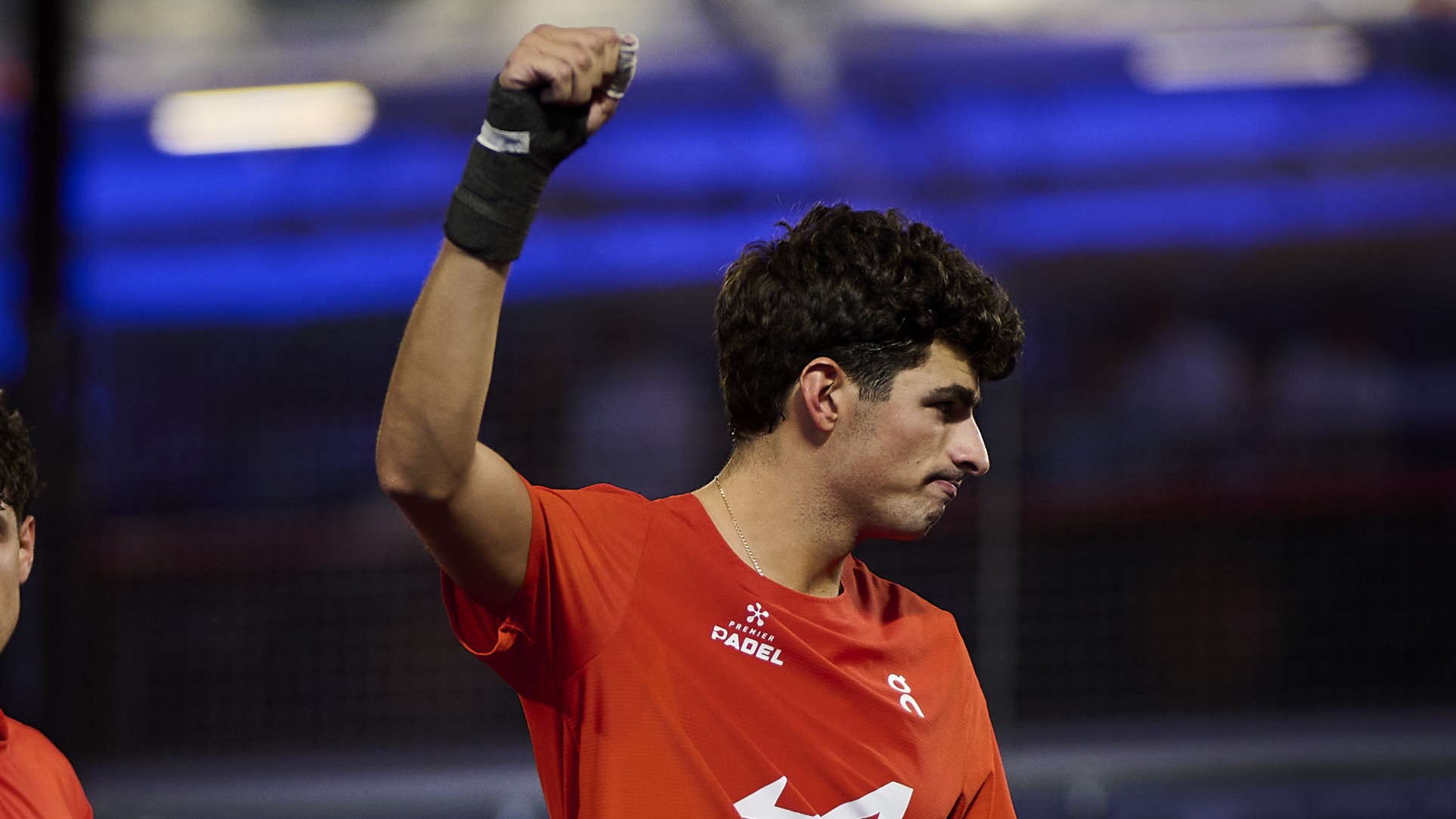 Why does Arturo Coello play with his right hand bandaged?
 What if your progress in padel depended on what nobody else is looking at?