









The 2025/2026 school year promises to be eventful for the French padel circuit . Between the new regulations and the reorganization of the P1000, several players of the French Top 200 are wondering about the future of this competition which, until now, had found a balance.
A regulatory change that raises questions
Since this season, the FFT no longer manages the P1000 schedule. This role now falls to the regional leagues , with quotas set according to the number of licensees. Problem: this decentralization risks multiplying overlaps. “And that is the problem: thus, from September 5 to 7, no less than four P1000s will take place simultaneously in mainland France,” we are told.
For Damien Jean , club manager The Apple Orchard in Caen , this development is not without consequences:
"For some time now, we have seen the quality of the P1000s being less endowed with good players, even if the top of the basket always remains interesting to follow and to watch."
Players' alert
Thomas Cazes Carrère , used to P1000 and current 65th French player , alerts on the risk of a weakening of this category:
"Aren't we killing off the P1000 tournaments that had found their cruising speed after a period of uncertainty?"
He also insists on the method of distributing points:
"With the change in the organization of the P1000, should we continue to distribute points based on the number of teams or the weight of the bracket? For me, this is a mistake. Some P1000s may be very tough with few teams. We should distribute points based on the weight of the eight seeds."
With the proliferation of tournaments, it is indeed becoming easier to enter a main draw, and even to aim for a victory. Players accustomed to the semi-finals could now secure titles, due to a leveling of the average level .

The P1500, a new horizon
The P1500 already illustrates this shift. The recent tournament of Tops of Nîmes showed that the tables are now attracting some of the players who were the strength of the P1000s yesterday.
For Damien Jean, this trend is worrying:
"We had already lost density in recent years. We will have to expect to see the average level of the elite categories drop further with this type of regulation."
Increased competition despite everything
The circuit, however, remains constantly evolving. New pairs regularly emerge and join the fray, ensuring a quality spectacle in the final rounds.
But the risk remains: France could soon experience P1000 two-speed , according to the formula of Thomas Cazes Carrère.
"We must hope that the leagues communicate with each other to avoid ending up with four P1000s on the same weekend. Even if they are geographically distributed, this will unbalance the tables and weaken the category."
Indeed, if players and clubs had the assurance that, for example, they could not exceed more than 2 P1000 per week and that the leagues would be rigorous enough to force themselves to preserve the value of the P1000, then the fears would be unfounded.
With 18 tournaments played over the last twelve months , Cazes Carrère is one of the active players on the circuit. Many believe that the P1000s had found a good cruising speed and that he “is It's a shame to see this category so disrupted. , while there were undoubtedly other priorities than destabilise a format that worked well and was appreciated by competitors, clubs and spectators ".
Case to follow.

Franck Binisti discovered padel at the Club des Pyramides in 2009 in the Paris region. Since then, padel has been part of his life. You often see him touring France to cover major French padel events.
































































 Martina Calvo after her revenge on Sánchez / Ustero: “Your question served as motivation for me! »
 Düsseldorf P2: Tapia/Coello still too strong for Stupa/Sanz, third consecutive title for the world number 1s
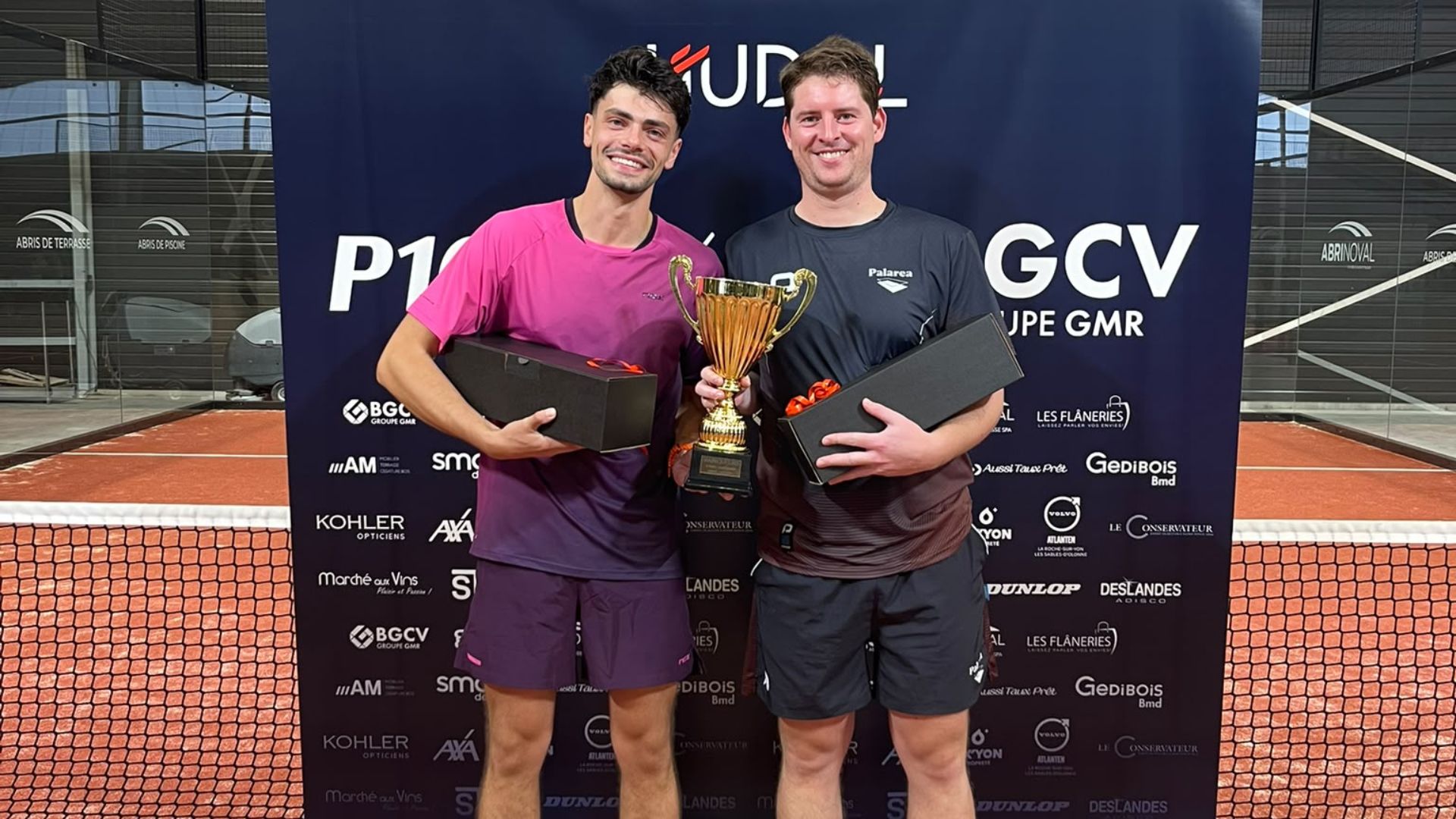 Prod'homme and Marin defeat Mitjana/Henrion to win the P1000 HUDDL Aizenay
 France or Portugal, Spain or Argentina: Miguel Lamperti ranks the best padel nations
 Cédric Lavoye: "Hard work pays off" and a first FIP tournament in Guadeloupe is in his sights
 Nicolas Rouanet is preparing his return in 2027: “With Bastien Blanqué, I would never say no”
 Leygue/Blanqué respond bluntly to the criticism: "You can say what you want... We're putting all our money and our lives into this."
 Padel rankings October 2026: more than 150,000 men ranked in France
 P1000 Verneuil Padel Club – Results / Live / Schedule
 West Padel opens its 4 indoor courts in Montivilliers on November 5th
 With Galán tired and Coki Nieto sidelined, is the infernal pace of the circuit starting to take its toll on the players?
 Milan P1: Thomas Leygue launches his qualifying campaign with Jesús Moya
 Germany P2: The fastest quarter-finals in history Premier Padel
 Zidane and Galán reunited on the track to launch the Metalbone ZZ
 For sale: two padel clubs in Mauritius, starting from 330,000 euros
 How much does it actually cost to organize a FIP Bronze event?
 Padel How Lidl is transforming Crivit into a fully-fledged sports brand with Steffi Graf
 Compagnie des Alpes is accelerating its involvement in padel with PadelCity: a new step in its European strategy
 Coello with a player at 0 points ahead of two top 10 players: should the FIP ranking be reviewed?
 Les Pyramides: after 12 padel courts, the club is focusing on youth training
 Health Care Padel Tour 2026: What if your next padel tournament was played in Barcelona?
 FAST Padel Academy continues its development and establishes itself in Liège.
 What the analysis of the stroke reveals: tennis forehand vs. padel bandeja
 Has the bandeja disappeared from modern padel?
 Flat forehand in padel: 5 exercises from Cristian Álvarez to gain control and efficiency
 Why knowing how to play on the right and left can make all the difference
 Tapia reveals his recipe for beating Coello / Tapia: "I would bet everything on myself"
 How Coello defused Chingotto's game plan
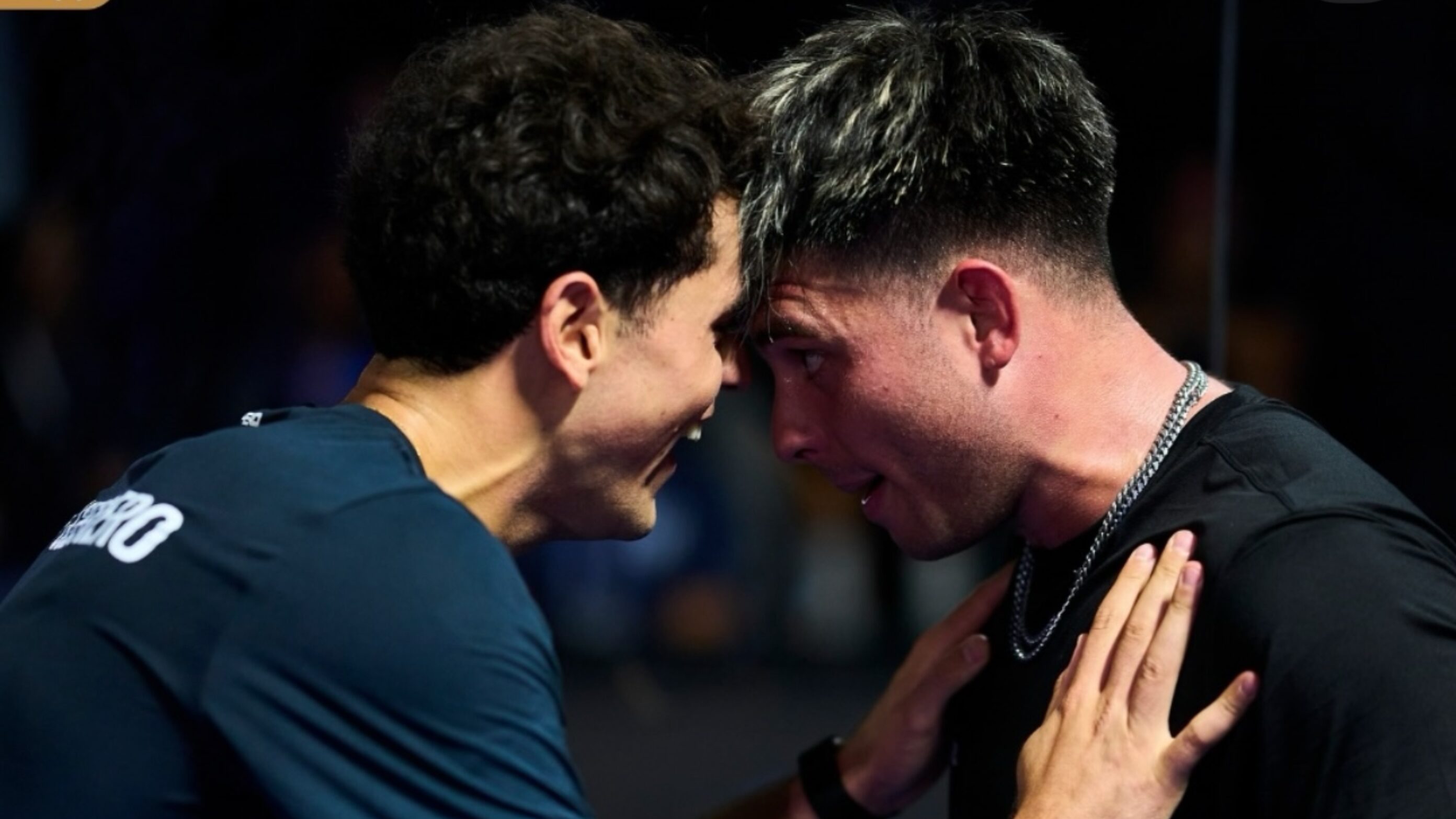 In padel, does the chemistry between a pair count as much as individual skill?
 Summer changes padel… but what if the real challenge wasn't hitting harder?
 Neither FIP Tour nor World Team Championship: the unique format of padel at the Mediterranean Games
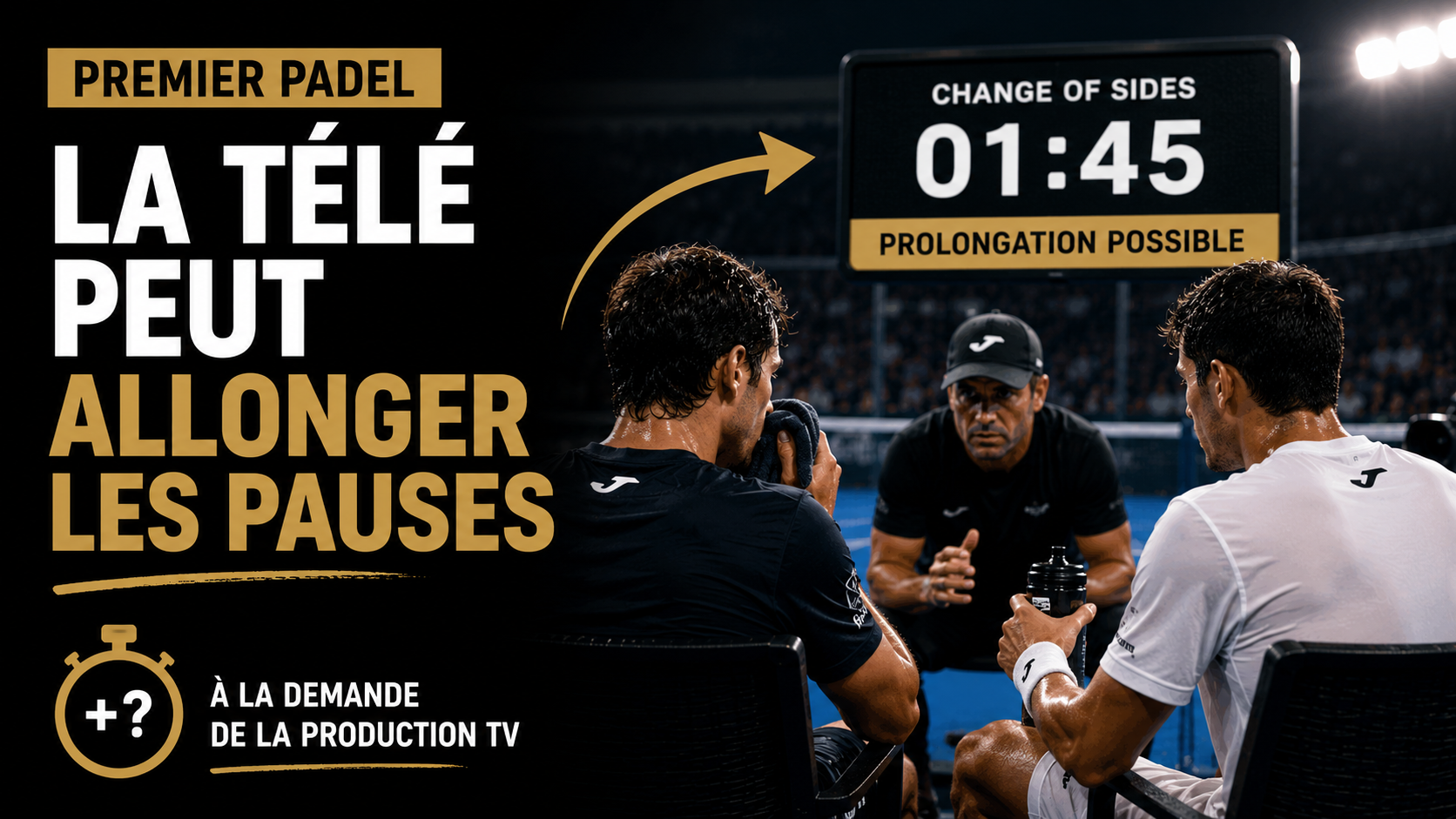 Premier Padel : when television can lengthen players' breaks
 Premier Padel Yes, a referee can refuse a player permission to go to the toilet
 Julien Seurin opens up about his mental state: "There are far more doubts than moments of happiness."
 More than a year later, Thomas Leygue is back in the top 150: behind the scenes of a comeback that's still unfinished
 Padel vs squash vs badminton: the scientific ranking of cardio intensity
 Why does Arturo Coello play with his right hand bandaged?
 What if your progress in padel depended on what nobody else is looking at?