










Ari Sánchez herself admits she's not going through the best period of her career. Yet, her influence on Andrea Ustero is becoming increasingly clear. At Roland-Garros, the former world number one didn't just hold her own on the court: she reassured, guided, and freed up her young partner, ultimately allowing her to unleash her full power in the semi-final.
A less dominant Ari Sánchez, but still just as important
"I don't think I'm at my best in padel."
Ari Sánchez's statement after her Paris Major quarter-final match contrasts sharply with the usual discourse of top players. The Spaniard makes no attempt to hide the difficulties she has faced since partnering with Andrea Ustero. She acknowledges that she is currently in a different phase, within a project that is still under construction.
But the performance of a player like Ari isn't measured solely by the number of winning points or the speedy shots that land in the net. Her role seems to have changed. Less dominant than during her partnership with Paula Josemaría, she has become the stabilizing force in a pairing where Ustero must gradually assume more responsibility.
Ari may not always shine individually. But she is increasingly allowing her partner to shine.
In the quarter-final, Ustero admitted to having mentally lost focus.
The quarter-final victory against Alejandra Salazar and Aranza Osoro, 6/3 3/6 6/2 This constitutes a first revealing example.
After a dominant first set, Ustero gradually lost her way. The young Spaniard admitted after the match that her mind had wandered at times in the second set. Troubled by the way the match was unfolding and less comfortable in her own half of the court, she was no longer able to play with the same freedom.
It was at this point that Ari Sánchez and coach Ángel González became essential players. Ustero recounted that his partner kept telling him to "Playing freely" , because she knew that this freedom was essential to expressing her best padel.
The advice seems simple, but it reveals a true understanding of her partner. Ari didn't try to demand more control from a player already paralyzed by pressure. On the contrary, she gave her permission to take risks again.
Ustero found more freedom in the decisive set, and the pair managed to regain control. It would be an exaggeration to attribute the victory solely to Ari's intervention, but Ustero's comments directly confirm the importance of his support.
In the semi-final, Ari stabilizes and Ustero strikes
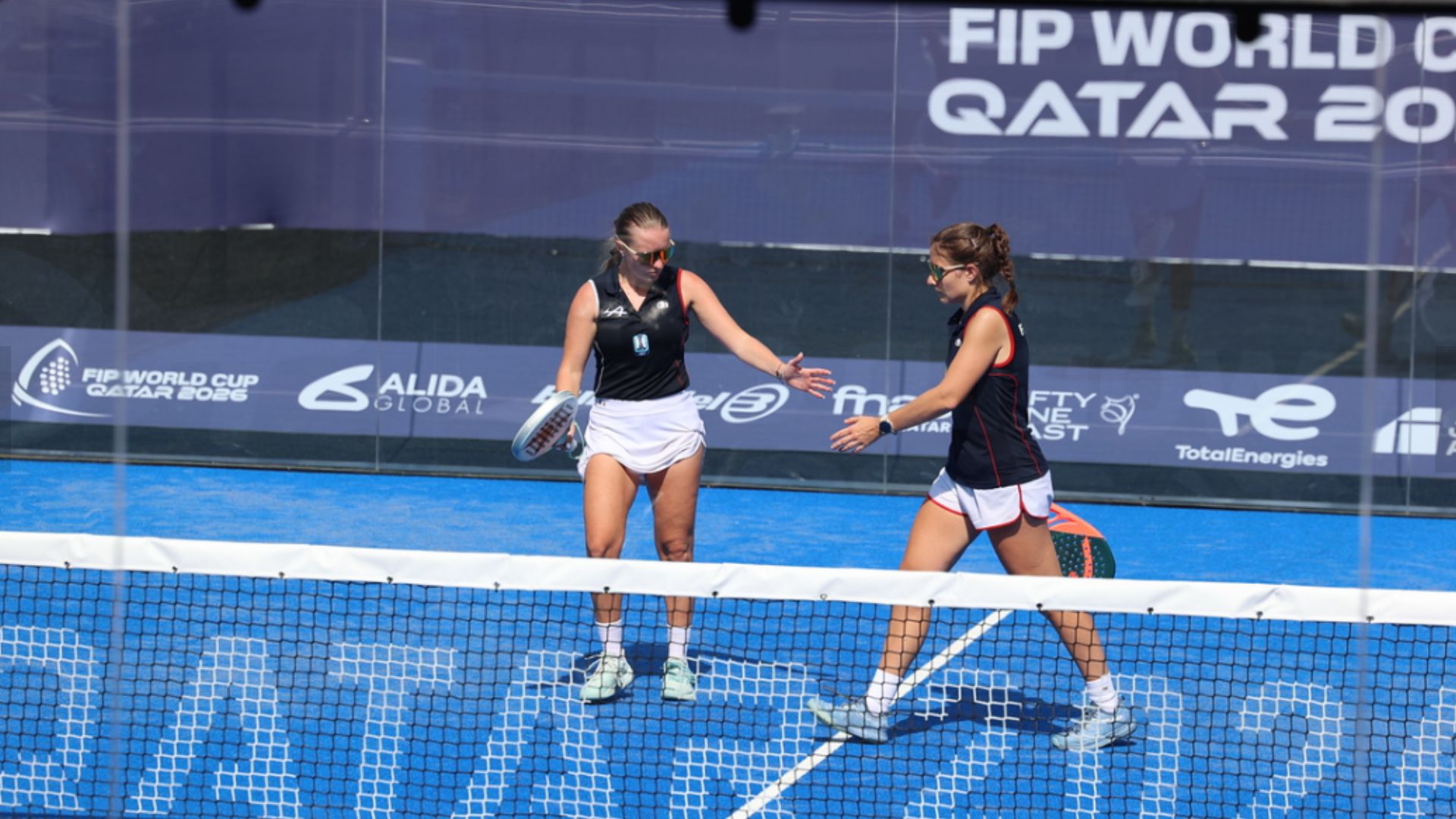
The scenario was repeated, in another form, in the semi-final against Marta Ortega and Sofia Araújo.
Sánchez and Ustero lost the first set 7/5 The young left-hander was still struggling to get fully into the match and made several mistakes. On the other side, Ortega provided a lot of control, while Araújo took advantage of the relatively fast conditions to impose her power.
The game then gradually changed.
Ustero began to find better positions and play much more aggressively. His striking ability, particularly on par 3s, pushed his opponents back and allowed him to take an increasing part in both building and finishing points.
During this build-up, Ari Sánchez provided the foundation. She held her diagonal, reduced errors, and kept the pair in a structure stable enough for her partner to continue attacking without feeling the need to nail every shot.
Sánchez–Ustero won the second round 6/4 before unfolding in the third, 6/1 Ustero had then become the pair's main offensive force. Ari, on the other hand, didn't necessarily need to occupy all the spotlight: her control gave her partner the space she needed to express herself.
Ustero's power needs security
Andrea Ustero already possesses a natural ability to accelerate and finish points. But power can only become a consistent weapon if the player feels secure enough to accept mistakes.
This is perhaps Ari Sánchez's main contribution.
When Ustero played with Alejandra Alonso, the two players were still at a similar stage of their development. With Ari, the situation is different. One is gradually discovering the demands of the highest level; the other is experiencing finals, the pressure of rankings, and periods when her game isn't as strong.
Ustero herself acknowledges that playing with such an experienced partner represents a significant change and helps her to show a more liberated version of her padel.
This security doesn't mean Ari should only defend and return the ball. Her ability to vary her game, move opponents, and control the pace remains essential. But she also accepts that power and finishing often come from the other half of the court.
It sometimes takes a lot of trust to let your partner become the most spectacular player in the duo.
A new leadership for Ari Sánchez
For several seasons, Ari Sánchez was judged by her titles, finals appearances, and world number 1 ranking. Her partnership with Ustero reveals another facet: that of a player capable of nurturing the development of immense potential.
This influence is not always apparent in the statistics. It is found in an instruction repeated at the right time, in a diagonal held without rushing, or in the ability to prevent the pair from becoming disorganized when the partner goes through a bad sequence.
The Paris Major final against Claudia Fernández and Martina Calvo will be another test. Ustero will once again have to shoulder a large part of the offensive load. But to be able to shoot freely, she will need to feel that Ari Sánchez is holding the entire structure together behind her.
At Roland-Garros, Ustero impressed with her power. And if she was able to gradually free up her arm, it was probably not unrelated to the presence, patience, and stability of her partner.

I discovered the Padel I stumbled into Spain at a campsite. I was instantly hooked; passionate about padel, I follow international and regional news with the same excitement as the sport itself.

































































 2026 World Championships – Spain reclaims its world crown, a stratospheric Coello defeats Argentina
 2026 World Championships – Argentina / Spain: a third match for the world title!
 2026 World Championships – Ustero in tears, Triay facing Brea: the world champions' confessions
 "I applied to become the coach of the French national team": an objective for Adrien Maigret
 Fonteny/Joris after their “almost” upset against Tapia/Libaak: “We believed until the very last point”
 2026 World Cup – Five players barred from World Cup with the United Arab Emirates: Íñigo Jofre denounces the situation
 Coello/Tapia ahead of the Kuwait Major final against Tello/Arce: “These are two players who cause us a lot of problems”
 2026 World Championships – No medal for the French women, beaten 2-0 by Italy in the bronze medal match
 2026 World Championships – The French women's team loses their first point against Italy despite a strong performance from Touly/Pothier; Collombon/Bahurel can no longer afford any mistakes.
 Padel, weight training, and even HYROX: clubs are changing their model
 2026 World Championships – Where to watch the finals? Spain vs. Argentina, two clashes for the world titles
 Dunlop unveils the Galactica Pro by Nisse, a limited edition of only 500 pieces worldwide
 2026 World Cup – Joris/Robert, the new addition to the French team for their final match against Paraguay
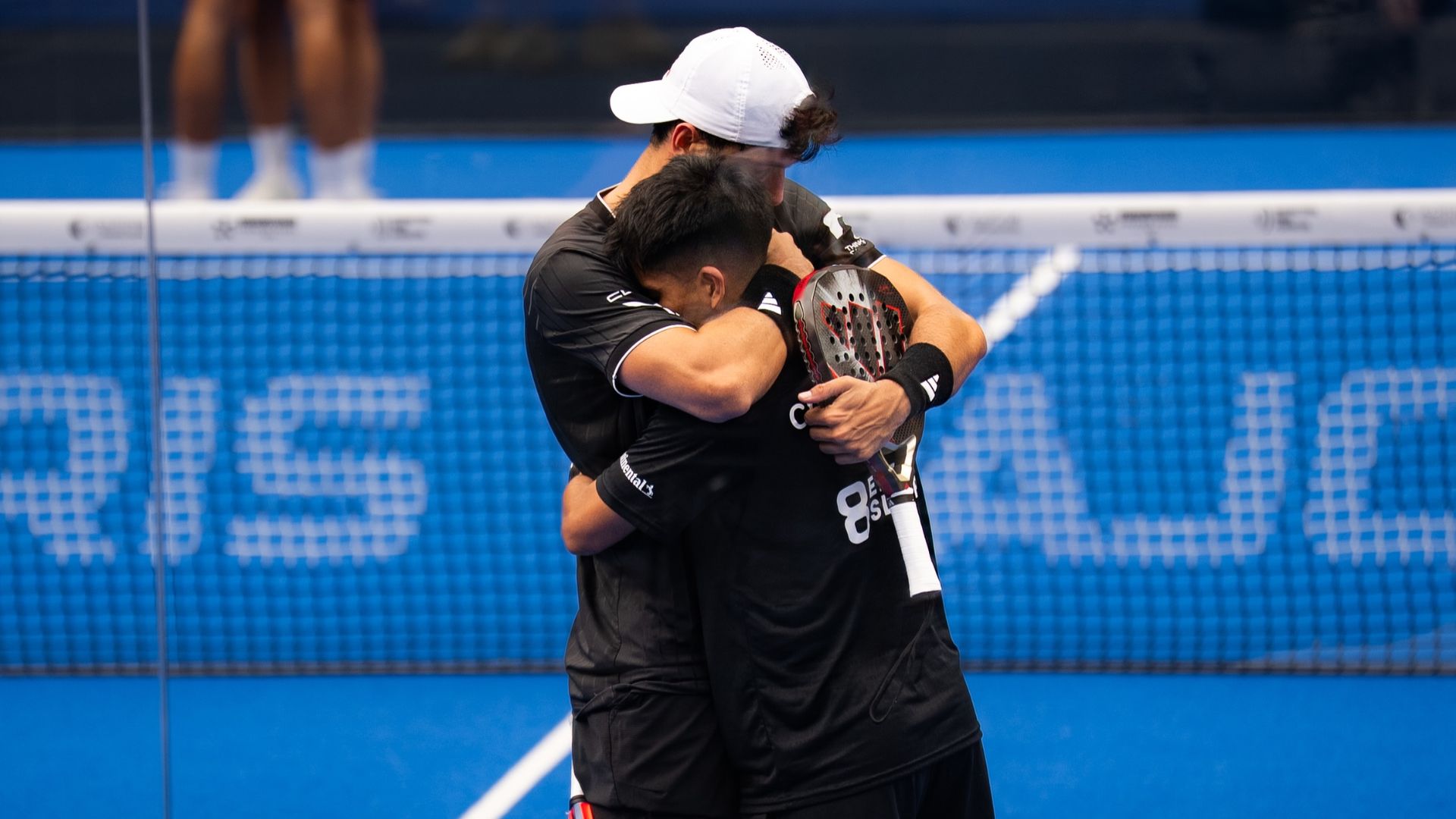 Dubai P1 – Galán/Chingotto withdraw, Leal/Guerrero take advantage of their absence to directly enter the main draw
 Padel court rentals: a global market estimated at 4,6 billion euros
 FIP Beyond: the new global padel circuit for amateurs and seniors
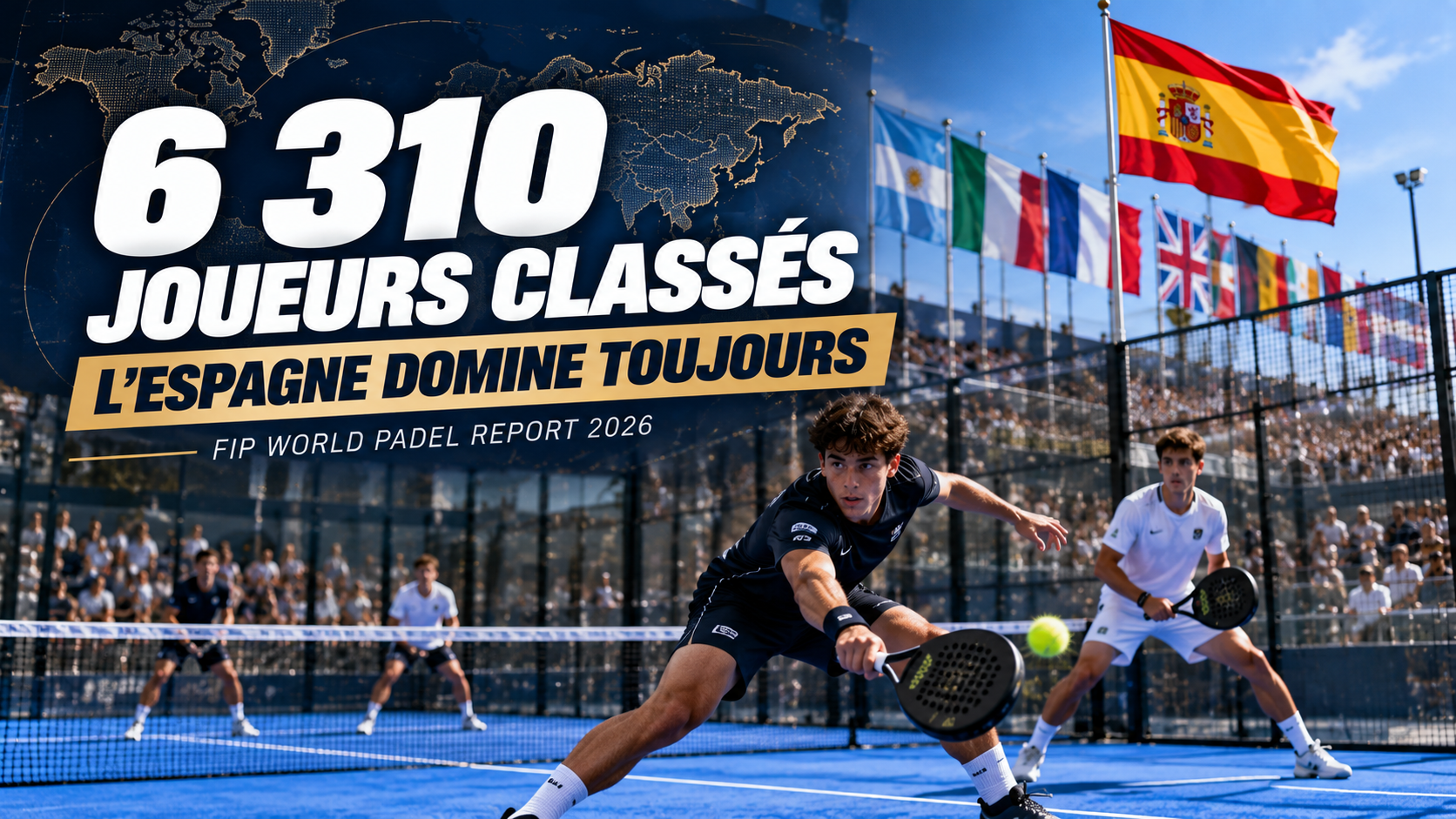 More than 6,300 FIP-ranked players: professional padel is becoming international, but Spain dominates
 Memory, reflexes, concentration: what happens in our brain when we play padel?
 P2000 or P3000: what are the differences in prize money, format and organization in 2028?
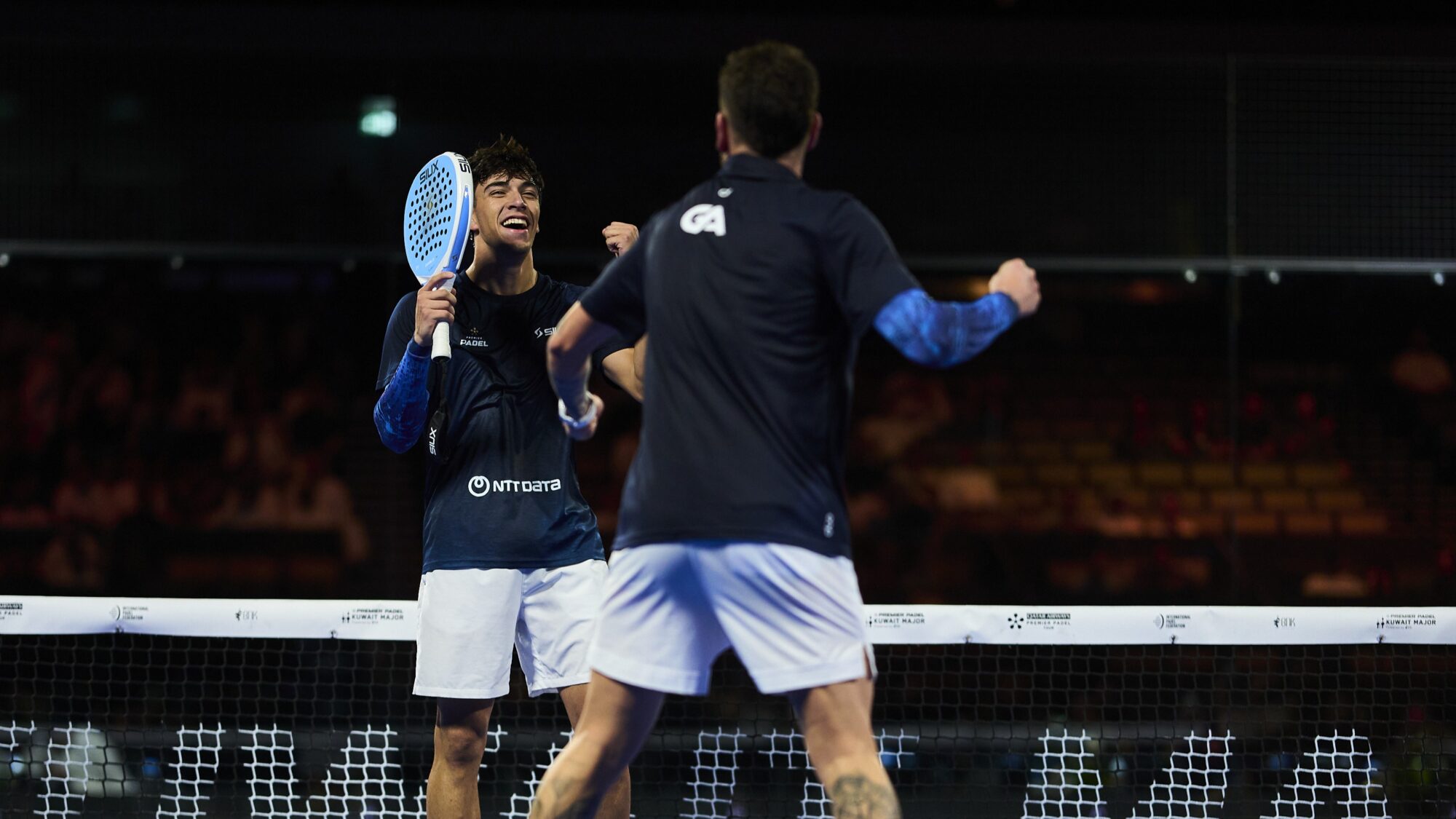 Why can Libaak/Alfonso beat almost everyone… except Coello/Tapia?
 Could padel help the brain recover after chemotherapy?
 What the analysis of the stroke reveals: tennis forehand vs. padel bandeja
 Has the bandeja disappeared from modern padel?
 Flat forehand in padel: 5 exercises from Cristian Álvarez to gain control and efficiency
 Why knowing how to play on the right and left can make all the difference
 Tapia reveals his recipe for beating Coello / Tapia: "I would bet everything on myself"
 How Coello defused Chingotto's game plan
 In padel, does the chemistry between a pair count as much as individual skill?
 Organising a P2000 or a P3000: how much does it really cost clubs?
 Do you lose your ranking? Padel FFT after more than a year without a license / without competition?
 Coello with a player at 0 points ahead of two top 10 players: should the FIP ranking be reviewed?
 Kuwait Major: Chingotto/Galán out, Alejandro Galán injured, Coello/Tapia the only favorites?
 Julien Seurin opens up about his mental state: "There are far more doubts than moments of happiness."
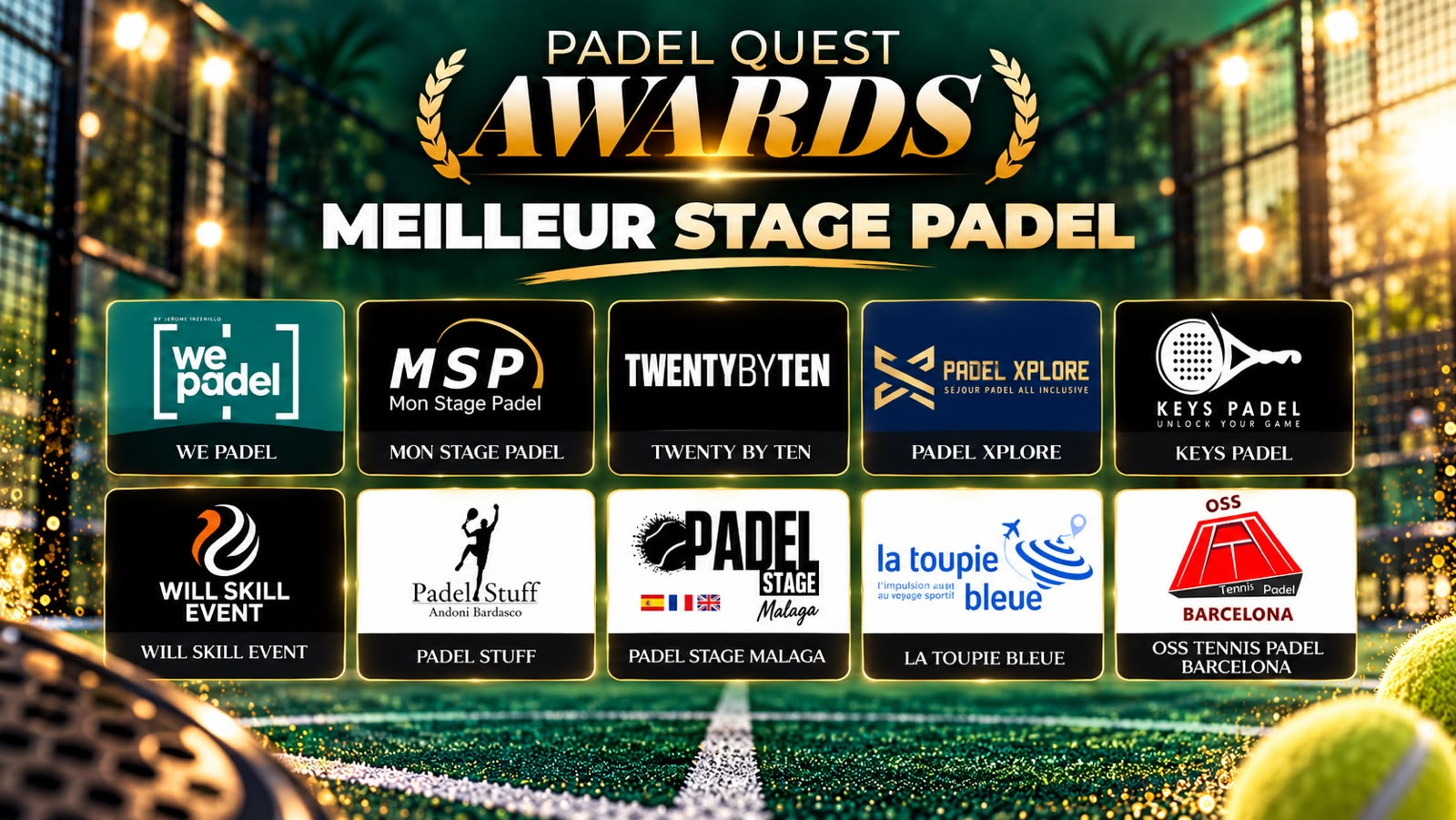 Padel Quest Awards: Ten specialists in the running for the title of best padel training camp of the year
 Padel Xperience: The Academy opens on November 2nd in Marcheprime, ahead of the complex's inauguration in 2027
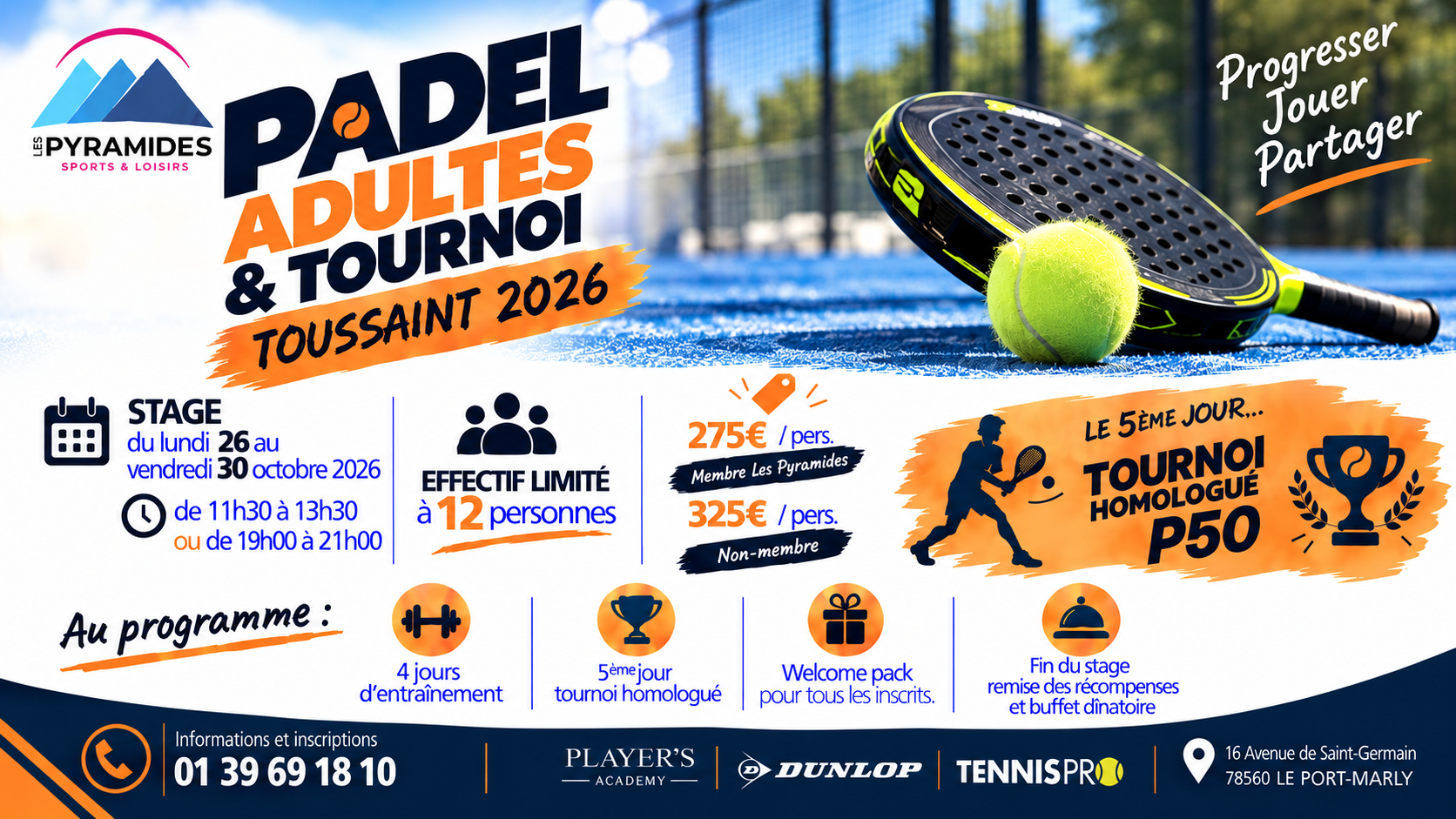 All Saints' Day – Les Pyramides are organizing a padel training camp for adults with a P50 tournament to close out the week
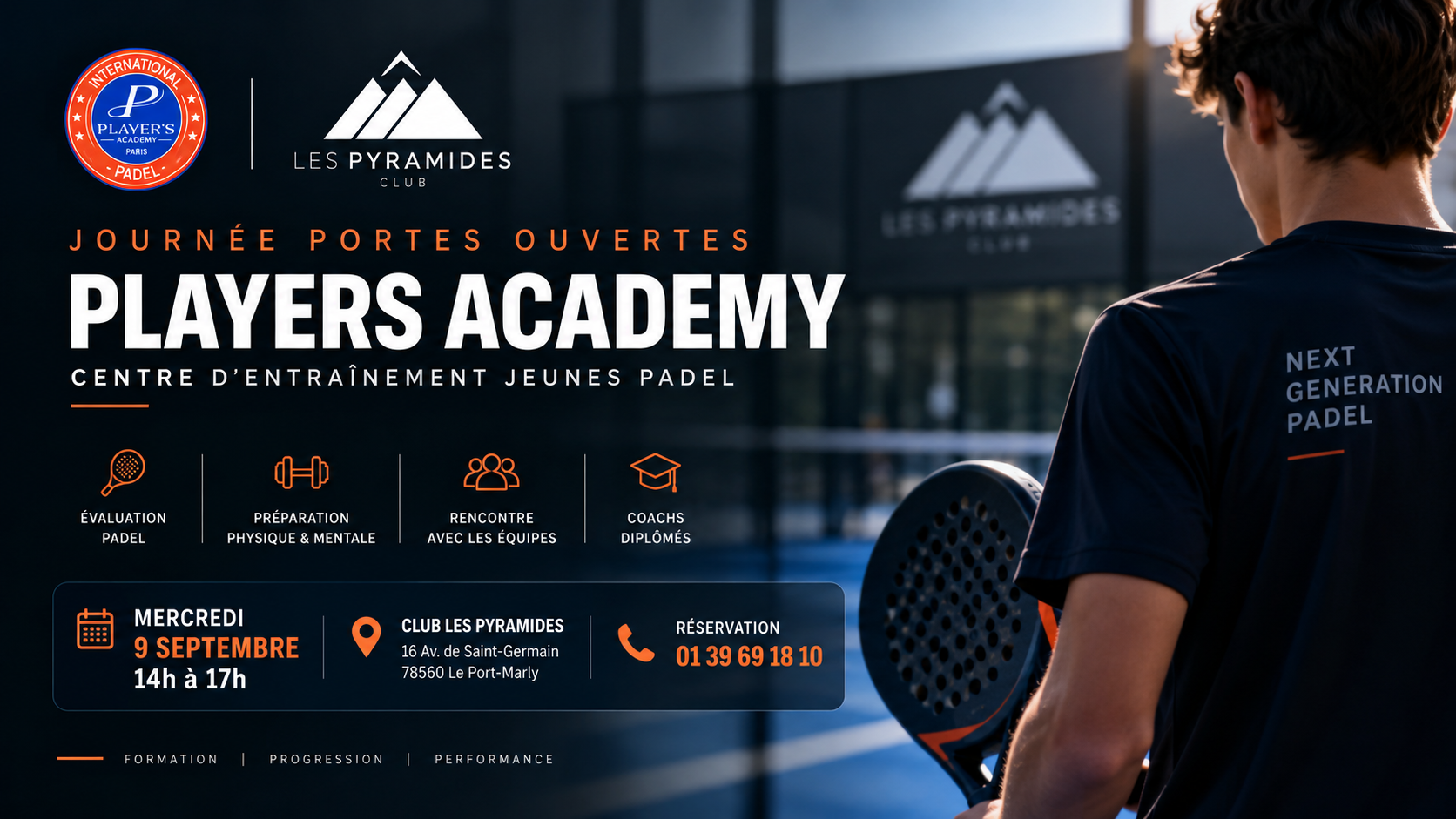 Les Pyramides: after 12 padel courts, the club is focusing on youth training