

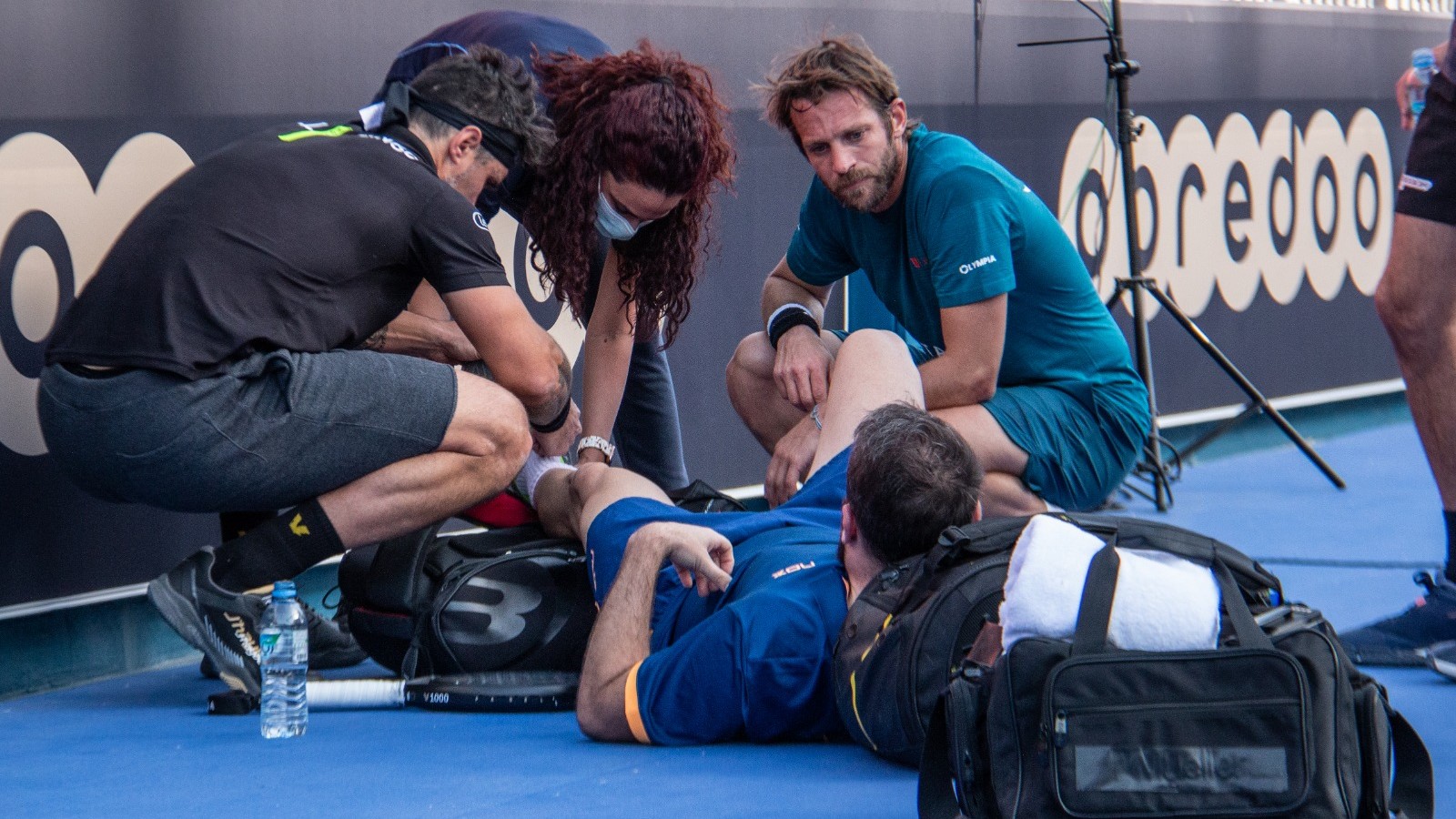











Where are the main wounds located? padel ? What are the remedies? How long are we usually unavailable? Pierre-Olivier Ferrand shares his study with us.
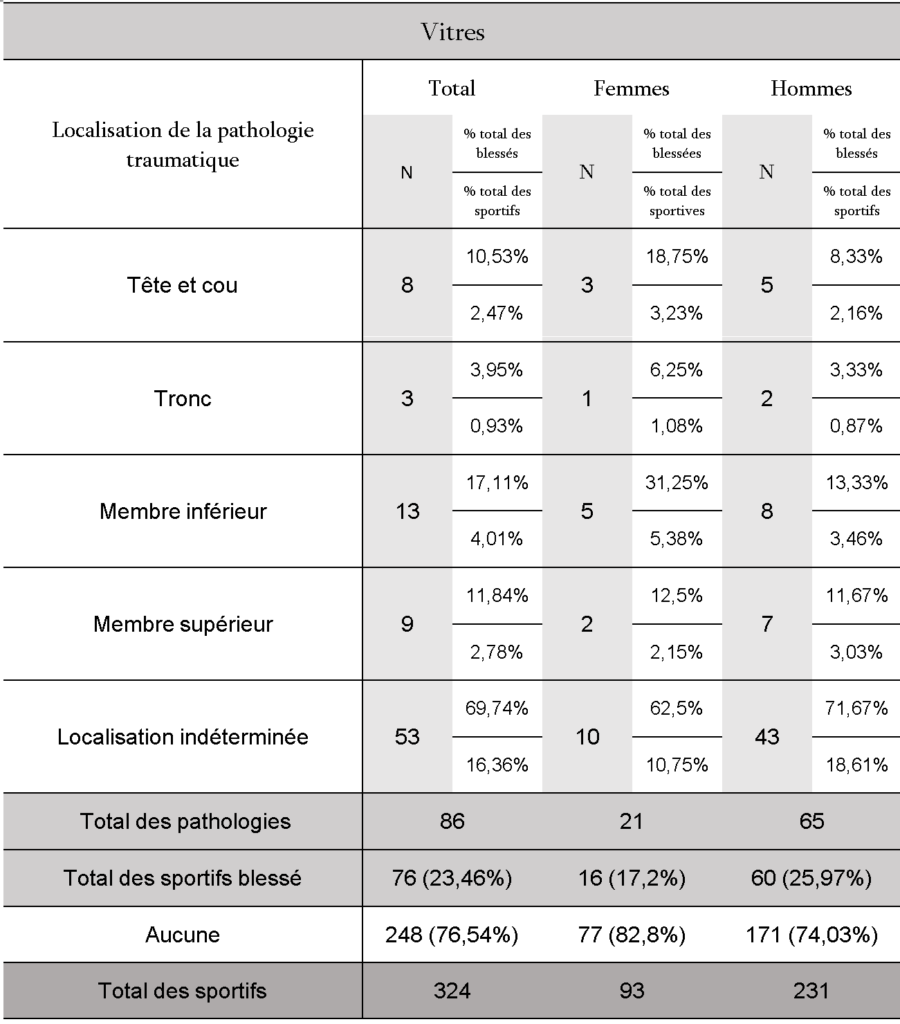
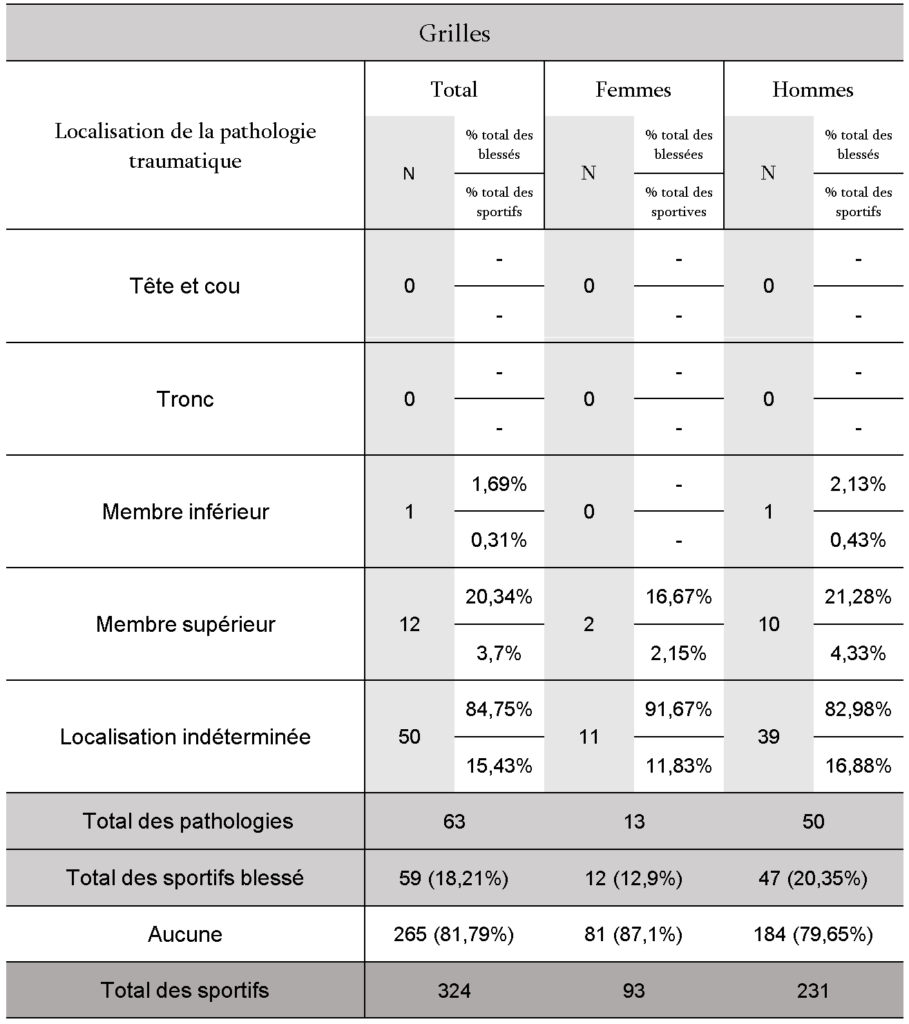
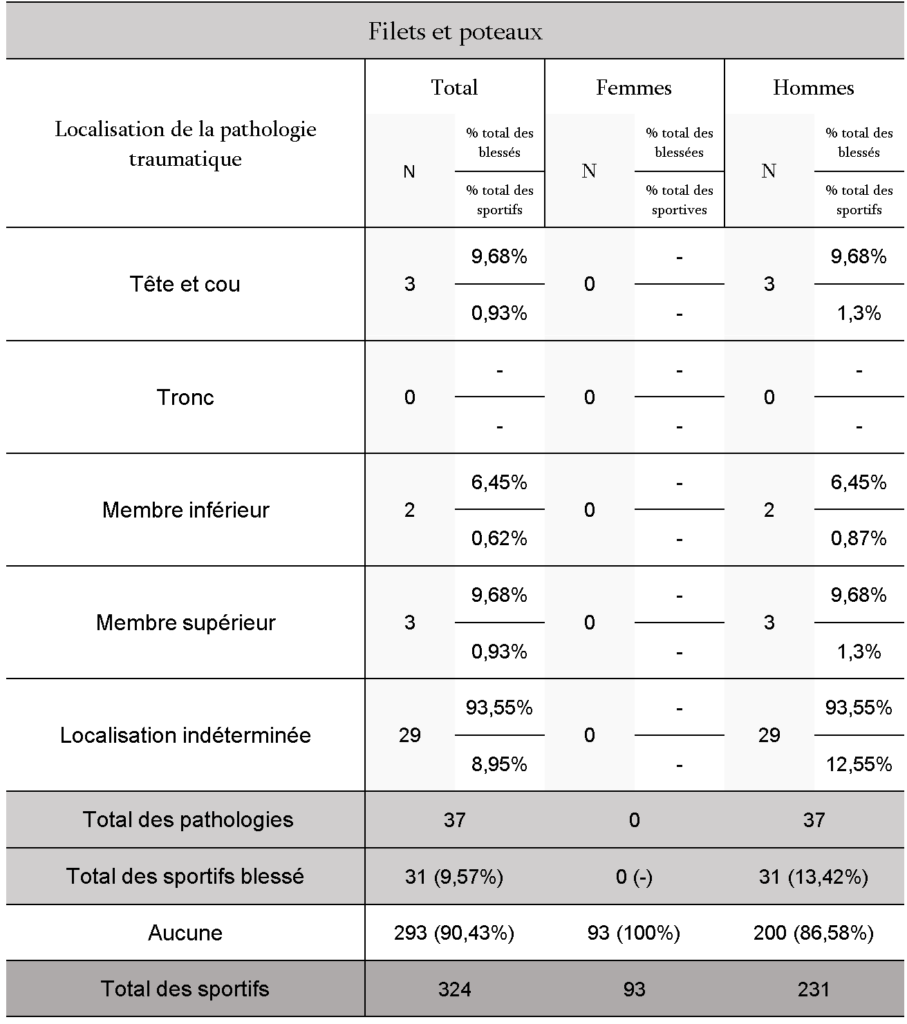
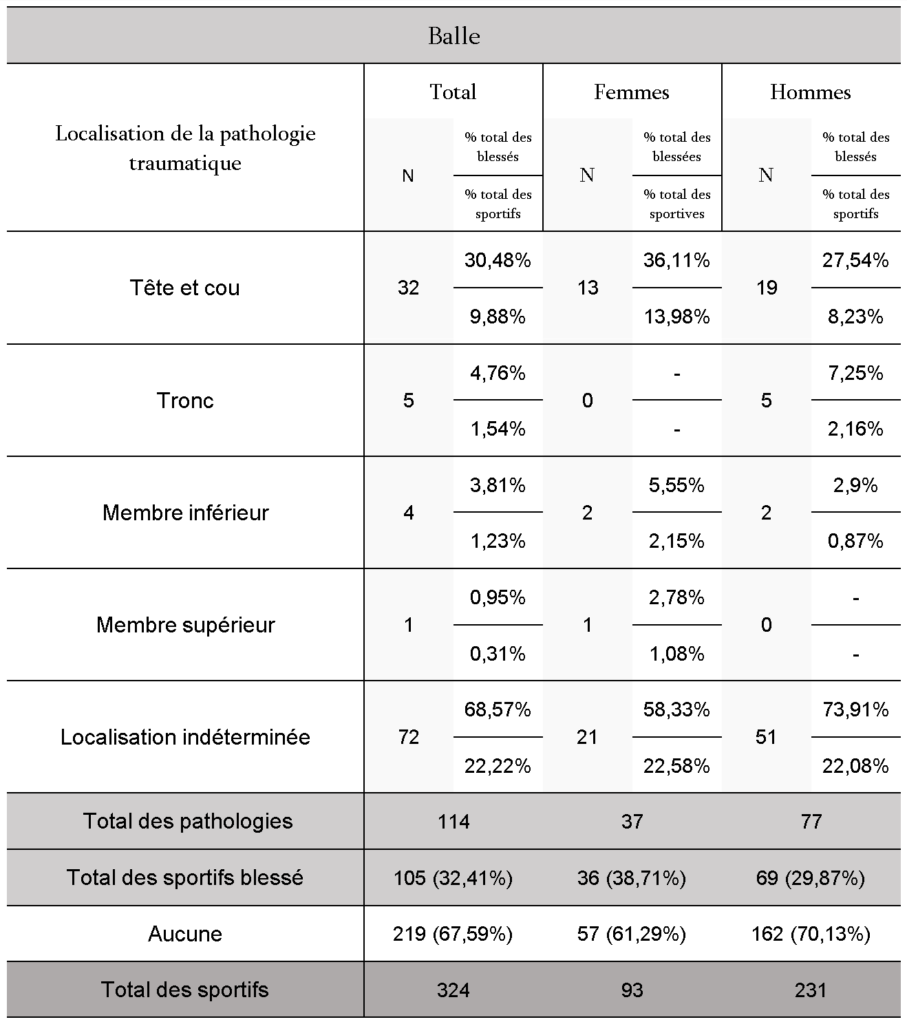
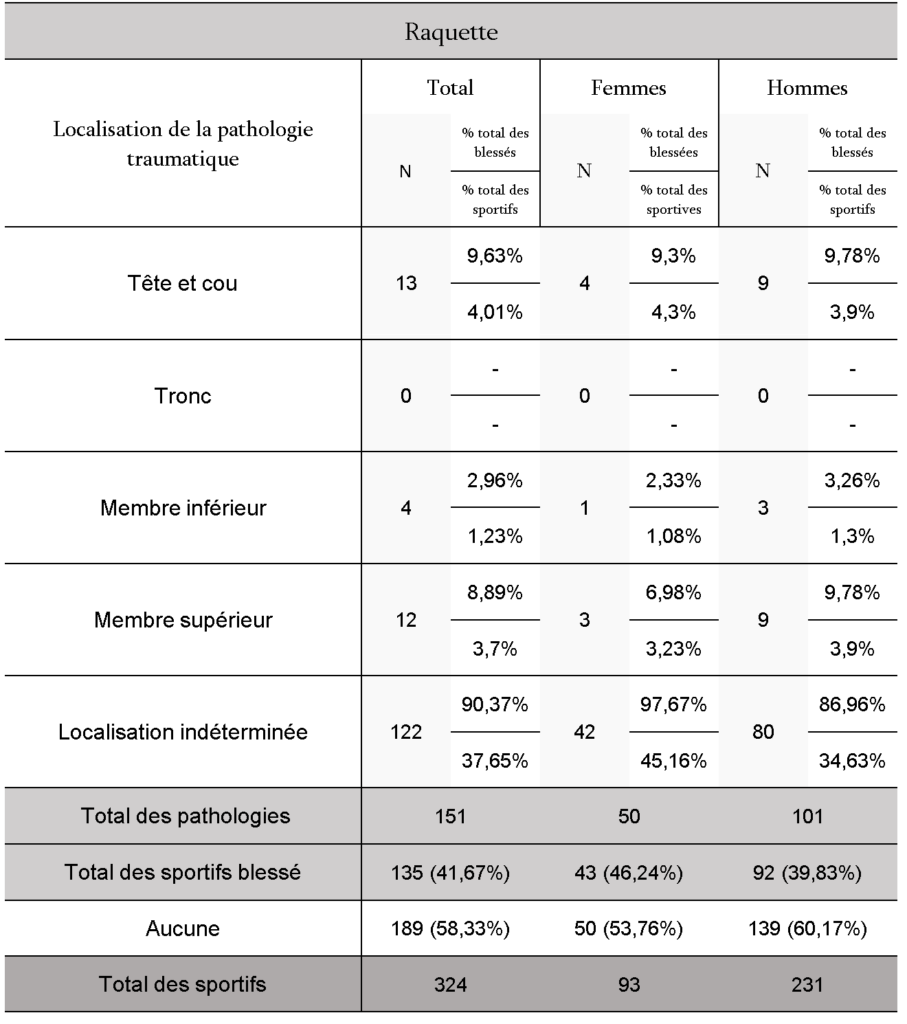
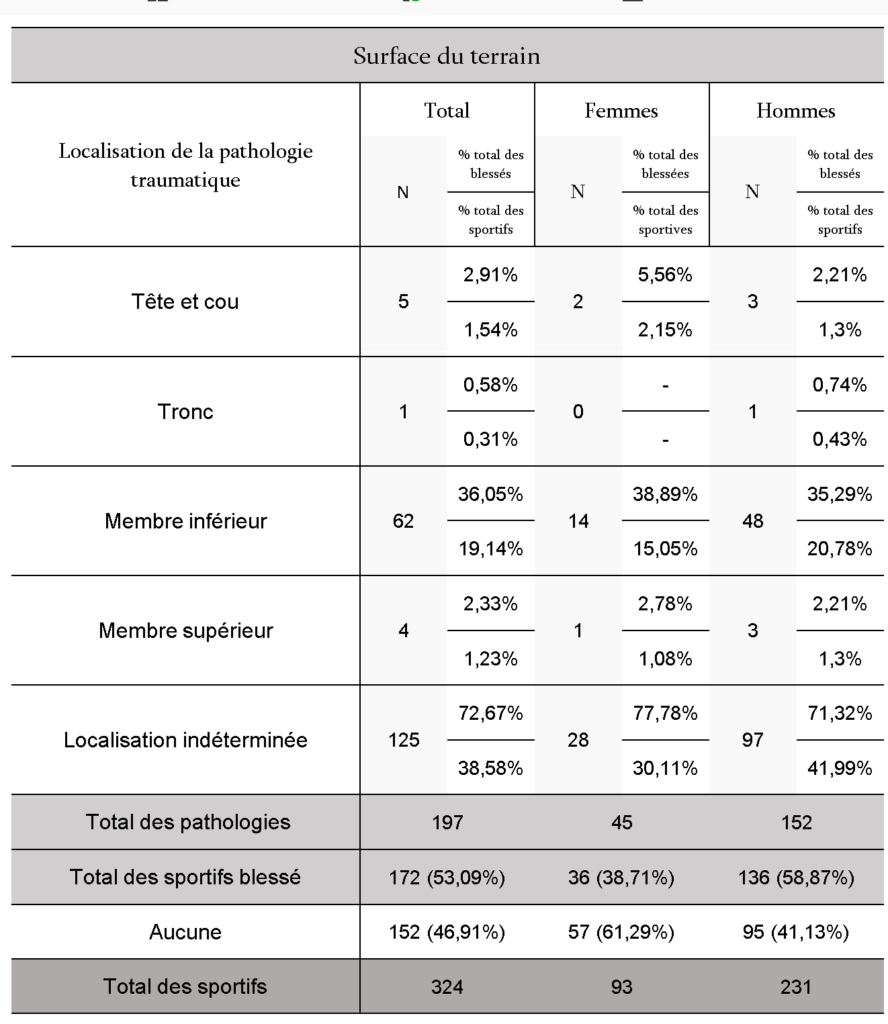
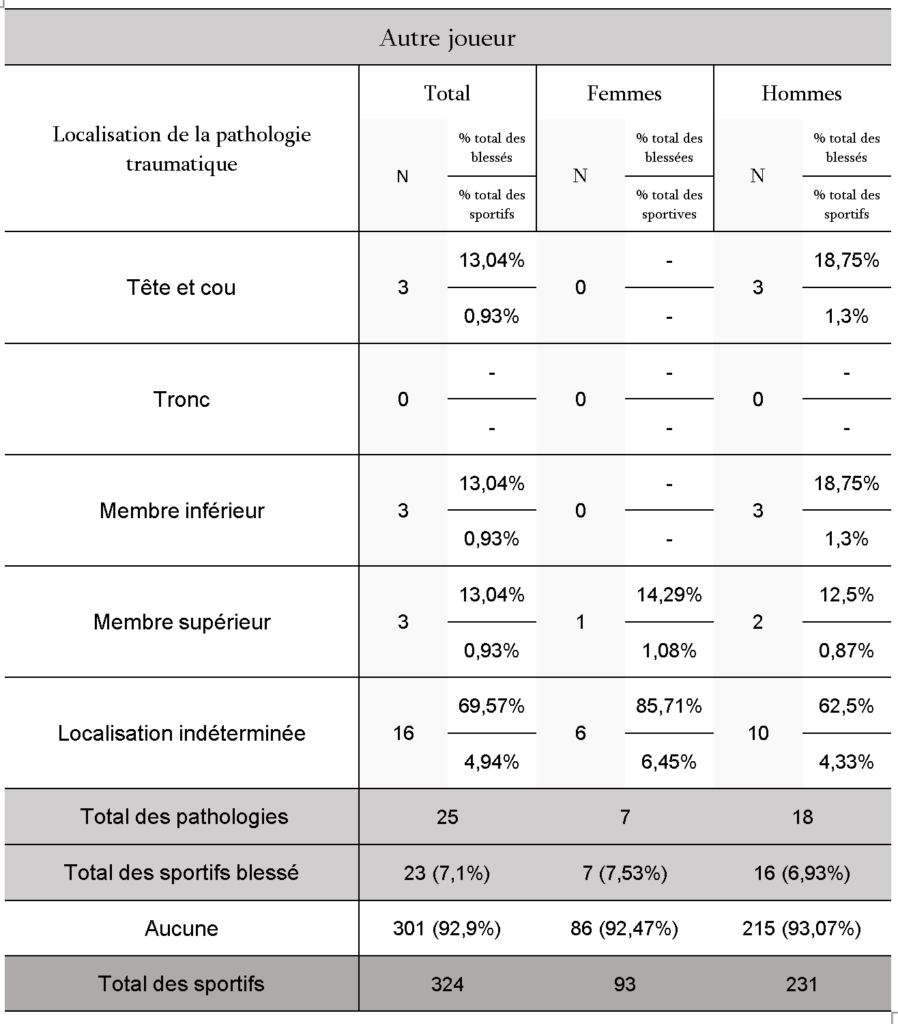
We carried out an analysis of the traumatic localizations by structure of the ground of padel (Table 9 to 15). Each table corresponds to a structure and lists the number of injuries according to the body area affected, also dissociating men and women.
Two different totals are used. On the one hand, we note the total number of injuries with the structure in question, on the other hand the total number of athletes who have presented a traumatic pathology in relation. The difference between these two sections is explained by the fact that the same athlete can have several different injuries, resulting in a higher number of pathologies than the number of subjects.
Pierre-Olivier Ferrand, General practitioner trained in sports pathologies and manual medicine, dissects for us THE TRAUMATIC PATHOLOGIES OF THE PLAYER PADEL as part of his thesis which you can find in full HERE.
This difference allows us in a second time to discern two relationships:
- The ratio between the number of injuries and the number of injured, a ratio that allows us to represent the frequency of traumatic pathologies according to the different parts of the body.
- The ratio between the number of injuries and the total number of athletes, which allows us to assess the general potential of the structure and to be able to compare them with each other.
We will take for example the traumatic injuries with the windows of the field (Table 9).
86 injuries were highlighted with this structure, 21 in women and 65 in men.
However, only 76 athletes out of the 324 people questioned presented a traumatic pathology.
The analysis of the data collected counted 13 pathologies of the lower limb related to the windows, which represents 17,11% of the people who responded positively to the presence of an injury with this structure. On the other hand, this ratio drops to only 4,01% if we consider all of the subjects surveyed.
Location of traumatic pathologies by structure
Use of the care offer
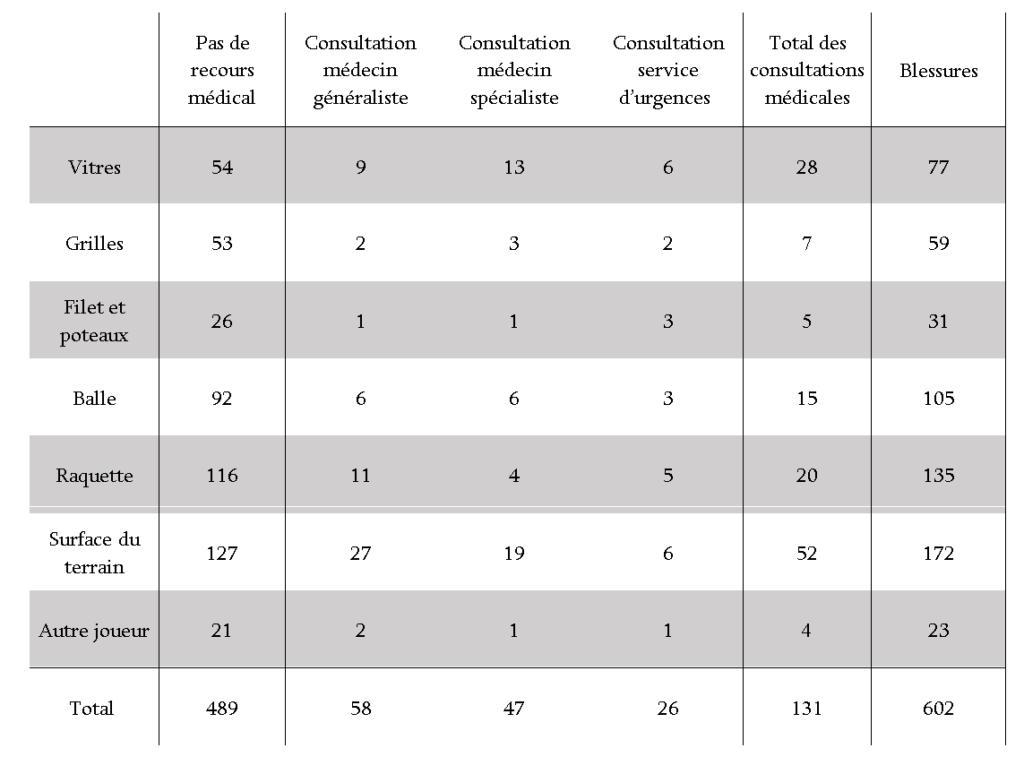
The questionnaire also made it possible to question the athletes on any medical consultations that resulted from their traumatic pathologies. The players of padel were therefore asked to comment on their use of the healthcare system following their injuries. They had a multiple choice between 4 proposals: no medical consultation necessary, general medicine consultation, consultation with a medical specialist and consultation with an emergency department.
The medical consultation necessities have been analyzed for each structure of the player's environment. padel and listed in the table above (Table 16).
The analysis highlights 131 medical consultations caused by traumatic pathologies. On the other hand, this table shows 2 different totals.
The first, horizontally, makes it possible to total the number of medical consultations in connection with the traumatic pathologies of the structure studied. Thus, there were 52 medical consultations for pathologies caused by the surface of the ground, including 27 consultations with a general practitioner and 19 consultations with a specialist doctor. A consultation with an emergency service was necessary in the case of 6 pathologies caused by the windows of the field.
Regarding the vertical reading of the table, the study makes it possible to identify the number of medical consultations with general practitioners (58), specialists (47) and emergency physicians (26) all structures combined.
Periods of unavailability linked to traumatic pathologies
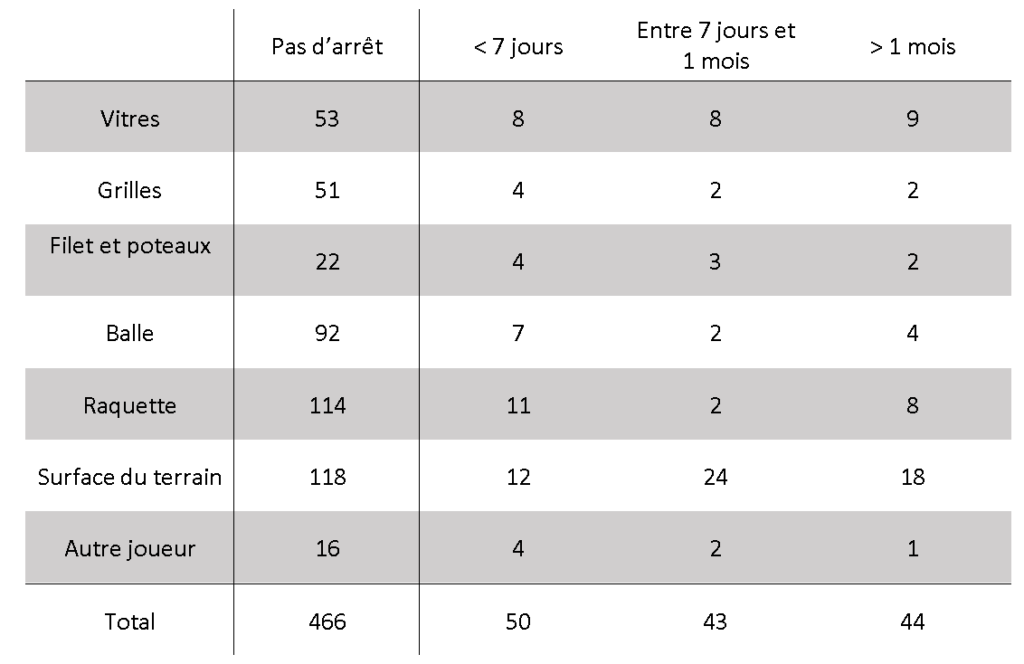
The last part of the study concerned the duration of unavailability of the player of padel related to the traumatic pathology encountered. According to the different structures, the durations are divided into four increasing categories: no stoppage of sport, duration of stoppage less than 7 days, duration of stoppage between 7 days and one month and duration of stoppage greater than 1 month . The results of the questionnaire are thus summarized in Table 17.
In addition to the players who were not injured, we note that the majority of players who suffered a traumatic pathology were not forced to observe an interruption in their practice. Of all the people who responded to the questionnaire, 137 interruptions in practice were recorded. We also highlight a certain homogeneity in the stop periods. The number of short-term inactivity appears as high as the long periods of more than one month. If the padel seems to cause less disabling pathologies, so we cannot rule out the presence of more serious pathologies requiring a substantial downtime.
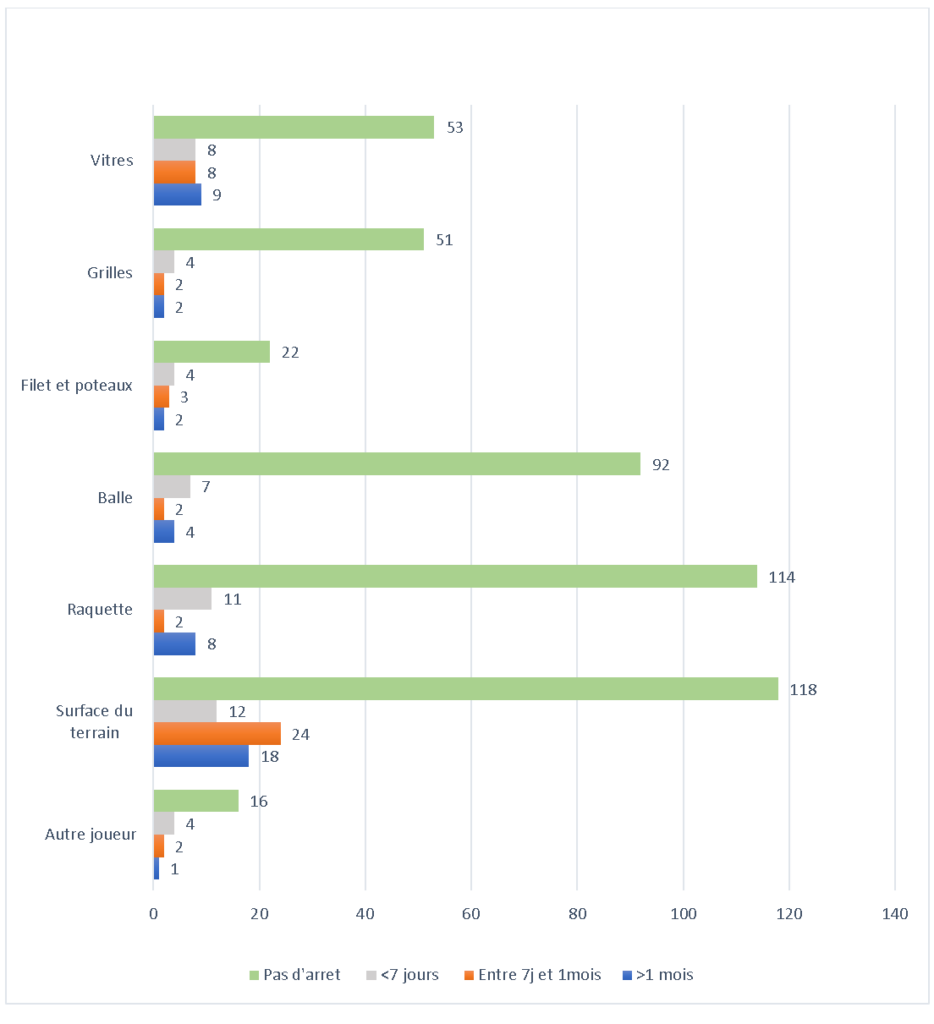
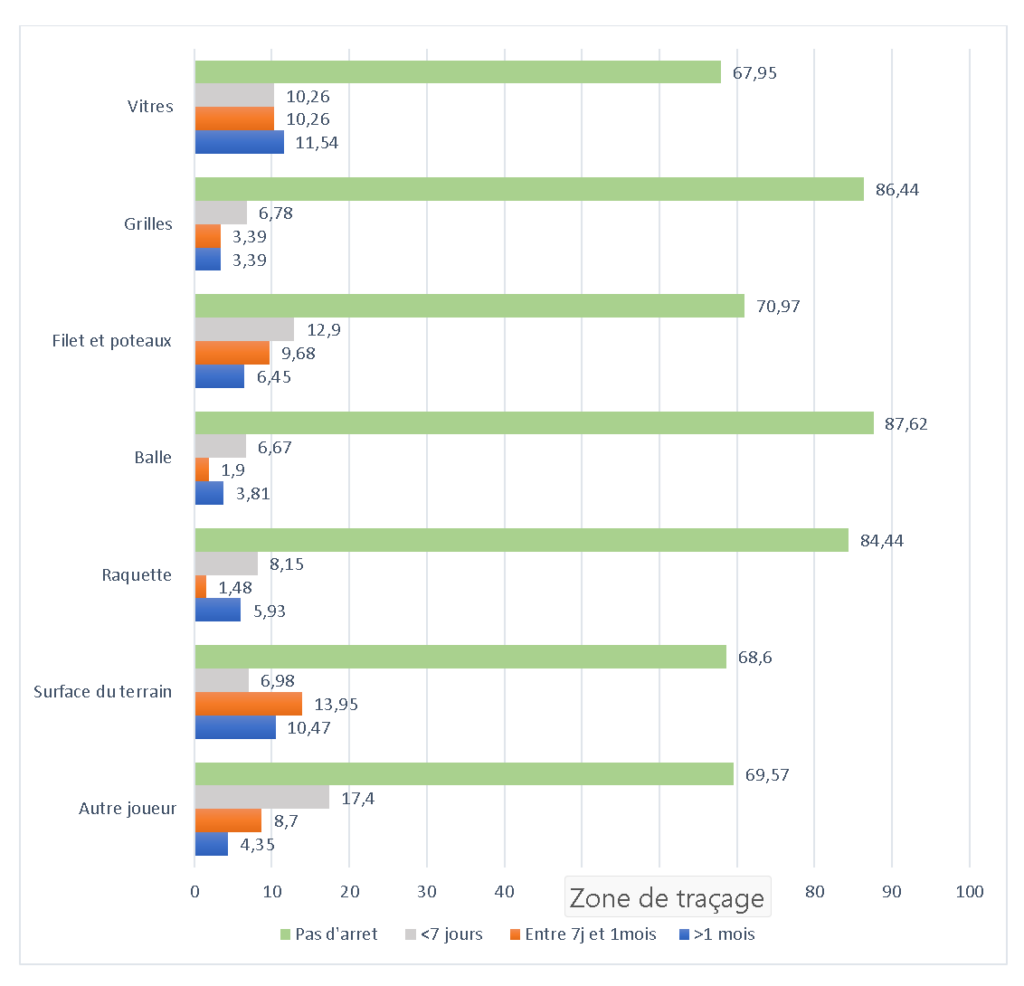
Figures 2 and 3 highlight the distribution of these periods of unavailability according to the traumatic structures. We find a majority of responses relating to a lack of cessation of sport. We can see that all structures do not lead to the same duration of unavailability. The surface of the court, the windows and even the racket padel cause pathologies that are sources of more numerous rest periods. There are thus 18 stoppages longer than a month, 24 stoppages between 7 days and a month in relation to traumatic pathologies caused by the surface of the field, and 11 sports interruptions of less than 7 days with the snowshoe. padel. Conversely, the traumatic pathologies caused by the grids, the net and the posts, the ball and the other players seem to be at the origin of a rather weak stoppage of activity.

Passionate about tennis from an early age, Pierre-Olivier discovered a passion for padel in 2018. General practitioner trained in sports pathologies and manual medicine, he juggles between snowshoes and stethoscope for his greatest pleasure.































































 Premier Padel Sevilla P2 – From the waiting list to previas for Dylan Guichard and Ricardo Martinez!
 Miguel Lamperti: three tie-breaks and a return to the quarter-finals!
 Premier Padel Brussels P2 – Place for the quarter-finals
 Guillaume Codron de Sud Padel : “A family project”
 Nallé Grinda: “Democratize the padel in the USA with PadelX "
 Simon Boissé: “We know that there are two nations in front of us”
 Marie Maligo: “This period of frequent changes of partners was beneficial for me”
 Gilles Moretton: “We will be able to put the padel at the level of tennis”
 Two P1000 doubled prize money approaching!
 José Manuel Escin at the inauguration of Casa Padel DOS: “Finally, and thank you!”
 Big evening in Brussels with two seeded players on the mat, heckled number 1s…
 A1 Padel – the French Open replaces the Mexican Open on the calendar
 4 Fiberglass Padel Courts for The Ville de Paris: a choice that looks to the future
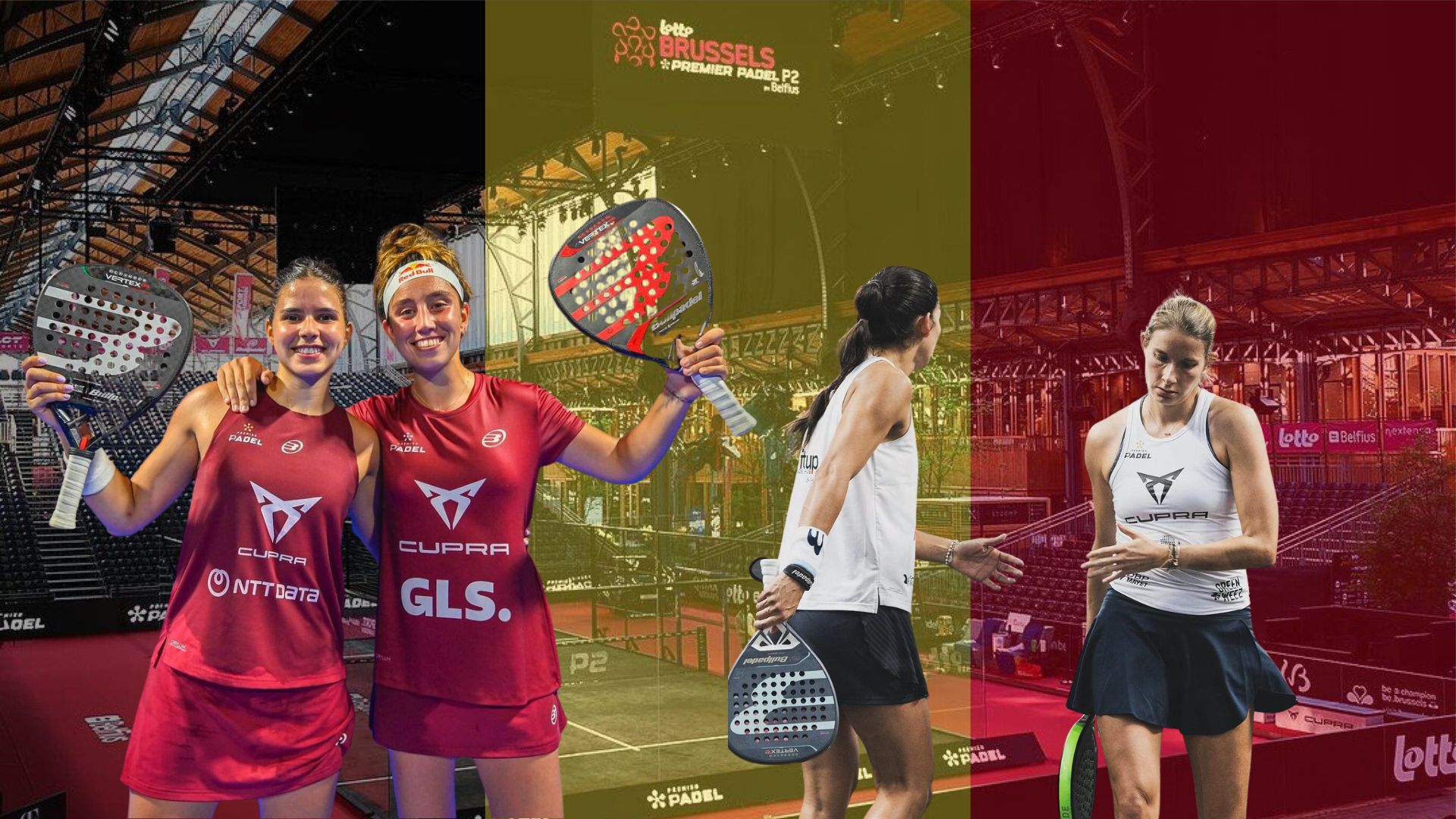 Brussels Premier Padel Brussels P2 – Collombon / Bidahorria falls against Brea / Gonzalez
 Padel Score comes to Tahiti for American Express Padel Cup!
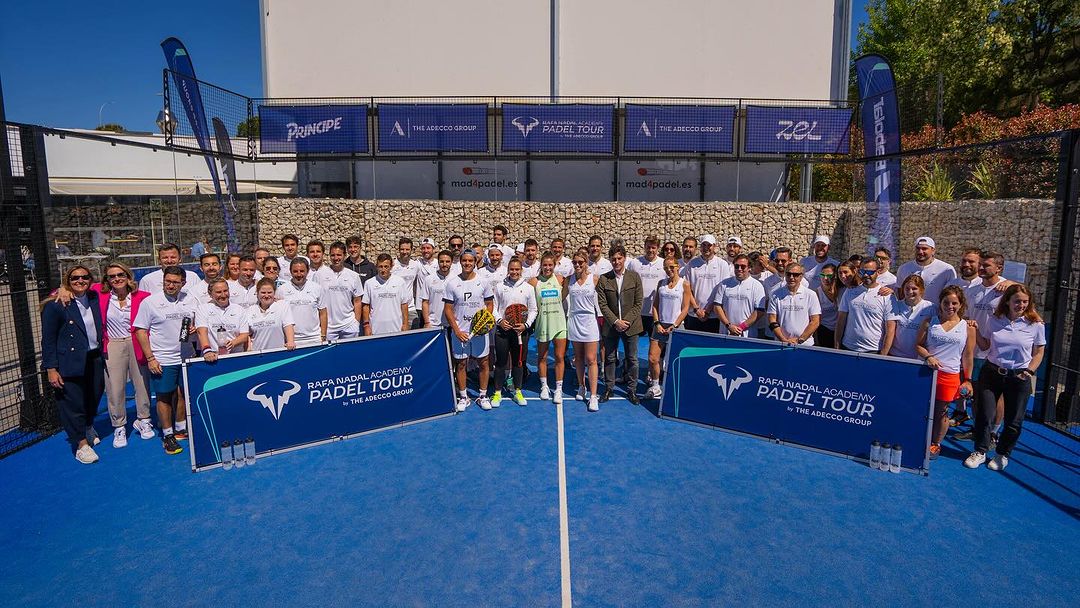 Do you know the Rafa Nadal Academy Tour?
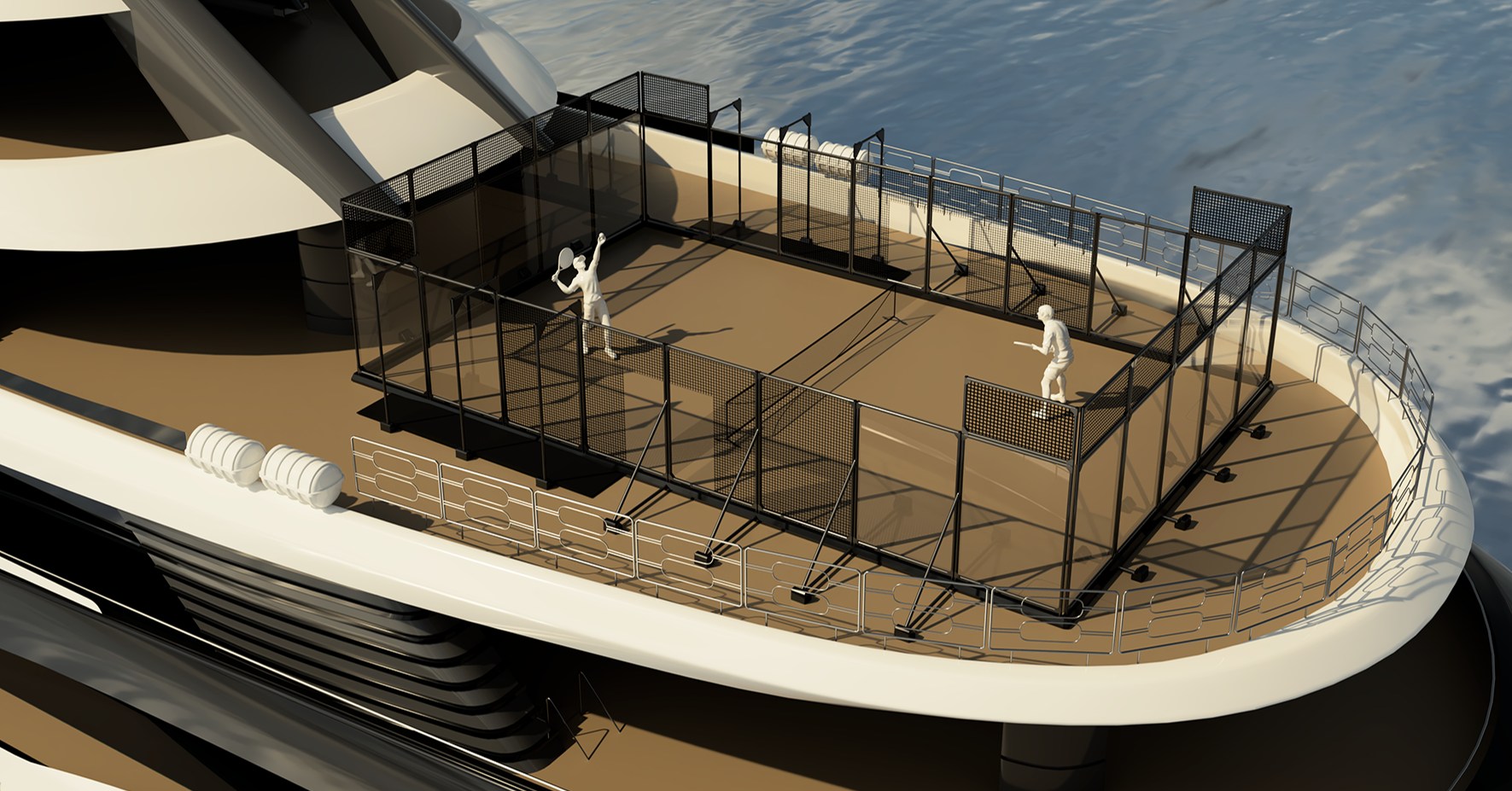 Play at padel on his yacht? Possible for €233.000!
 Our Top 10 training courses padel in France and Europe
 At the heart of padel – Episode 25: Paul and Andoni answer your questions
 Tactical padel – What to do when faced with players who systematically stay at the bottom?
 The basic tactics of padel
 At the heart of padel – Episode 25: Paul and Andoni answer your questions
 At the heart of padel – Episode 23: defend the window well
 Prohibition on playing topless Padel : the reasons
 FIP Tour – Going far from Europe, THE strategy to earn points!
 What is a good football player? padel ?
 “Lefties give me headaches when I play against them!”
 At the heart of padel – Episode 14: how to earn points in winter?
 A par 4 is always a winner...even if you manage to defend it!
 Carbon fiber VS fiberglass: what to choose?
 How to effectively test a racket padel ?
 La padel to fight Parkinson's disease
 Don't play with a cracked or broken racket, your body will thank you!
 Michel Cymes: “The padel, physically, it’s serious!”
 Jeremy Gala: “Promote the padel among young people in Belgium remains a challenge”
 The French Touch Academy organizes its selection day Padel-Study
 Report on the detection and training of younger generations